Field notes · Look · Try · Compare
Noticing vertical lines in a photograph
Explore upright edges, the areas they separate, and their place around a subject.
An upright edge can give you a place to begin looking. A doorway may separate a bright area from a dark one; a column may divide texture from open space. Follow these lines around a person and notice how they help different parts of the photograph sit together.
Find an upright edge

Portrait in a hallway · Photograph: Yenra
Several door frames repeat behind this portrait. A larger edge stands near the right side, while smaller frames continue into the hallway. The long blue hair adds another pair of downward shapes closer to the camera. Look from a nearby edge to one farther away, then return to the face.
The hallway also contains lines that slope across the picture: ceiling edges and floor patterns lead toward its far end. Upright and slanting lines can work together. You can enjoy that relationship without needing every edge to be perfectly vertical.
Notice what a line separates
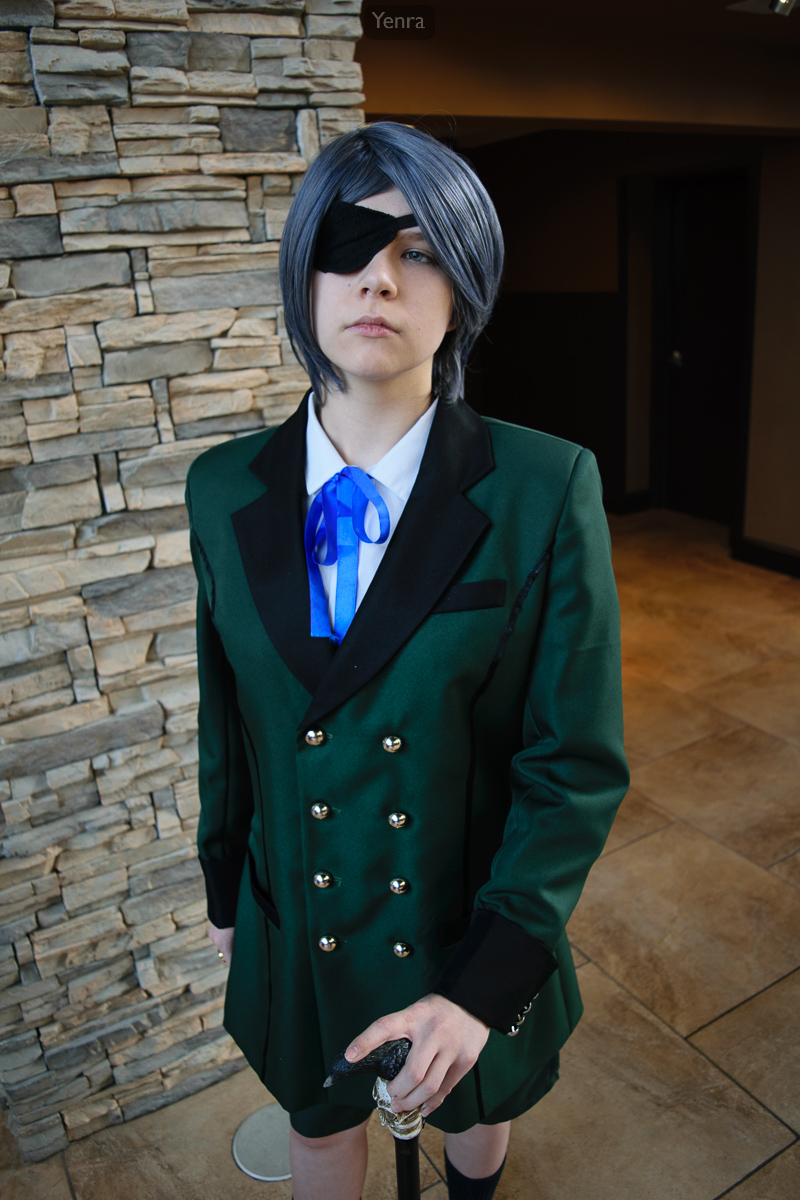
Ciel Phantomhive, Black Butler · Photograph: Yenra
The edge of the stone column separates a patterned surface from a dark doorway. Part of that boundary disappears behind the person. The edge still helps you read the areas on either side: small stone shapes on one side and a larger, quieter opening on the other.
Try following the visible pieces of the edge. Where does it meet the head, shoulder, or picture boundary? Looking at these meetings can suggest a small change of camera position when you make your own photograph.
Compare upright and slanting lines
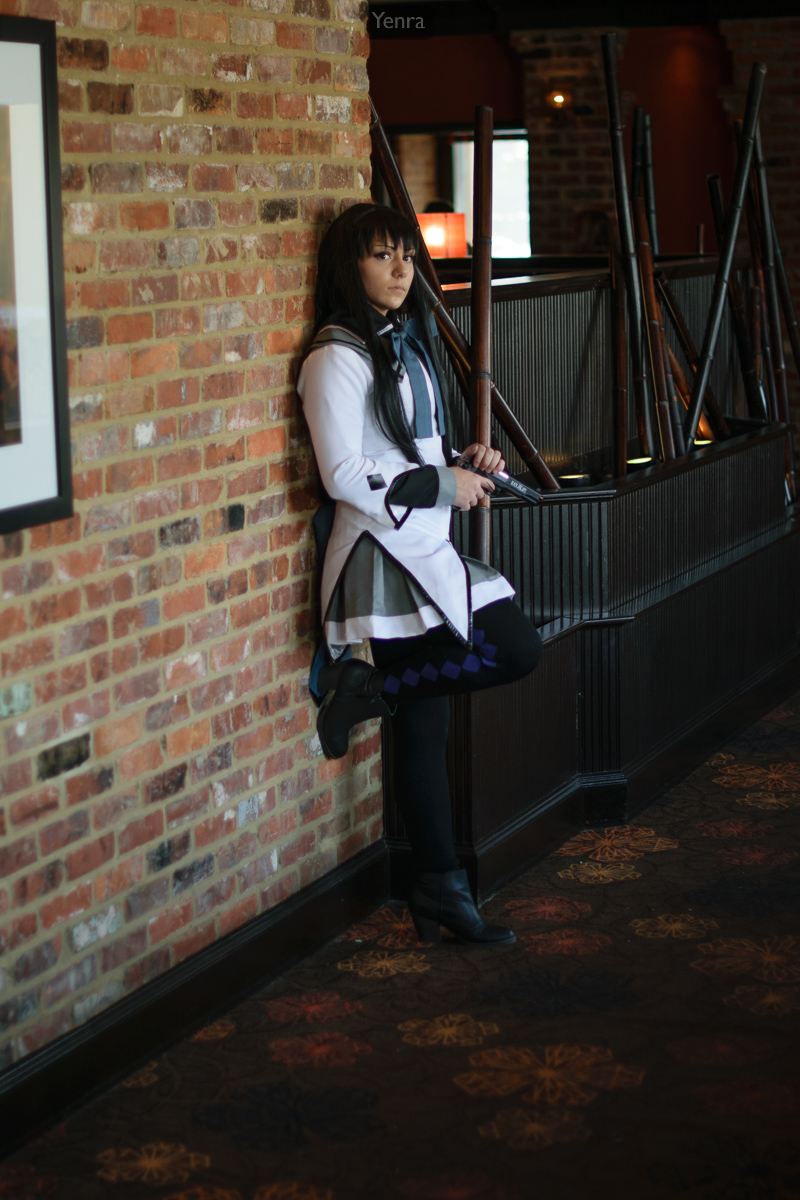
Homura Akemi, Puella Magi Madoka Magica · Photograph: Yenra
Here the brick wall edge, upright poles, and narrow lines in the dark paneling share the scene. Other poles lean across them, and the paneling continues diagonally into the room. The portrait sits near the meeting of the brick and darker area. Notice which line you find first and where it takes you next.
You can explore this with a doorway, a shelf, or a fence post. Make a view, move a little to one side, and make another. Compare the spaces beside the edge and the places where lines overlap. Your aim can be as simple as finding a relationship you enjoy.
Look back with curiosity.
- Which upright edge catches your attention first?
- What changes on either side of it?
- How does its relationship with nearby slanting lines affect your reading?
Keep exploring
Following lines through a photograph · Noticing diagonals in a photograph · Finding frames within a photograph · Seeing depth in a photograph
Explore the complete galleries: ROFCON 2014 · ROFCON 2015 · All ROFCON years.