Field notes · Look · Try · Compare
Following lines through a photograph
Explore paths, curves, and repeated shapes, then try three viewpoints around an everyday line.
A path, a garden edge, or a row of columns can give your eye a route through a photograph. Begin by noticing where a line enters the picture. Follow it for a moment, then look at the people, objects, or spaces it brings into view. A small change in where you stand can offer another way through the same scene.
Follow an edge into the photograph.

Elena Shimabara, Idolmaster Million Live · Photograph: Yenra · Credit: Kaymm

Kirino Kousaka, Oreimo · Photograph: Yenra · Credit: Jenni Bon
In the standing portrait, two pale garden edges narrow behind the person. They divide the path from the plants and give the view a direction into the distance. The bright jacket provides another place for your attention to settle. You might begin with the face and then follow the path, or arrive at the person after noticing the lines.
The seated portrait gives one garden edge a stronger diagonal. It enters from the lower right and continues toward the left side of the picture. The person's position connects with that edge, while the open area of path gives the composition a different balance. The two photographs offer different routes through a garden setting.
Try tracing each route with your eyes. Notice where the edge becomes less distinct among the plants and distant shapes. A useful line can change along its length; it can be a clear boundary near the camera and a quieter suggestion farther away.
Look for repetition and curves.
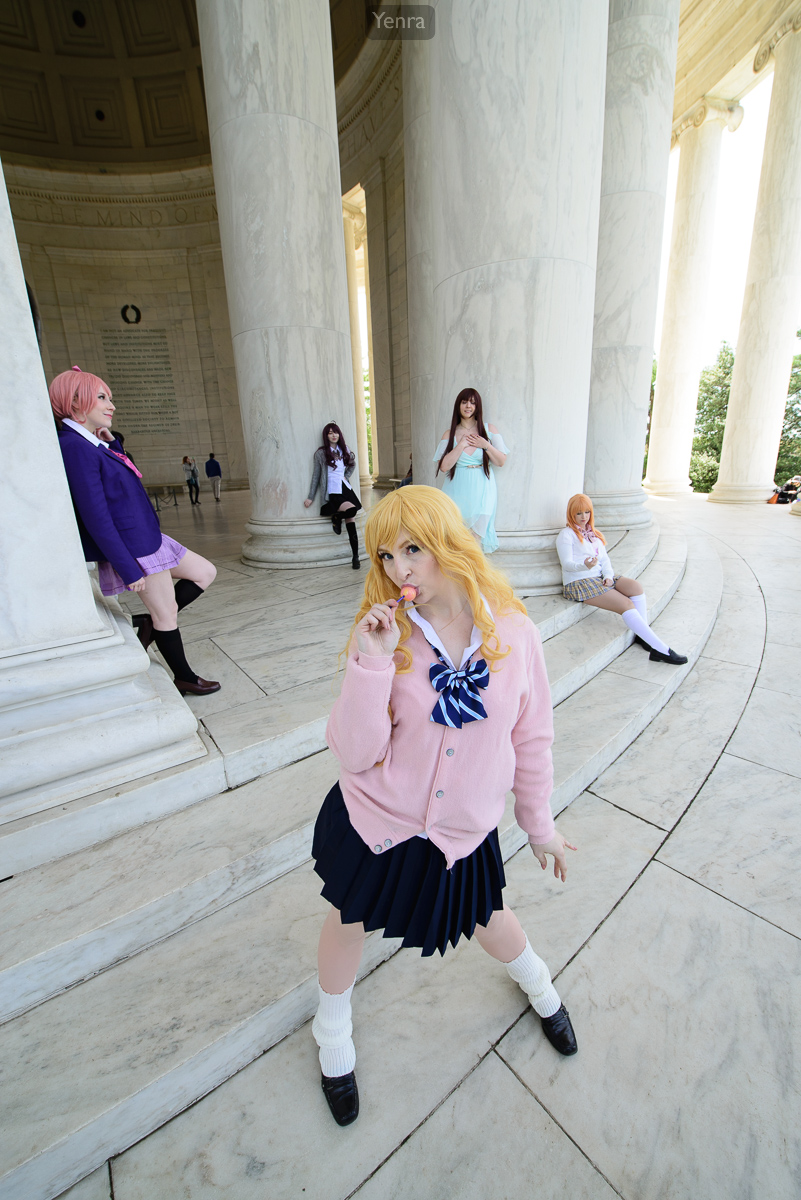
Yui Ohtsuki, Idolmaster Cinderella Girls · Photograph: Yenra · Credit: Barracuda Cosplay
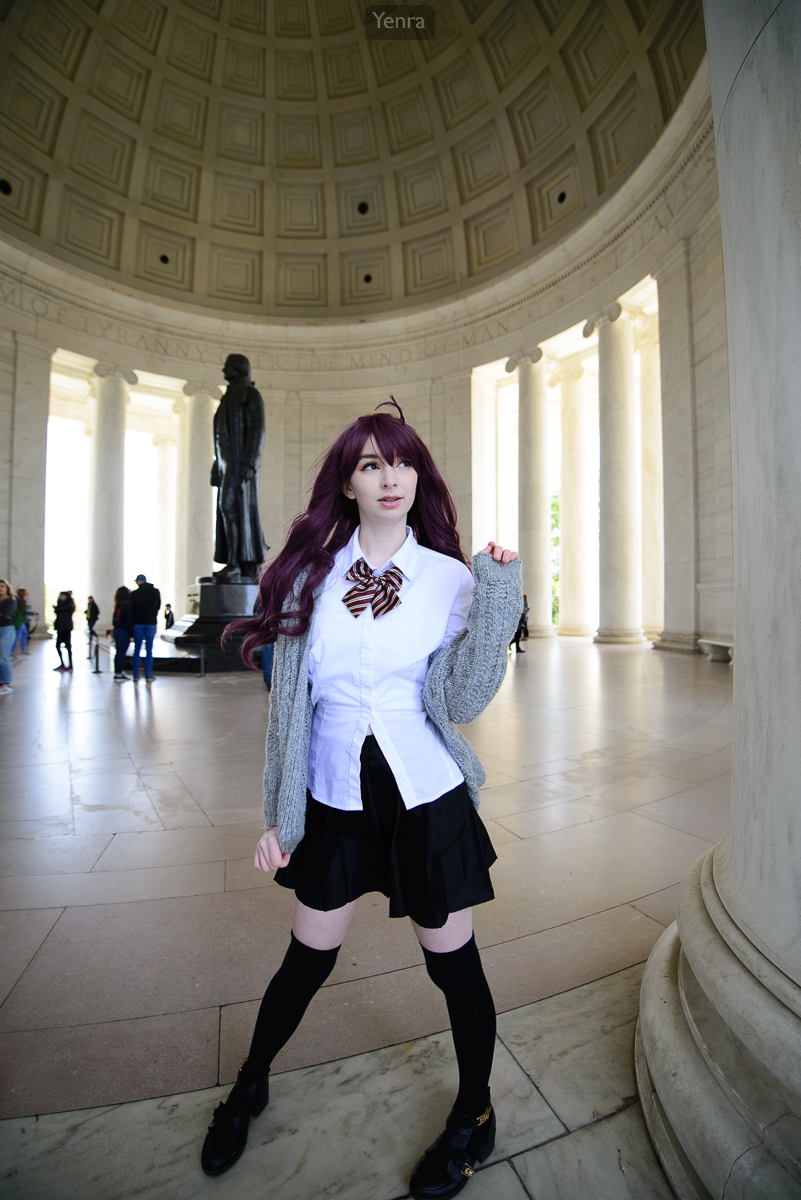
Shiki Ichinose, Idolmaster Cinderella Girls · Photograph: Yenra · Credit: Himeluka
Among the columns, the rounded steps sweep across the picture while the columns rise in repeated vertical shapes. Several people occupy different parts of this arrangement. The steps can lead you between them; the columns give you another rhythm to follow. Spend a moment with the photograph and see which route you notice first.
In the portrait beneath the dome, a nearby column fills the right edge. The curve of the room continues above the person's head, and the divisions in the ceiling repeat around it. Look from the figure toward the upper part of the photograph, then return through the column and the floor. One scene can contain several connected directions.
Lines can lead toward a subject, pass beside it, divide the setting, or make a repeated pattern worth looking at. You can choose how strongly to include them. A portrait might benefit from a clear path through its surroundings, or you might enjoy a quieter line that becomes apparent only after a closer look.
Give yourself another viewpoint.
Before moving on, make one small change. Shift a little to the side and notice where an edge meets the subject. Try a comfortable lower or higher viewpoint and see how much floor, path, or tabletop becomes visible. Look at the whole picture as well as the line: the subject, the corners, and the spaces between shapes all contribute.
You can explore this with everyday things. A table edge, a row of books, or a folded piece of paper gives you lines to work with at home. Let the arrangement suggest a photograph you would like to make.
Try three views around one line.
- Choose an edge or a repeated shape. Look for a tabletop, a garden border, a path, or a row of objects. Include something you would like the viewer to notice.
- Make a starting photograph. Notice where the line enters and what lies along it.
- Move slightly sideways. Watch the line's relationship with the subject, then make another photograph.
- Change the height comfortably. Try another standing or seated viewpoint. See how much of the line and the surrounding space you want to include.
- Compare your three views. Choose a route through the picture that you enjoy, then use that observation for another variation.
Notice the route you enjoy.
- Where does your eye enter the picture, and where does it pause?
- What changes when the line passes beside the subject or meets it?
- Does a repeated shape or curve add another route you would like to explore?
Keep a sentence in the field practice notebook, or browse the complete Spring Flowers gallery. Continue with frames within a photograph or people together for other ways to explore relationships inside the frame.