Field notes · Look · Try · Compare
Seeing depth in a photograph
Notice near, middle, and distant elements, then try a small change of position.
A photograph is a flat surface that can invite you to look into it. Nearby leaves, a person on a bench, and a building farther away give the eye different places to visit. You can begin exploring depth simply by noticing how those parts meet.
Find a near layer and something beyond.
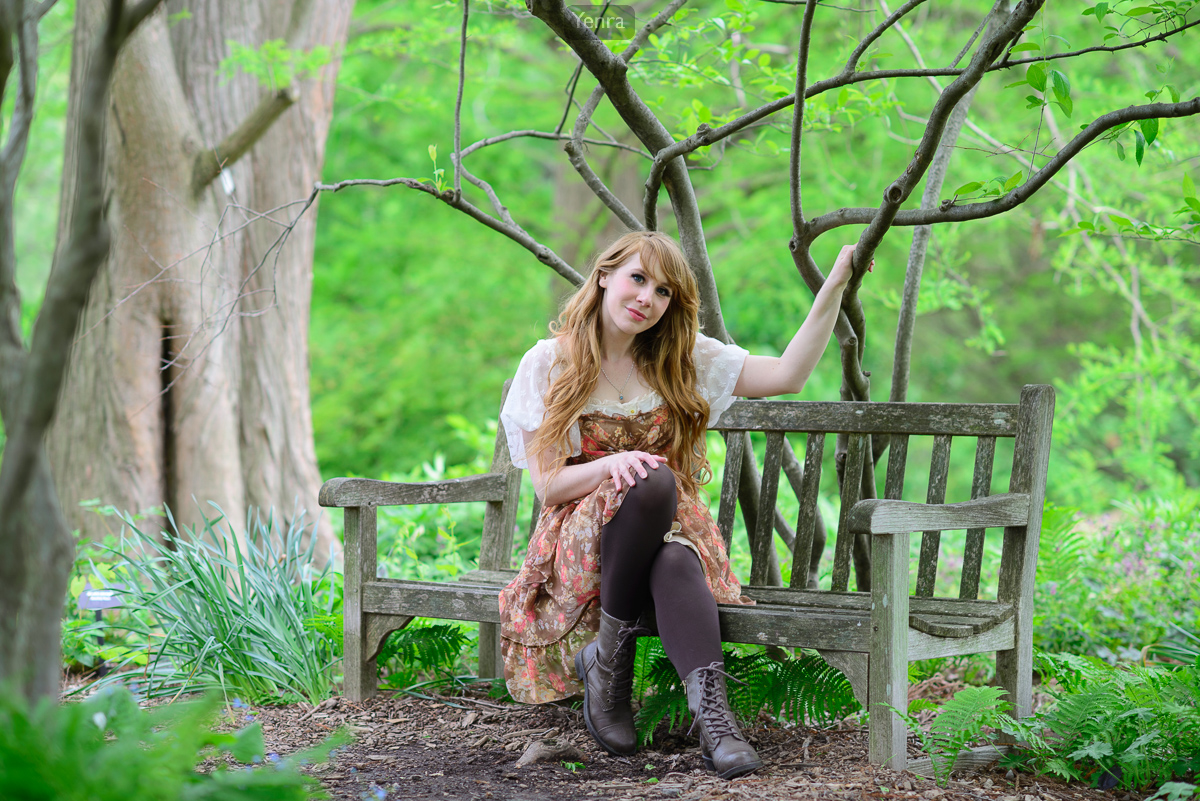
Liz Lisa, Country Bench · Photograph: Yenra · Credit: Jenni Bon
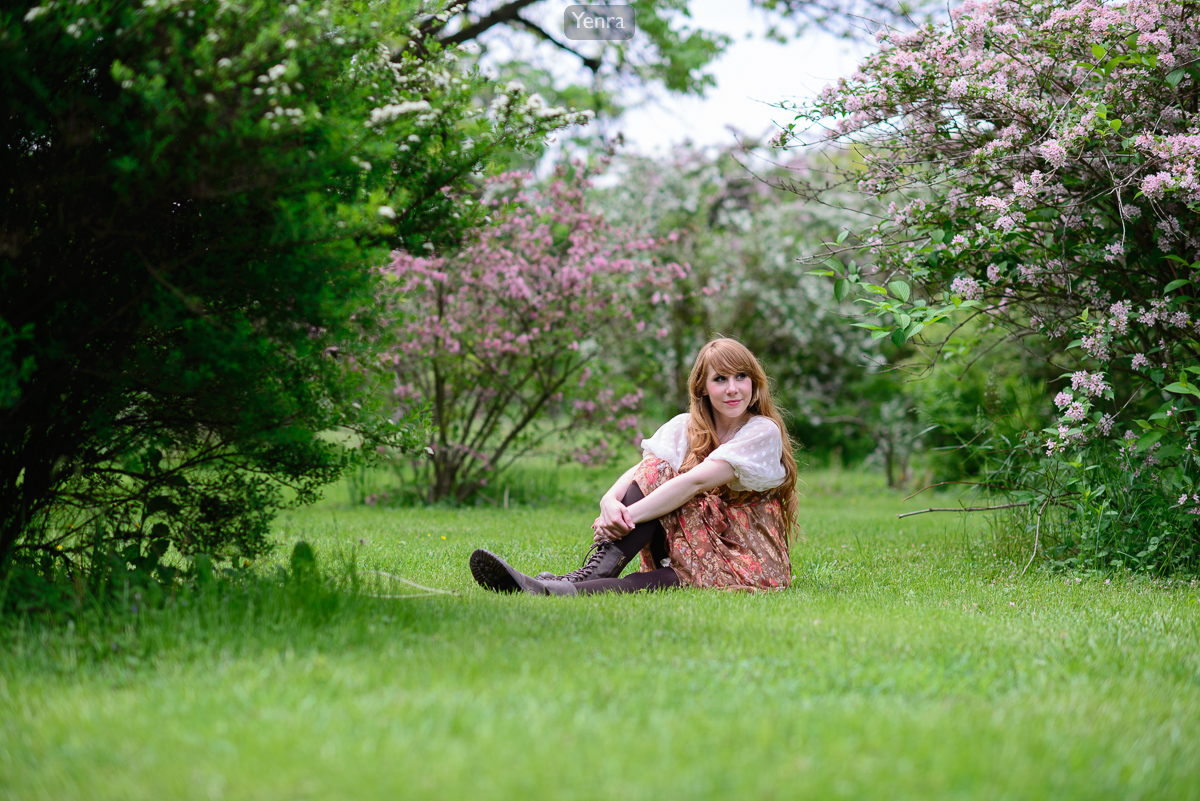
Liz Lisa in the Arboretum · Photograph: Yenra · Credit: Jenni Bon
In the bench portrait, plants and branches surround the seated figure, with greener surroundings extending behind. In the second photograph, soft grass crosses the foreground while trees and blossom fill the space beyond the figure. Let your eye travel from the nearest visible element toward the back of each picture.
There is no need to name an exact distance. Ask which part feels closest, which part holds your attention, and what suggests space farther away. A difference in apparent size, visible detail, or the way one shape covers another can offer a useful clue.
Notice what overlaps.
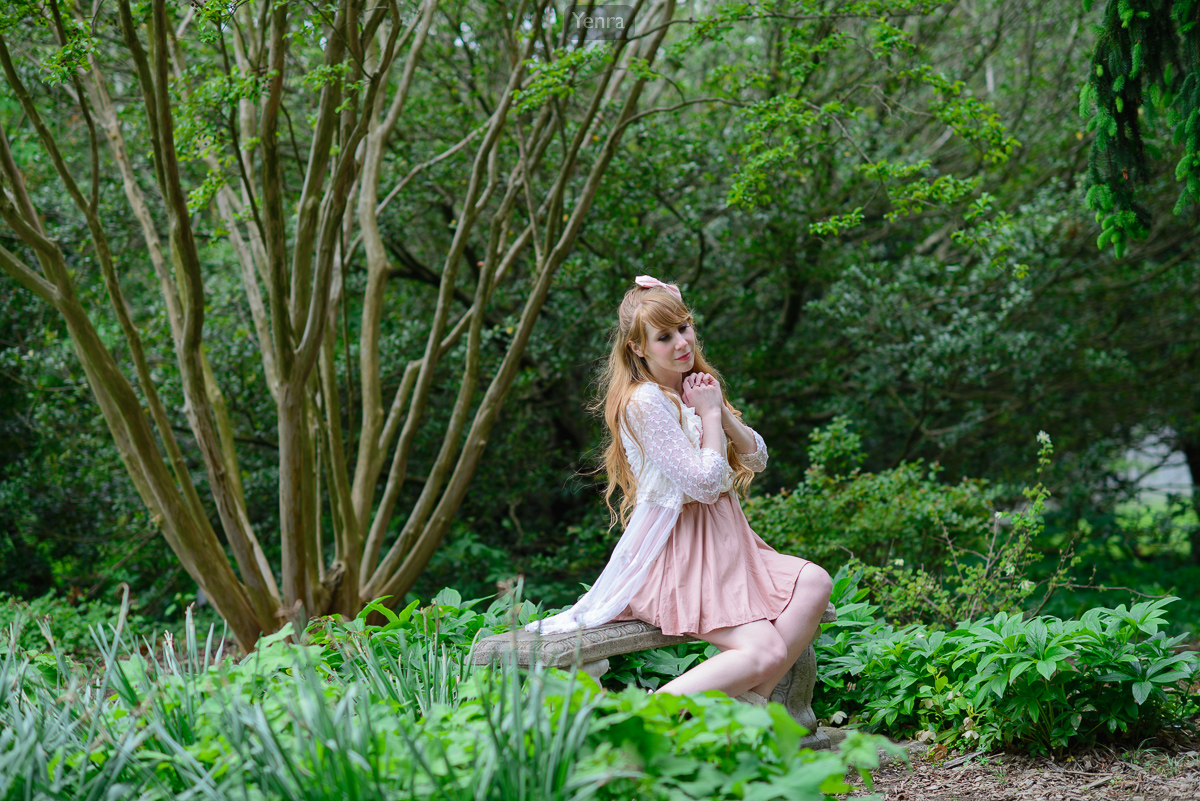
Liz Lisa in Nature · Photograph: Yenra · Credit: Jenni Bon
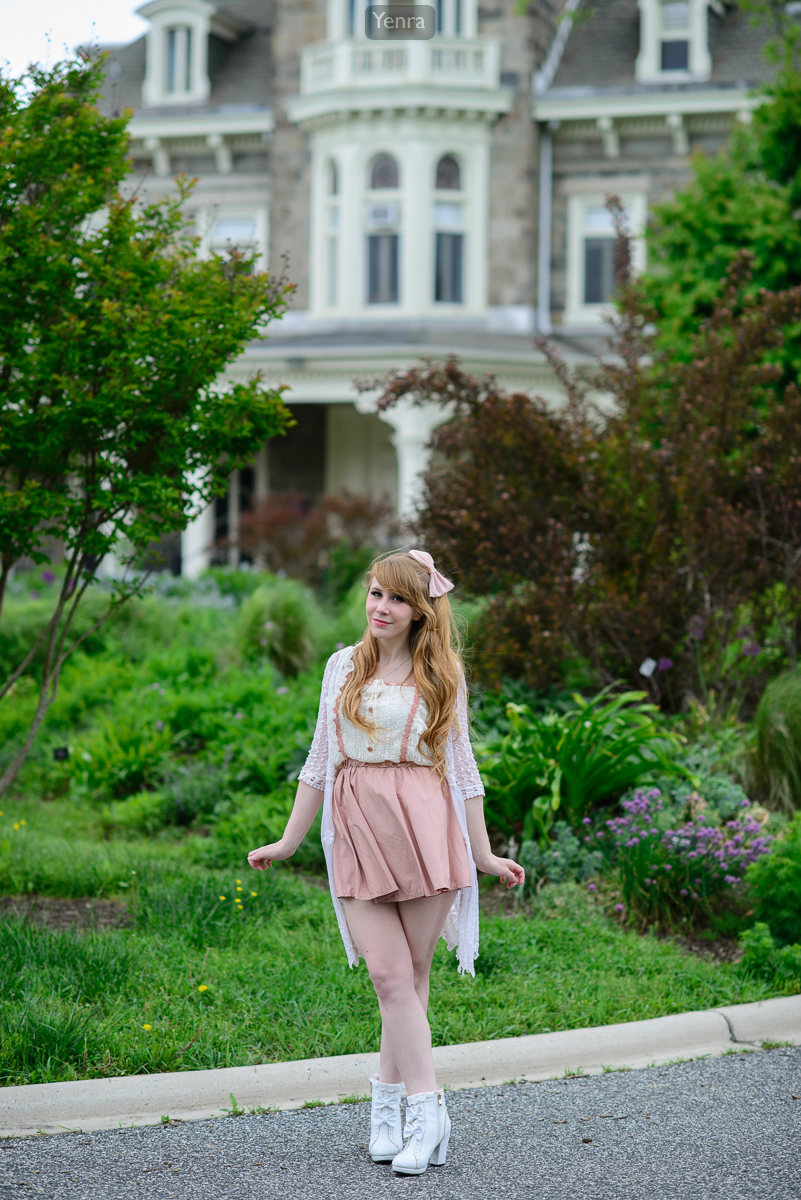
Liz Lisa, Country Estate · Photograph: Yenra · Credit: Jenni Bon
Plants partly overlap the bench and seated figure in the first view. In the second, the standing figure sits within garden planting, with a large building farther behind. The layers give each portrait a setting to look through as well as a subject to look at.
Try following one edge: a leaf against clothing, a shoulder against foliage, or a roofline behind a head. A small move to one side can change those relationships. You might enjoy an overlap that connects two shapes, or a gap that gives each more room. Both are possibilities worth trying.
Look back with curiosity.
- What feels nearest?
- What helps you look into the picture?
- Which overlap would you enjoy changing?
Continue with Choosing a portrait background or Changing your viewpoint for more ways to explore the space around a subject.
Browse all 14 May Garden photographs → · Take the depth experiment with you →