Field notes · Look · Try · Compare
Changing your viewpoint
Notice how foreground and background relationships change, then try a small shift in camera position.
A small change in where you hold the camera can reveal another photograph. A nearby flower moves across the view, a background shape appears beside a face, or more of the ground becomes visible. Begin from a comfortable position, make one photograph, then let a small movement show you another possibility.
Look at the relationships between layers.
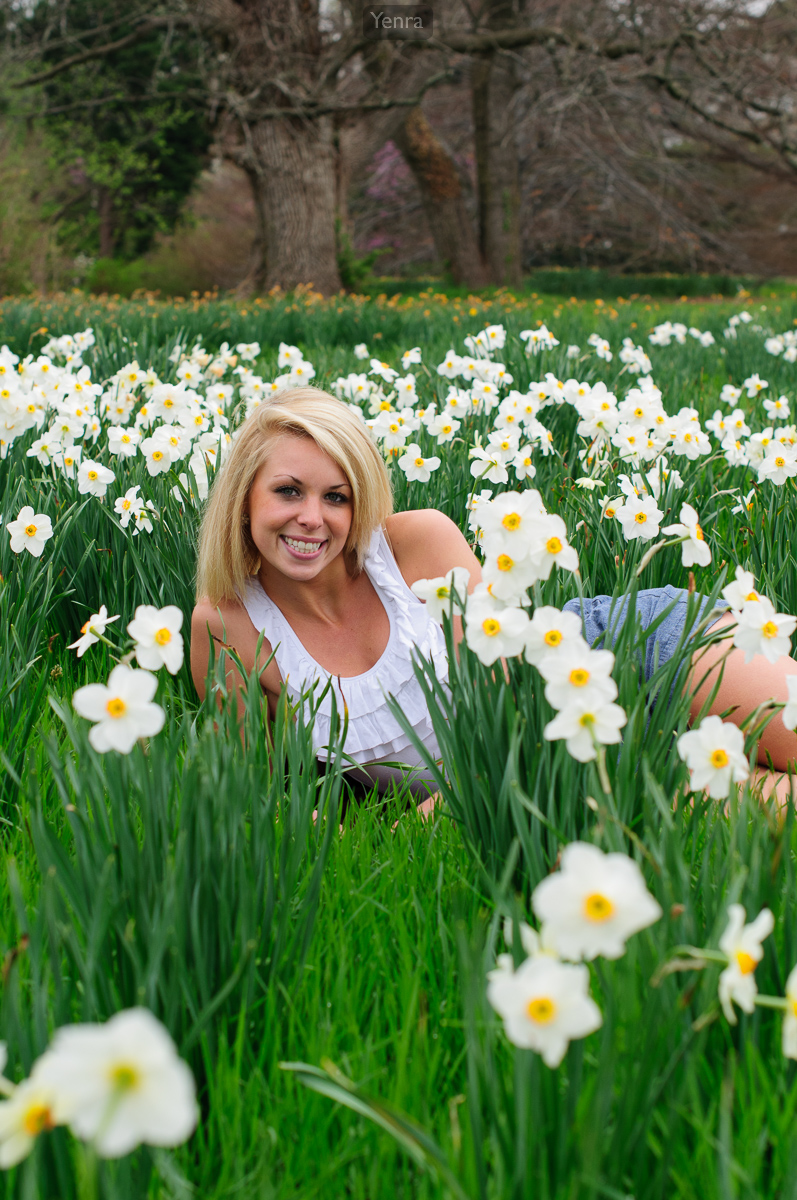
Vertical portrait among white flowers · Photograph: Yenra
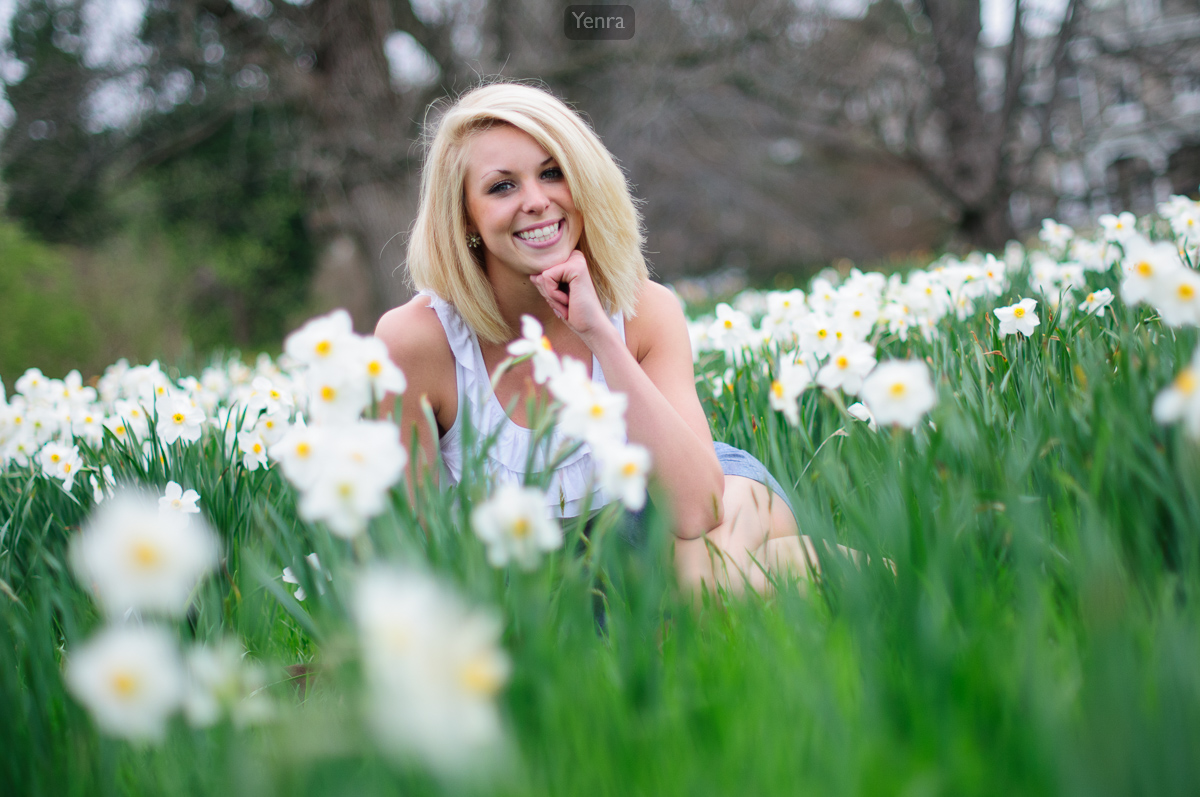
Horizontal portrait among white flowers · Photograph: Yenra
In the vertical photograph, flowers rise around the reclining figure and continue toward the distant trees. You can look across several bands of the garden: nearby flowers, the person, more flowers, and the tree trunks beyond. Notice where the nearest stems overlap the clothing and where the face remains visible.
The horizontal photograph brings a broad band of soft flowers into the lower part of the picture. The face sits above much of that foreground, with the hand beneath the chin. Compare the position of the nearest flowers against the person and the trees. The layers make another arrangement within the frame.
These are different moments in the garden, with changes in pose and picture orientation as well as the view. They offer two arrangements to study. Use the visible relationships to form your own question: what might happen to a nearby shape if you held your camera a little higher, lower, or farther to one side?
Notice how the setting enters the view.
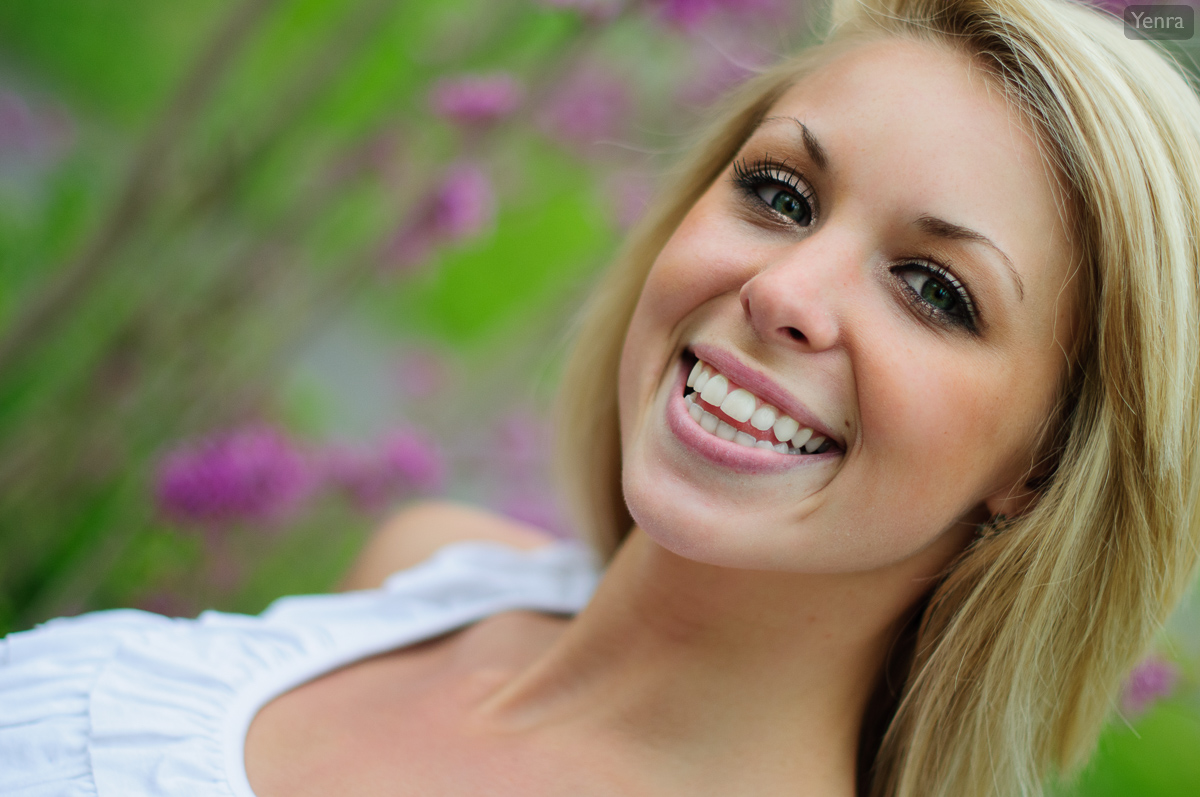
Close portrait with garden colors · Photograph: Yenra
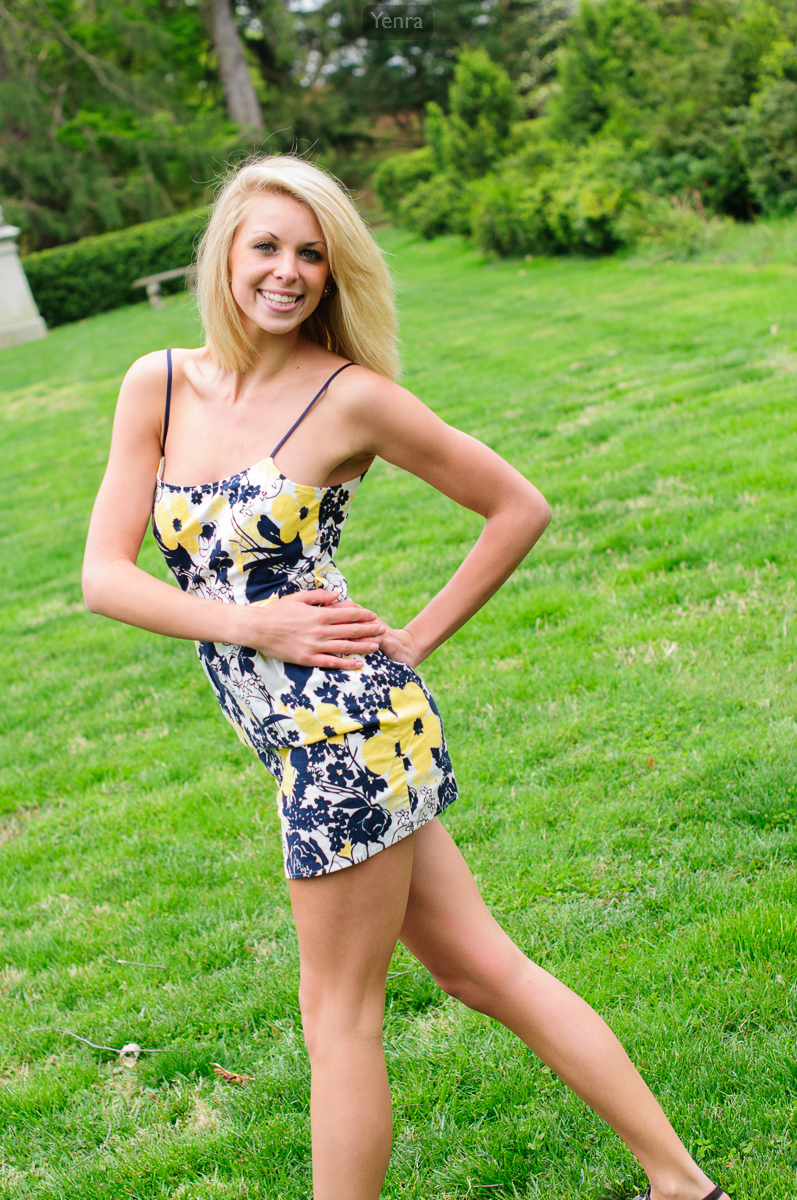
Standing portrait on a lawn · Photograph: Yenra
The close portrait places the face diagonally across the picture, with soft green and purple shapes around it. The standing portrait includes a much larger area of grass behind the person. Follow the visible ground and the distant greenery, then look at where the arms and clothing sit against them.
These views have different subjects within their boundaries: one gives most of its space to a face, while the other includes more of a person and their surroundings. When you make your own photographs, notice both how much you include and how objects overlap from your position. Moving slightly sideways can change an overlap even when the subject stays about the same size in the picture.
Try watching one background edge as you move. It may pass behind the subject, appear beside it, or disappear from view. A small shift can be enough to reveal a relationship you like. You can also choose to keep an overlap when its shape or color adds something interesting.
Explore from a comfortable position.
Place an object on a table with another object a little farther behind it. A cup and a book work well. Make an initial photograph, then move your camera slightly to one side. Watch what happens to the book's edge relative to the cup. A small change in height offers another way to explore the arrangement.
You can do this while seated and use a small movement of your arms. Keep the objects and other choices broadly similar so you can notice what your position changes. Use the camera or phone you already have, and take a moment to compare each view before deciding where to move next.
For portraits, share what you are exploring with your partner. Let them remain comfortable while you try a few nearby positions. Review the photographs together and notice which relationships you each enjoy.
Try one subject from three positions.
- Arrange a simple subject. Place an object on a table with something visible behind it.
- Make a starting view. Choose a comfortable position and notice one foreground or background edge.
- Shift sideways. Move the camera a little and make another photograph, watching that edge.
- Explore another height. Raise or lower the camera comfortably and photograph the new arrangement.
- Compare the overlaps. Look at what appeared, disappeared, or changed position. Try another small movement if you are curious.
Follow the change you enjoy.
- Which overlap changed most clearly?
- What became visible from another position?
- Which viewpoint would you like to explore further?
Keep your observations in the field practice notebook or browse the complete Early Spring Arboretum gallery. Continue exploring with portrait backgrounds and frames within a photograph.