Field notes · Look · Try · Compare
Noticing small chains in a costume portrait
Find a fine curved line among larger blocks of color and pattern.
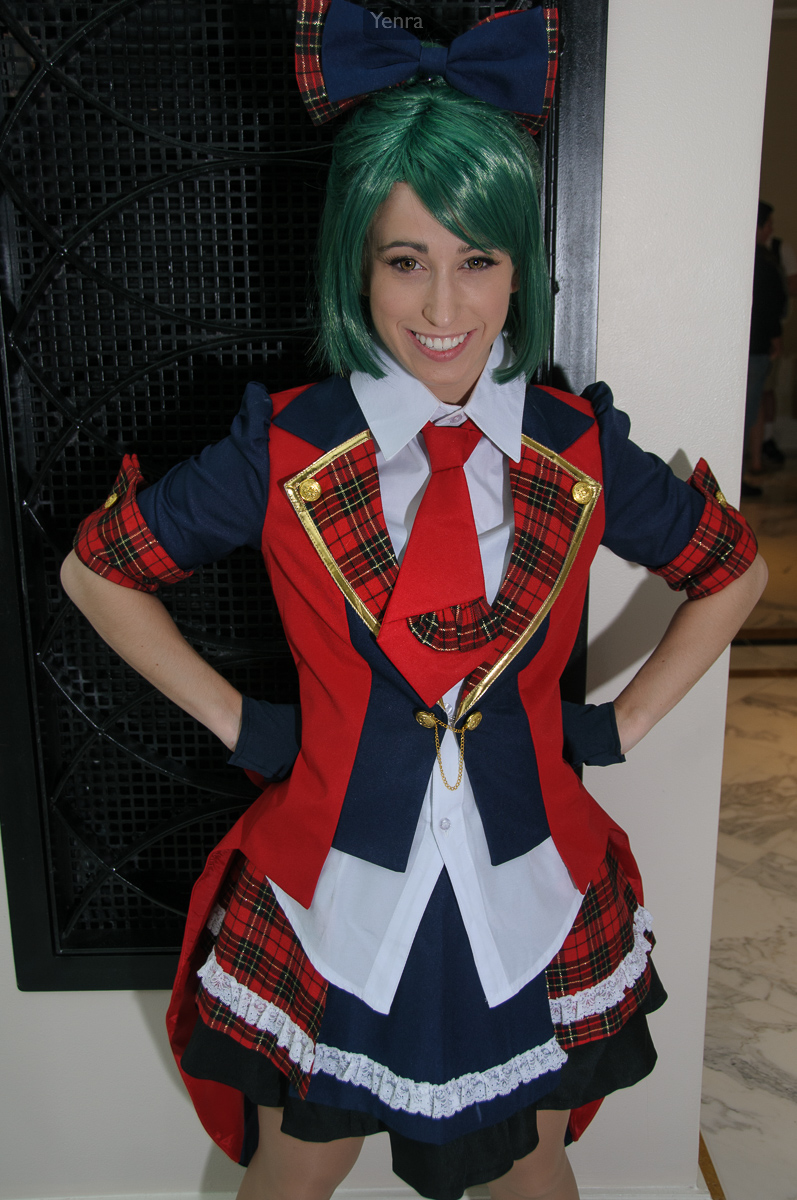
Takahashi Minami, AKB0048 · Photograph: Yenra · Archive tags: Dejavudea
Captured: 2013:02:16 15:18:24
A fine curved line can give you a quiet way into a busy portrait. Begin with a small detail you can see, follow its shape, then return to the whole photograph. You do not need to identify its material or explain how the costume was made to enjoy the relationship between a little curve and the larger shapes around it.
These three Katsucon 2013 portraits include small gold-colored chains near the waist. The chains sit among dark blue, white, red and checked areas of clothing. Each complete frame gives the detail a different setting, so keep the surrounding portrait in view while you compare.
Find the small loop
Find the hanging loop between the small fastenings near the waist. Its curved line occupies much less space than the jacket and skirt. Trace the loop with your attention, then look back at the larger blocks of color that helped you locate it.
A useful observation can be as simple as noticing a narrow curve beside a broad straight edge. You can describe those visible shapes without deciding what the chain is made from, what it supports, or why someone chose to include it. Small discoveries are enough to begin.
Follow the curve beside a broad shape
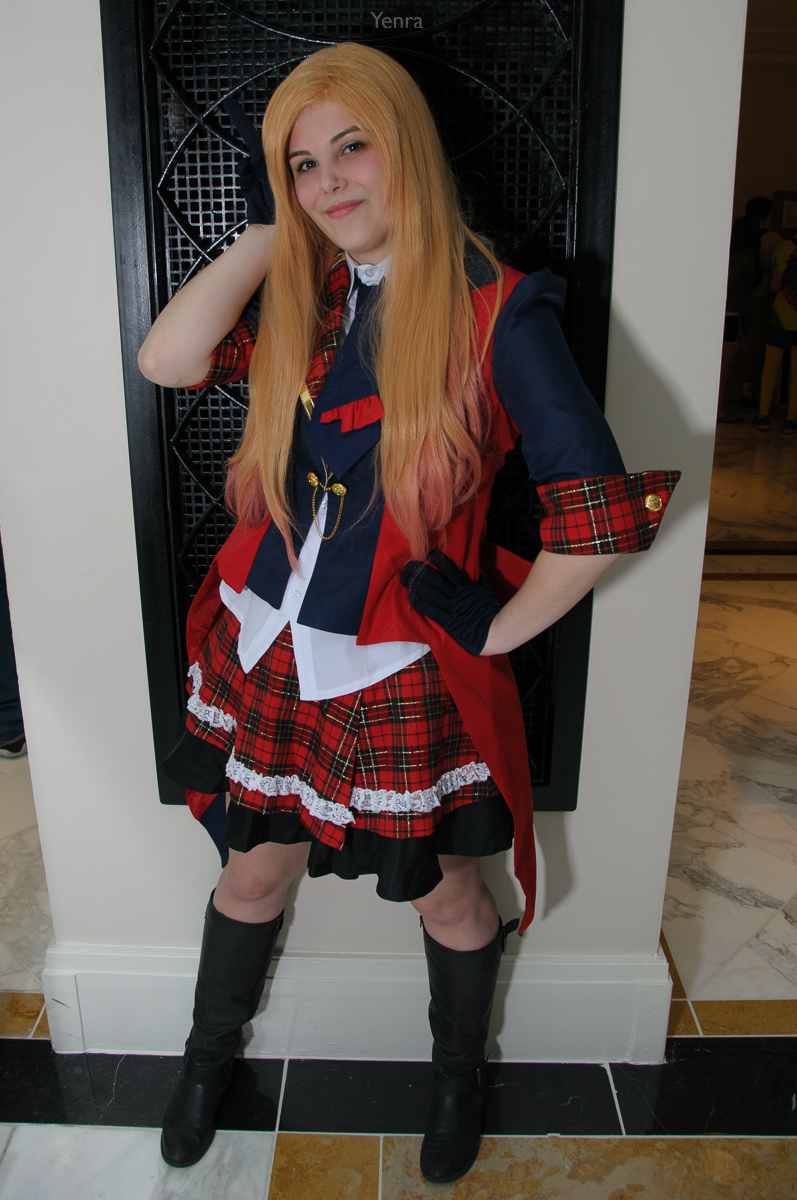
Tomomi Itano, AKB0048 · Photograph: Yenra · Archive tags: Valley Bunny
Captured: 2013:02:16 15:19:43
In this portrait, the loop stands against dark jacket fabric and a pale shirt. The surrounding shapes make a place for the little line to appear. Compare the chain's fine scale with the larger buttons, checked cuff and broad panels of clothing.
Try looking at the portrait first from a comfortable distance, then a little more closely. Which detail do you find first each time? There is no required order of attention. Your note might simply describe a shape you missed on the first look.
Find the detail in a wider pose
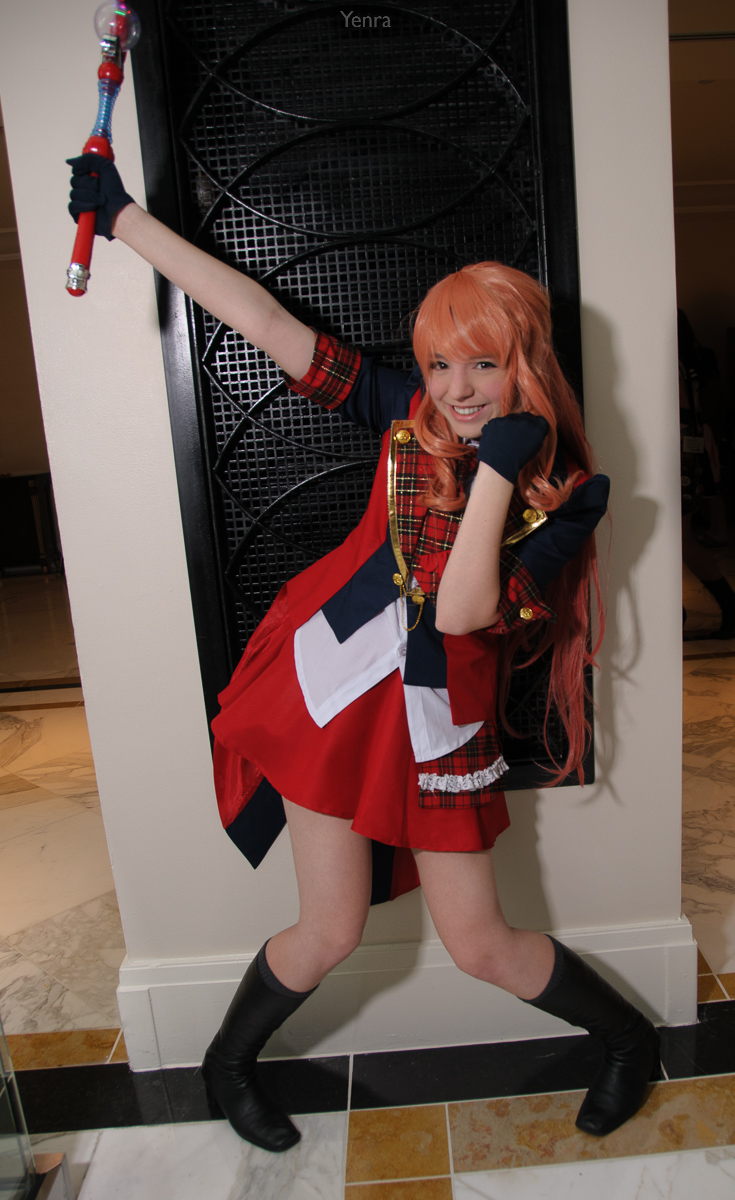
Haruna Kojima, AKB0048 · Photograph: Yenra · Archive tags: Alex Pinku
Captured: 2013:02:16 15:21:26
The wider, angled pose gives the raised arm, hair, clothing and surrounding space more room in the picture. The small loop remains visible near the waist. Find it without treating it as the only subject, then let your attention travel through the rest of the frame.
Compare the three whole photographs and keep one sentence about scale, curve or contrast. You can make this kind of observation with pictures you already have. A closer look does not require cropping the original, naming a character, or knowing how the clothing was constructed.
Look back with curiosity.
- What makes the fine line visible?
- Which large shape helps you find it?
- What changes when you return to the whole portrait?
Keep exploring
Noticing buttons in a portrait · Noticing contrasting textures in a photograph · Photographing the details that matter
Explore the complete Katsucon 2013 gallery. Follow the original neighbors and see which detail or variation catches your attention next.