Field notes · Look · Try · Compare
Photographing the details that matter
Give a favorite detail its own photograph, with room for context, craft, and collaboration.
A detail can hold something you love about a subject: the curve of a feather, a line of trim, a familiar button, or a mark of use. Give that feature a photograph of its own. Begin by noticing what matters to you or your collaborator, then explore how much of its surroundings helps it speak.
Begin with context.

Peacock Realness · Photograph: Yenra · Credit: Headpiece: Blonde Swan; Dress: KMK Designs; Worn by: Captain Swallow the Fabulush
This portrait brings the headpiece, outfit, and wearer together. You can see the blue and green accents repeating through the purple clothing, and the headpiece extending above the face. That wider view gives the following detail photographs a home: you know where the small features belong.
A contextual view can be a full portrait, an object on a table, or a familiar corner of a room. Include the relationships you want to remember. Then choose one feature that invites a closer look.
Give one feature the frame.

Peacock headpiece detail · Photograph: Yenra · Credit: Headpiece: Blonde Swan; Worn by: Captain Swallow the Fabulush
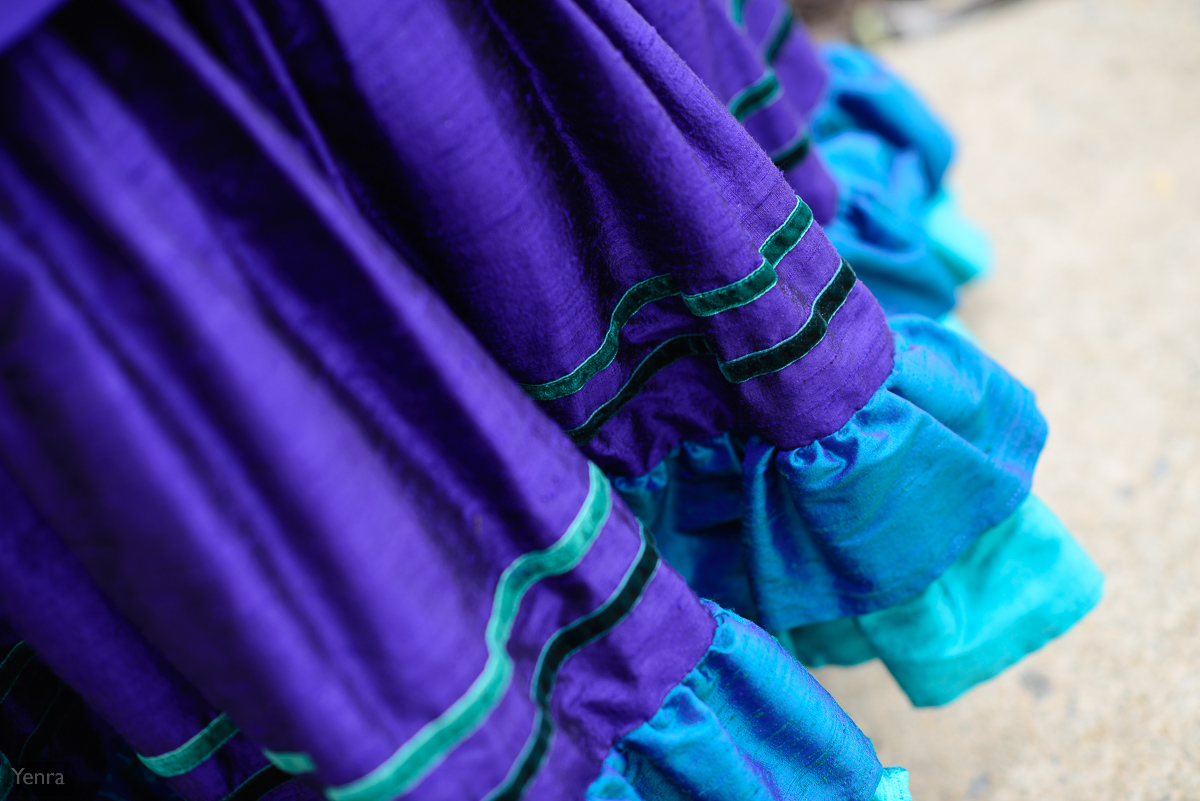
Blue ruffles and green trim · Photograph: Yenra · Credit: Dress: KMK Designs; Worn by: Captain Swallow the Fabulush
The headpiece photograph fills the frame with blue-green feathers and their repeated eye-like markings. Some edges appear crisp while others soften into their surroundings. Follow a curved feather, then notice how the darker background gives its outline room.
The clothing detail follows a different direction. Blue ruffles run diagonally beneath purple fabric, with thin green bands crossing the folds. The photograph gives those layers enough room to show their relationship. A detail can include several connected features while still feeling focused.
Choose what to include around the detail.
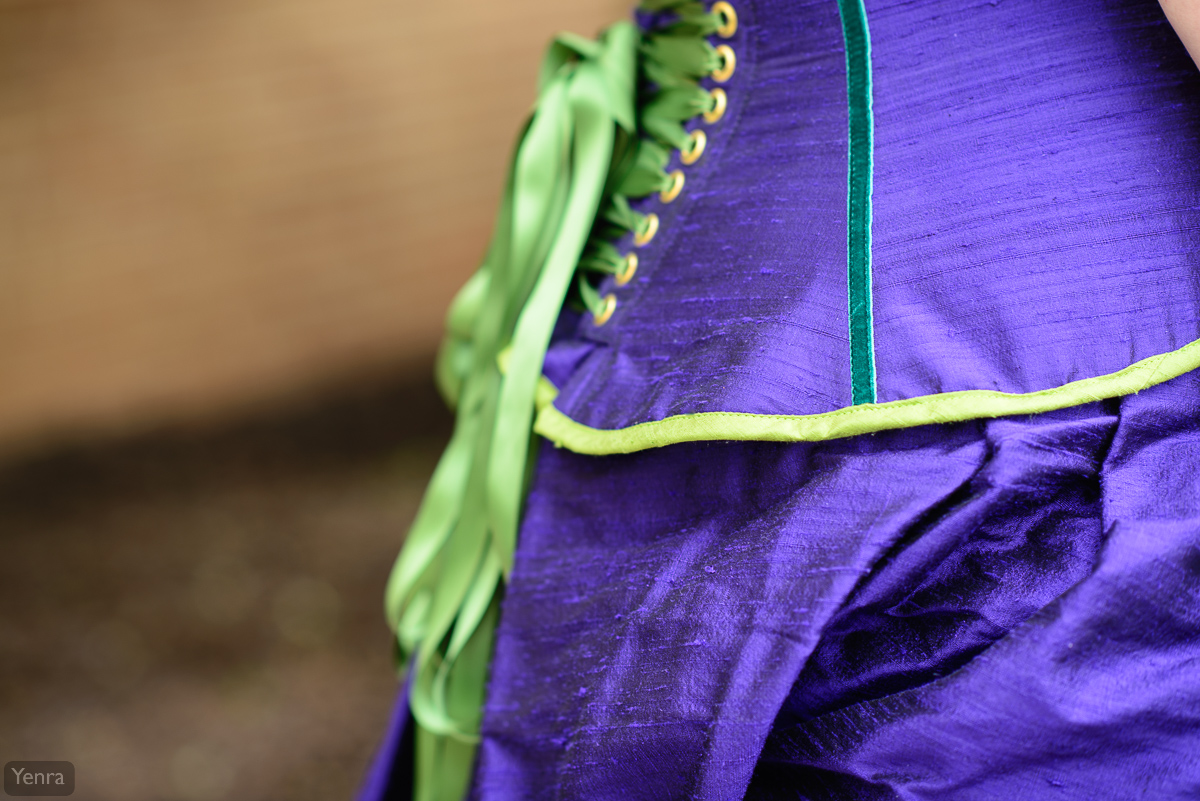
Green trim across purple fabric · Photograph: Yenra · Credit: Dress: KMK Designs; Worn by: Captain Swallow the Fabulush
Here, green trim crosses purple fabric and meets a laced edge. Part of the surroundings remains on the left. Notice what that quieter area contributes beside the color and texture. You might enjoy a detail filling the whole frame, or you might prefer a little space that helps you locate it.
A phone or the lens you already use is a good place to begin. Move closer gradually, and check that the feature you chose is in focus. If your camera struggles at a close distance, step back until it focuses comfortably. You can explore details at many distances; a macro lens is one possibility among others.
Make room for the people behind the details.
The credits here name the headpiece maker, dress maker, and wearer where those roles are supplied with each photograph. Those distinctions help people discover the work behind what they see. When photographing with someone, ask which features they would enjoy showing and how they would like the people involved to be credited.
A handmade object, a favorite garment, or a well-used possession can offer a starting point at home. Make one contextual photograph, then choose two details with different qualities. You might explore a repeated shape in one and a meeting of colors in the other. Let your own curiosity or your collaborator's preference guide the choices.
Try a context-and-details study.
- Choose something meaningful. Pick an object you enjoy, or ask a willing portrait partner which detail they would like to show.
- Make a contextual view. Include enough of the subject and setting to show where the details belong.
- Explore one feature. Find a comfortable focusing distance and decide how much surrounding space to include.
- Choose a second detail. Look for another shape, color relationship, or surface that adds something different.
- Compare and credit. Notice what each photograph reveals, invite your collaborator's preferences, and retain the supplied maker and wearer credits when sharing.
Keep a note about what became visible.
- What did the detail photograph help you notice?
- How did the contextual view change your experience of it?
- Which feature would you like to explore next?
Use the Details experiment in the field practice notebook, browse all Peacock Realness photographs, or study the Mermaid Sylveon headpiece detail. For another way to notice surfaces, continue with Noticing texture in a photograph.