Field notes · Look · Try · Compare
Noticing texture in a photograph
Look at stone, water, foliage, and fabric, then make a small study of familiar surfaces.
Photographs let us look closely at the appearance of surfaces: folds of cloth, marks on a wall, small leaves, or water crossing stone. Notice the details that make you want to linger. Then look at how those surfaces share the picture with a person or another object. A small study of texture can begin with something already beside you.
Let different surfaces share the picture.
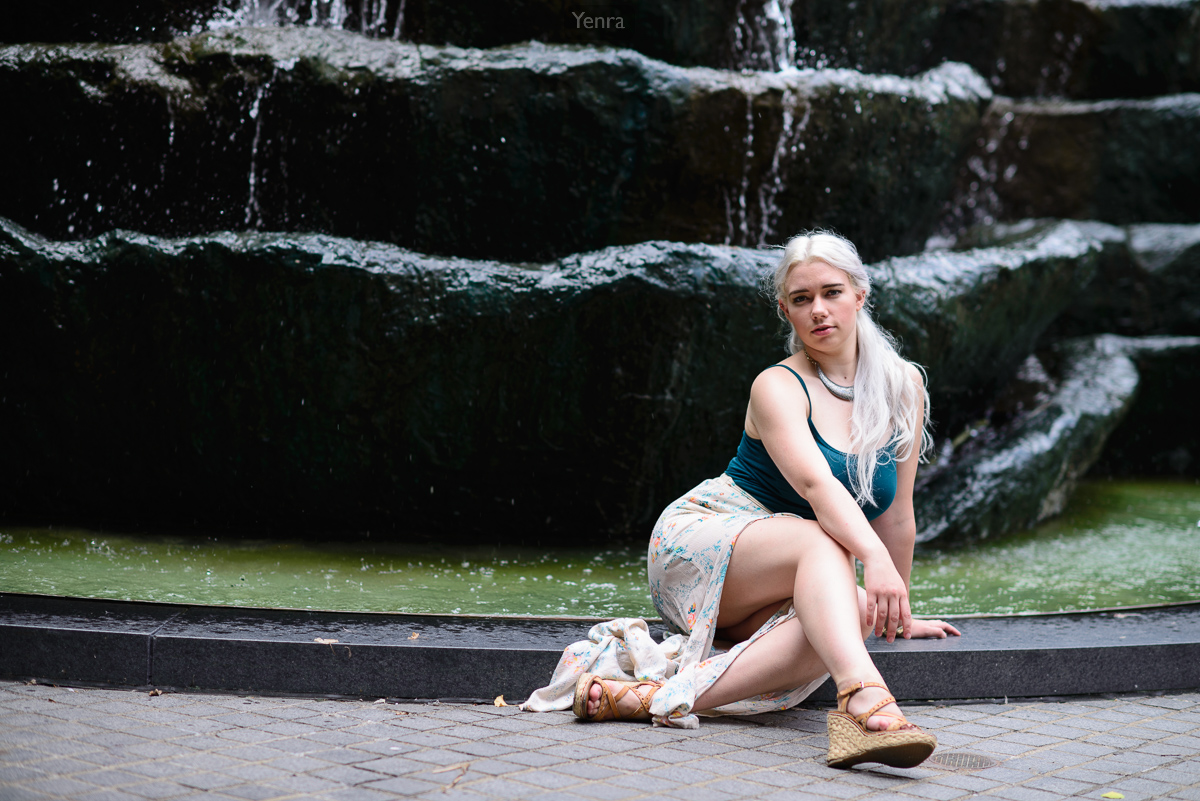
Portrait beside stepped stone and water · Photograph: Yenra
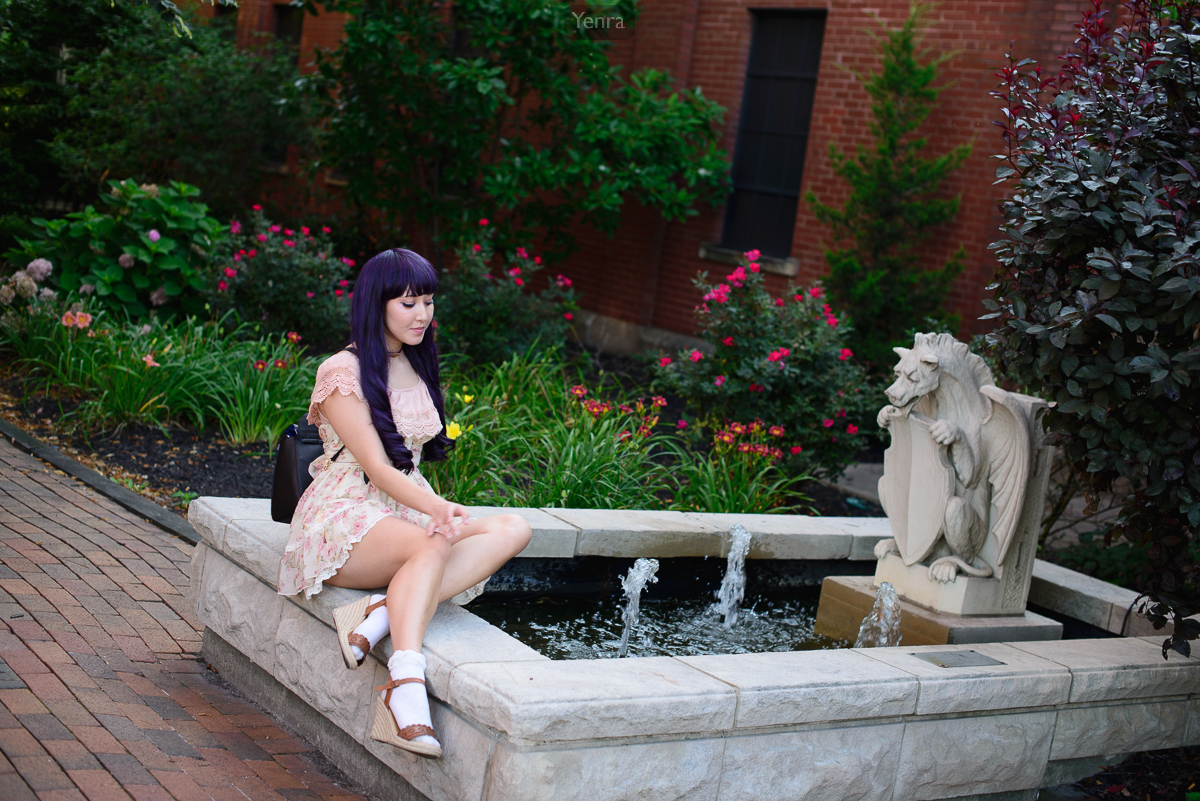
Portrait at a carved garden fountain · Photograph: Yenra
In the portrait beside the stepped fountain, bright water breaks across dark stone. The paving in front repeats smaller rectangular shapes. Clothing introduces another pattern and a different outline around the seated figure. Each area offers its own kind of detail, from the small bright marks of water to the broad dark shapes behind.
The garden fountain brings several surfaces closer together. Carved stone surrounds the water; leaves and flowers fill the space behind it; brick paving runs along one side. The person's patterned clothing joins this varied setting. Look at which surfaces remain easy to distinguish and which merge into larger patches of color.
These photographs invite more than one reading. You might follow the falling water, look at the carving, or begin with the person. The texture you notice can become a way into the whole scene. Try naming a few visible qualities—rough-looking, folded, repeated, flowing—then look again at the relationships between them.
Compare fabric with a marked surface.

Portrait beside a painted brick wall · Photograph: Yenra
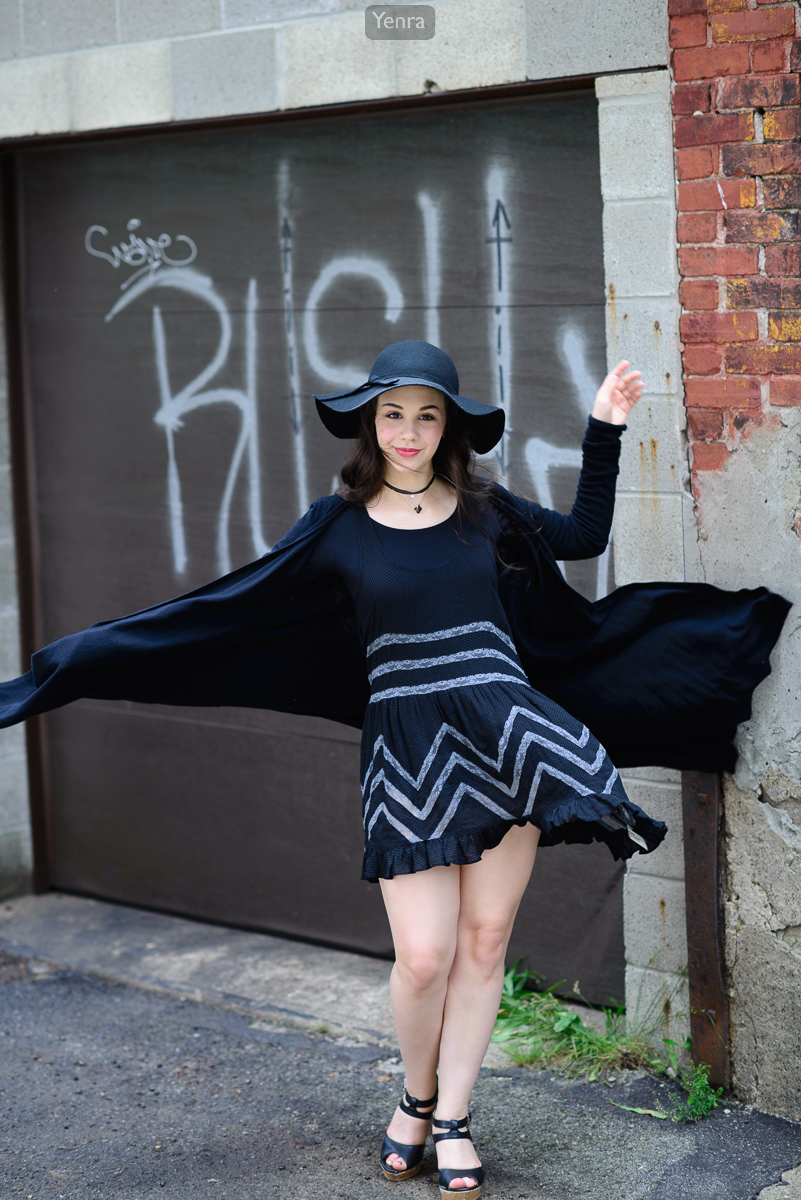
Fabric and pattern by a painted doorway · Photograph: Yenra
The painted wall contains brick edges, large curved marks, and areas of uneven color. Dark fabric extends away from the figure in a smoother-looking shape. Both occupy substantial parts of the picture, so you can compare their outlines as well as their surface detail. Notice where the fabric's edge meets the wall.
In the doorway portrait, repeated stripes and zigzags cross the clothing. The larger painted marks behind them have a different scale. The outstretched fabric adds broad folds, and the surrounding masonry adds another set of shapes. Let your eye move between a small repeated detail and a larger area of the picture.
A surface can be interesting because of its own detail or because of what sits beside it. When you make a photograph, try giving one texture more room, then bringing a second surface into the composition. Compare the resulting relationships and keep the combinations you enjoy.
Choose how much detail to include.
A wider view shows where a textured surface belongs. A closer view can give its small variations more of the picture. Try both as separate photographs, then compare what each lets you notice. You might prefer the context of a whole object, the detail of one small area, or a sequence that includes both.
Familiar objects are useful subjects: a folded cloth, a leaf, a piece of paper, or a stone. Turn the object or change your viewpoint slightly and look at what becomes more apparent. Work with the details you can see, and let them suggest your next photograph.
Make a small surface study.
- Choose something familiar. Find an object whose surface interests you, such as a leaf, cloth, or stone.
- Include its surroundings. Make a photograph that shows where the object sits and how its surface relates to the space around it.
- Make a closer view. Give a small detail more room in a new photograph. Notice what you include at the edges.
- Add a contrasting surface. Try the object beside something with a different appearance, such as folded fabric beside smooth paper.
- Compare the three photographs. Choose a detail or relationship you enjoy and make one more variation based on it.
Keep the details that catch your eye.
- Which small detail first drew your attention?
- What does the wider view contribute to your understanding of the surface?
- Which two surfaces make a combination you would like to explore again?
Record your discoveries in the field practice notebook and explore the complete Pittsburgh in July gallery. For related choices, continue with portrait framing or portrait backgrounds.