Field notes · Look · Try · Compare
Exploring portrait framing
Choose what setting, clothing, hands, and expression contribute, then try wider, intermediate, and close views.
Framing is a way to choose what a portrait shares with its viewer. A whole figure can bring clothing, stance, and setting into the picture. A closer view can give a hand, an expression, or a small detail more room. Begin with something you want to show, then explore how much of the surrounding scene helps you show it.
Compare a whole figure with a close view.
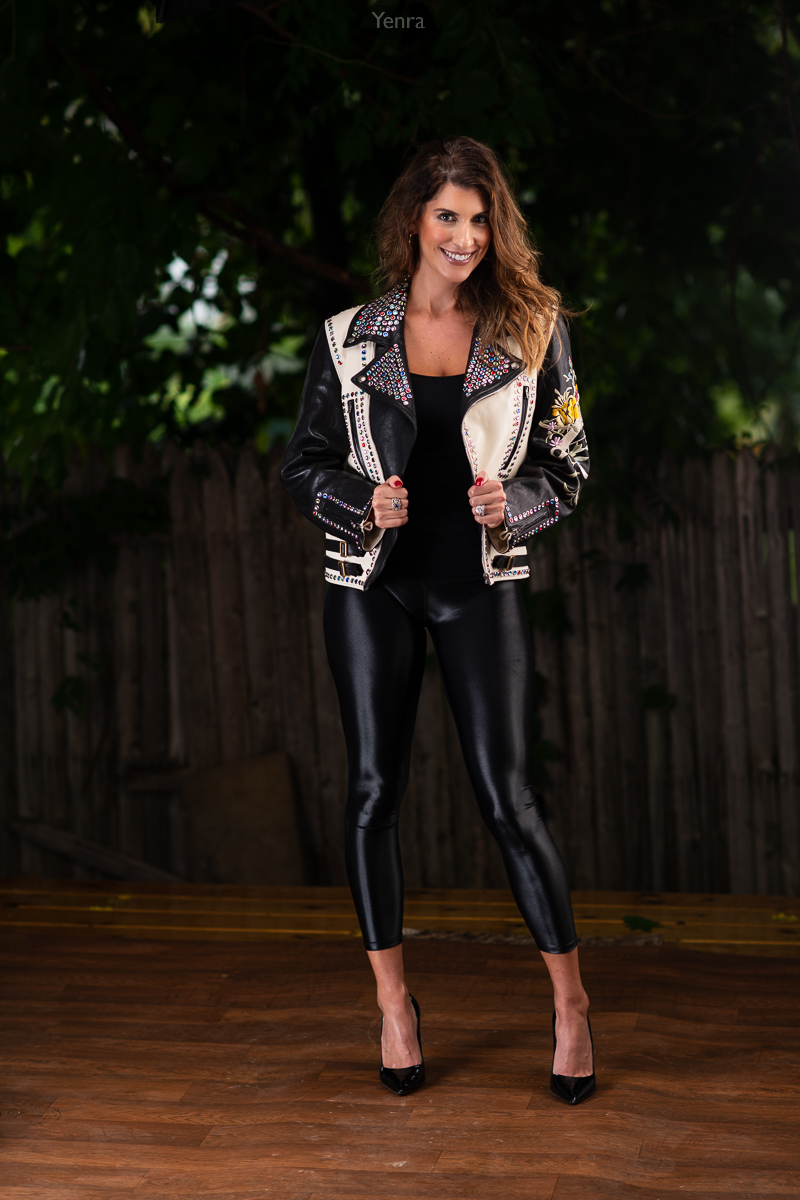
Fashion Photoshoot · Photograph: Yenra
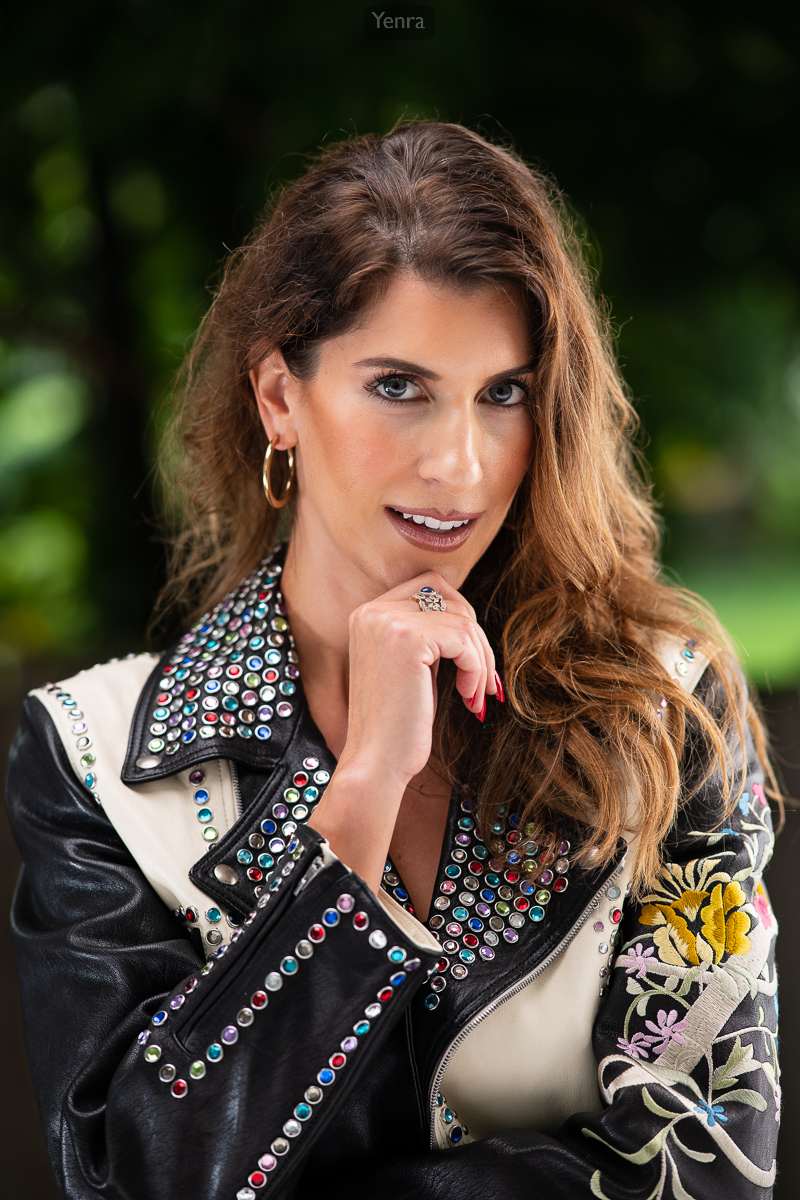
Fashion Photoshoot · Photograph: Yenra
The full-length photograph includes the jacket, trousers, shoes, hands, and floor. Foliage and a fence surround the person. The stance and the space around it are part of how you encounter this portrait, alongside the expression and clothing.
The close view brings the face, hand, hair, and decorated jacket into greater prominence. The hand near the chin gives the lower part of the portrait a point of interest, while the clothing's small details become easier to examine.
These are two original photographs with different poses as well as different framings. Compare the attention each one invites: the whole figure within a place, or a closer encounter with expression and detail. You can enjoy both and choose between them according to what you want a particular photograph to communicate.
Let clothing and hands have a part to play.
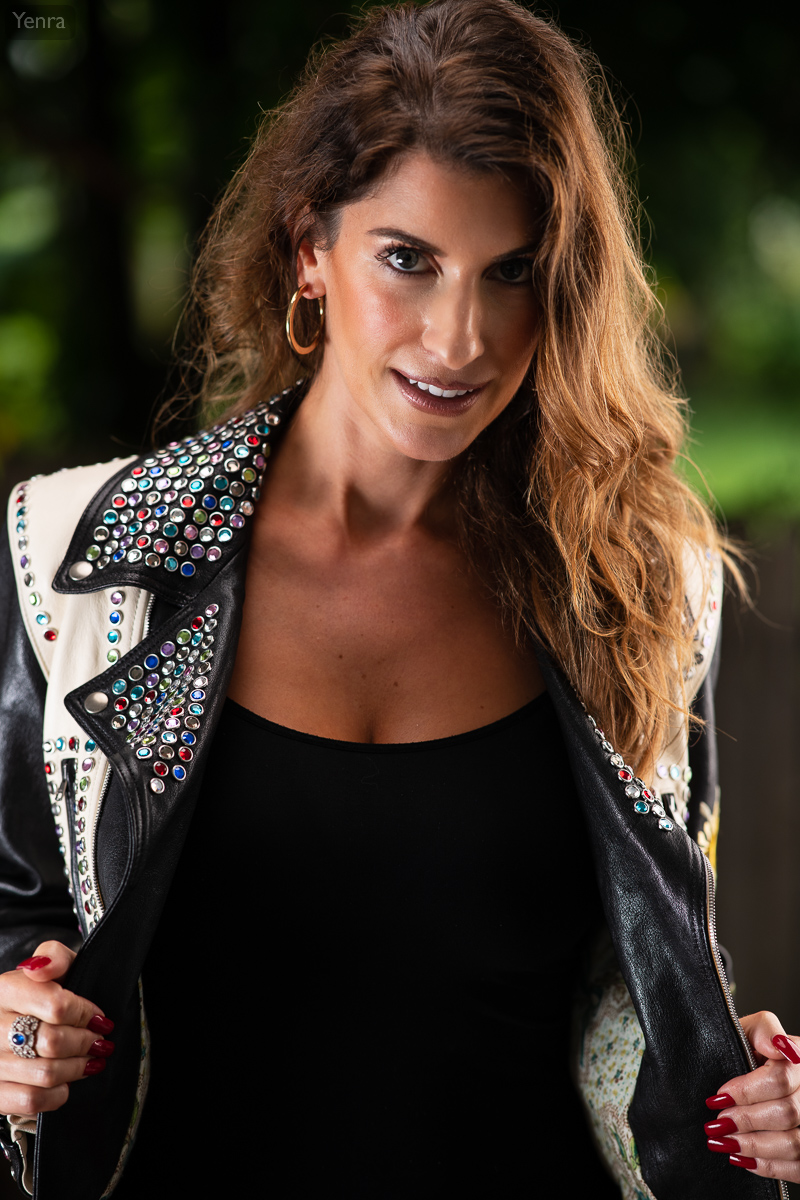
Fashion Photoshoot · Photograph: Yenra
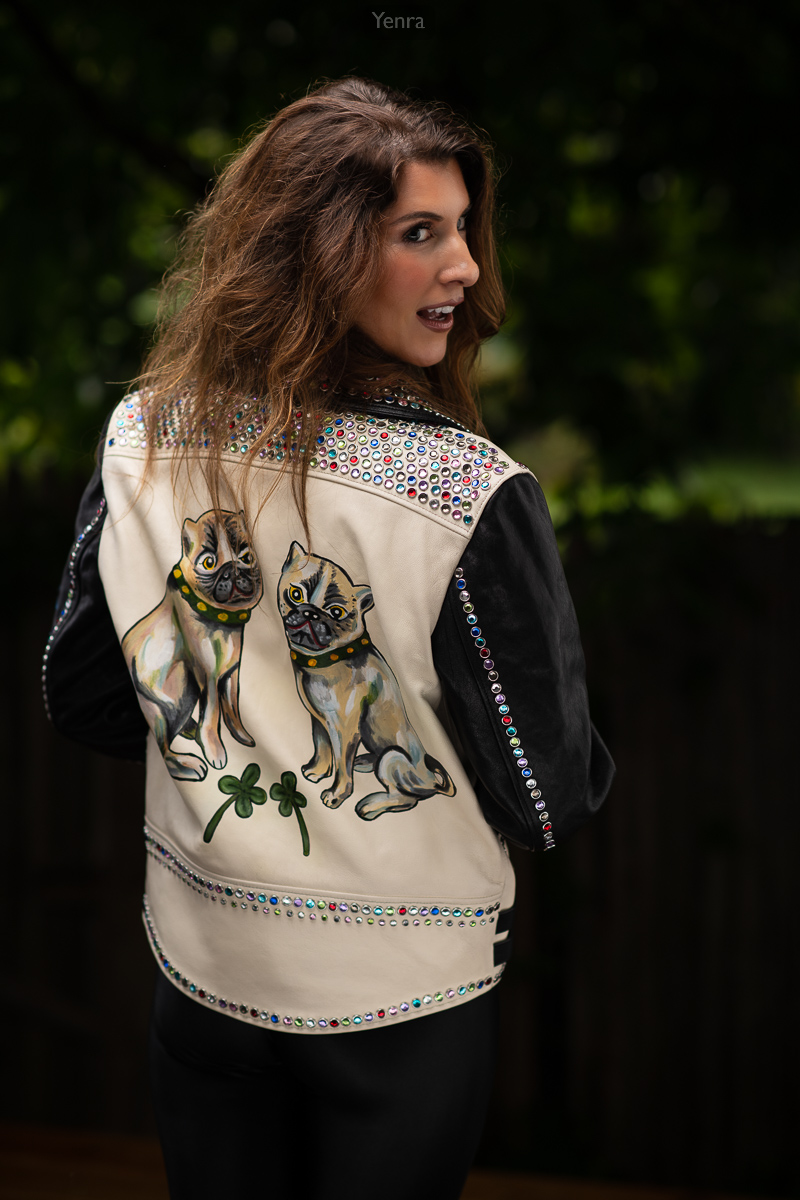
Fashion Photoshoot · Photograph: Yenra
The intermediate view includes the face, upper body, and both hands holding the jacket. That combination gives the clothing and the action of the hands a shared role. Look at how the jacket's edges lead toward the face, and how much of the lower frame the hands occupy.
In the turned portrait, the back of the jacket becomes a large part of the picture. Its illustrated dogs and decorative details are visible alongside the face turned toward the camera. Changing orientation offers another way to tell the clothing's story.
When you photograph someone, ask what they would like to include. It might be a costume detail, a favorite jacket, a prop, or the place itself. Build a frame around that interest and let the person help decide how to show it.
Look around the edges before you take the picture.
Give the whole frame a brief look. Notice where hands, hair, clothing, or nearby objects meet its boundaries. Try leaving a little more room, then try a closer view. Each version can reveal something about the balance you enjoy.
Also look at the surroundings that remain. In these portraits, foliage and a fence provide recognizable context in the wider views and smaller areas of color in the closer ones. Your own setting may contribute a window, a wall, or a place the person cares about. Include enough to serve the photograph you are making.
Try three portrait framings.
- Choose a subject and an interest. Work with a willing portrait partner and ask what they would enjoy showing. Use a phone or any camera you like.
- Include the person and some surroundings. Make a comfortable full-length or wider portrait. Notice the stance, clothing, and setting together.
- Try an intermediate view. Choose a framing that brings the face, hands, or a clothing detail forward. Make room for the elements you care about.
- Explore a close view. Ask your partner which expression or detail they enjoy. Adjust your framing and make another photograph.
- Read the set together. Pick a version for showing the place, one for a gesture or detail, and one for an expression. A single photograph may serve more than one purpose.
You can try the same exercise with an everyday object: show it in its surroundings, move to a closer relationship, then make a detail photograph. Keep the three originals so you can revisit the choices each one contains.
Choose what the portrait shares.
- What can you discover in the wider view that changes in the close one?
- Where do hands or clothing add something you want to keep?
- Which framing feels right for the idea you and your partner want to explore?
Use the field practice notebook to keep your observations, or browse the complete Home Studio Fashion Photoshoot. Continue with the wide-angle portrait lesson, gesture and expression, and the original lens notebook for related ideas.