Field notes · Look · Try · Compare
Exploring gesture and expression
Look at hands, gaze, and small changes between frames, then explore a short sequence together.
A hand can give a portrait a direction. A glance can lead beyond the frame. A turn, a pause, or the way someone holds a prop can suggest a different relationship with the viewer. A short sequence gives you room to discover those possibilities together.
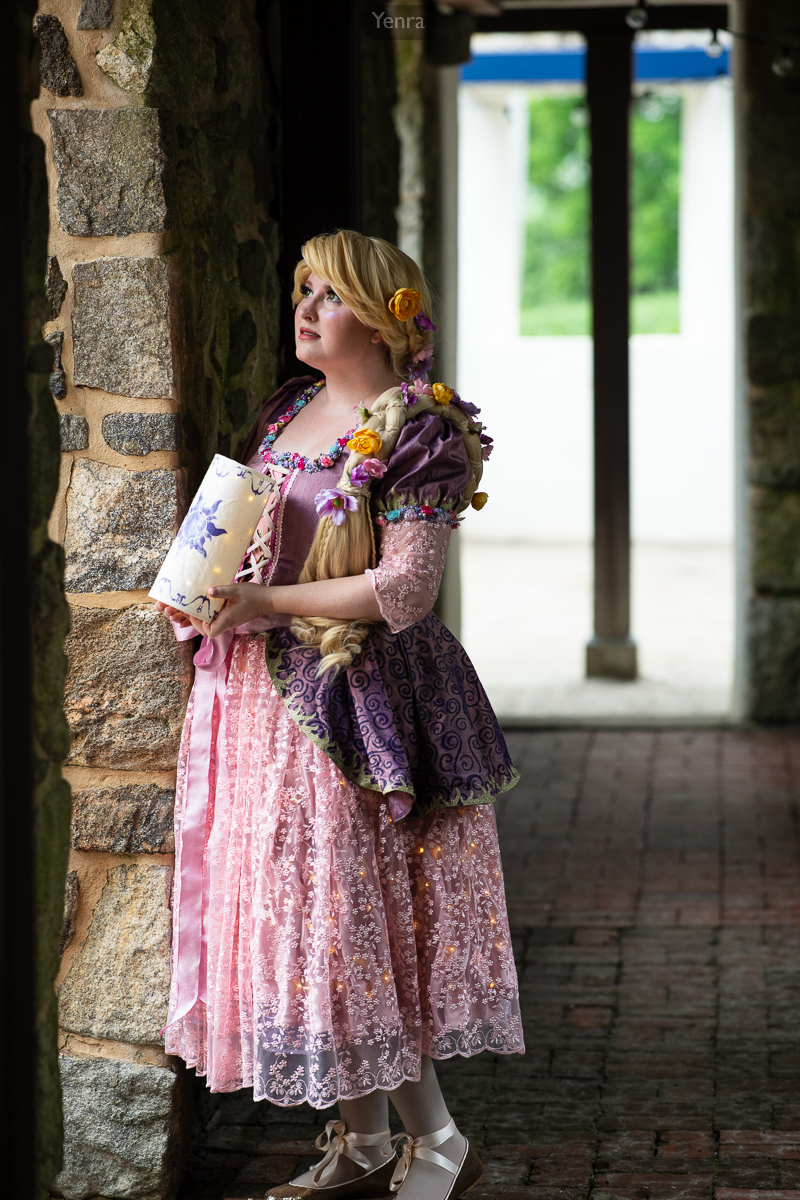
Rapunzel, Tangled · Photograph: Yenra
Begin with what the hands are doing.
In this portrait, the lantern sits in front of the figure, held with both hands. It gives the hands something to do and introduces a shape that echoes the pale and purple details of the costume. The upward gaze leads attention away from the lantern toward the face and the space above.
When you look at a portrait, follow the hands before reading the whole pose. Are they holding, touching, resting, or reaching? How does that action connect to the face? A simple action can give a person a comfortable starting point and give the photograph a relationship to explore.
Compare nearby frames with curiosity.
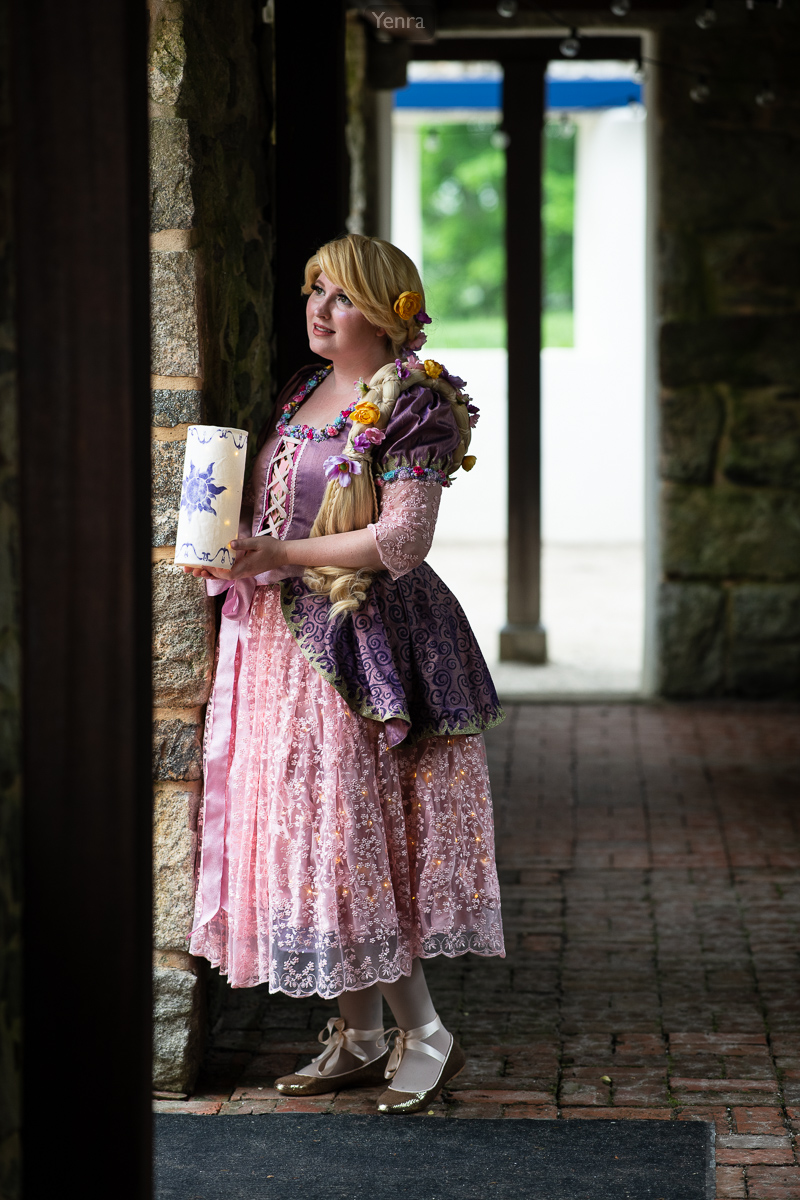
Rapunzel, Tangled · Photograph: Yenra
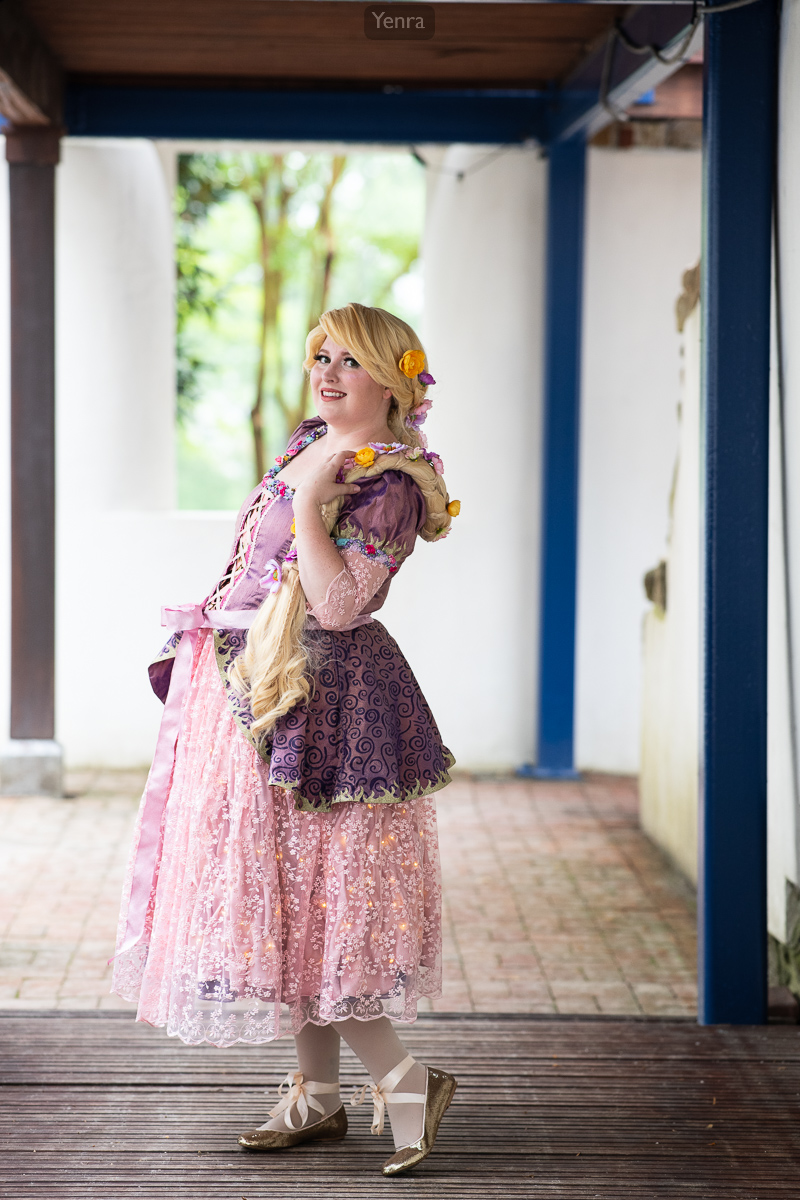
Rapunzel, Tangled · Photograph: Yenra
The first of these related frames keeps the lantern in front and shows a smile with the gaze directed upward. In the second, the figure turns toward the camera, a hand comes toward the shoulder, and the stance changes. Each version offers a different way to meet the person in the picture.
The framing and background also change between these photographs. Read them as different expressive possibilities. You might enjoy the lantern as a storytelling detail in one frame and the direct connection with the viewer in another. Keeping more than one favorite can help you recognize what each contributes.
For a comparison of your own, make a few photographs from a similar camera position while exploring one small action. Then allow a larger change of stance or framing. That gives you both close variations and room for a new idea.
Let a gesture travel through the frame.
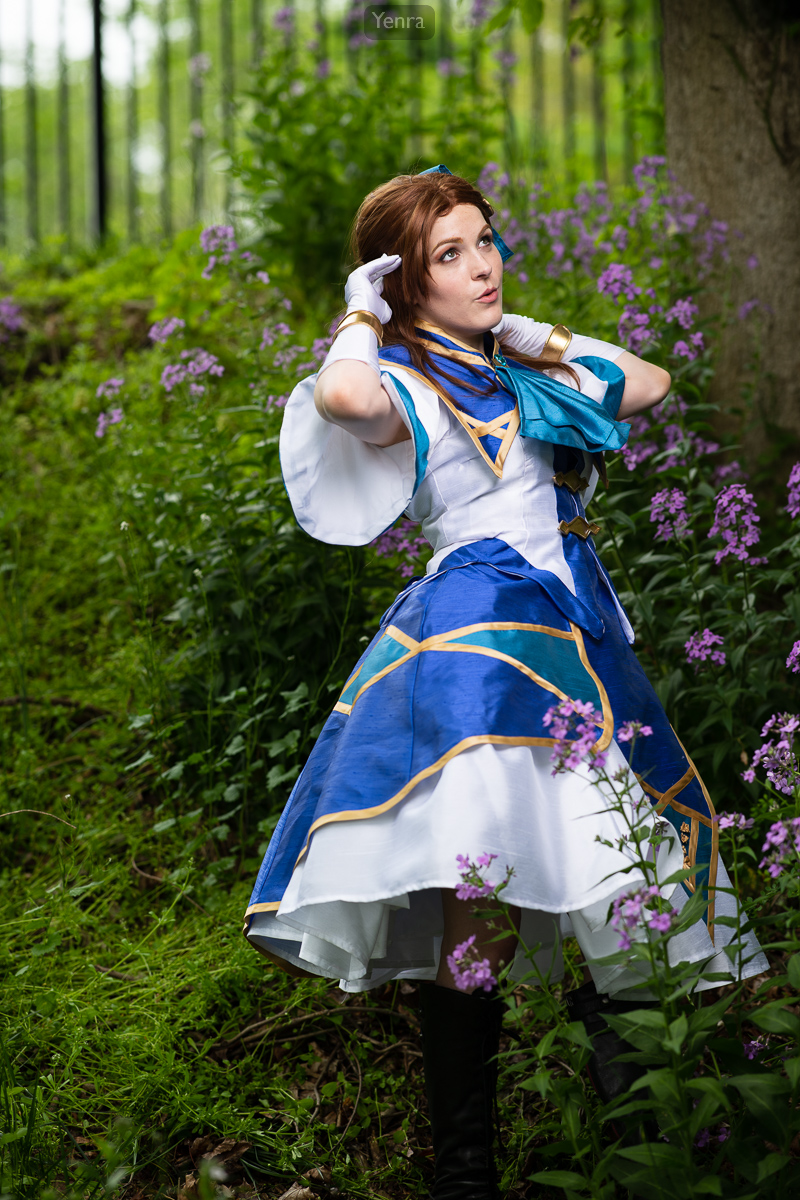
Katarina Claes, I Reincarnated into an Otome Game as a Villainess · Photograph: Yenra
Here, the raised hands bring attention toward the head, while the gaze continues upward. The angles of the arms create spaces around the face. The blue costume and purple flowers supply another set of relationships for the eye to follow.
Notice the shape of a gesture as well as the action it suggests. A hand can continue a line in clothing, point toward a detail, or create a pause beside the face. Invite the person you are photographing to explore an idea in a way that feels natural to them. Their own movement and interpretation can bring something you would not have planned.
Try a short sequence together.
- Agree on a starting idea. Choose a comfortable stance, a prop, or a small action the person enjoys. Ask what they would like the photographs to convey.
- Make a quiet starting frame. Give them time to settle. Notice the relationship between hands, face, and any object they are holding.
- Invite one small variation. They might change where they look, turn slightly, or explore another way of holding the prop. Let them choose a comfortable range of movement.
- Leave room for a pause. Relax, talk, and take another photograph when everyone is ready. A small break can make the next idea easier to find.
- Review the sequence together. Ask which versions they enjoy. Choose a gesture to revisit or let a new idea lead the next few frames.
You can practice with a self-timer too: try a few comfortable variations, review them, and keep the ones that feel expressive to you. The aim is to build a vocabulary of possibilities you can return to.
Ask what each frame adds.
- Where does the gaze lead your eye, and how do the hands support that direction?
- What does the prop or gesture help communicate?
- Which version feels most connected to the idea you explored together?
A sequence can contain several useful answers. Save a few and write a short note about why you like each one in the field practice notebook. Explore the complete Ellicott City 2019 gallery and the group gestures in Otakon 2019. For the conversation around a session, continue with Working together for a portrait and A pause between poses.