Field notes · Look · Try · Compare
Noticing buttons in a portrait
Follow the small shapes of buttons, compare their spacing and brightness, and see how they belong within the whole portrait.
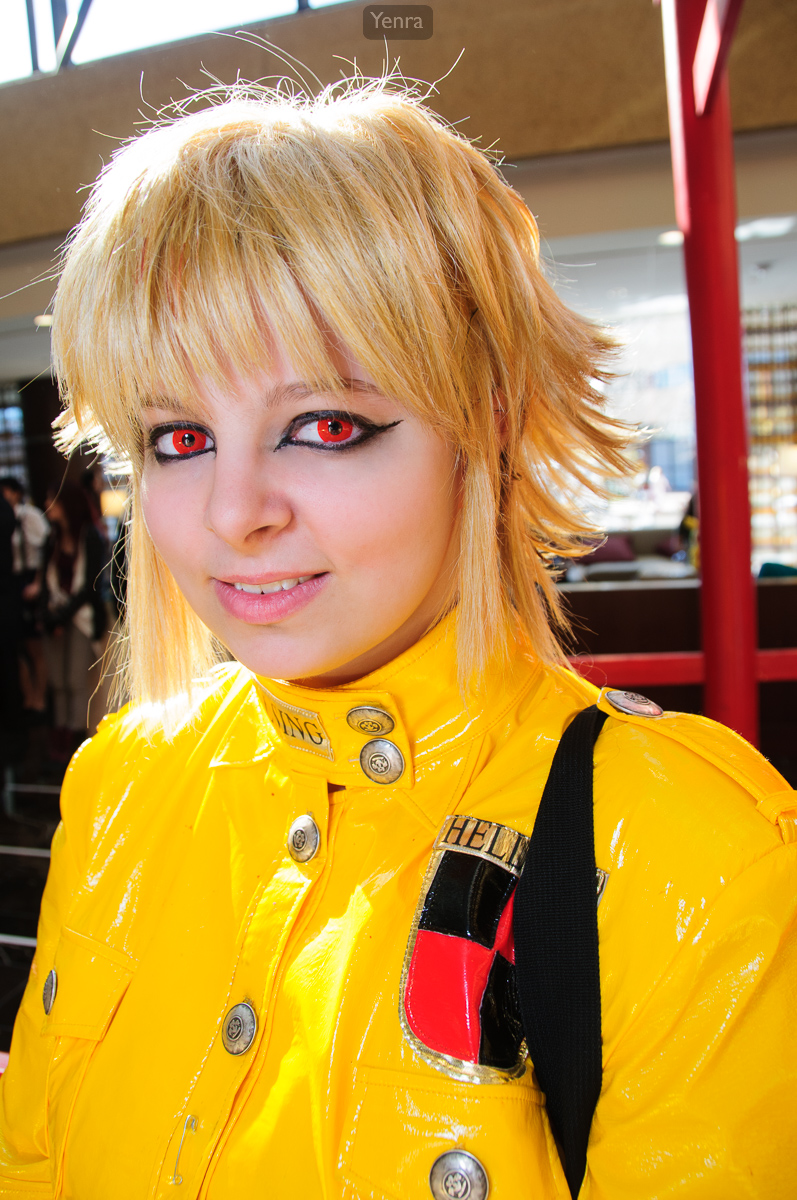
Seras Victoria, Hellsing · Photograph: Yenra
Captured: 2011:11:18 13:46:13
Small clothing details can offer a useful way into a portrait. Buttons may repeat down a jacket, gather at a collar or interrupt a broad area of fabric. Following a few of those shapes can reveal a pattern you had passed over while looking at the face.
These Anime USA 2011 photographs invite you to compare buttons against bright and dark clothing, then return to a wider paired portrait. Begin with what you can see: circles, spacing, edges and brightness. An ordinary detail can become the starting point for a new observation.
Find small shapes on a bright surface
Round silver-colored buttons stand out against the bright yellow Seras Victoria costume. At the collar, front and pockets, their dark centers and brighter edges give the eye small shapes to find within a much larger yellow area. Some sit close together; others are farther apart.
Look at two or three buttons, then notice the surface around them. The yellow clothing has broad bright areas of its own, while the buttons introduce smaller circles. You can describe that difference without deciding what the buttons are made from or how the costume was constructed.
Try a brief note such as “small dark circles within bright yellow.” Then return to the face and whole portrait. The aim is to discover how a detail belongs in the picture, rather than letting the detail replace everything else you enjoy about it.
Follow a row against darker clothing
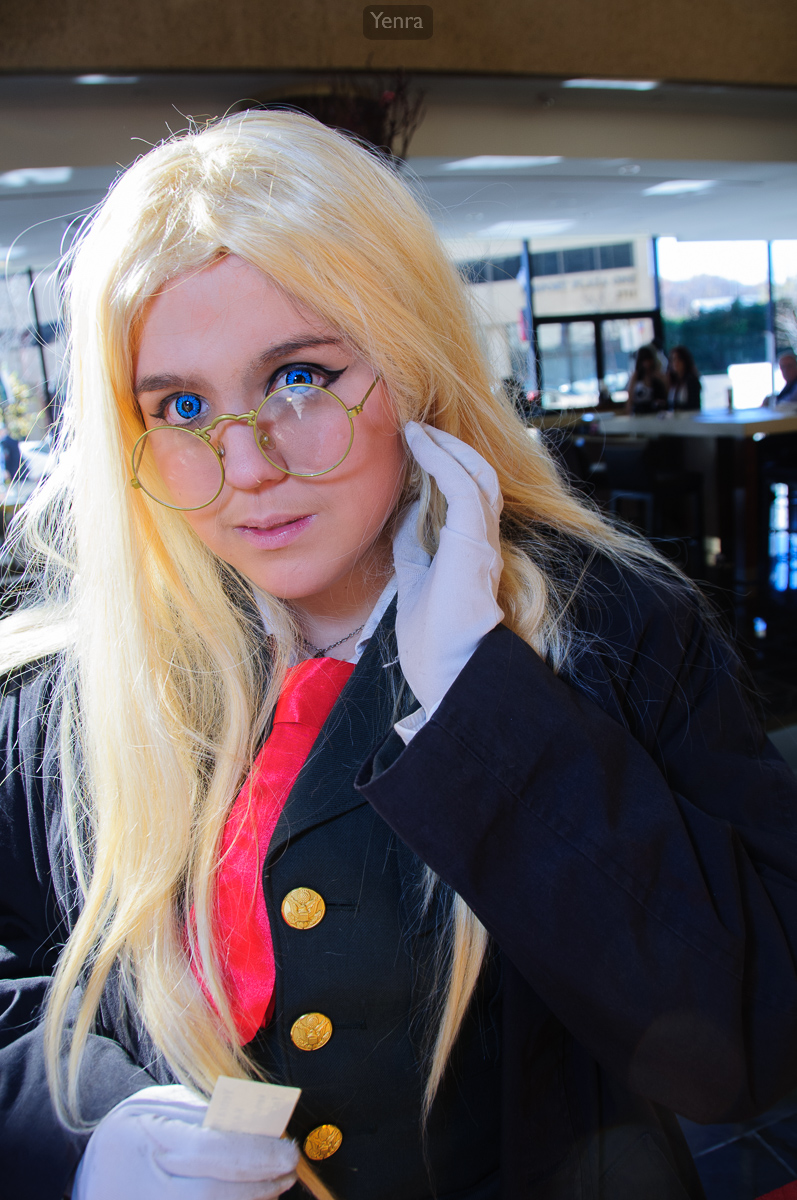
Gold-colored buttons on a dark jacket · Photograph: Yenra
Captured: 2011:11:18 13:54:16
Three gold-colored buttons form a descending row on the dark jacket beside a vivid pink tie. Their color and brightness separate them from the fabric. Repetition gives the eye a short path through the lower part of the portrait while the face and glasses remain prominent above.
Compare this arrangement with the yellow costume. The surrounding colors, the row of circles and the amount of visible clothing differ. Those changes give you several relationships to notice; you do not need to choose a single winning example.
In one of your own portraits, follow a short row of repeated details and see where it leads your attention. Look again at the complete image before deciding what matters. A small pattern can support the portrait while remaining a modest part of the frame.
Return to the wider portrait
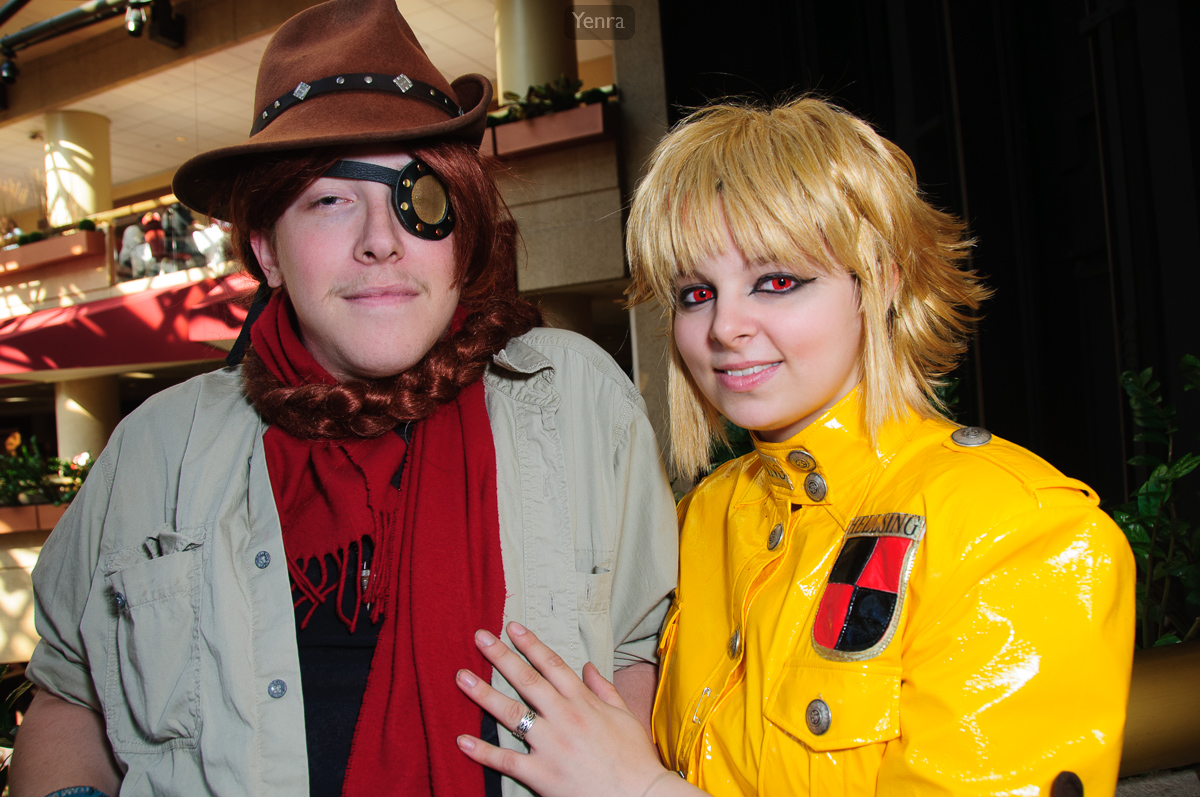
Buttons and contrasting fabrics in a paired portrait · Photograph: Yenra
Captured: 2011:11:18 13:37:06
The horizontal paired portrait includes buttons on both a pale shirt and the yellow costume. Their smaller shapes now sit within a wider arrangement of two faces, clothing, a hand gesture and the surrounding space. The details contribute without carrying the whole picture.
Move between this image and the closer yellow-costume portrait. What becomes easier to see at each scale? The closer view gives the buttons more room, while the paired view shows their place among other clothing and gestures. Keep both original frames intact as you compare.
If you make a new portrait, review the whole image and then one small detail within it. You might try a closer framing as a separate photograph, or keep the wider view because it includes a relationship you enjoy. A useful observation can be as simple as noticing what each version makes easier to see.
Look back with curiosity.
- Which button shapes catch your attention?
- How do their spacing and brightness relate to the fabric?
- What do you notice when you return to the whole portrait?
Keep exploring
Noticing circles in a photograph · Noticing repeated motifs in a portrait · Noticing shine in a photograph
Browse the complete Anime USA 2011 gallery. Return to a photograph that interests you, follow its original neighbors, and see what else you notice. Your next useful experiment can begin with a small detail that catches your attention.