Field notes · Look · Try · Compare
Noticing contrasting textures in a photograph
Compare the surface cues of sparkling decoration, soft fibers, glossy gloves and cloth.
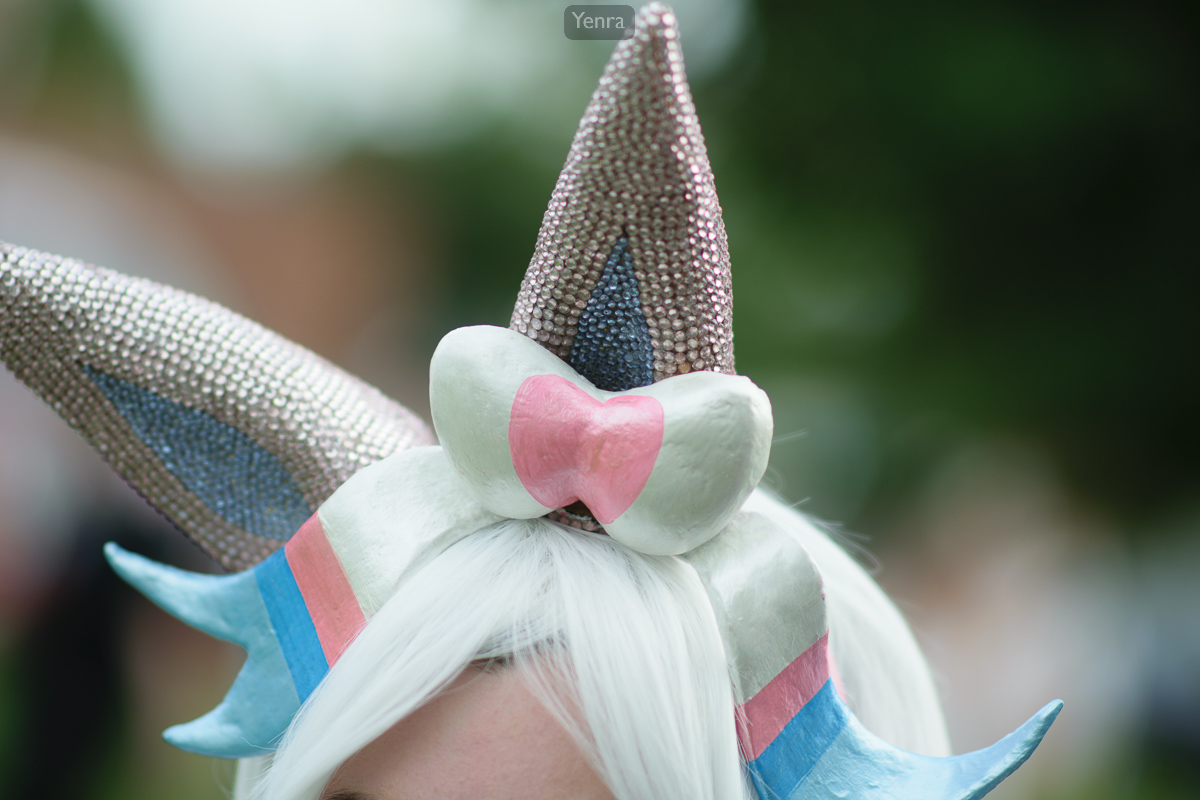
Sylveon, Armor, Pokemon · Photograph: Yenra
Captured: 2015:06:19 17:56:44
Two surfaces can make each other easier to notice. A scattering of small highlights may sit beside soft fibers, or a glossy glove may stand out against quieter cloth. Begin with a finished photograph and compare what you can see in neighboring areas. You can learn a great deal without needing to name every material.
Compare small highlights and soft fibers
The pointed shapes in this headpiece carry many small reflective decorations. Below them, soft white fibers form a different kind of edge. The pale central shape and pink bow offer smoother-looking areas between those two textures.
Let your eye travel from the decorated point toward the white fibers. The tiny marks are individually visible in some places and gather into a larger sparkling surface in others. The fibers describe their shape through thin strands and softer boundaries. Each area gives you a different way to read the object.
Try describing one contrast in a short sentence: “Small bright marks sit beside soft strands.” Then look for the part of the photograph that makes that sentence clearest. This small act of comparison can help you decide what to emphasize in a photograph of your own.
Look for a broad sheen beside cloth
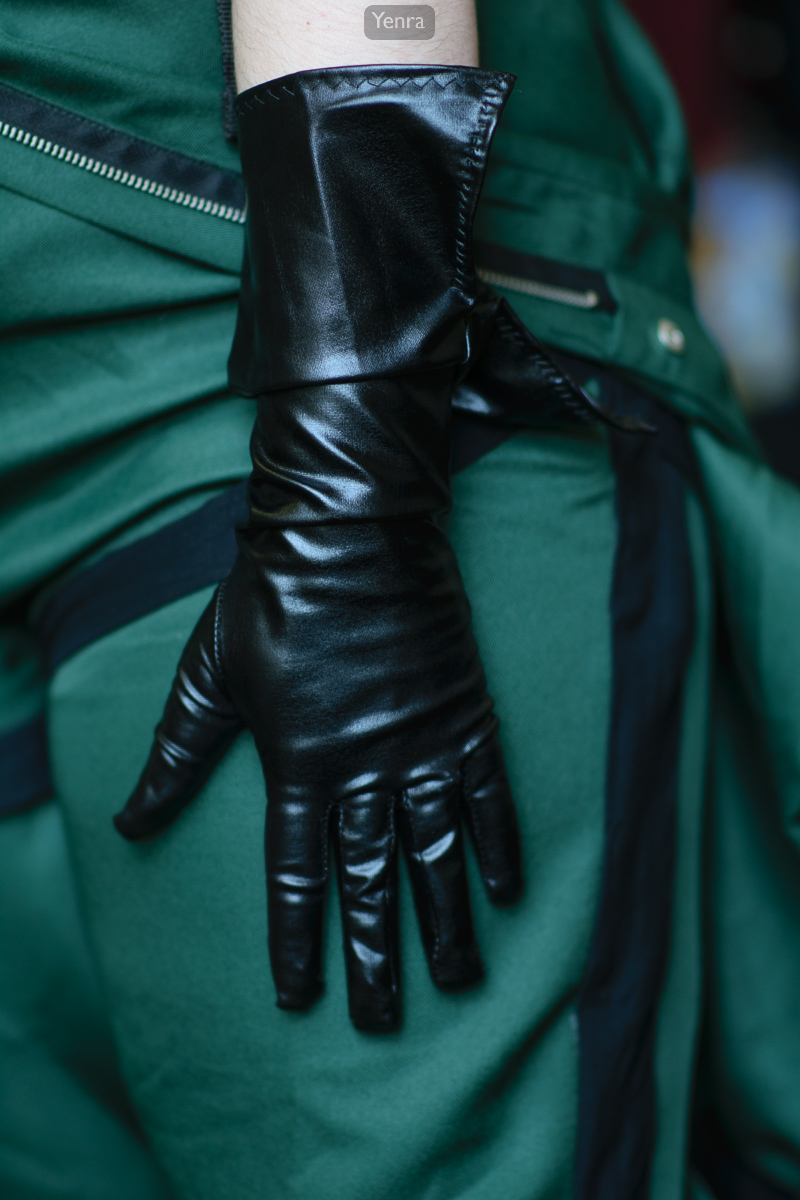
Green Attire with Black Leather Gloves · Photograph: Yenra
Captured: 2015:06:20 13:09:25
The black glove has broad highlights along its folds, fingers and cuff. The green cloth behind it has a quieter appearance, while the zipper adds a row of small, more sharply defined marks. Three different surface cues share a close frame.
Compare the glove’s brightest area with a nearby fold in the cloth. Notice how the highlight follows the glove’s shape and how the surrounding darker areas help you see it. You might find that the contrast is most useful at an edge where the two surfaces meet.
For a small experiment, place two familiar objects with different surfaces beside each other, or photograph a detail your portrait partner would like to show. Try a slight change of viewpoint. Compare the resulting pictures and keep the one that makes the relationship you enjoy easier to see.
Follow changes across a sleeve and collar

Sora (Final Form) from Kingdom Hearts 2 · Photograph: Yenra
Captured: 2015:06:20 15:35:37
The silver-colored sleeve changes brightness across its wrinkles and patterned area. Dark trim provides another boundary, and the pale folded collar has a different distribution of light and shadow. These surface relationships remain visible within a portrait that also includes the face and gesture.
A texture study can be part of a wider picture. Look at how much surrounding information helps you understand a detail. A close frame may invite attention to a surface; a wider one can show where that surface belongs in the outfit.
These observations describe the finished photographs. They can suggest experiments without establishing the exact materials or how the original light was arranged. In your own work, compare a close view with a little more context and ask which one communicates the surface relationship you want to remember.
Keep one useful comparison rather than trying to describe everything at once. “Broad sheen beside soft cloth” or “small highlights beside fibers” can be enough to guide your next look. The texture lesson offers more ways to explore the marks and edges that make a surface visible.
Look back with curiosity.
- What makes these surfaces look different?
- Where does the contrast read most clearly?
- Which small change would you like to explore?
Keep exploring
Noticing texture in a photograph · Noticing shine in a photograph · Noticing where a photograph is sharp
Browse the complete Anime Mid-Atlantic 2015 gallery.