Field notes · Look · Try · Compare
Noticing shadows in a photograph
Explore the direction and shape of cast shadows, and try giving them room in your photographs.
A shadow gives a subject another shape in the photograph. It may stretch toward an edge, cross an open area, or echo a gesture. Following it can help you discover a part of the composition that is easy to pass over at first glance.
Follow the shadow away from the subject
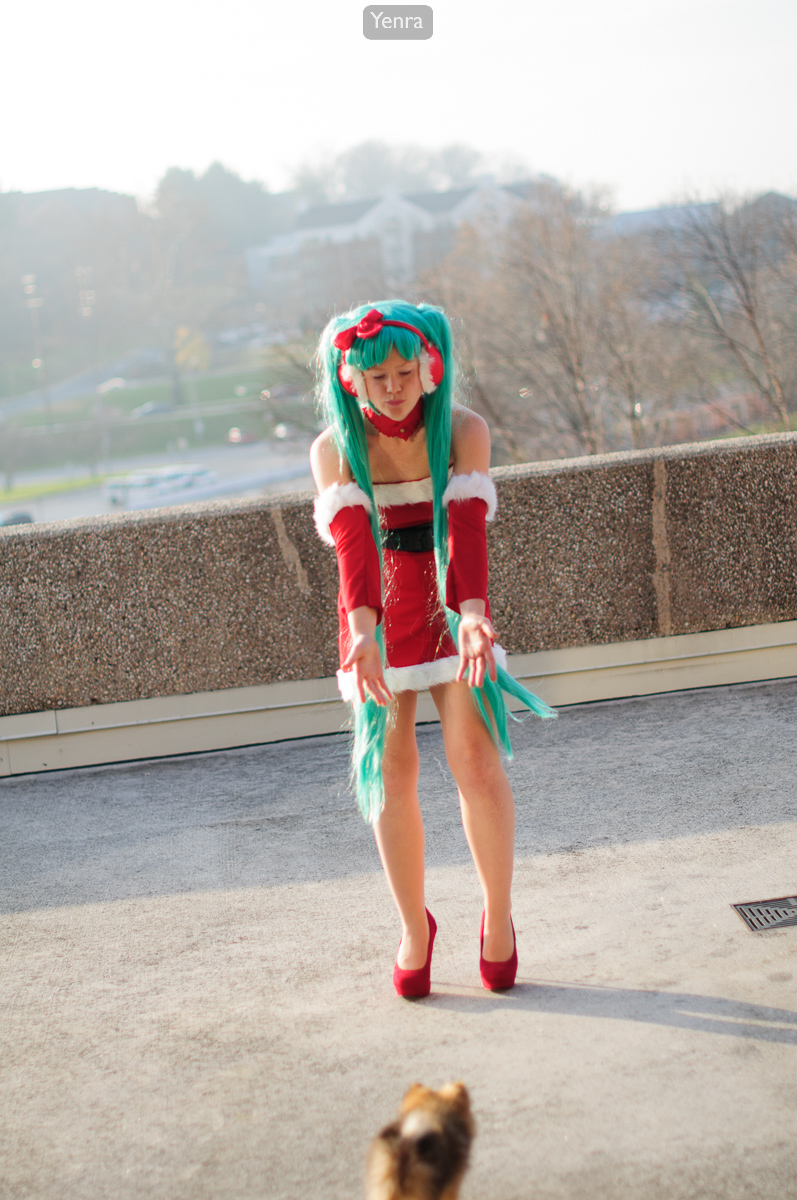
Christmas Miku · Photograph: Yenra
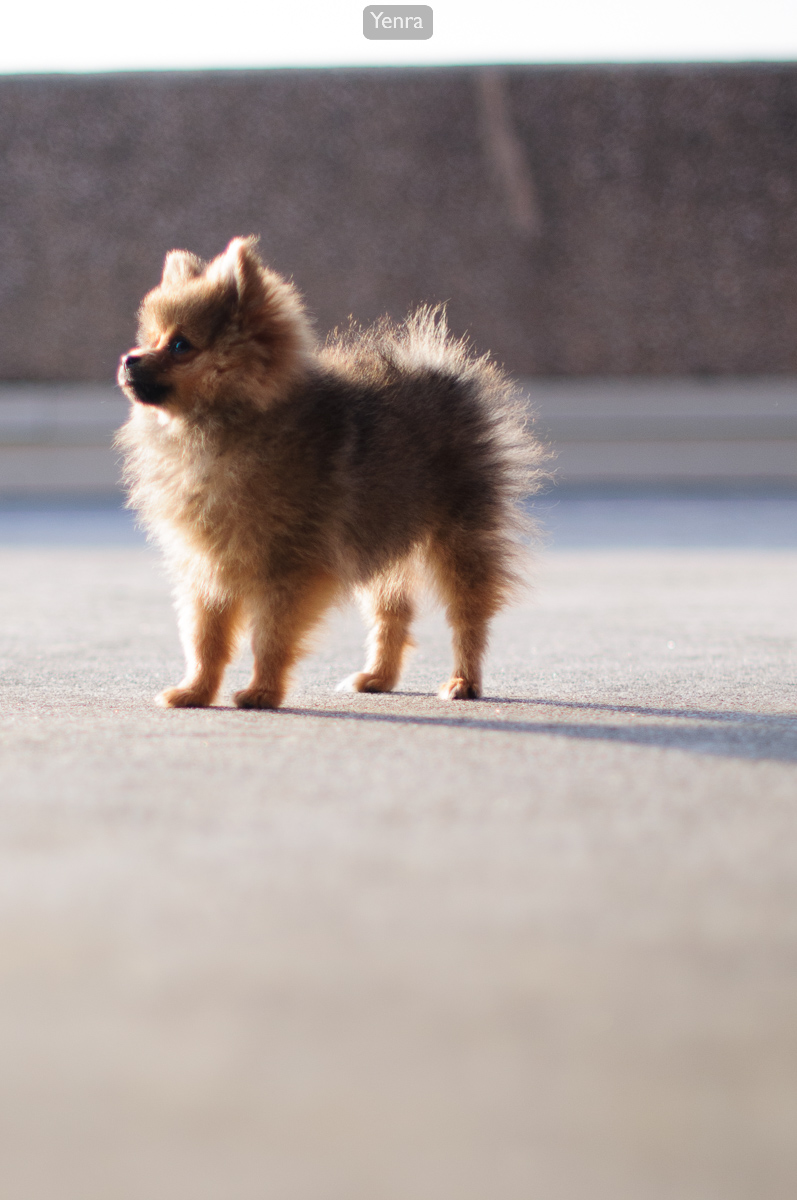
A dog and its shadow · Photograph: Yenra
In the first portrait, a shadow begins at the feet and extends toward the right edge. In the dog photograph, the paws meet a narrow shadow running along the paving. Look at each subject first, then follow the darker shape across the ground. Where does it leave the picture?
The photographs give these shadows different amounts of room. The first includes a dog at the lower edge; the second gives more space to the paving around the standing dog. You can notice how the subject, its shadow, and the surrounding space work together while enjoying each photograph as a whole.
Look at the shape along the ground
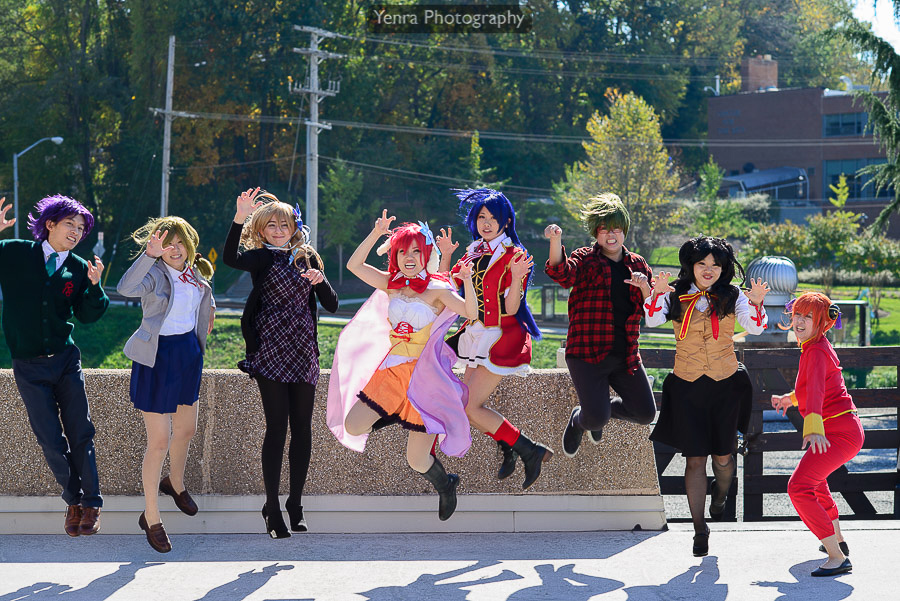
A group and their shadows · Photograph: Yenra
The group photograph has another collection of shapes along its lower edge. Several people are airborne, while their shadows remain visible on the paving. Hands, arms, and clothing give those outlines small variations. Try matching a shadow to the person above it, then look at the spaces between neighboring shadows.
Some outlines continue beyond the frame. That gives you a useful composition question: how much of a shadow would you like to include? You might enjoy a complete shape, or a shape that leads your eye toward an edge. Both offer possibilities to explore.
Leave room for a shadow
Start with an everyday object beside a window or in another place where it casts a visible shadow. A cup, a plant pot, or a small box offers plenty to observe. Make one view that includes the object and part of its shadow, then move your camera to change their relationship within the frame.
Look for the place where the object meets the surface, the direction the shadow takes, and the softness of its outline. Your own scene will offer its own shapes. A small change of viewpoint can give you a new way to arrange them, without needing to recreate any of these photographs.
Look back with curiosity.
- Where does the shadow begin, and where does it lead?
- How much of its shape fits inside the frame?
- Which relationship between subject and shadow would you like to explore?
Keep exploring
Noticing light and dark shapes · Following lines through a photograph · Exploring the edges of the frame · Making space around a subject
Explore the complete galleries: Tigercon 2012 · Tigercon 2014 · All Tigercon years.