Field notes · Look · Try · Compare
Noticing light and dark shapes
Explore bright and dark areas, notice where your eye pauses, and try a small arrangement of your own.
A photograph holds many small details, and it also has a larger arrangement of light and dark. A pale sleeve, a shaded face, a bright patch of foliage: each can give your eye a place to pause. Try looking at those broad areas first, then enjoy the details they lead you toward.
Let one bright area catch your attention.
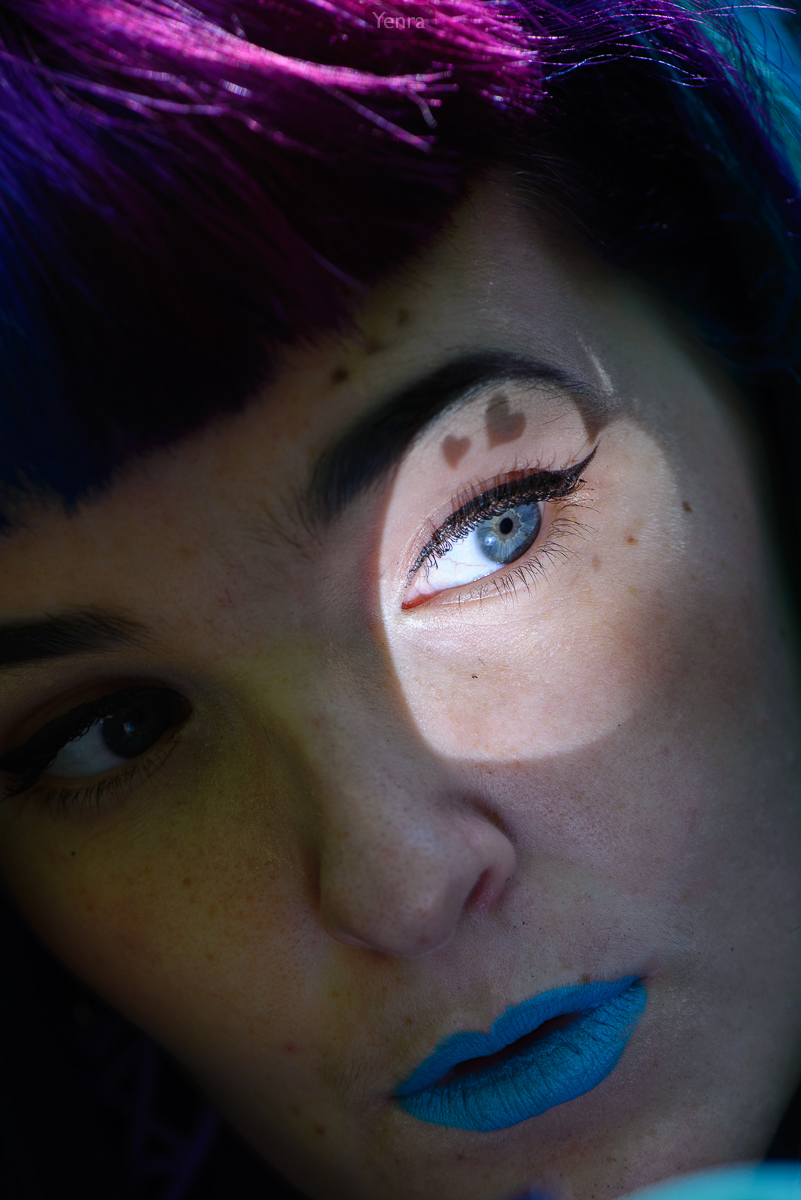
Woman with Blue and Purple Hair · Photograph: Yenra · Credit: Chibicabra

Woman with Bold Hair · Photograph: Yenra · Credit: Chibicabra
In the first portrait, a small oval of brightness brings an eye and part of a cheek into view. The surrounding shade gives that small area room to stand out. In the second, the face and arm form larger pale shapes beside dark clothing, while the hair and bow offer colorful places to return.
Notice where you look first, then follow your own route through each photograph. You may move from an eye to a lip, from a bow to a hand, or notice another relationship entirely. These finished photographs give us visible shapes to explore; your own experiment can begin with any available light.
Look at the background as a shape too.
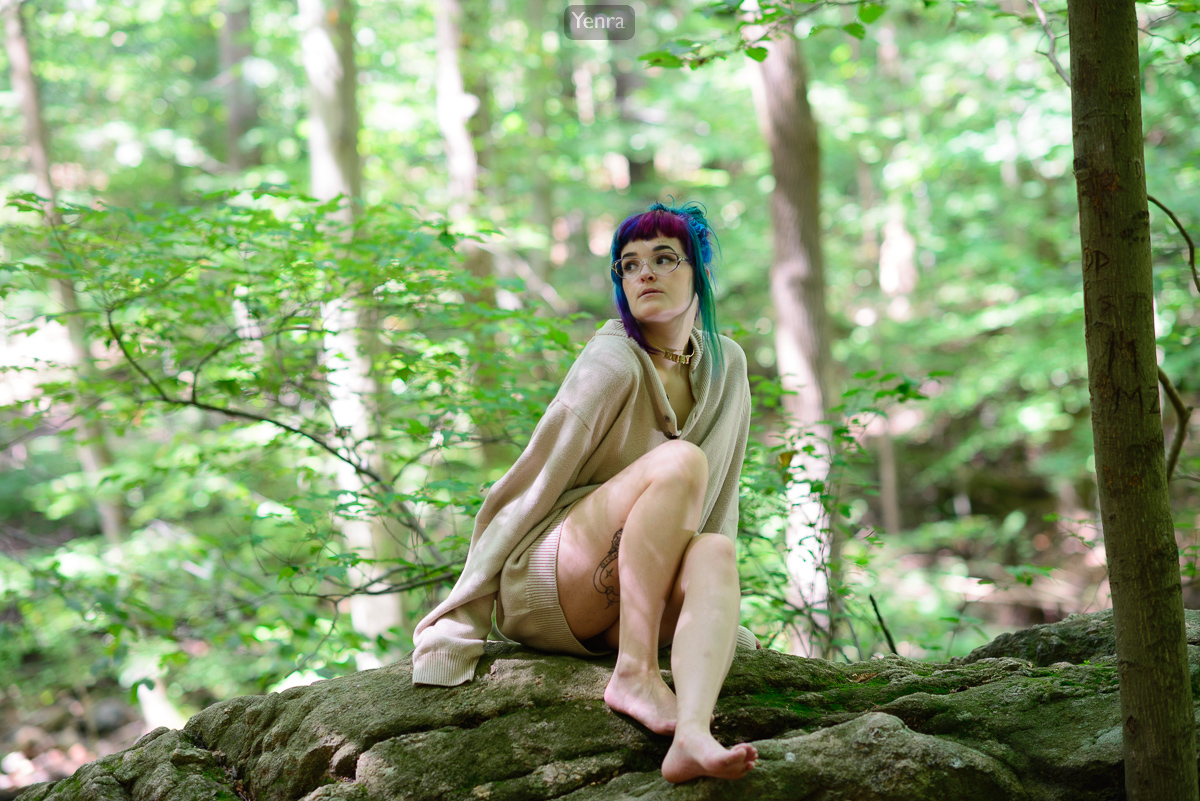
Woman in the Woods · Photograph: Yenra · Credit: Chibicabra
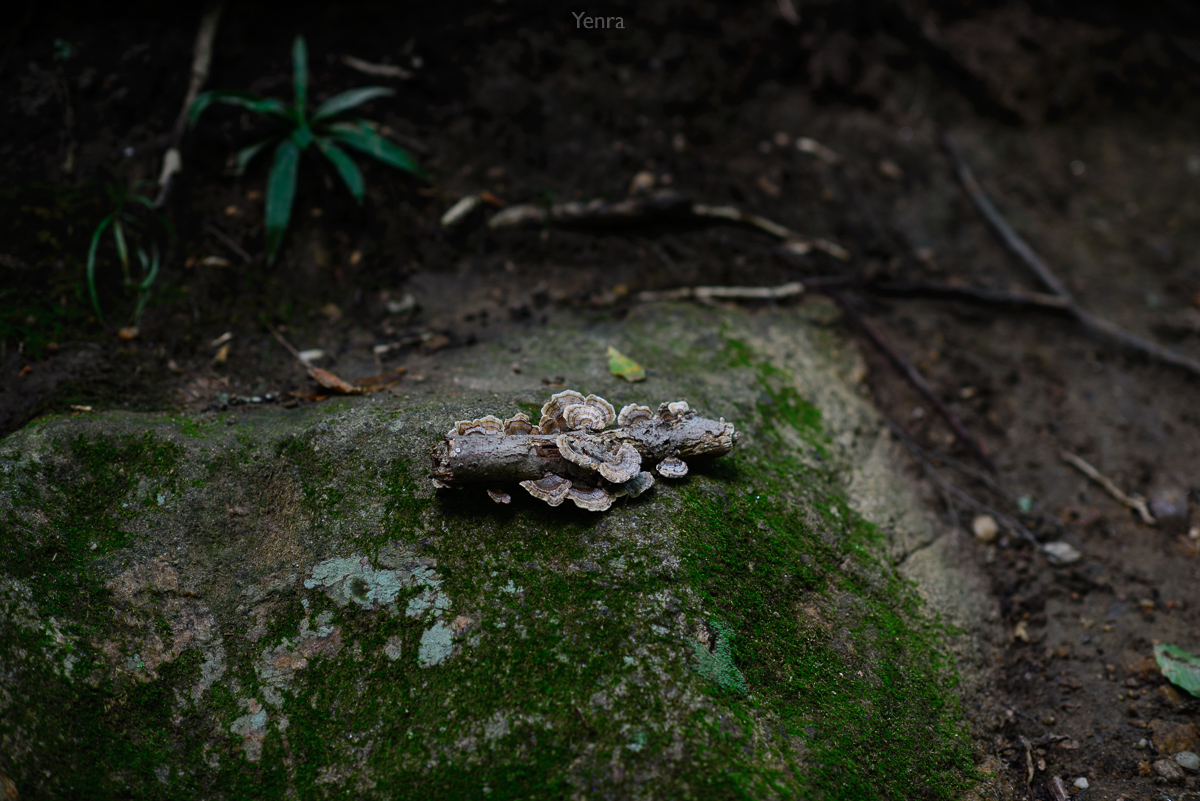
Mushrooms on Rock in Forest Setting · Photograph: Yenra
The seated portrait includes a broad bright area of foliage behind the figure and the darker rock. In the woodland detail, small pale forms sit among darker bark and moss. Both invite you to consider the surroundings alongside the subject: how much of the picture is light, how much is dark, and where those areas meet.
You can explore this while keeping all the color you enjoy. For a moment, look past individual leaves or strands of hair and notice the larger areas they form together. Then let the details come back into focus.
Look back with curiosity.
- What caught your eye first?
- Which bright and dark areas feel connected?
- What small change would you enjoy trying next?
If you would like to explore the direction of light as well, continue with Seeing light in a portrait. For another way to shape the space around a person, try Choosing a portrait background.
Browse all 200 September Hike photographs → · Save an experiment in the practice notebook →