Field notes · Look · Try · Compare
Noticing related colors in a photograph
Explore how similar colors connect while keeping their own brightness and texture.
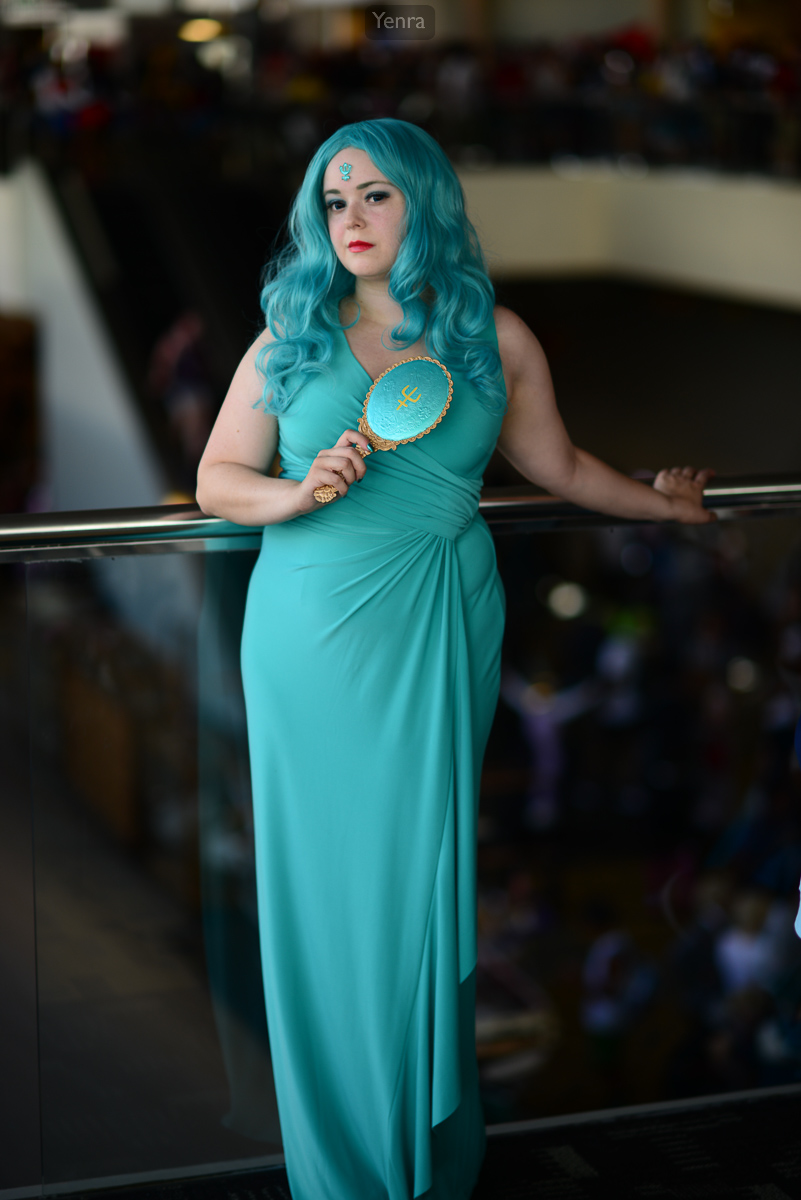
Sailor Neptune, Gown, Sailor Moon · Photograph: Yenra
Captured: 2016:08:12 11:58:00
Similar colors can connect different parts of a photograph. A color in hair may find a companion in clothing; a pale area may sit beside a stronger variation of blue. Following those relationships gives you a way to explore a frame, one small discovery at a time.
Follow a color between separate areas
In this Sailor Neptune portrait, teal hair and a long teal gown form a broad connection. The turquoise mirror introduces another nearby color, edged with gold. Your eye can move between hair, mirror, and fabric while noticing how differently each surface holds detail.
Start with one area you enjoy. Follow its color to another part of the picture, then return to the first. What makes them feel related? You might notice a similar blue-green hue, a difference in brightness, or a change from fine strands to broad folds.
Color names are useful starting points. You can describe what you see in ordinary words, such as pale blue, stronger blue, or a greenish teal. The purpose of this exercise is to notice a connection that interests you and give yourself a way to explore it.
Notice lighter and stronger variations
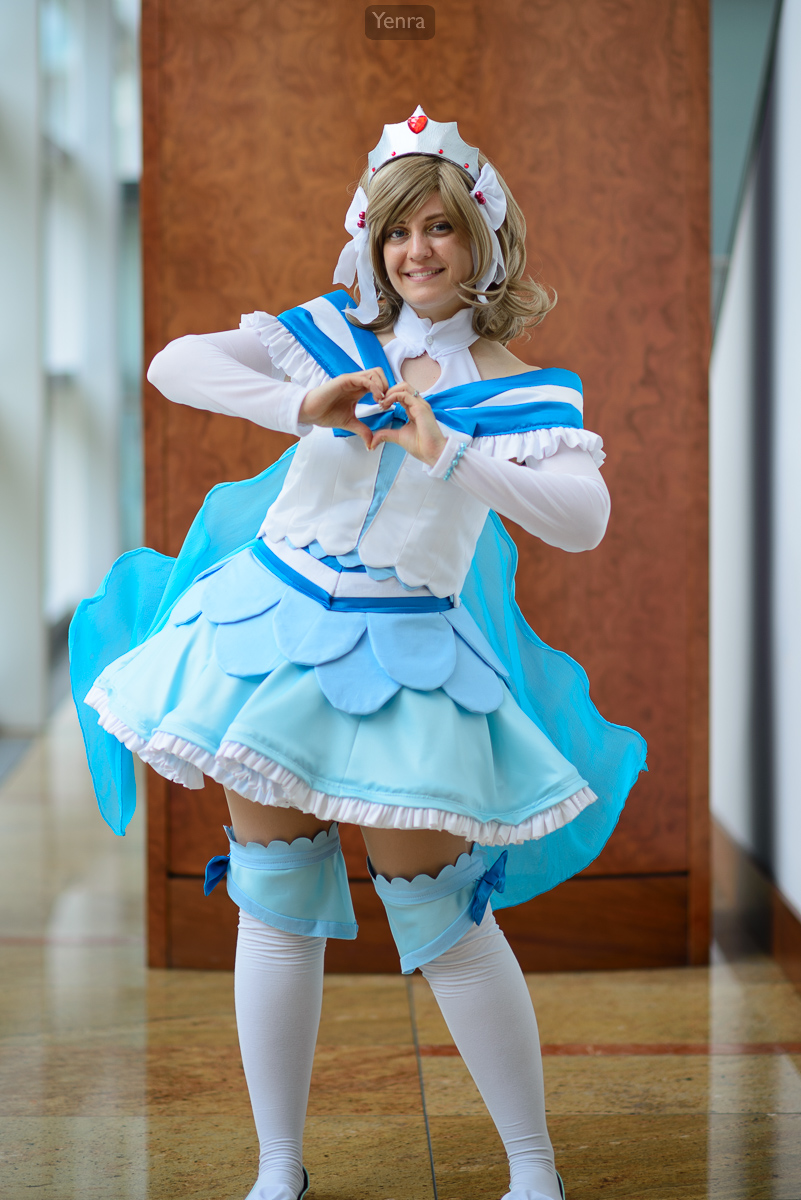
You, Koi ni Naritai Aquarium, Love Live Sunshine · Photograph: Yenra
Captured: 2016:08:12 15:25:58
The blue trim and paler fabric in this You costume create several variations within the same photograph. Stronger blue outlines parts of the collar and waist, while broad pale areas give the skirt a different presence. White fabric sits between some of those blues, helping you see their separate shapes.
Try looking first at the strongest blue, then at the palest blue you can find. Notice the size of each area and what lies beside it. A narrow strip of strong color can catch your eye even when a larger, quieter area occupies more of the frame.
For your own experiment, gather two or three familiar objects whose colors seem related. Fabric, a cup, or a book cover can provide enough variety. Include some surroundings in the photograph, then try a nearby viewpoint or a small change of arrangement. Compare the connections you notice in each version.
Let related colors keep their differences
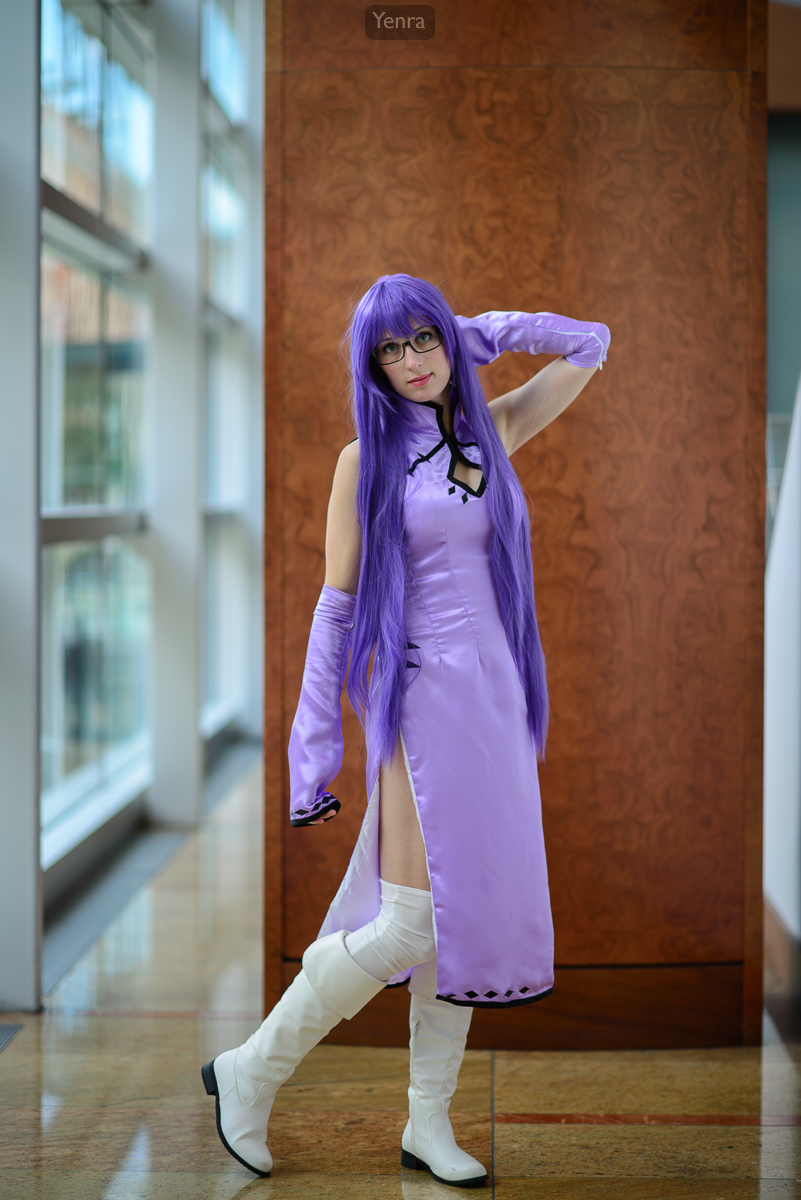
Sheele, Akame ga Kill · Photograph: Yenra
Captured: 2016:08:13 16:17:23
Purple hair, a lavender dress, and gloves connect areas of this Sheele portrait. The darker hair and lighter fabric remain distinct, and folds introduce further changes within the dress. The brown panel and pale window area contribute other colors around the figure.
Related colors can bring areas together while texture and lightness give each one its own character. Enjoy both qualities: the connection across the photograph and the differences that reward a closer look. A frame can contain many other colors and still offer a clear relationship to follow.
When you compare your own photographs, describe one change you can see. Perhaps the second view places two colors closer together, includes more of a pale surface, or lets a small accent stand out. Keep the version that makes you curious to continue.
Look back with curiosity.
- Where does your eye connect similar colors?
- What differences help each colored area remain distinct?
- What would you enjoy including in another photograph?
Keep exploring
Noticing color accents · Following color through photographs · Noticing texture in a photograph
Browse the complete Otakon 2016 gallery.