Field notes · Look · Try · Compare
Noticing rectangles in a photograph
Notice familiar rectangular shapes and how they appear from another viewpoint.
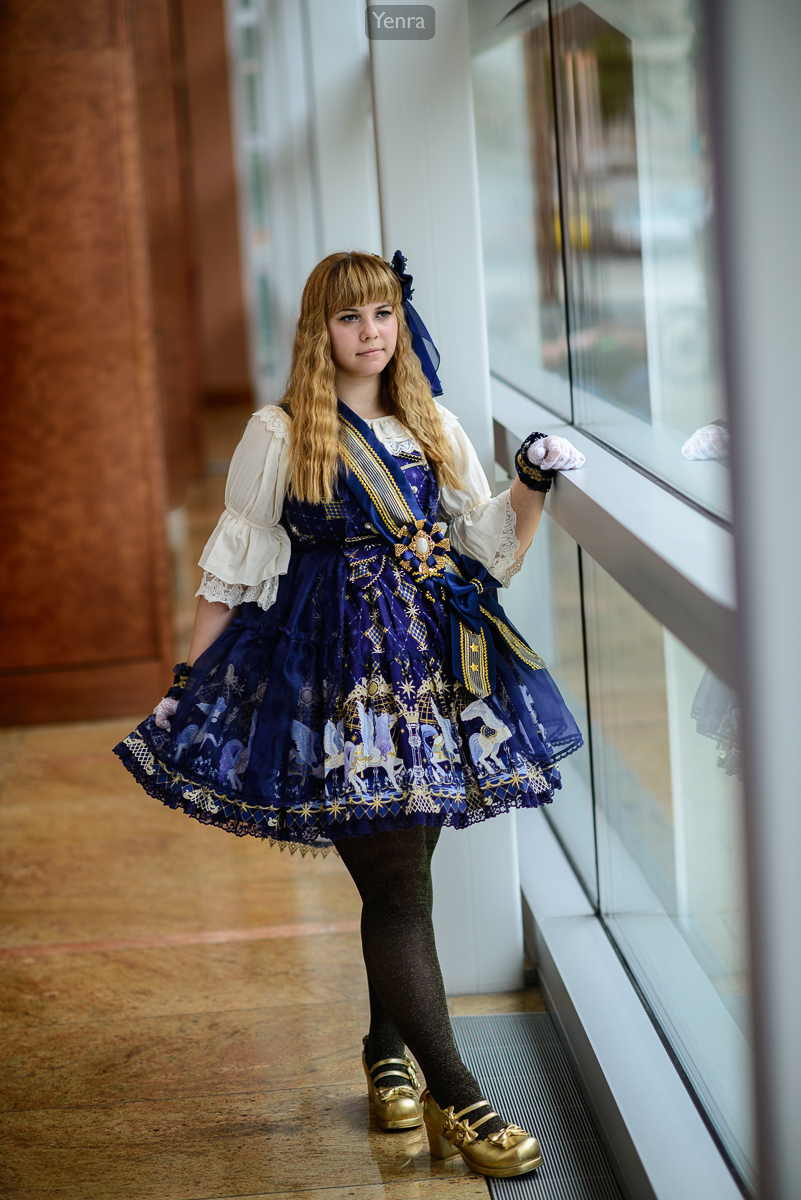
Crystal Dream Carnival from Angelic Pretty · Photograph: Yenra
Captured: 2014:08:09 18:29:17
Rectangles are familiar companions in photographs: window panes, wall panels, book covers, and the divisions of a building. Following their edges can help you notice how a picture is organized. Begin with one recognizable shape, then explore how it relates to the person and space around it.
Follow the window divisions
The pale divisions of this tall window sit beside a person wearing Crystal Dream Carnival from Angelic Pretty. A vertical edge and a crossbar divide the glass into areas, while part of the hand and dress appears in reflection. Your eye can move between the window's broad divisions and the smaller gold patterns on the clothing.
Some window edges continue beyond the photograph. You can still recognize the rectangular forms they belong to. Notice which edges are visible, which leave the frame, and how the viewpoint changes their apparent angles. A rectangle viewed from the side may appear narrower or slanted in a photograph.
For a small experiment, choose a familiar rectangular feature or object. A cupboard panel, window, or book cover gives you a simple starting point. Before taking a picture, follow its edges and notice what sits beside it. Perhaps a nearby curve or a patch of color makes the shape easier to see.
Notice a broad panel behind a portrait
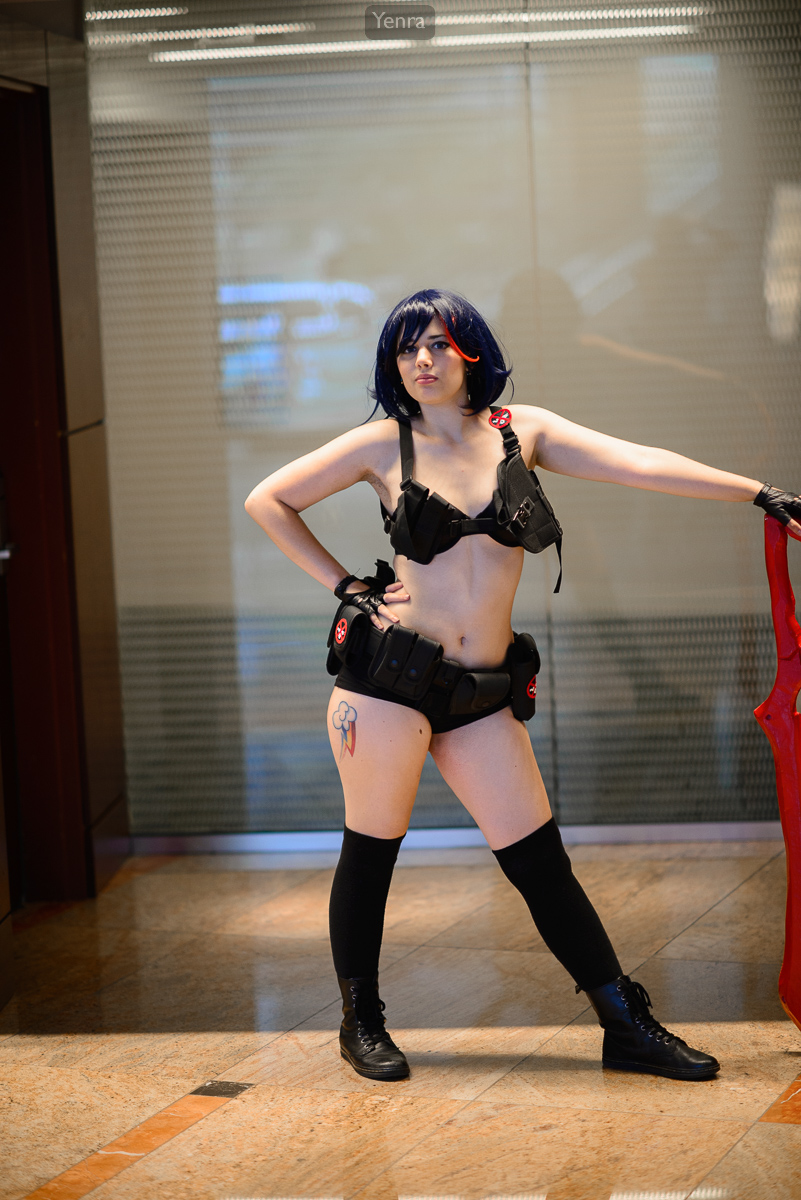
Ryuko Matoi and her Scissor Blade from Kill la Kill · Photograph: Yenra · Credit: Sinnabun
Captured: 2014:08:09 18:06:12
Behind Sinnabun as Ryuko Matoi, a broad gray panel creates a large area with a visible border. Its edges give the background structure, while the figure and red costume prop introduce different outlines. The prop extends beyond the right edge of the original photograph.
Look first at the panel as a broad shape, then return to its surface and border. How does that relatively quiet area relate to the more detailed costume? The panel provides a place to compare edges, spaces, and scale within the full picture.
A rectangular background does not need to enclose a person completely to contribute to a portrait. Its divisions may sit beside the figure, pass behind it, or continue beyond the frame. Describe the relationship you can see: an edge near a shoulder, a broad area beside a hand, or a gap between the figure and a border.
Look for rectangles repeating into the distance

Love Live No Brand Girls · Photograph: Yenra
Captured: 2014:08:08 15:15:50
In this Love Live No Brand Girls group photograph, gloved hands reach toward the middle while glass canopy panels repeat above and behind the group. Rows of windows continue across the buildings. These familiar rectangular forms appear at different angles within the scene.
Follow one row of canopy panels into the distance. Their apparent shapes change with the viewpoint, helping you notice the depth around the group. Then return to the people and see how the architecture shares the frame with their arrangement.
Make a starting photograph of your own rectangular subject with some room around it. Move to a comfortable nearby viewpoint and make another. Compare how the edges appear and what becomes visible beside them. Neither view has to make every corner look square: each can reveal a different relationship.
Keep a sentence about something you enjoy in either view. You might notice a clearer outline, a more interesting gap, or a reflection you had passed over. That observation gives you an idea to carry into another photograph.
Look back with curiosity.
- Which edges help you recognize the rectangular form?
- How does the shape appear different from the second viewpoint?
- What does the surrounding space add?
Keep exploring
Finding frames within a photograph · Following lines through a photograph · Noticing patterns around a portrait
Browse the complete Otakon 2014 gallery.