Field notes · Look · Try · Compare
Noticing off-center portraits
Explore how a face, a pose and the surrounding space share a photograph.
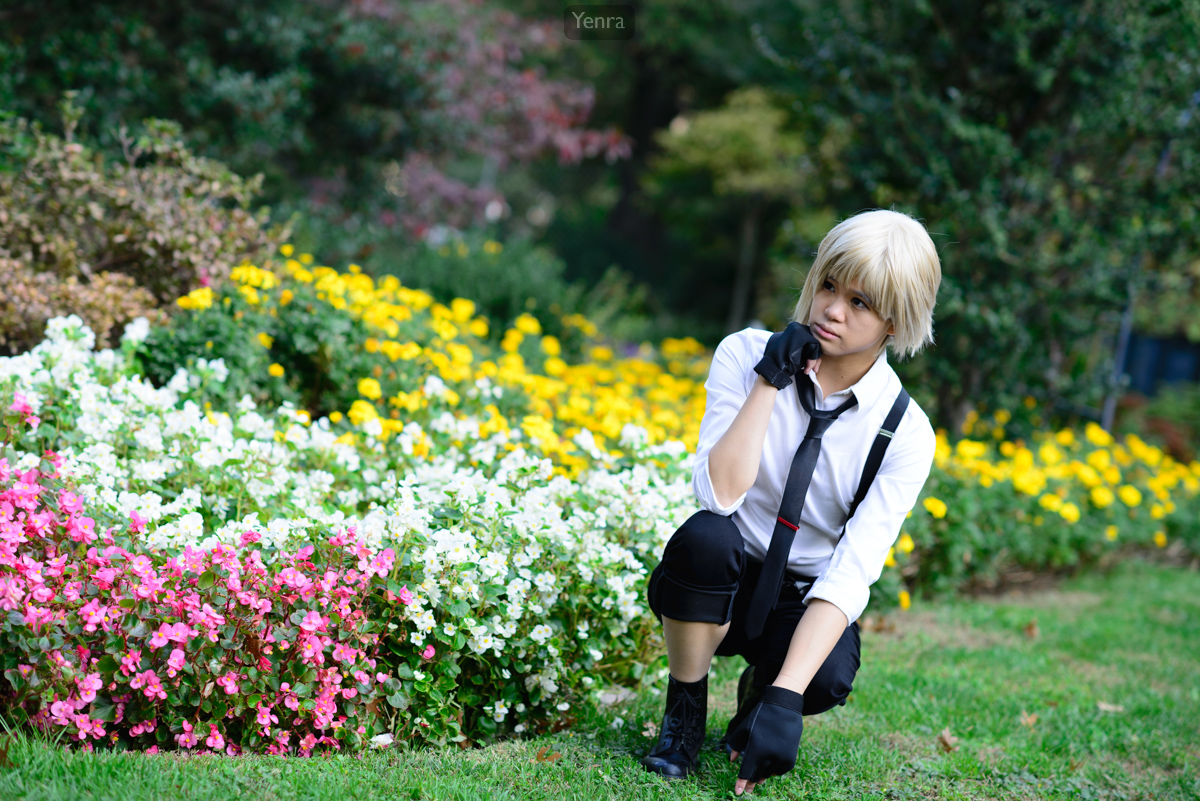
Atsushi Nakajima Thoughtful · Photograph: Yenra
Captured: 2016:10:21 10:56:35
A portrait can give the face a clear presence while leaving plenty to discover beside it. Flowers, a stretch of floor or the rest of a pose can share the frame. Looking at these relationships offers a useful way to explore a photograph without needing to begin with a compositional grid.
These three Anime USA 2016 Friday photographs place faces and bodies in different parts of horizontal pictures. Begin by finding the face, then follow the whole pose and the surrounding shapes. Notice what holds your attention and what brings it back.
Let flowers share the frame
The figure occupies the right side of the photograph while bands of pink, white and yellow flowers spread across the left. The bright shirt gives the eye a substantial light shape to return to, and the face sits above the bent knee and gloved hand.
The flowers contribute many small marks; the clothing and pose make larger shapes. Neither side needs to contain the same kind of detail. Follow the flower bed across the frame and notice how its colors surround the portrait rather than stopping at a dividing line.
Try describing what each side contributes. You might write that one side offers a person and gesture, while the other offers color and place. A description like this can be more useful than deciding whether a face lands on an exact intersection.
Give a room a part in the portrait
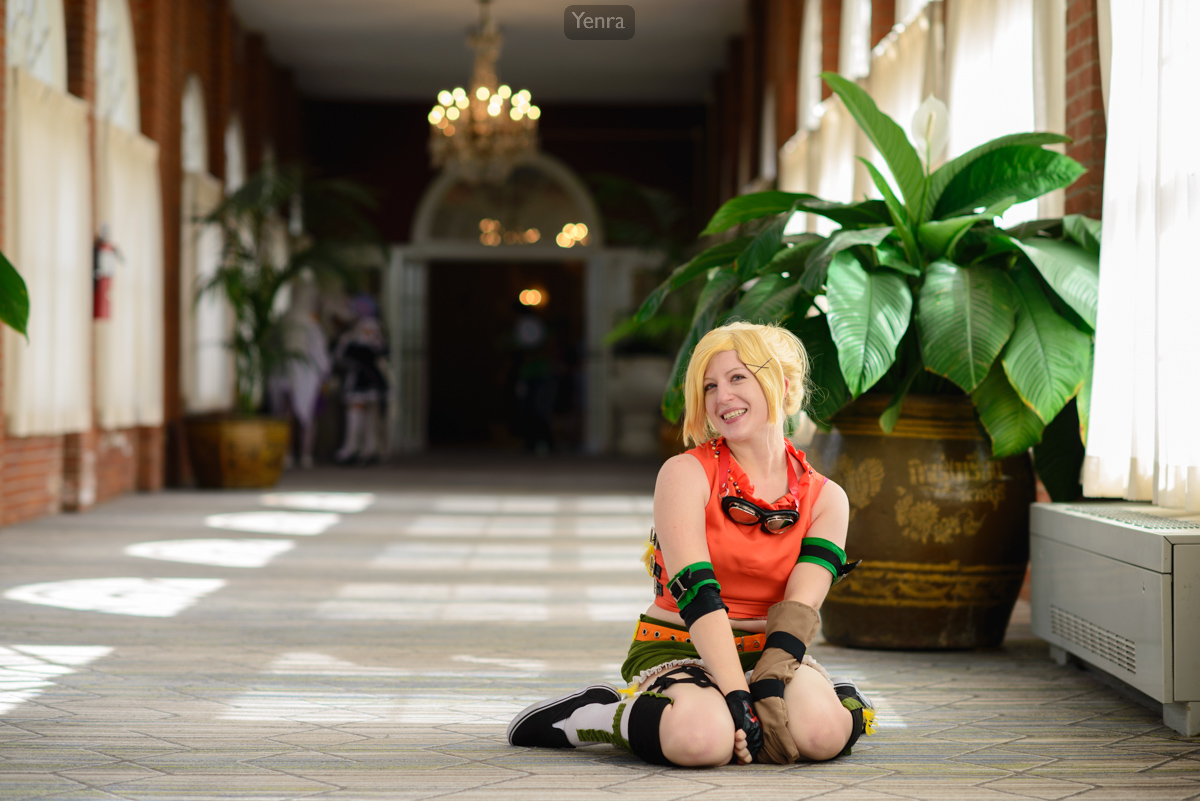
Happy Rikku · Photograph: Yenra
Captured: 2016:10:21 12:58:36
The seated figure sits in the lower-right portion of this picture. The orange top stands out against the floor and large plant, while the corridor continues behind. Patches of light cross the open floor on the left.
Follow the room into the distance, then return to the face and hands. The surroundings have enough space to describe where the portrait is set. The figure remains prominent through its color, shape and placement even though it occupies a relatively small part of the frame.
For your own experiment, a chair beside a wall or a familiar room can provide similar opportunities to share space. Begin in a comfortable position and change the framing a little. Compare how much of the place you want to invite into the photograph.
Follow a pose across the picture
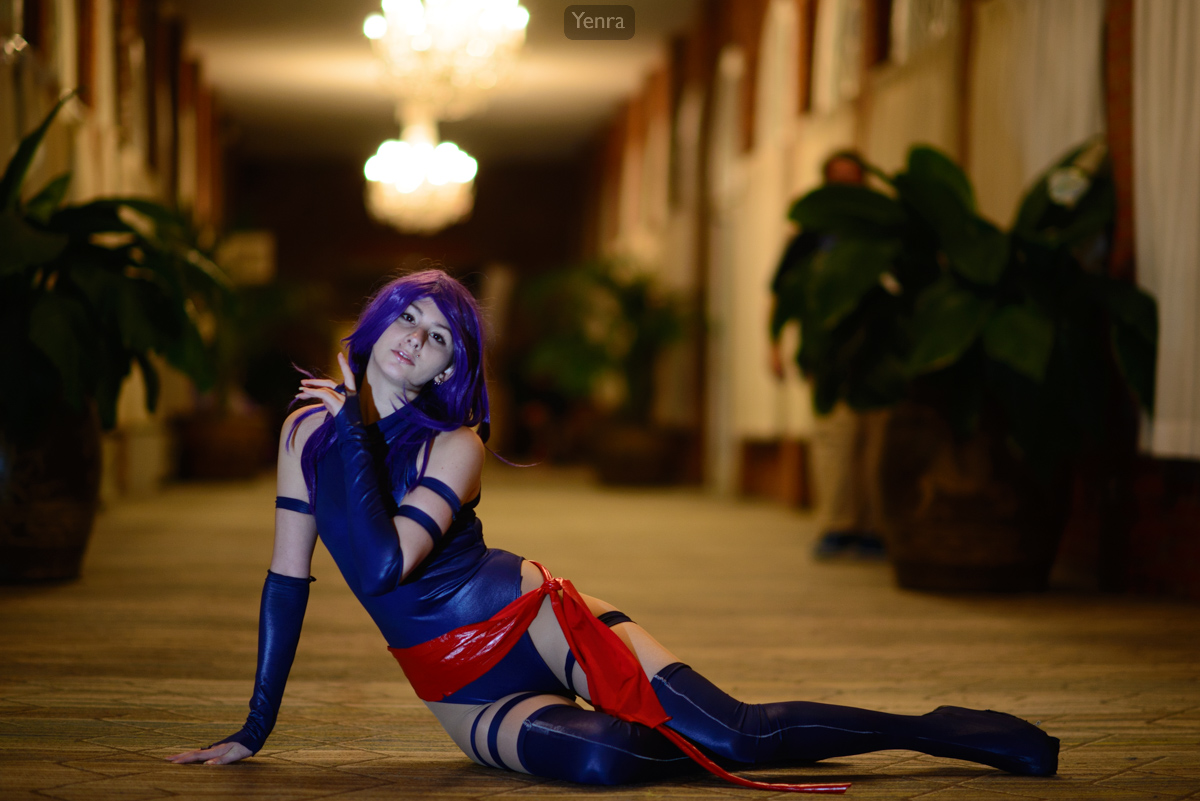
Psylocke Reclining Elegantly · Photograph: Yenra · Credit: RachniQueen
Captured: 2016:10:21 19:40:03
In this portrait credited to RachniQueen, the face and torso sit left of center. The legs and red sash extend across the lower part of the picture toward the right. The supporting hand adds another point near the left edge.
Here, locating the face tells only part of the compositional story. The full pose reaches across the frame, and the background corridor continues above it. Follow the larger body shape before deciding where most of the picture's attention sits.
This is an invitation to look at the complete arrangement, rather than a pose you need to reproduce. A standing portrait with an outstretched arm, a seated portrait beside a bag or a photograph of an ordinary object can give you another way to study a shape that extends beyond its main point of interest.
Compare relationships you enjoy
Choose one existing portrait and name two things beside the face that matter to the picture. They might be small details or broad areas. Then make a centered and an off-center version of your own subject, if you would like to take the exercise further.
Look at the full frames together. These archive examples differ in pose, setting and scale, so they offer several possibilities rather than a controlled comparison. A centered arrangement can be satisfying too. Keep the version whose relationships make you want to look again.
Look back with curiosity.
- What shares the space beside the face?
- How does the full pose distribute attention?
- Which position would you like to explore?
Keep exploring
Noticing centered compositions · Making space around a subject · Following your attention through a portrait
Browse the complete Anime USA 2016 Friday gallery.