Field notes · Look · Try · Compare
Following your attention through a portrait
Notice where you look first and what connects the details you discover.
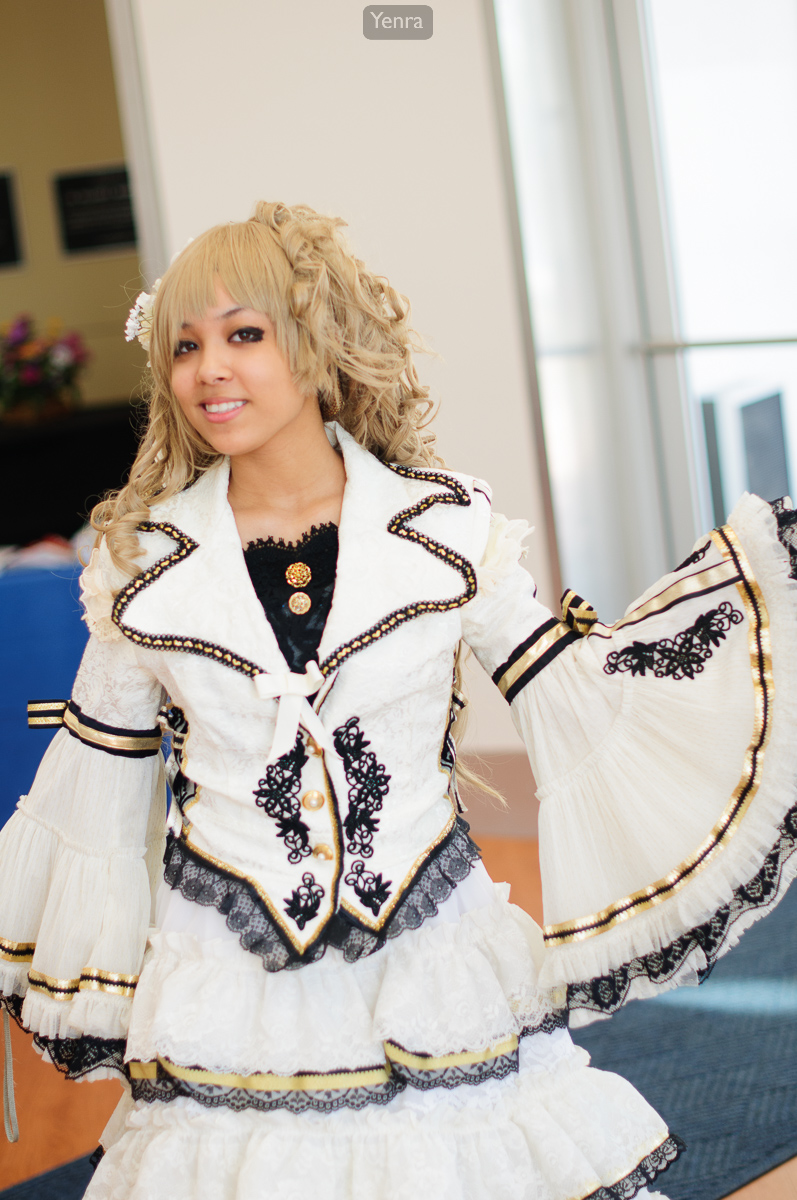
Victorian Elegance · Photograph: Yenra
Captured: 2012:06:16 09:43:44
A portrait can give you several places to begin looking: a face, a hand, a bright shape, or a detail in a costume. Pause with one photograph and notice your own starting point. Then look again. The connections you find can become useful questions for making, choosing or discussing photographs.
Follow an outlined collar and sleeve
Dark trim outlines the pale collar and the broad raised sleeve. The face sits among these contrasting edges, with smaller decorative details below. You might begin with the face and follow the collar downward, or notice the large sleeve first and return toward the face.
Try putting that experience into a short sentence: “I noticed the sleeve, then its dark edge, then the face.” Naming the places makes the observation specific. You do not need to prove that the photograph directs every viewer along the same route.
Now look for what connects two of your chosen places. Here it could be the continuous trim, a repeated pale area, or the way the raised sleeve reaches across the picture. A connection can be a line, but it can also be a color or a change in brightness. Let the photograph supply the possibilities.
Move between a hand, a shirt and a mask

Team Rocket · Photograph: Yenra
Captured: 2012:06:17 12:29:34
An extended hand holding a pink-and-white ball fills part of the foreground. Above it, a red letter stands out on the dark shirt, and the pale mask provides another distinct area. The foreground hand is softer than the mask, yet it remains a recognizable part of the gesture.
Notice whether you begin close to the camera or farther into the picture. The size of the hand, the color on the shirt and the pale mask offer different invitations. Sharpness is one visible quality among several; a softer detail can still be something you notice.
After a second look, you may discover a different path. Keep both observations if they interest you. This exercise can help you recognize what a photograph offers beyond its most obvious subject, without turning viewing into a search for a single correct answer.
Explore the details around a face

Woman with Purple Hair Poses Outdoors · Photograph: Yenra
Captured: 2012:06:16 19:54:51
Purple and green coils surround the face. Dark and green markings appear near the eyes, while bright green strands recur around the larger shapes. There is a great deal to explore, and you can choose just two or three details to connect.
You might move from a green strand to a small green mark beside an eye, or from a large coil toward the face it surrounds. Describe the visible relationship in your own words. These are new observations about the photograph; the picture does not need to tell us what its maker intended for your observation to be useful.
If another viewer is available, invite them to name their first three points of interest before sharing yours. Different answers can reveal details each of you overlooked. Keep the exchange curious: “What connected those places for you?” is a useful question.
Carry one observation into your next photograph
Choose a small possibility to explore, such as including a hand and a costume detail together or leaving space around an outline. Make a photograph, then repeat the looking exercise. You can also revisit an existing portrait and write a three-stop note without changing it.
The aim is to become more aware of your own looking. A surprising starting point, a shared detail, or a different response from a friend can each give an older photograph something new to teach you.
Look back with curiosity.
- What did you enjoy noticing?
- Which variation would you like to explore?
- What small observation would you like to keep?
Keep exploring
Following lines through a photograph · Noticing color accents · Writing viewing questions for a photo collection
Browse the complete Anime Mid-Atlantic 2012 gallery.