Field notes · Look · Try · Compare
Writing viewing questions for a photo collection
Invite a closer look with open questions and room for different observations.
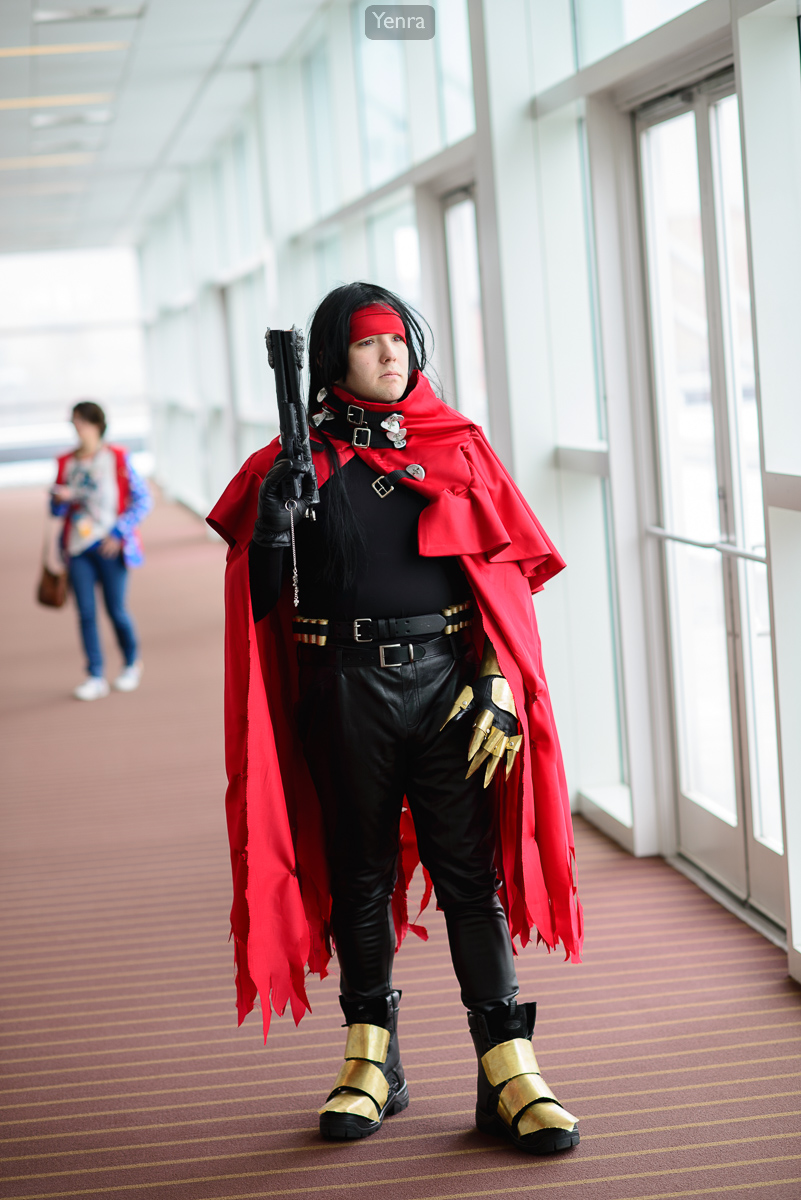
Vincent Valentine, Final Fantasy VII · Photograph: Yenra
Captured: 2016:04:09 11:11:13
A good viewing question gives someone a place to begin looking and room to discover something for themselves. It can draw attention to a color, a small detail or a relationship between pictures. Try writing one question for each photograph in a small collection.
The questions below are new editorial invitations using three existing Tekko 2016 photographs. They are not historical comments from the model or a record of how the original session was directed. Different observations are welcome.
Begin with something visible
This wider Vincent Valentine portrait includes a red cape, black clothing, gold-colored costume pieces and the surrounding corridor. A viewer can begin with those visible elements even without knowing the character or event.
Try asking, “Where do you notice the red color recurring?” The question offers a point of attention while leaving the viewer to choose a path through the picture. They might begin with the cape, then notice the headband or another part of the costume.
An open question does not need to be complicated. “Where does your eye go first?” and “What do you notice after a longer look?” both invite observation. A question about visible relationships can help people join the conversation with the knowledge they already have.
Invite a closer look at a detail
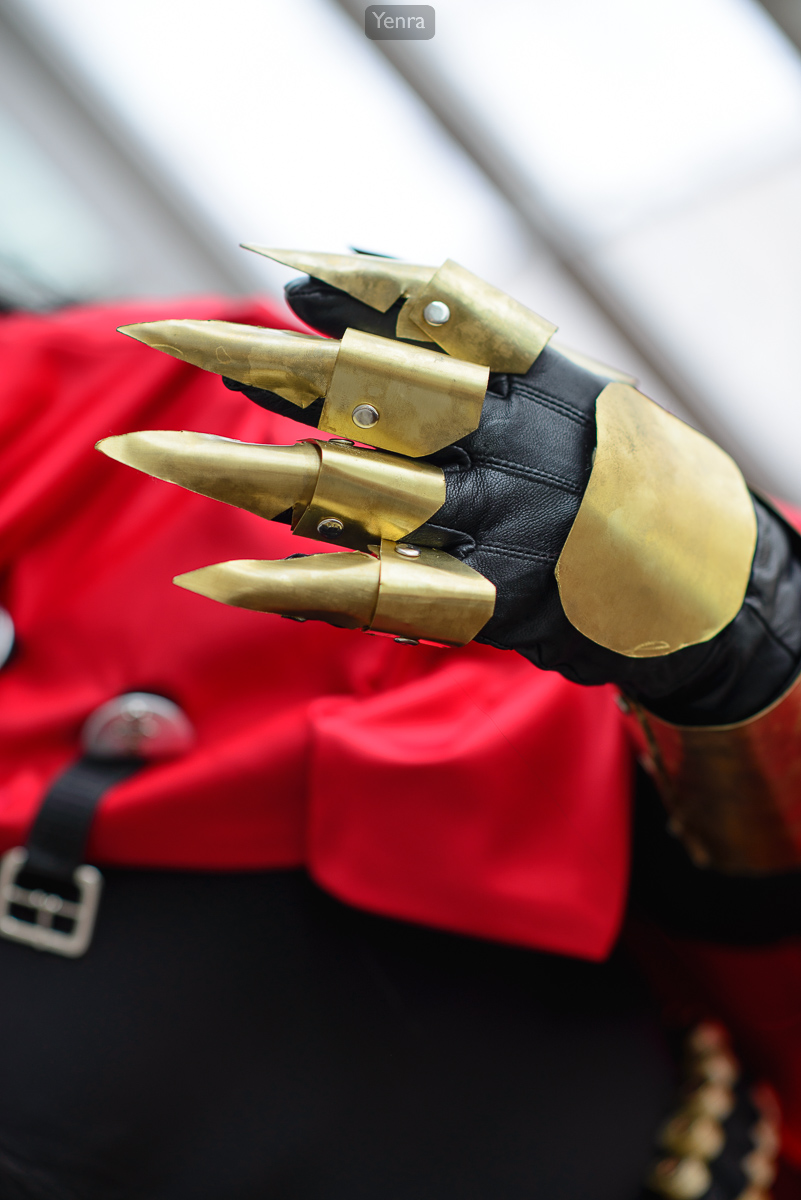
Vincent Valentine, Final Fantasy VII · Photograph: Yenra
Captured: 2016:04:09 11:12:02
This separate close photograph brings the glove forward. Gold-colored plates, pointed fingertips and black sections create shapes that are much smaller in the wider portrait. The red fabric remains visible behind them.
Ask what changes when the viewer moves from the whole costume to this detail. They might notice a repeated shape, a contrast between surfaces or a connection of color. You can describe a surface as shiny or textured without needing to identify its exact material.
A question can also connect two photographs: “What does the detail help you notice when you return to the wider view?” That small return journey gives a collection more than one reading order.
Leave room for another observation
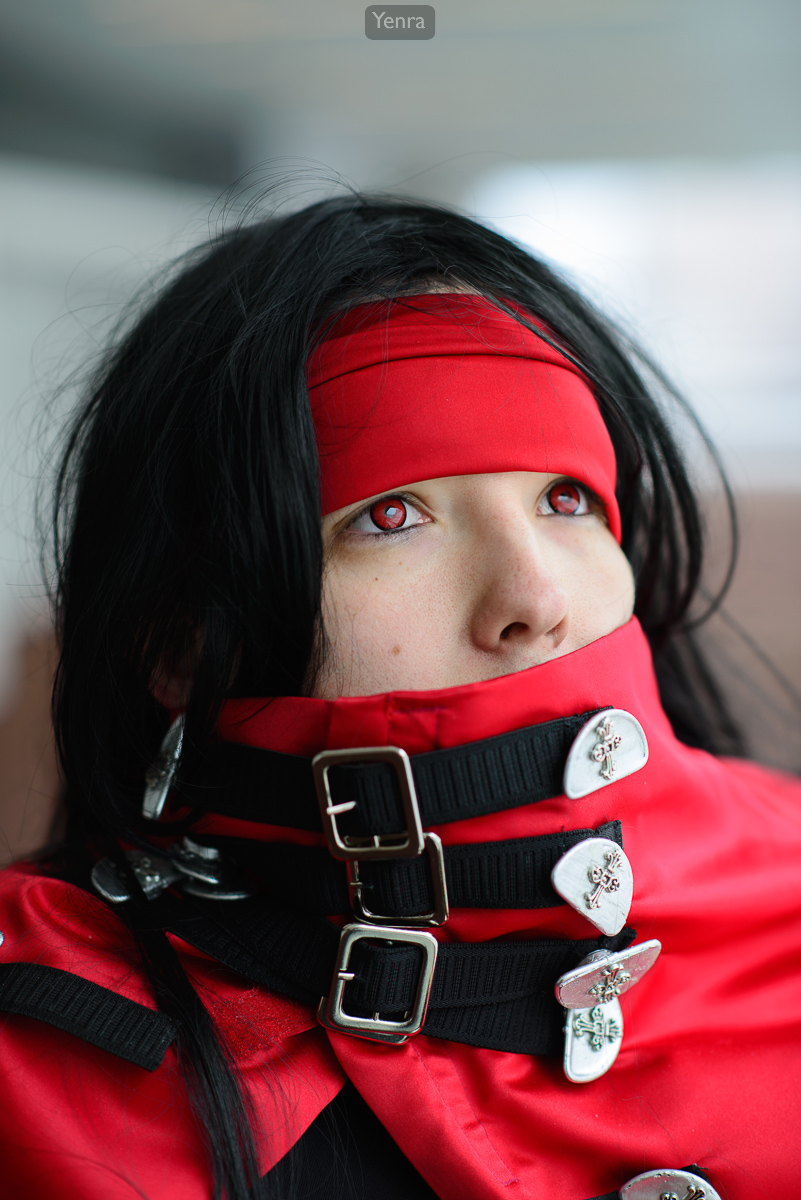
Vincent Valentine, Final Fantasy VII · Photograph: Yenra
Captured: 2016:04:09 11:12:34
The closer portrait brings the face between black hair, a red headband and a high collar with dark buckles. Ask where attention moves between the face and those costume details. One viewer might stay with the eyes; another might follow the red shapes around them.
You can offer an example without turning it into an answer key. The optional observations below describe one possible reading. Your viewer may notice something else, and that difference can make the conversation more interesting.
A viewing question invites someone to explore the photograph. A request for feedback asks them to help with a decision about your work. Both can be useful; choosing the purpose first makes it easier to write the question you need.
Read your questions alongside the pictures. Can someone respond by looking? Does the wording leave room for a different observation? If a question feels too broad, name one visible feature. If it feels too narrow, try “What do you notice about…” and leave the next step open.
Keep the questions in a paper note or beside your collection. You can revise them after sharing the photographs or simply after looking again yourself. A few welcoming words can help a familiar picture offer another discovery.
Look back with curiosity.
- Which question makes you want to look again?
- Can someone answer through observation without knowing the character or event?
- Where could the wording make more room for another response?
Keep exploring
Asking for useful feedback on a photograph · Introducing a small photo collection · Writing captions that invite a closer look
Browse the complete Tekko 2016 gallery.