Field notes · Look · Try · Compare
Asking for useful feedback on a photograph
Ask a focused question and turn an observation into a small experiment.
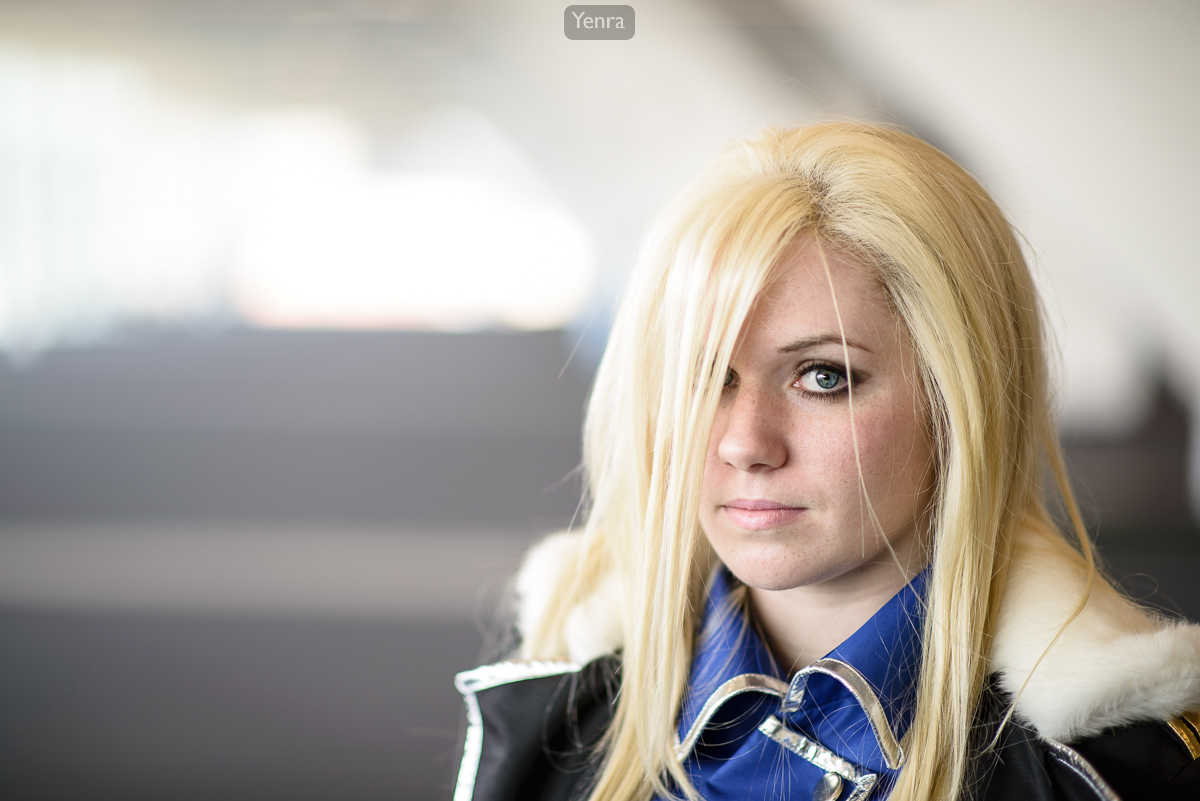
Major General Olivier Mira Armstrong from Fullmetal Alchemist! · Photograph: Yenra · Credit: Blair Thompson Costuming and Cosplay
Captured: 2013:04:05 16:56:19
A useful conversation about a photograph can begin with one clear question. Ask what catches someone's eye, which detail helps them understand the setting, or what variation they would be curious to see. A specific observation gives you something to consider and a possible next experiment, while leaving room for your own aims.
Ask where attention goes
The close horizontal portrait places the face toward one side, with pale hair, blue clothing, and light fur trim nearby. A useful opening question is: “What catches your eye first?” Give the other person time to look before adding your own observation.
Follow up with “Which detail drew you there?” They might mention an eye, a bright edge, a color, or the space beside the face. Their answer helps you understand how they are reading the picture. You can compare that response with what you hoped to show.
Choose a willing person and one photograph you feel comfortable sharing. A single question keeps the conversation manageable. If someone begins with “I like it,” invite them to name a detail they enjoy. That turns a welcome response into an observation you can remember and use.
Invite a specific observation
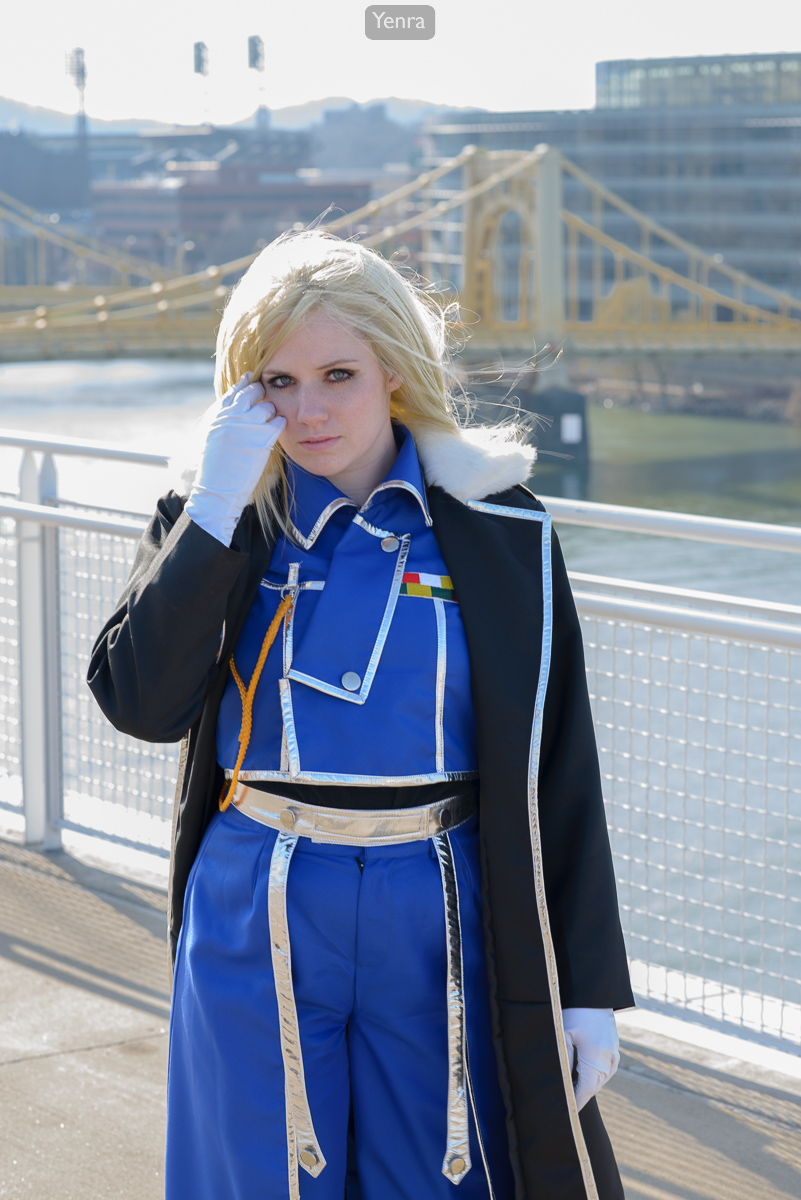
Olivier Mira Armstrong, Full Metal Alchemist · Photograph: Yenra · Credit: Blair Thompson Costuming and Cosplay
Captured: 2013:04:05 17:39:01
This wider portrait includes a river, a yellow bridge, and a railing around the figure. The raised white-gloved hand adds a gesture near the face. A question about setting gives the conversation a different focus: “Which details help you understand where this portrait takes place?”
Listen for the visible details behind the answer. Someone may notice the bridge before the water, or find that the railing connects the person to the surroundings. Ask them to point out what they mean. You can learn from the observation even when their attention goes somewhere you did not expect.
People bring different preferences to photographs. “I enjoy close portraits” tells you something different from “The bridge is the first shape I noticed.” Both can be part of the conversation. Naming the difference helps you decide which response relates to your own intention for the picture.
Choose one small experiment
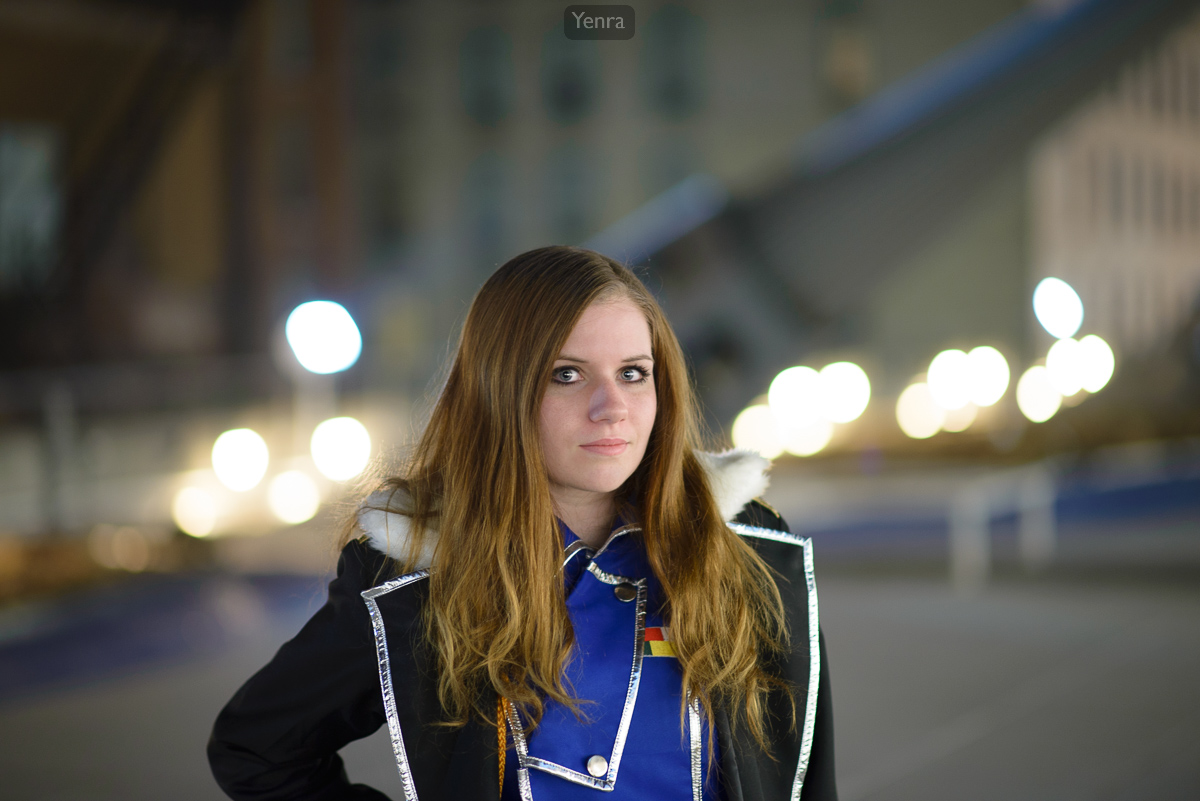
Photography at night · Photograph: Yenra · Credit: Blair Thompson Costuming and Cosplay
Captured: 2013:04:05 23:15:37
The night portrait includes a hand at the hip and blurred points of light behind the figure. Looking at the finished frame, you could ask: “What small framing variation would you be curious to see?” That question invites an idea you can explore in a future photograph.
A suggestion is something to consider. You might try a little more space beside a hand, a closer view of an expression, or another position relative to the background. Choose a variation that interests you and fits the photograph you want to make. You can also keep an arrangement you already enjoy.
Finish with a short note: one observation you value and one question for next time. When reviewing portraits with the person photographed, make room for what they enjoy about their expression or pose. Keep their response in their own terms alongside your observations.
Return to the note when another opportunity comes along. Try the idea, compare the result, and describe what you discovered. A helpful exchange can be brief; its value is the attention and curiosity it brings to your next photograph.
Look back with curiosity.
- Which question invited the most specific observation?
- What did another person notice that you had not considered?
- Which suggestion fits your own aims well enough to explore?
Keep exploring
Keeping notes after a portrait session · Choosing portraits together · Turning a photograph into a practice idea
Browse the complete Tekko 2013 and Tekko 2014 galleries.