Field notes · Look · Try · Compare
Keeping notes after a portrait session
Keep a useful observation and a small question for next time.
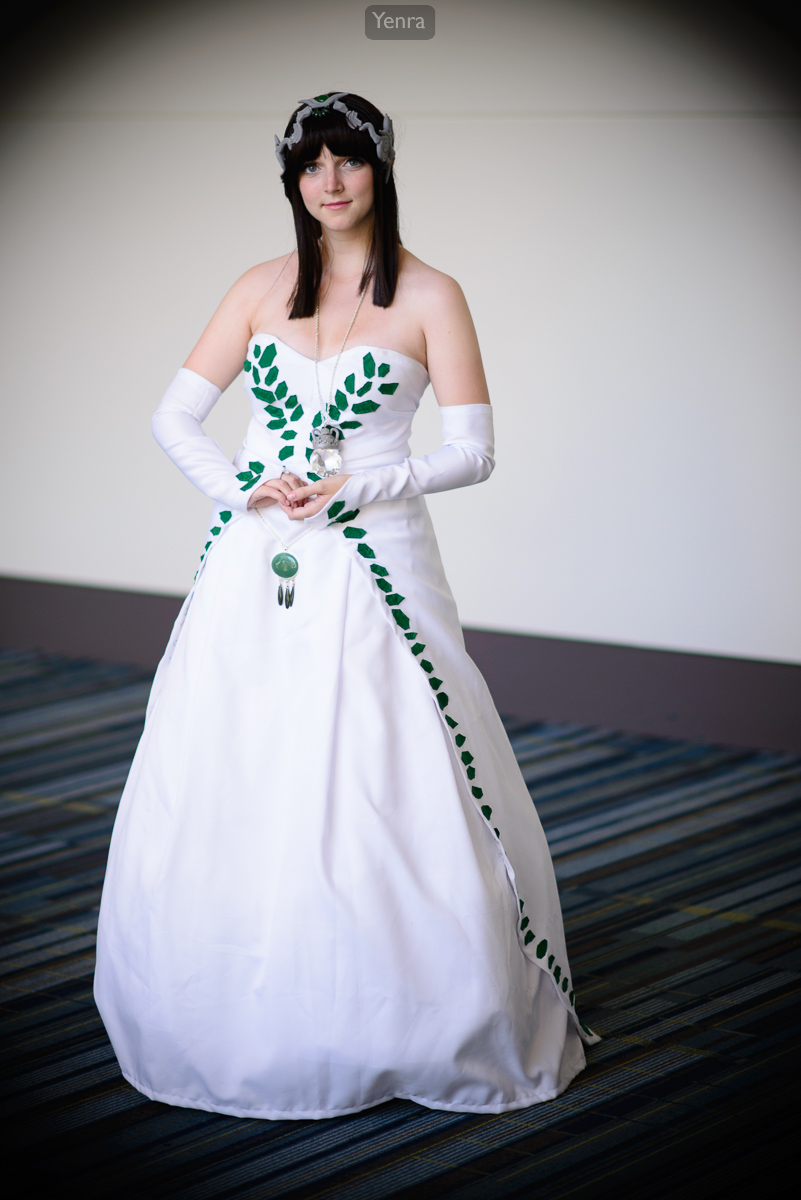
Full-length portrait in a white and green gown · Photograph: Yenra
Captured: 2013:05:25 14:25:44
A few notes after a portrait session can make the next one easier to begin. Record something you enjoyed, describe a variation that taught you something, and leave yourself one small question. The note can be brief: a useful detail beside your photographs may be all you need to remember an idea worth exploring.
Record something you want to keep
The wider view shows the full shape of the white and green gown. Hands meet near the center, while the pale wall and striped carpet describe the setting around the figure. A useful observation could be: “The full-length view gives the gown’s shape room and keeps the surroundings visible.”
Make your own note specific enough that you can recognize what you mean later. Instead of stopping at “I like this one,” name a visible relationship: the room around a sleeve, the line of a hand, or the way a color repeats in the background. Then add what you would enjoy exploring again.
Choose something that matters to you and, when available, invite your partner’s view too. They may enjoy an expression or detail you had overlooked. Keep their feedback in their own terms, and distinguish it from your observation. When reviewing alone, what you can see in the photograph is a useful place to begin.
Describe a useful variation
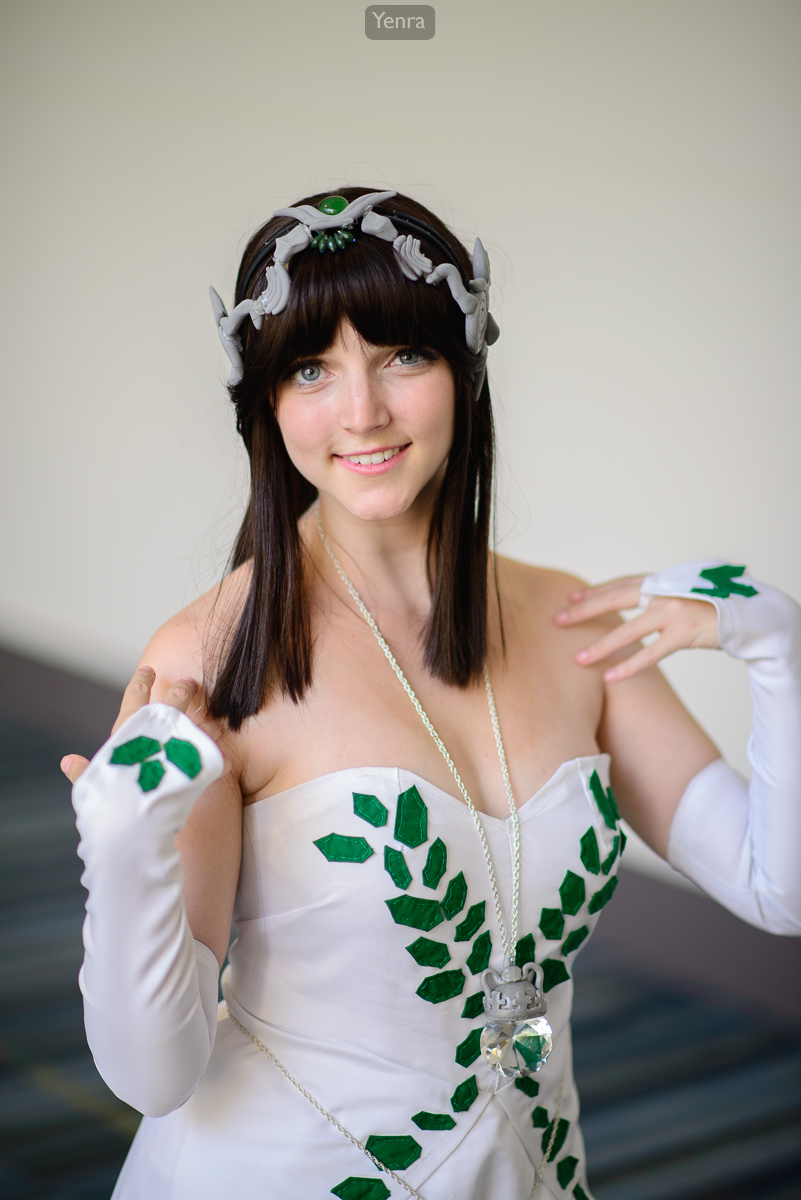
White-and-green portrait with raised hands · Photograph: Yenra
Captured: 2013:05:25 14:26:18
In the closer portrait, the gloved hands rise beside the shoulders and the smile becomes more prominent. The pendant and upper part of the gown remain visible. Compared with the full-length view, this framing gives expression and gesture more of the picture.
A comparison note might read: “The wider frame describes the gown and place; the closer frame brings the smile and raised hands forward.” Both observations can be useful. Naming what each picture contributes gives you more choices for another session.
Keep the comparison small. Choose one or two differences you can describe clearly, even if other things changed as well. You may notice framing and hand position, or background and gaze. The aim is to leave your future self a clear reminder of what caught your attention.
Leave yourself one next question
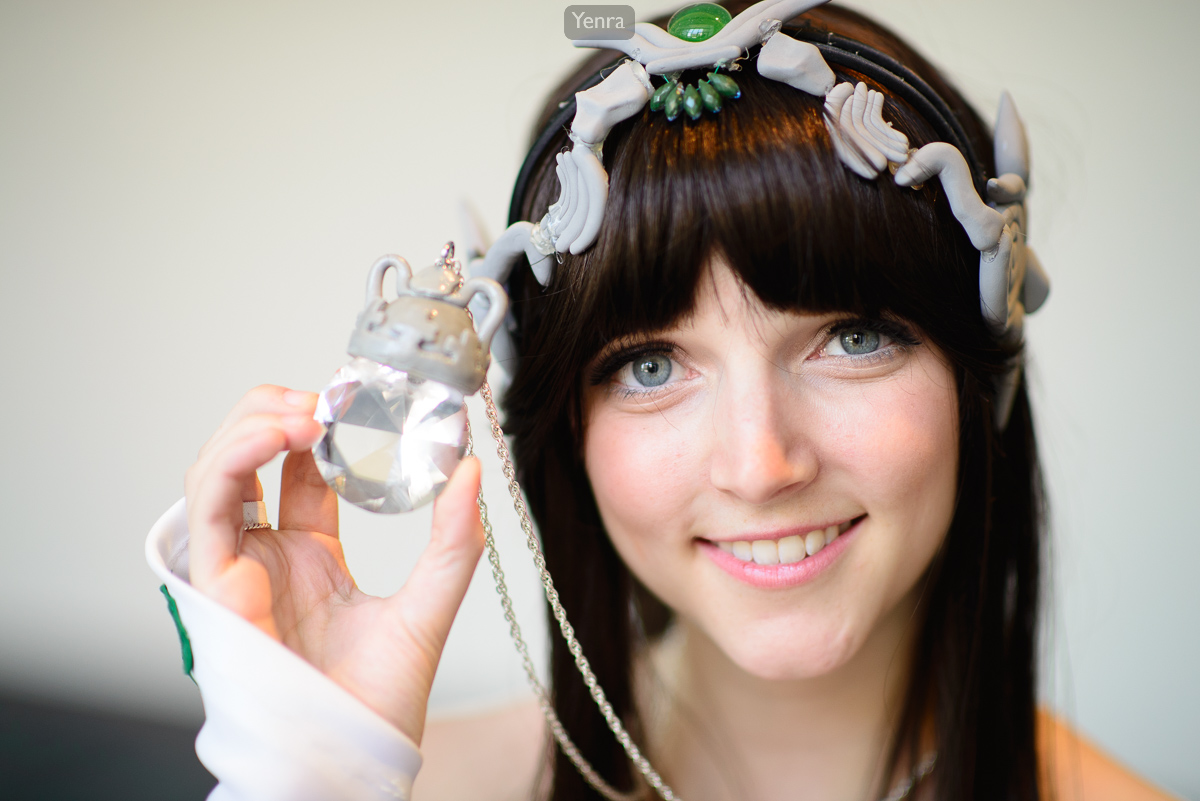
Close portrait holding a crystal-shaped pendant · Photograph: Yenra
Captured: 2013:05:25 14:39:38
The horizontal close portrait brings the clear, crystal-shaped pendant beside the smiling face. A decorated headpiece remains in view above. That relationship suggests a small question for a future session: what would change if the pendant sat a little nearer to, or farther from, the face?
Your next question can be equally modest. Try a little more room around a hand, another angle beside a window, or a relaxed variation your partner suggests. Choose something you would enjoy discovering together. It can remain a question until the next opportunity feels right.
Save the note beside the photographs, with a date or a filename that helps you find the examples again. A few sentences in a text file or a page in your notebook are enough. Before the next session, read the note and choose one idea that still interests you.
You can return later and add what you discovered. Over time, these small records become a conversation with your own practice: things you enjoy, variations worth remembering, and questions that keep inviting you back.
Look back with curiosity.
- Which observation will be useful to your future self?
- What did a variation help you notice?
- What is one small experiment you would enjoy trying next?
Keep exploring
Making a flexible portrait shot list · Choosing portraits together · Turning a photograph into a practice idea
Browse the complete Animazement 2013 gallery.