Field notes · Look · Try · Compare
Noticing branching lines in a photograph
Follow lines as they divide, cross and echo through a setting and a costume.
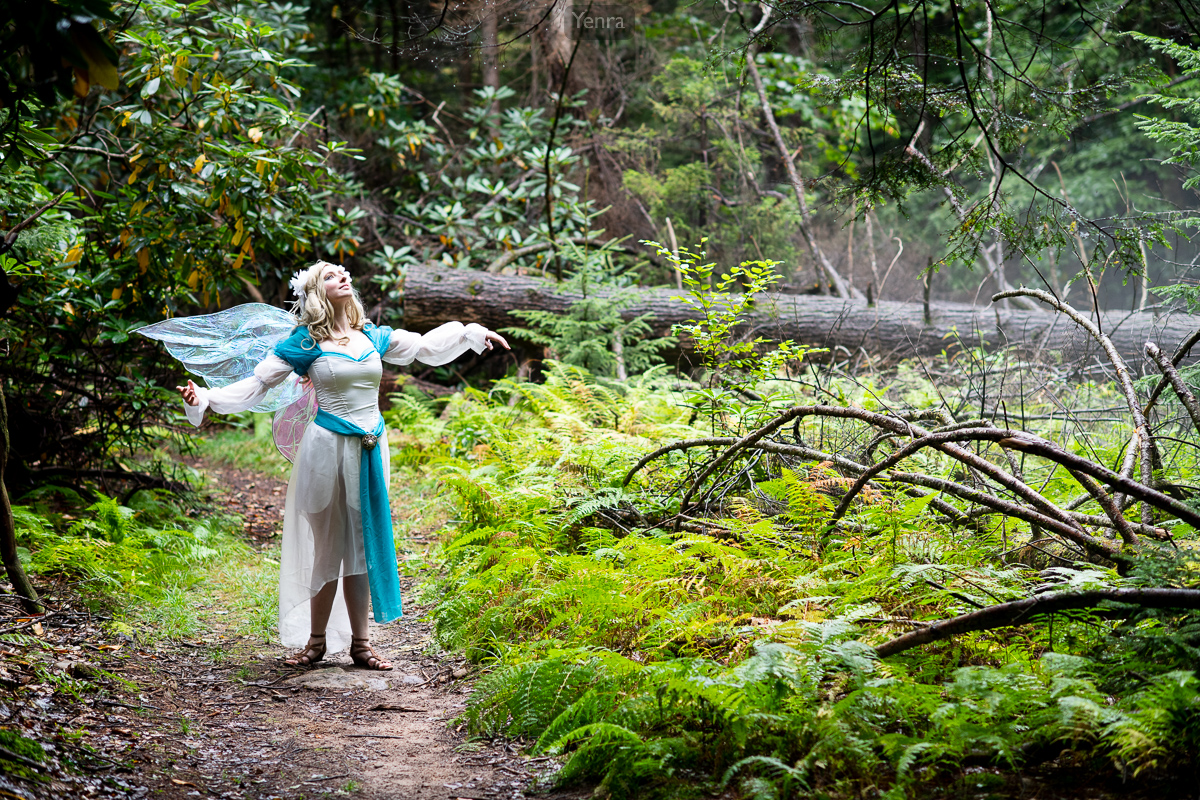
Fairy Odette, Swan Princess · Photograph: Yenra · Archive tags: Odette, Swan Princess
Captured: 2019:09:12 15:53:20
A branching line gives your eyes a choice. Follow a larger curve and it divides into smaller paths, with open spaces between them. Looking for those divisions can help you enjoy both a busy setting and a small decorative detail in a photograph.
These three Colossalcon East 2019 photographs bring together forest branches and the vein-like pattern of a costume wing. Their teaching order is a new editorial arrangement, rather than their capture order. Begin with one line that catches your attention and see where it leads.
Trace a line into smaller branches
In the first portrait, the standing figure occupies the left side while curving branches spread across the right foreground. Smaller offshoots leave the larger lines at different angles. Fine twigs overhead extend the pattern into another part of the frame.
Choose one larger branch and follow it until it divides. Then look at the open shape between two offshoots. That space can be as useful to notice as the branches themselves: it gives the pattern a little room and helps you distinguish one path from the next.
Return to the whole photograph. Notice where the lines sit in relation to the face, the clothing and the standing pose. You do not need to trace every twig. One clear path is enough to begin describing how the setting shares the picture with the person.
Compare the branches with the portrait
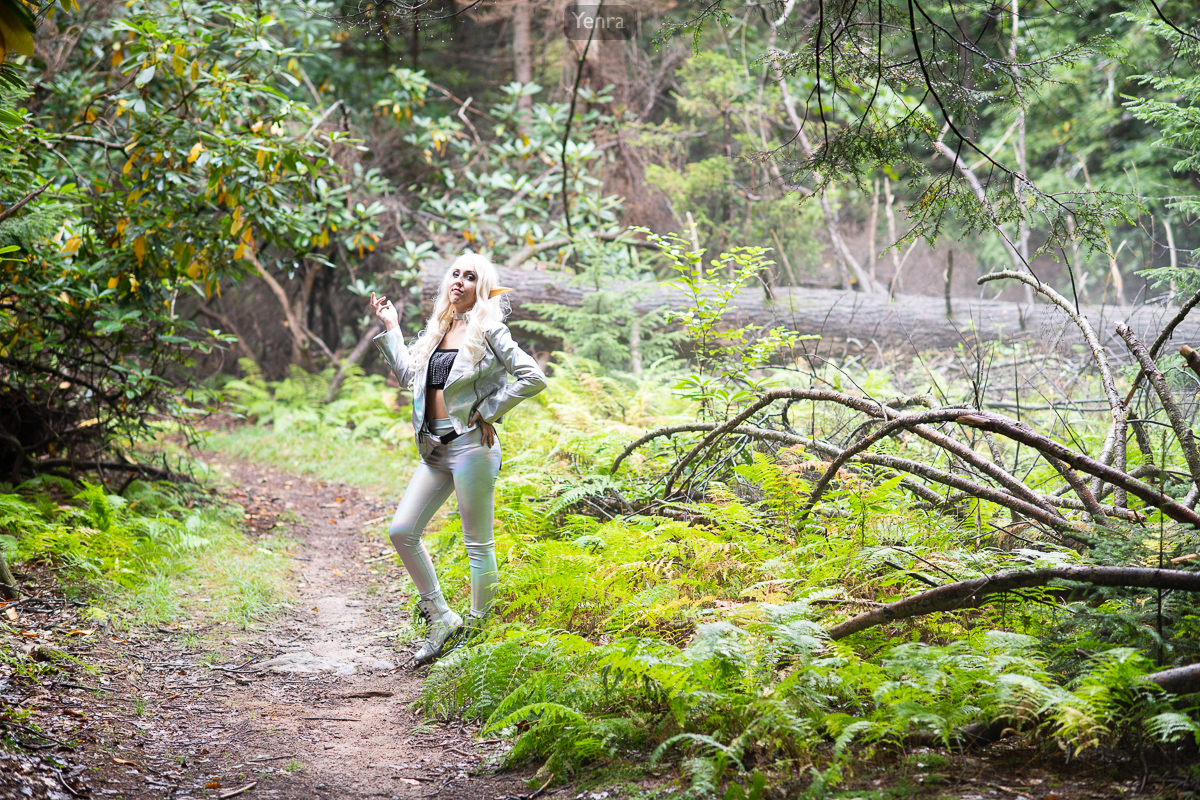
Space Elf · Photograph: Yenra · Archive tags: Elf, Krazy Magic Cosplay
Captured: 2019:09:12 15:51:48
The Space Elf portrait uses the same branch-filled setting, with the figure nearer the center and a different pose. The branches remain on the right. Comparing the two complete frames makes it easier to notice how the relationship between person and pattern changes.
Move your attention from the face to the nearest strong branch, then back again. Compare the space around the shoulders and arms in each picture. A pattern may feel prominent in one view and become a quieter companion in another, even when many of its lines remain recognizable.
When you make a photograph of your own, try a small change of viewpoint from an accessible path. Look at where a branch meets an outline and where a gap gives the subject space. Keep a frame you enjoy before trying another; each version can help you discover a different relationship.
Find an echo in a costume
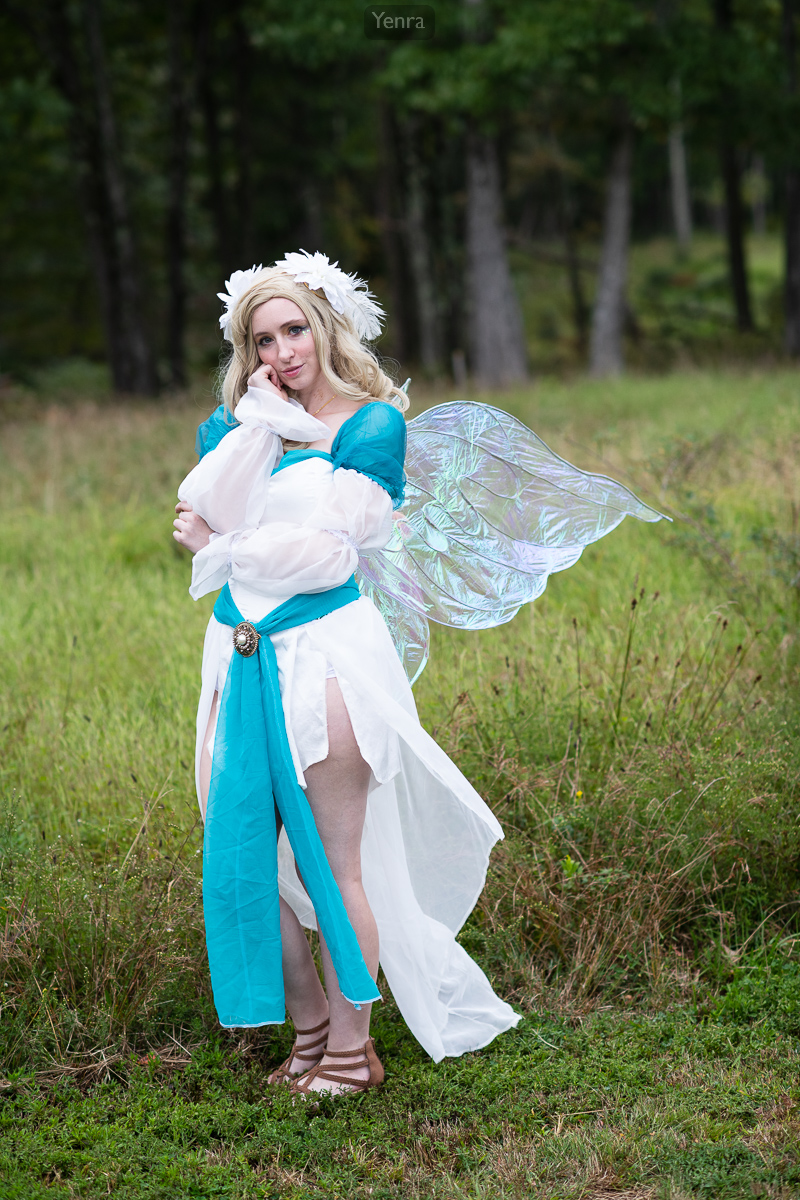
Fairy Odette, Swan Princess · Photograph: Yenra · Archive tags: Indigo Castle Cosplay, Odette, Swan Princess
Captured: 2019:09:12 17:40:35
The final portrait brings the idea into the costume. Fine vein-like lines divide the iridescent wing beside Fairy Odette. They create smaller areas within a broad outline, echoing the way branches divide the space in the earlier forest views.
Compare the scale of the patterns. In the forest, the lines occupy much of the setting. Here, they belong to one feature beside the figure. Looking for a similar structure at a different size can connect photographs without asking them to show the same subject.
Try describing one connection in everyday words: a larger line divides, smaller lines spread out, or open spaces sit between them. Keep the original frame in view as you look. Your observation can be brief and still give you a fresh way to enjoy a familiar photograph.
Look back with curiosity.
- Where does the line divide?
- Which branches or spaces are easiest to follow?
- How does the pattern relate to the person or main subject?
Keep exploring
Following lines through a photograph · Noticing crossed lines in a photograph · Noticing patterns around a portrait
Browse the complete Colossalcon East 2019 gallery. Follow a photograph into its original neighbors and see what else catches your attention. A branching path, a familiar layer or a small variation may give you the starting point for another experiment.