Field notes · Look · Try · Compare
Noticing crossed lines in a photograph
Trace a visible crossing, then compare what changes when two long shapes separate.

Portrait with crossed costume bands · Photograph: Yenra
Captured: 2013:11:02 11:50:31
Two lines crossing can give your eyes a small place to pause. A band of fabric, a long prop or an edge in the surroundings can create that meeting point. Following each line separately helps you notice the shape they make together.
These Nekocon 2013 photographs offer a crossing in clothing, a crossing between two props, and a more open arrangement of those props. Begin with what you can see, then compare the different spaces around the lines.
Find a crossing in the clothing
Black costume bands form an X below the pale top. Their straight edges meet near the center of the outfit, while the yellow hair makes longer curves on either side. The crossing is a small, clear shape within a portrait containing many other details.
Trace one band from one side of the picture to the other. Then follow the band that crosses it. Notice their angle and the spaces between them. You can describe the relationship in ordinary words: two dark diagonals meeting, with pale areas opening around them.
Look back at the whole photograph after studying the crossing. Where do your eyes travel next? They may return to the face, follow the hair or find another dark edge. The crossing can be one useful stop within a larger picture.
Follow two props across the frame
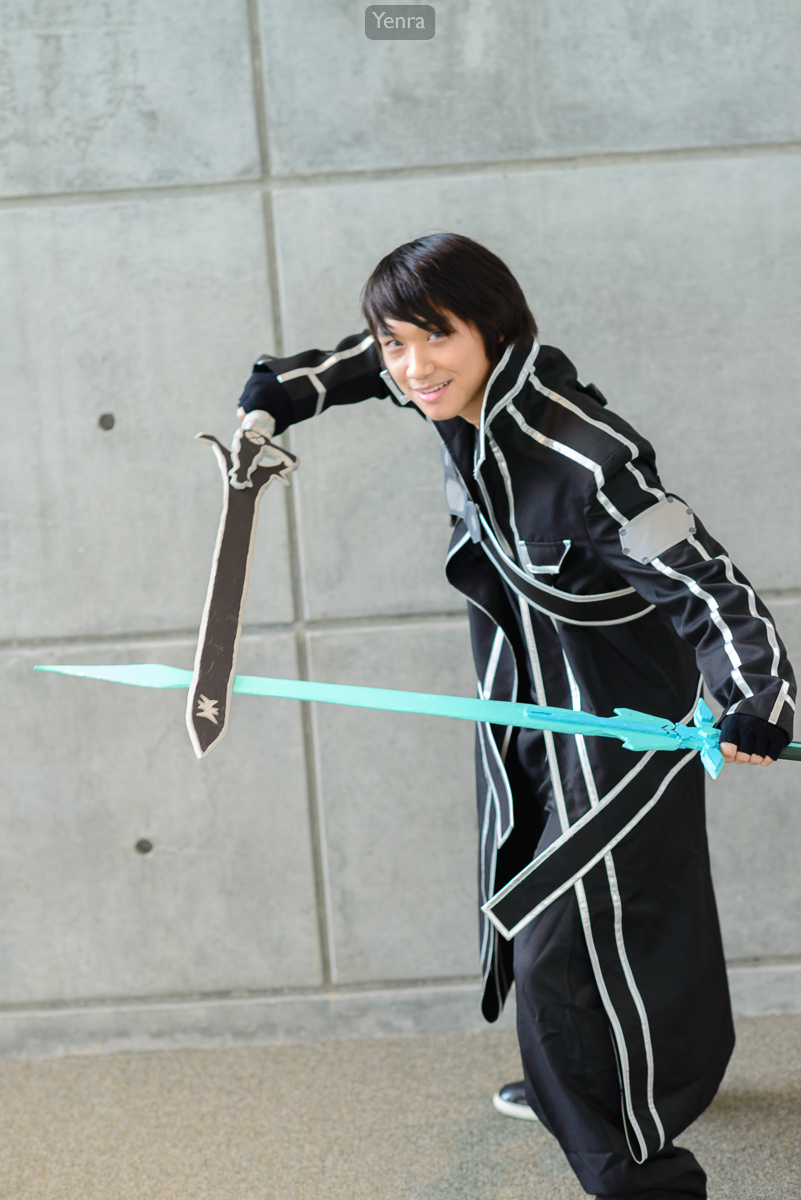
Kirito, Sword Art Online · Photograph: Yenra
Captured: 2013:11:02 11:58:48
A turquoise sword-shaped prop reaches across the lower part of this portrait. On the left, a darker prop points downward and crosses its path in the picture. Their different colors help you follow each shape.
The crossing sits away from the face, while the hands connect the props to the person's pose. Pale trim on the dark clothing adds further lines. Try tracing the two long shapes first, then explore how the arms and costume edges continue through the frame.
A photograph can show two forms crossing without telling us whether they touch. For this exercise, the visible meeting of their outlines is enough. Notice where it falls and how much space surrounds it.
Compare a separated arrangement
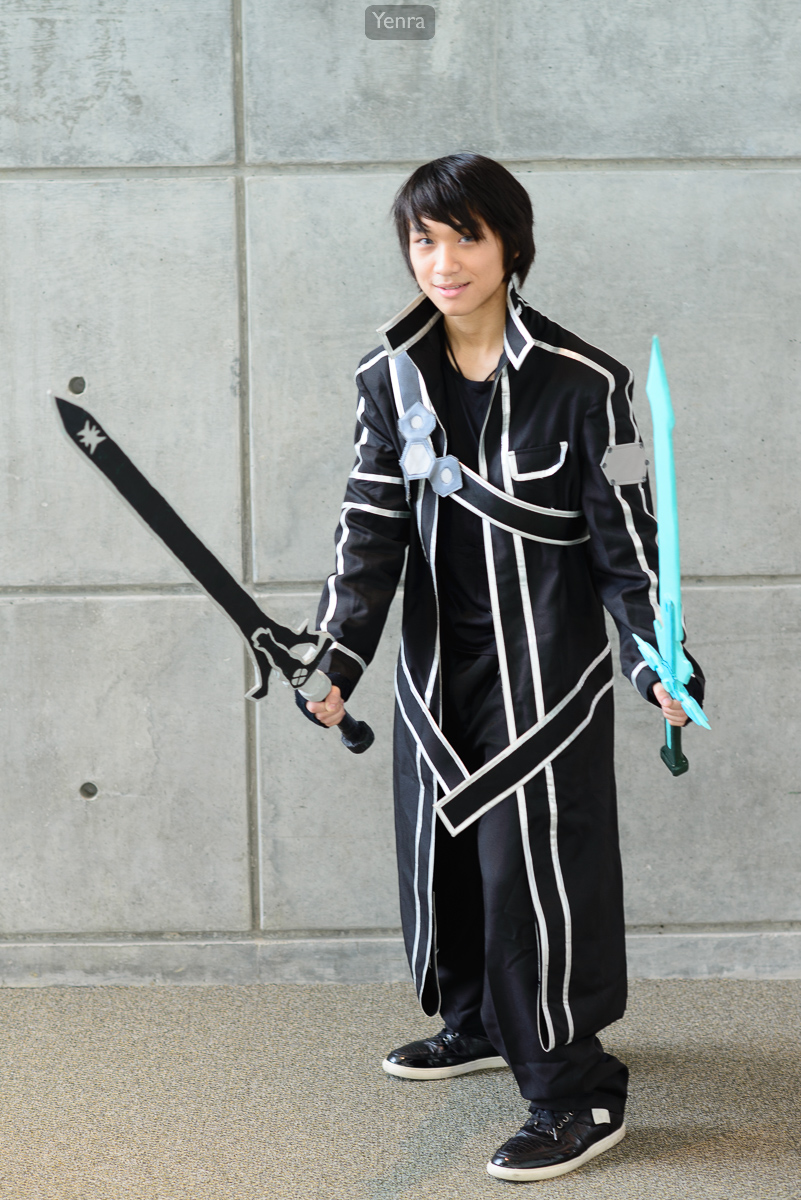
Kirito, Sword Art Online · Photograph: Yenra
Captured: 2013:11:02 11:59:02
The same two props now sit apart on either side of the person. The darker one points toward the upper left, while the turquoise one rises on the right. The space between them gives the portrait a more open arrangement.
Compare this picture with the previous frame. Where did your eyes pause before, and where do they go now? Follow the hands and the gaps around the body as well as the long edges. Each arrangement offers something different to enjoy.
The second photograph does not need to prove that crossings should be avoided or preferred. Together, the two pictures give you a useful comparison: a shared meeting point and two separate directions.
Try a crossing with simple objects
Two pencils or ribbons on a table are enough to explore this idea. Arrange them so their shapes cross in your view and make a photograph. Move one slightly, or separate them, then make another. A phone camera is a good place to begin.
Keep the whole frame in your comparison. Notice the crossing, its position and the surrounding empty areas. Write one sentence about each arrangement and keep a question for next time. A small change can give you plenty to see.
Look back with curiosity.
- Where do your eyes pause at a crossing?
- What changes when the long shapes separate?
- Which arrangement would you enjoy trying?
Keep exploring
Noticing diagonals in a photograph · Noticing overlap in a photograph · Exploring the edges of the frame
Browse the complete Nekocon 2013 gallery.