Field notes · Look · Try · Compare
Making a portrait with curtains
Use a curtain edge, an open gap and a gentle hand gesture to explore a portrait together.
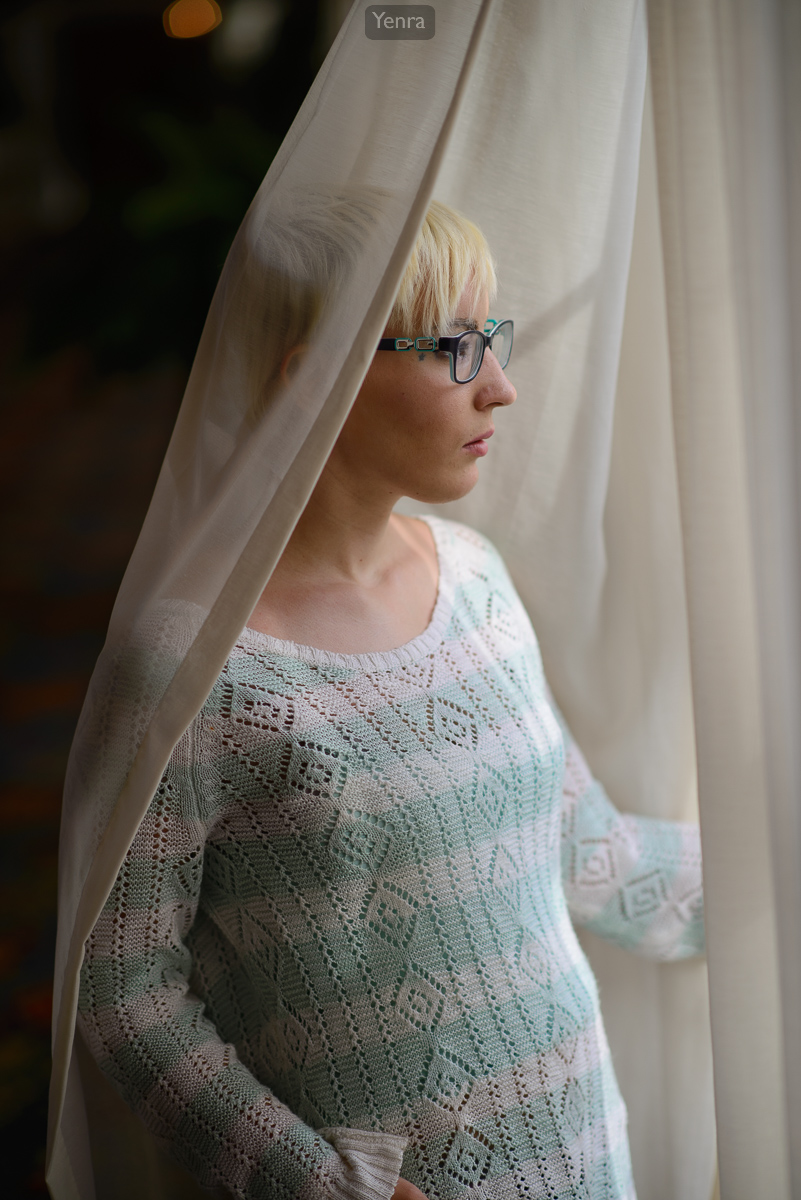
Portrait beside a curtain edge · Photograph: Yenra
Captured: 2015:10:29 15:43:17
A curtain can become a soft border, a pale background or something a portrait partner gently holds. Its edge gives you a shape to arrange around the face, and the gap between two panels offers an easy variation to explore together.
These are three separate Anime USA 2015 portraits with different people, framing and surroundings. They offer possibilities for working with fabric. Begin with a curtain or light fabric panel you can comfortably arrange, and let your partner help choose the opening and gesture.
Begin beside one curtain edge
A diagonal curtain edge passes beside the profile, with another pale panel at the right of the frame. The fabric partially overlaps the hair and shoulder while leaving a clear view of the glasses, nose and mouth. Lace clothing adds a smaller pattern below.
Notice the relationship between the face and the fabric rather than treating the curtain as something to remove from the picture. The edge makes a gentle boundary between the darker background and the portrait.
For a first variation, invite your partner to stand or sit beside one panel. Look for a position they enjoy and a clear view of the face. A small camera movement can change how the fabric overlaps the hair, shoulder and surrounding space.
Open a wider space
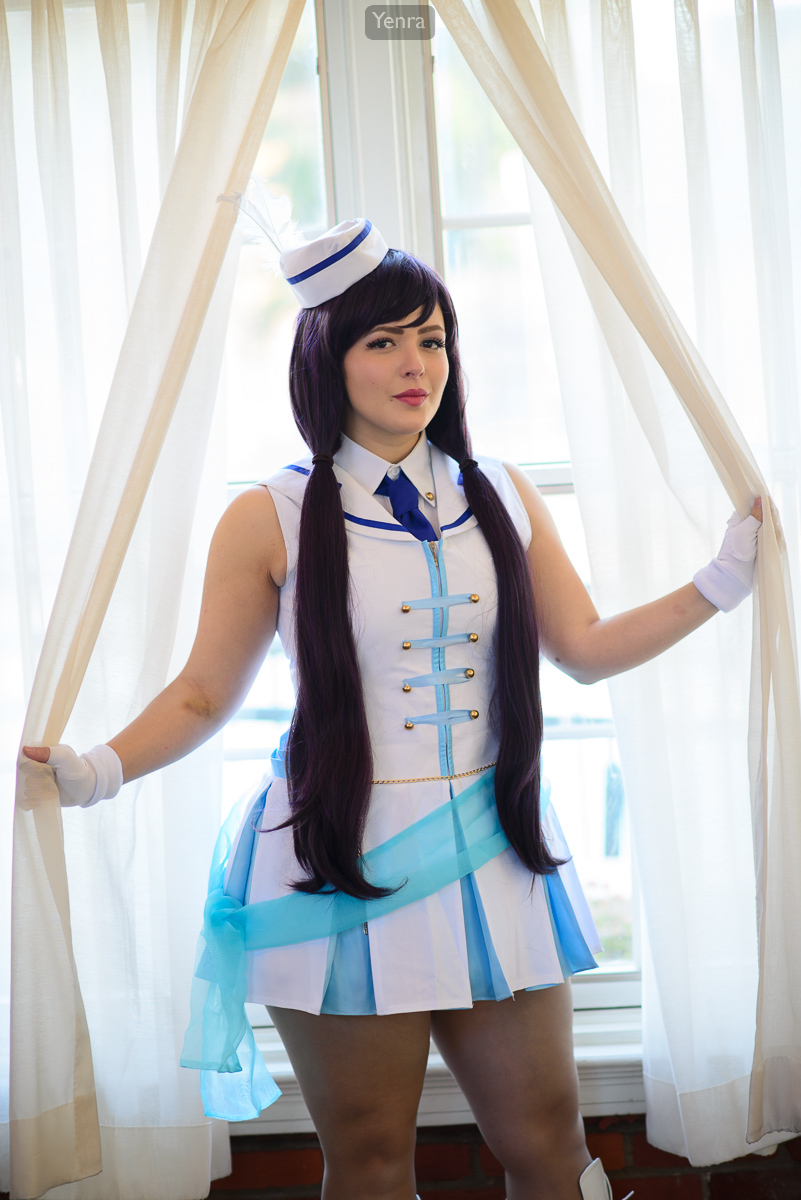
Nozomi Tojo, Wonderful Rush, Love Live · Photograph: Yenra
Captured: 2015:10:30 09:40:50
Two curtains are held apart around the blue-and-white costume. The hands connect the pose to the fabric, while the sloping edges create a broad opening in front of the bright window. The supplied source title, Nozomi Tojo, Wonderful Rush, Love Live, stays with the photograph.
If your partner would like to hold the edges, begin with their arms in a comfortable position. The opening can be wide or narrow, and the hands can sit at different heights. A hands-free arrangement can offer the same framing idea.
Look at the whole picture as you work. There may be a useful balance between the face, costume, bright background and pale fabric. Review a test photograph and adjust exposure for the rendering you enjoy; your own light and camera will offer their own possibilities.
Try a narrower opening
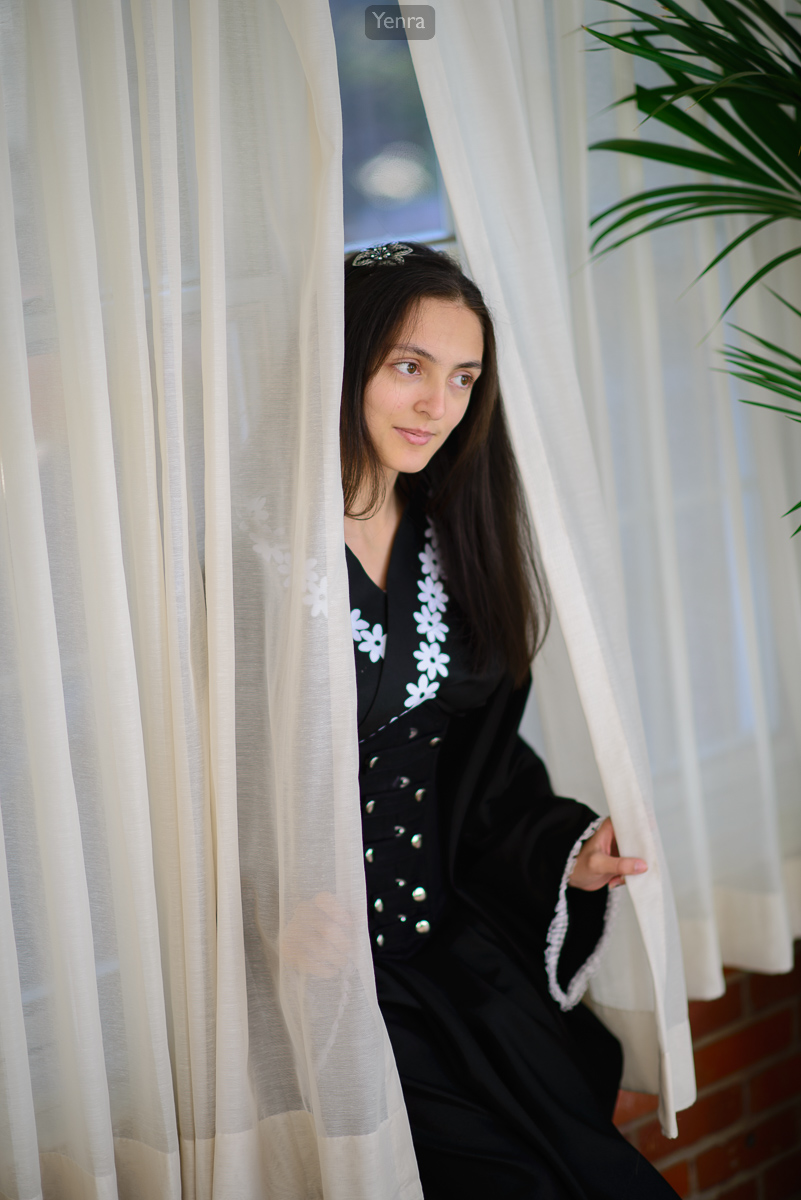
Portrait between pale curtains · Photograph: Yenra
Captured: 2015:10:30 11:07:11
A narrower gap reveals the face and dark clothing between pale curtains. A hand lightly meets the right panel, while the fabric on the left becomes a broad foreground shape. Small white decorations on the clothing echo the lighter areas around the portrait.
Compare how much of the frame the curtains occupy here and in the previous photograph. The fabric can be a narrow border or a substantial part of the composition. You can explore that change without needing a large gesture.
Invite your partner to decide how much of the opening feels comfortable. A seated position, one lightly resting hand or no contact with the fabric at all can be a complete portrait. Make time to look at the results together.
Keep one small discovery
Choose two versions from your own experiment and describe what the curtain contributes to each. Perhaps one leaves more room around the face, while another brings the fabric's folds into view. Those observations can guide the next photograph.
The recorded settings are a useful starting point for curiosity. Try your own light, framing and exposure, and keep a result you and your partner like. An ordinary window and a small change in the fabric can give you plenty to explore.
Look back with curiosity.
- How much of the curtain would you include?
- Which gesture feels comfortable to your partner?
- What small variation would you both enjoy?
Keep exploring
Making a portrait beside a window · Noticing sheer layers in a photograph · Planning a portrait together
Browse the complete Anime USA 2015 gallery.