Field notes · Look · Try · Compare
Noticing sheer layers in a photograph
Explore what remains visible through fabric, mesh, and overlapping layers.
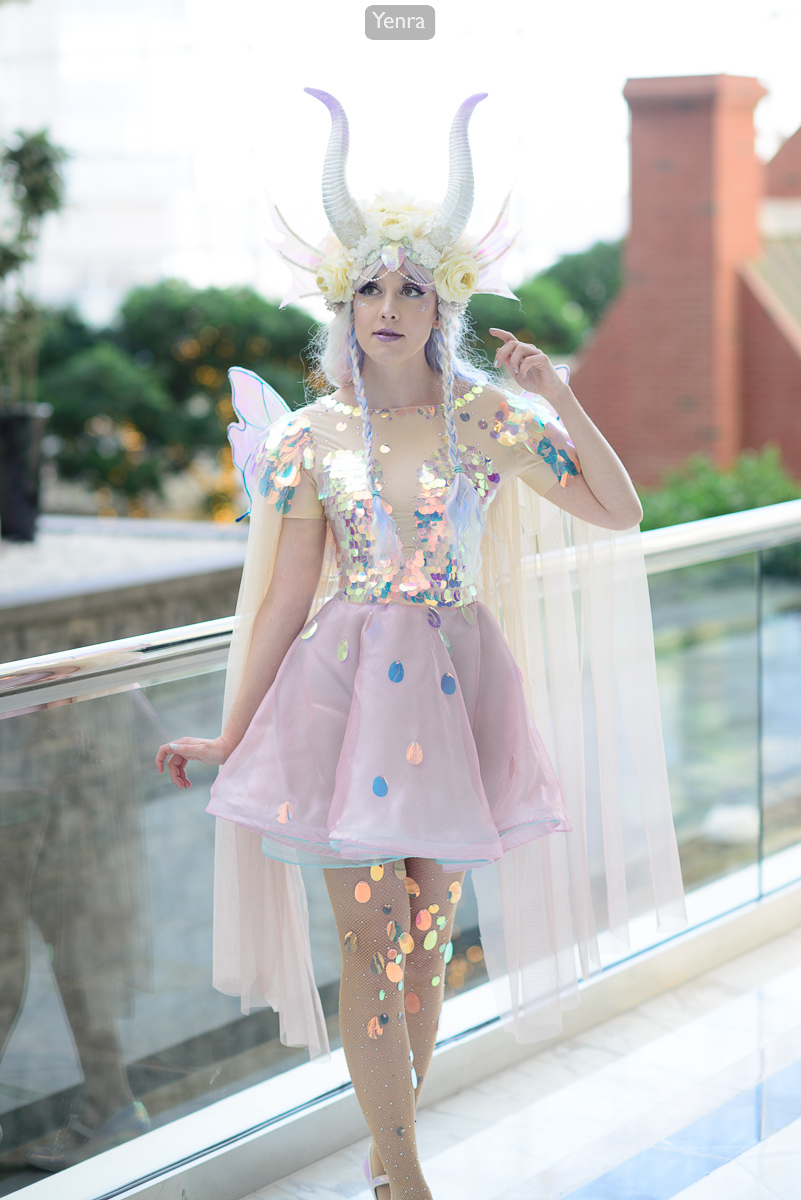
Opal Dragon · Photograph: Yenra · Credit: SunsetDragon
Captured: 2018:01:06 13:54:13
A light layer can let you see two things at once: the material itself and something behind it. A railing may remain visible through hanging cloth, or an open weave may become a small pattern across another surface. Follow what shows through and let that observation give you a new way into the photograph.
See the background through the cloth
In this Opal Dragon portrait, SunsetDragon stands beside a railing in a pale costume. Light fabric hangs from the shoulders. Look toward the lower right of the picture: the railing and its surroundings remain partly visible through that fabric.
You can follow the hanging edge, then look through it. The cloth changes the appearance of what lies behind without hiding it completely. Its folds and overlapping sections give some areas more presence than others. Those small differences can be as interesting as a strong outline.
Begin with one visible connection. Where does a line continue behind the material? Where does it become softer or harder to follow? You do not need to name the textile or reconstruct the lighting to enjoy what the finished picture offers.
In your own surroundings, a light curtain can provide a similar opportunity. Look at the edge of a window frame through it, or at a familiar object beyond a loose piece of fabric. A small change of viewpoint may reveal a different relationship between the layers.
Look closely at an open weave
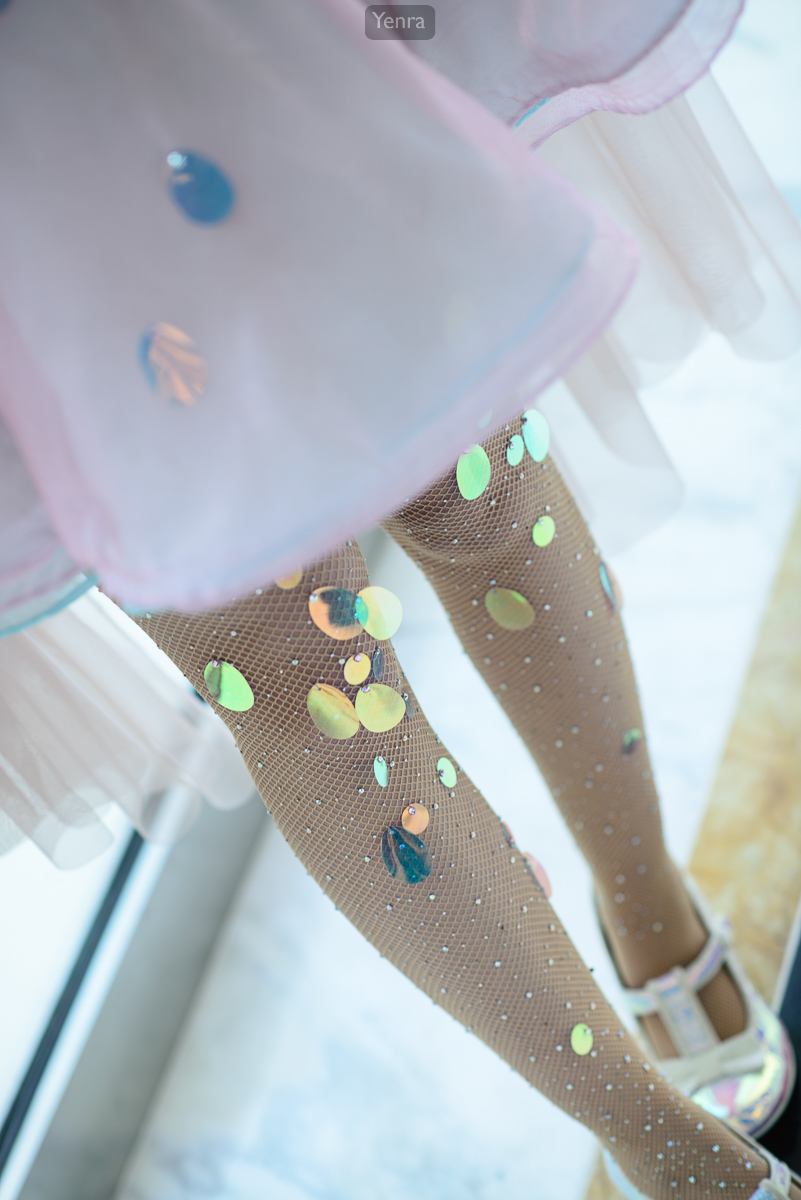
Opal Dragon Detail · Photograph: Yenra · Credit: SunsetDragon
Captured: 2018:01:06 13:55:24
This is a separate close photograph, not a crop made from the first image. A soft skirt edge sits above an open mesh decorated with reflective discs. The mesh has visible openings; the skirt presents a softer, more continuous layer. Each gives you a different kind of partial visibility.
Follow a few lines in the weave and then look at a reflective disc beside them. One lets you see through an opening, while the other catches light on its surface. Separating those observations helps you describe the photograph more precisely.
The soft edge, fine pattern and bright decorations share the frame. Let your attention move among them. You might notice the pattern first at one viewing size and a larger pale shape at another. Both observations can be useful when deciding how close to stand for a new picture.
Try an ordinary piece of material you already have. You can photograph an object beyond it, or simply compare a single layer with a loose overlap. Keep the arrangement easy and look for what becomes visible, rather than aiming for a particular effect.
Follow the layer into another setting
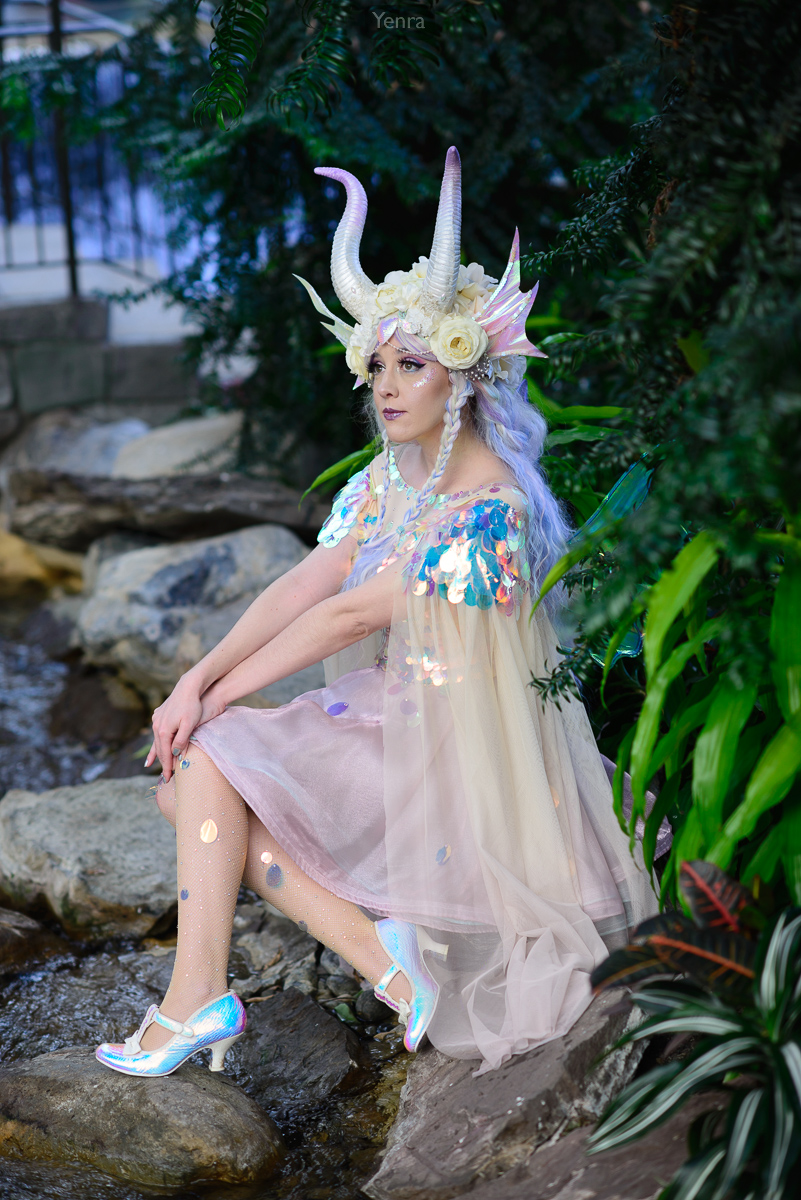
Opal Dragon · Photograph: Yenra · Credit: SunsetDragon
Captured: 2018:01:06 14:20:20
Here the model sits beside plants and rocks. Pale fabric falls across the costume and gathers near the stone. Against these darker surroundings, parts of its outline and overlapping areas become easier to follow.
Compare this view with the railing portrait. The fabric belongs to a different arrangement of tones, textures and shapes. A layer that was easy to look through in one area can become a more substantial shape in another.
These photographs also differ in pose, framing and setting. Enjoy the visible comparisons without treating them as a controlled test of one material or lighting change. They can suggest a question to explore in your own circumstances.
Make two pictures, or revisit two photographs you already have. Write one short observation about where a layer becomes clear and where it seems to dissolve into its surroundings. That is enough to begin a small study of your own.
Look back with curiosity.
- What can you still see through the layer?
- Where does the material become easier to notice?
- What background would you like to try next?
Keep exploring
Noticing texture in a photograph · Noticing fabric folds in a photograph · Noticing light and dark shapes
Browse the complete MAGFest 2018 gallery.