Field notes · Look · Try · Compare
Planning a portrait together
Begin with a shared idea, a comfortable view, and one variation to try.
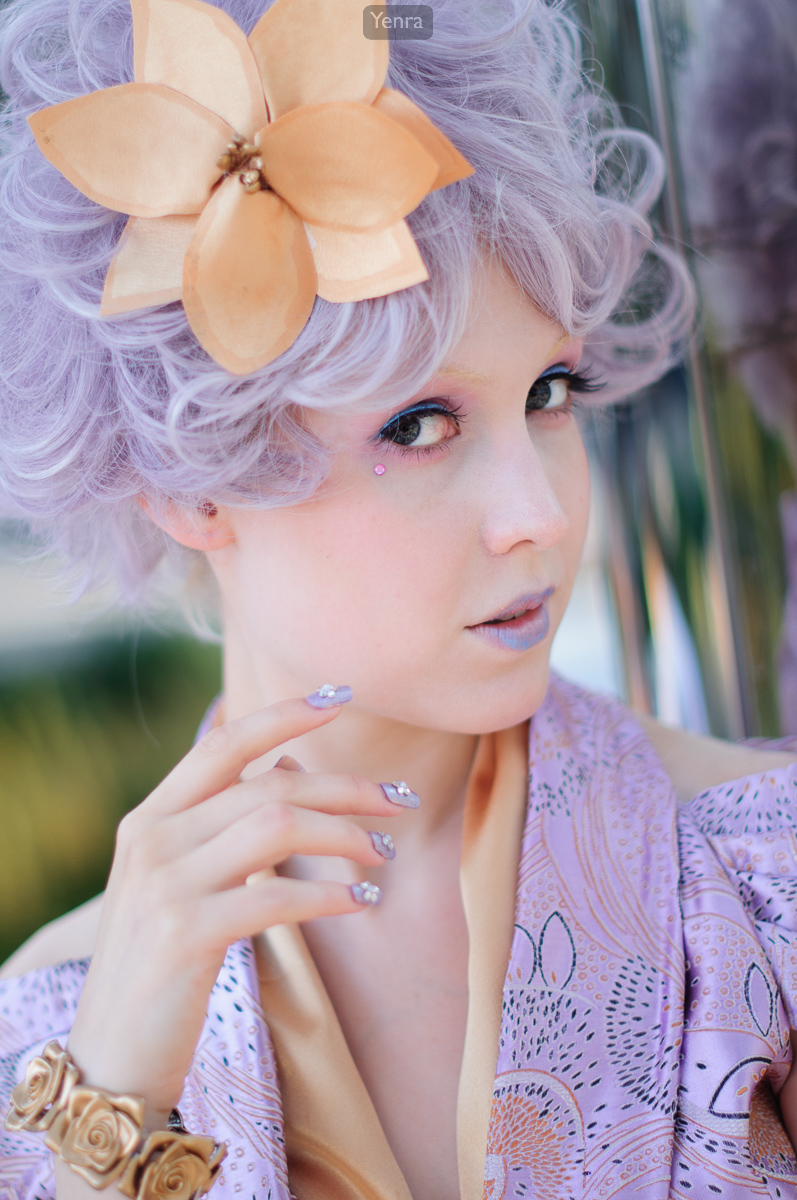
Effie Trinket, Hunger Games · Photograph: Yenra
Captured: 2012:07:28 17:46:35
A portrait can begin with a small conversation. Ask what the person would enjoy showing, share a detail that caught your attention, and choose a comfortable place to start. A brief shared idea gives you something to explore while leaving room for either of you to suggest a change.
Begin with a detail your model enjoys
The peach-colored flower, lavender curls, patterned clothing, and decorated nails offer several details to notice in this close portrait. The hand beside the face brings some of those smaller elements into the same view.
You could use a visible detail like this as a starting question: “Is there something in your outfit or styling you would especially enjoy including?” Give your model time to name their own interest. It may be different from the first thing you noticed.
Share your observation as a possibility. You might enjoy a color relationship, a shape, or the way an accessory sits beside the face. Connect that observation with what your model wants to show, then describe the shared idea in one simple sentence.
Agree on a comfortable starting view
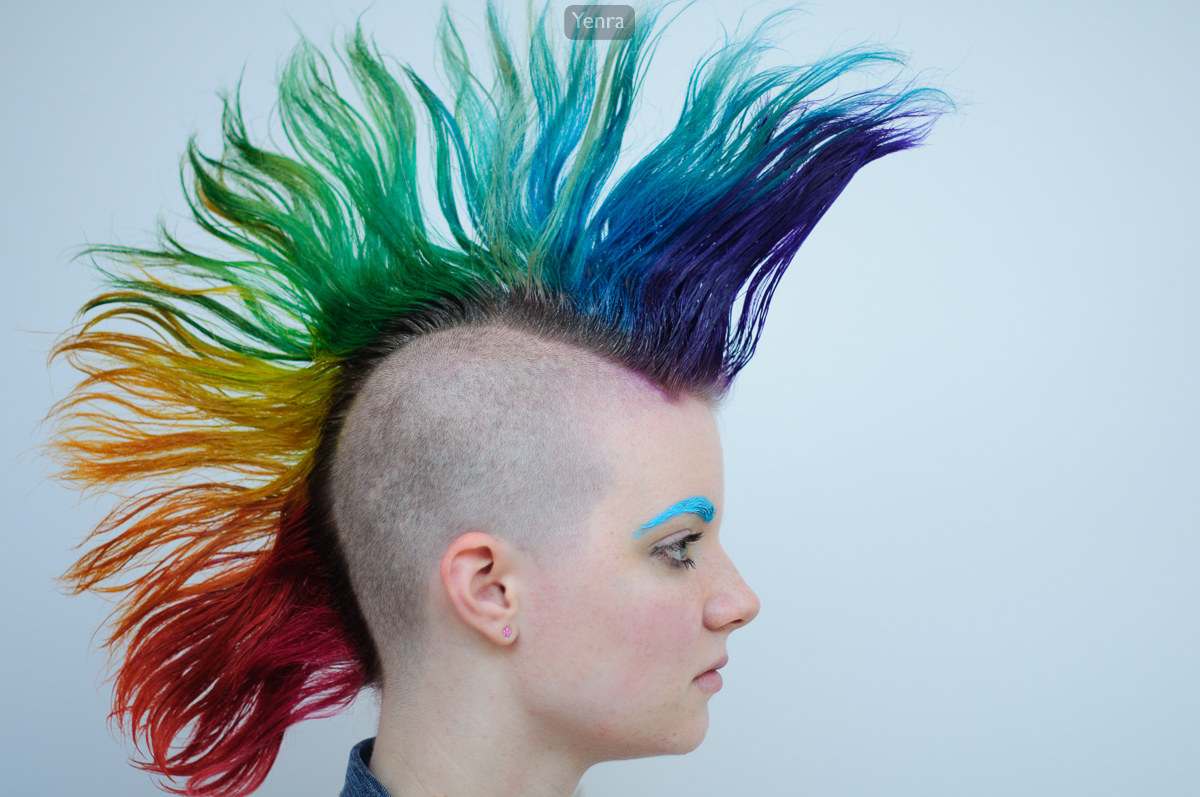
Rainbow Dash with Mohawk · Photograph: Yenra
Captured: 2012:07:28 17:28:11
The profile photograph gives the rainbow-colored hairstyle room to describe its outline against a pale background. The horizontal frame includes its spread as well as the profile of the face. Those visible choices offer a useful example when discussing a starting view.
Ask whether your model would enjoy a profile, a closer view, or more of their clothing and surroundings. Choose a place and position that feel comfortable to them. Let them adjust their own hair, clothing, or accessories, and keep the starting idea easy to revise.
A plan can be as brief as “We would like to show this detail in a comfortable close portrait, then try a wider view.” You can also agree how you both would like the photographs to be used. Keeping that conversation clear helps the later review connect with the idea you shared.
Leave room for a shared variation
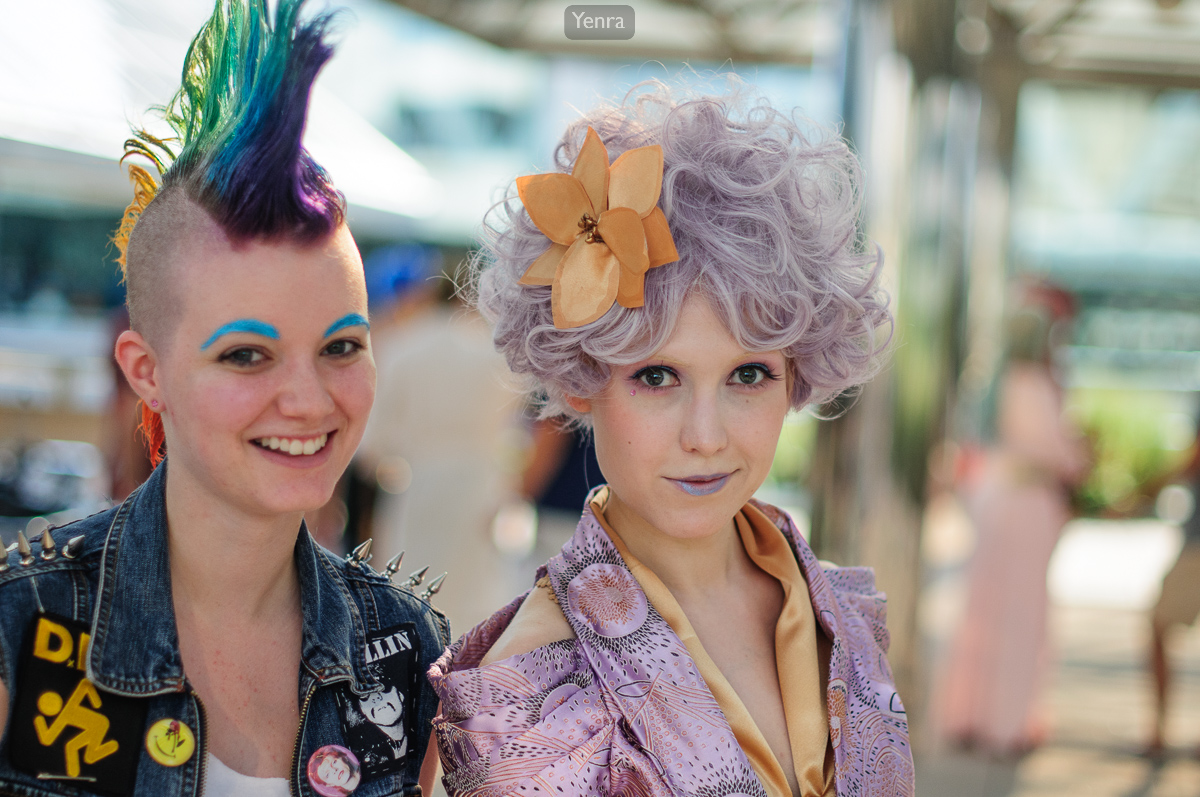
Rainbow Dash and Effie Trinket · Photograph: Yenra
Captured: 2012:07:28 17:51:41
The two-person photograph brings the rainbow-colored hairstyle and lavender curls into one frame. The decorated denim vest and patterned clothing remain visible beneath the faces. It offers another arrangement to discuss alongside the individual portraits.
A shared variation might involve another willing person, a wider framing, or a small change in viewpoint. Ask what each person would enjoy contributing. The example shows a two-person arrangement; it does not tell us the relationship between the people or how they planned the photograph.
Choose one variation without making it a requirement. Your model may prefer the starting view, suggest something new, or decide to pause. A useful plan supports the conversation as it develops.
Write down the idea you agreed on and return to it when you look at the pictures together. What did each person enjoy? What would you change next time? Those answers can help the next portrait begin with a little more shared understanding.
Look back with curiosity.
- Whose suggestion shaped the starting idea?
- What makes the starting arrangement comfortable for your model?
- What would you both enjoy trying or changing next?
Keep exploring
Making a flexible portrait shot list · Asking for useful feedback on a photograph · Choosing portraits together
Browse the complete Otakon 2012 gallery.