Field notes · Look · Try · Compare
Making a portrait with a veil
Explore how a veil frames a face, falls over an outfit and changes against different backgrounds.
Katsucon 2016 Friday photograph 0498 · Photograph: Yenra · Archive tags: Bubbleteabrigade
Captured: 2016:02:12 11:44:13
A veil gives a portrait another outline to explore. It can frame the face, fall over the shoulders and overlap an outfit. A small change in framing or background may make a different part of that arrangement easier to see.
These Katsucon 2016 Friday photographs offer a wider view, a closer portrait and a second background. Follow the pale patterned fabric through them, then choose one simple variation to try with a willing partner. Let your partner arrange the fabric and find a comfortable position they enjoy.
Include the drape in a whole portrait
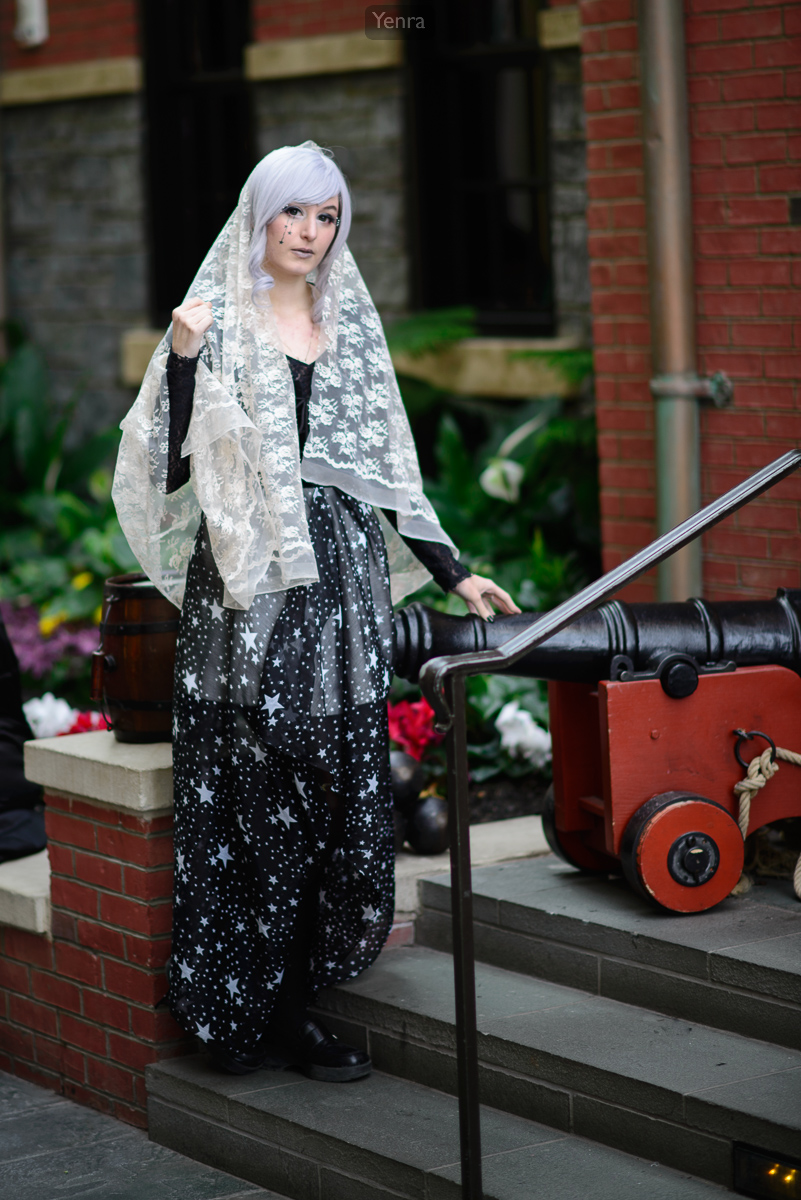
The wider portrait shows the veil falling on both sides of the face and across the dark outfit. One hand holds an edge near the shoulder. The steps, railing and surrounding setting remain visible, so you can see the fabric as part of the whole standing portrait.
For your own wider view, invite your partner to arrange the fabric first. Choose an ordinary clear place to stand or sit, then leave enough room in the frame to show the drape you both like. You can explore the idea without recreating this location or pose.
Look closer at the face and veil edge
Katsucon 2016 Friday photograph 0512 · Photograph: Yenra · Archive tags: Bubbleteabrigade
Captured: 2016:02:12 11:45:39
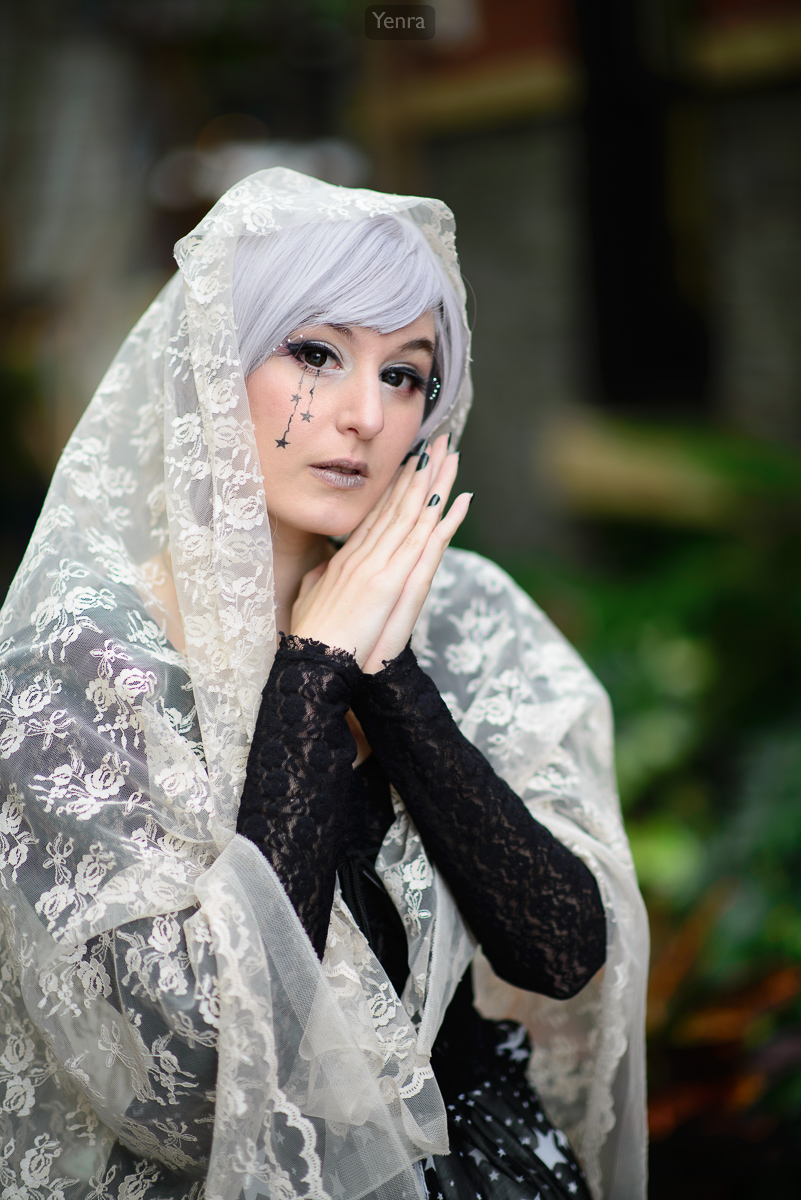
In the closer portrait, the floral pattern and the veil edge occupy more of the frame. The face remains clear, with the hands resting together beside the cheek. Dark sleeves show through and beneath the pale fabric, giving its pattern several backgrounds within one picture.
Try a closer framing and notice which edge helps you follow the face. Your partner might hold an edge, leave their hands relaxed or choose another position. Review the photograph together and keep a variation that feels comfortable and gives you something new to see.
Compare the pale fabric with a second background
Katsucon 2016 Friday photograph 0654 · Photograph: Yenra · Archive tags: Bubbleteabrigade
Captured: 2016:02:12 11:59:52
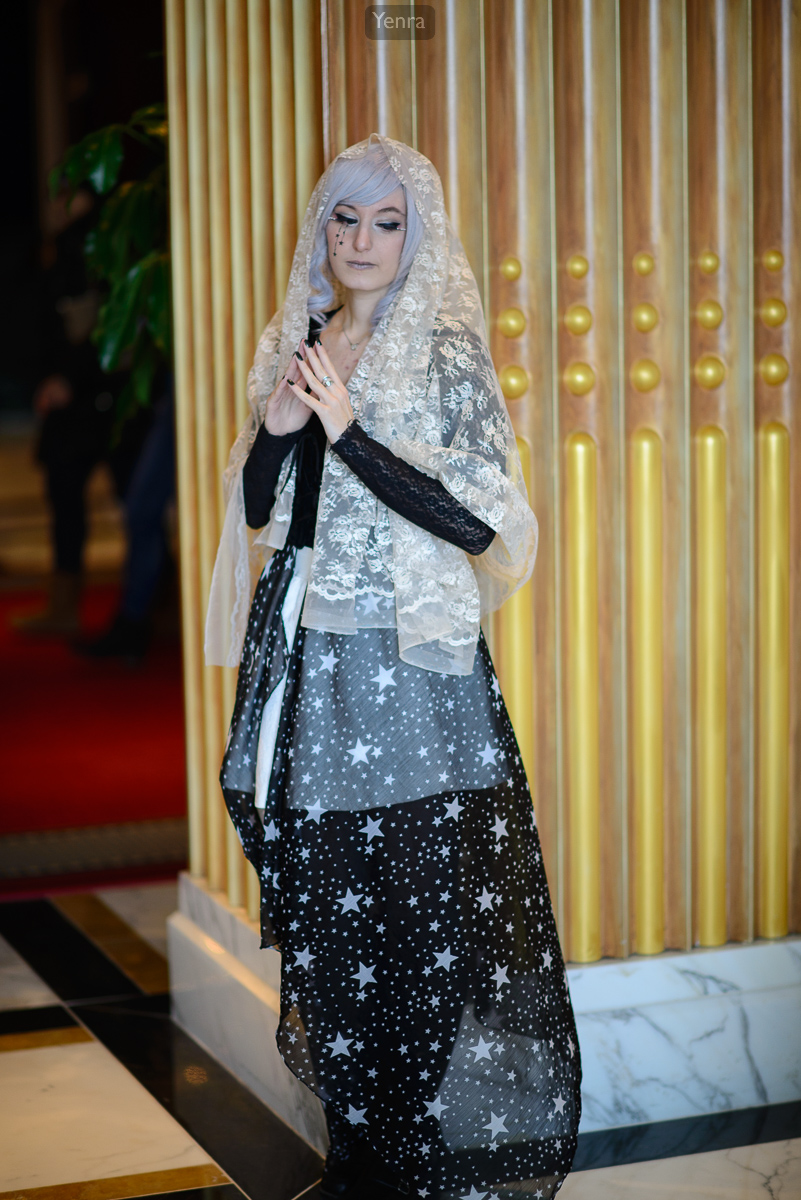
The third photograph places the pale veil against gold-colored vertical forms. The fabric also overlaps dark sleeves and star-patterned clothing. Compare those areas: the same pale pattern can be easier to follow in one part of the picture than another.
If a second background is convenient, make a variation there and compare the fabric with the first setting. Keep the face and your partner’s view clear. A small change is enough; the wider view and the closer portrait can both be useful discoveries in the same collection.
Look back with curiosity.
- How does the veil frame the face?
- What can you discover in the closer view?
- Which background makes the fabric pattern easiest to follow?
Keep exploring
Noticing sheer layers in a photograph · Exploring portrait framing · Choosing a portrait background
Browse the complete Katsucon 2016 Friday gallery. Follow a photograph into its original neighbors and see which detail, drape or connection catches your attention next.