Field notes · Look · Try · Compare
Making a portrait on steps
Explore repeated step edges and comfortable variations together.
Steps bring a ready-made rhythm to a portrait: repeated edges, small changes in height, and lines that lead into the setting. Begin with a willing partner and a comfortable place to stand. A bottom step or landing can offer plenty to explore, especially when you look together at how the surroundings meet the pose.
Let the steps shape the setting
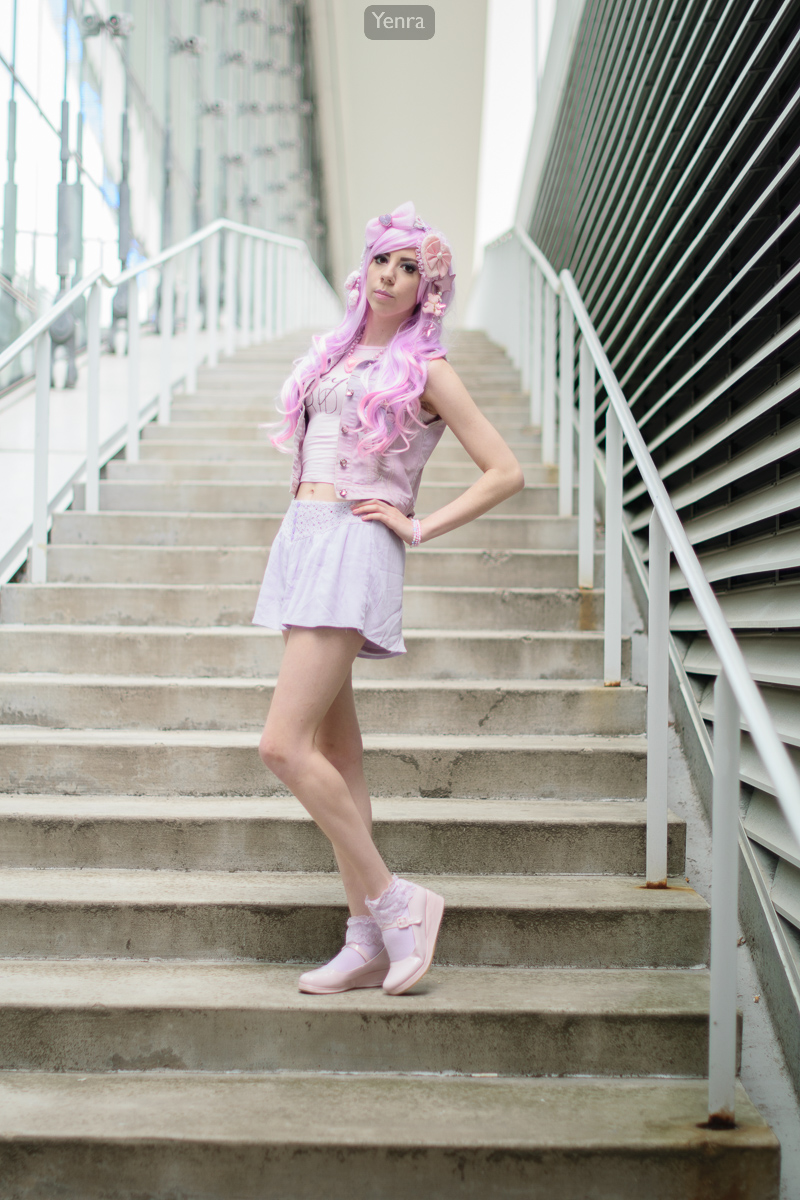
Lavender portrait on steps with one hand at the hip · Photograph: Yenra
Captured: 2015:04:17 15:15:42
In this portrait, the concrete step edges repeat behind and beneath the lavender outfit. White railings introduce longer lines, while the dark wall has another close-set pattern. The bent leg and hand at the hip give the figure a shape of its own among those repeated edges.
Notice where a step line passes beside the clothing and where a railing approaches the head or shoulder. Those relationships can change when you move the camera a little. Before asking your partner to move, try looking from a slightly different position and see what becomes clearer.
Choose stable footing and leave space for people to pass. Let your partner decide whether a step or landing feels comfortable. You can make the stairs part of the background while everyone stays on level ground, too.
Try a small change together
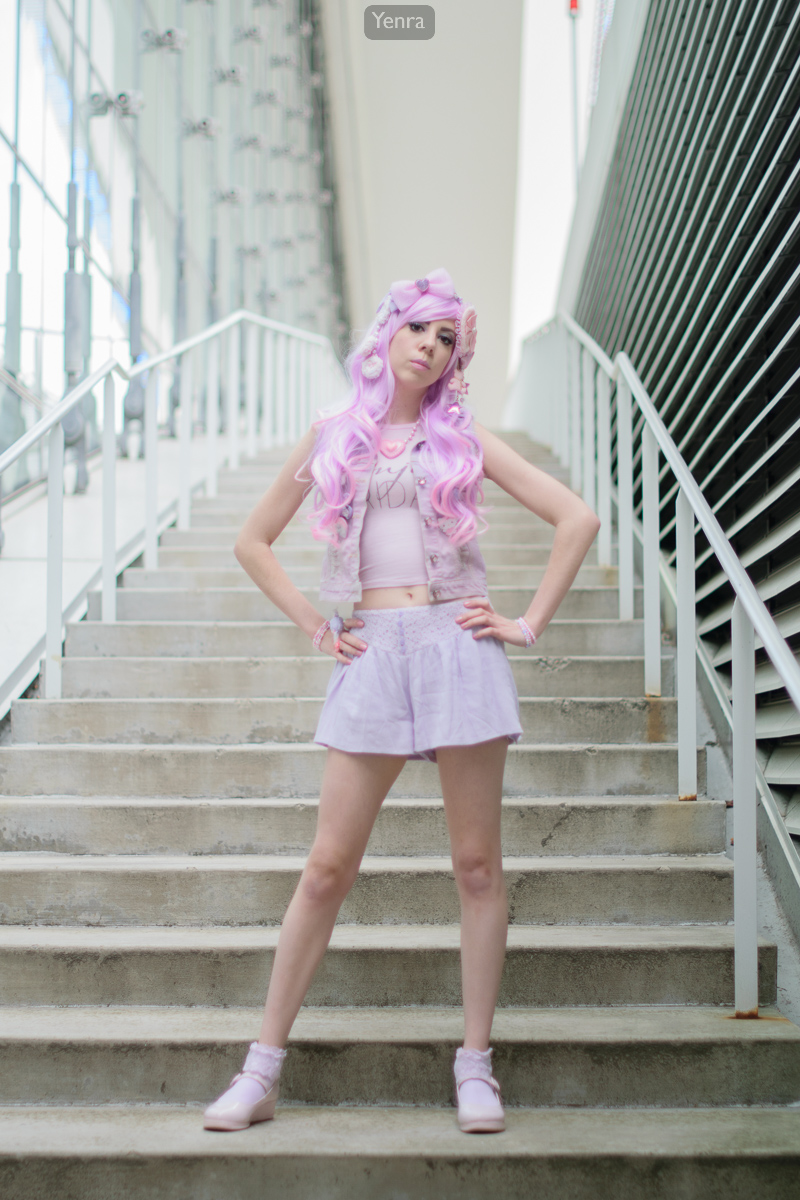
Lavender portrait on steps with both hands at the hips · Photograph: Yenra
Captured: 2015:04:17 15:16:15
This nearby portrait shows both hands at the hips and the feet farther apart. Compare the open spaces around the arms, the angle of the legs, and the step edges behind them with the first picture. The framing changes as well, so there are several useful differences to notice.
Invite your partner to suggest a variation: rest one hand, turn a little, or let the shoulders settle. Make a starting portrait, try the idea, and look at the pictures together. Ask which version feels most like what they wanted to express. A small gesture that feels comfortable can be a rewarding place to continue.
You might also leave the pose as it is and change how much of the staircase appears. A closer view can emphasize expression; a wider one can let the repeated lines become more noticeable. Each gives you another way to connect the person with the place.
Give a pair a shared focus
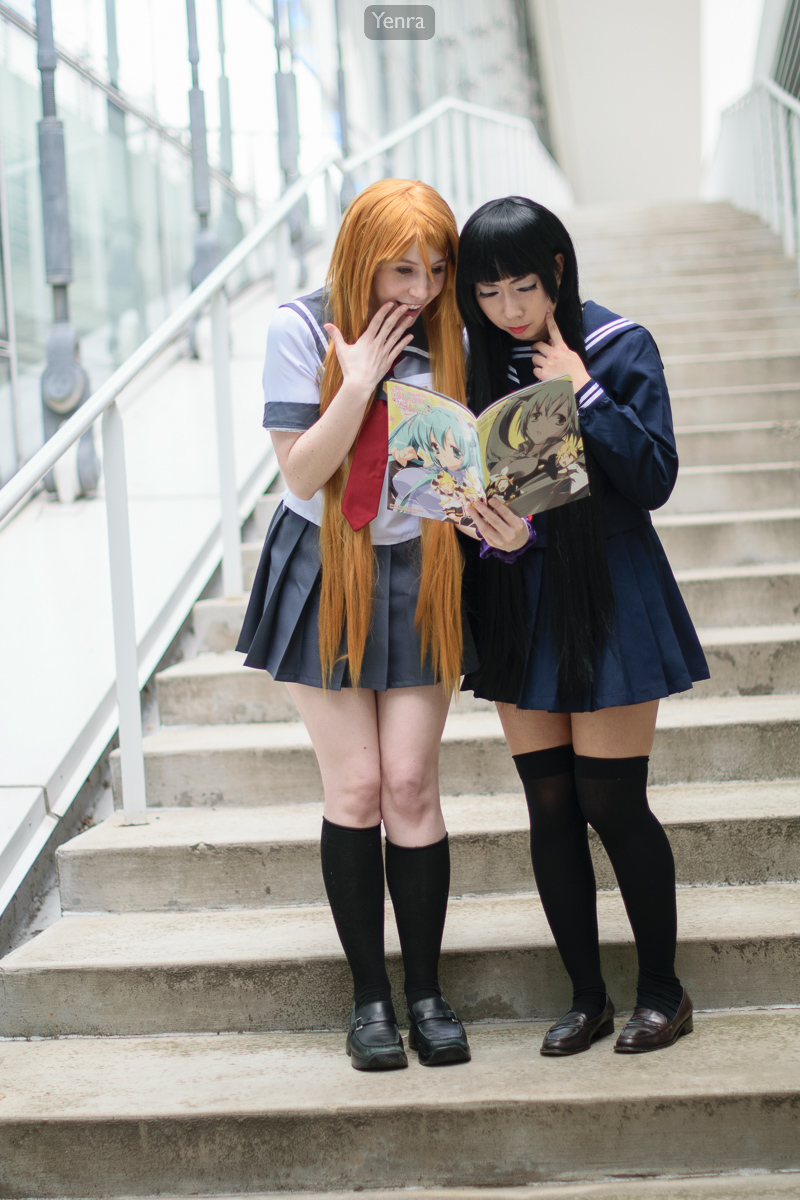
Two cosplayers sharing a book on steps · Photograph: Yenra
Captured: 2015:04:17 15:14:29
Two cosplayers lean toward an open illustrated book in this photograph. Their heads and hands gather around that shared focus, while the steps and white handrail describe the setting. The book gives the pair a reason to look toward the same part of the frame.
For a two-person variation, invite a shared activity or a brief conversation. Let each person find a comfortable position, then notice the space between them and the room around their faces. A book can be useful if it belongs in the picture; an exchanged glance can offer a connection too.
Keep the exercise small. One place, a starting portrait, and one or two shared ideas are enough. Review the photographs together and save a variation whose relationship between people and setting you enjoy.
Look back with curiosity.
- How do the repeated step edges guide your eye?
- What changes when the pose or framing shifts slightly?
- Which variation does your partner enjoy?
Keep exploring
Exploring a standing portrait · Following lines through a photograph · Photographing people together
Browse the complete Tekko 2015 gallery.