Field notes · Look · Try · Compare
Exploring a standing portrait
Choose a comfortable stance together, then explore small changes in hands, feet, and body direction.
A standing portrait gives you several relationships to explore: the placement of the feet, the direction of the body, the hands, and the space around the figure. Begin with a position your portrait partner chooses and enjoys. One small change can open up another possibility.
Follow a small variation.
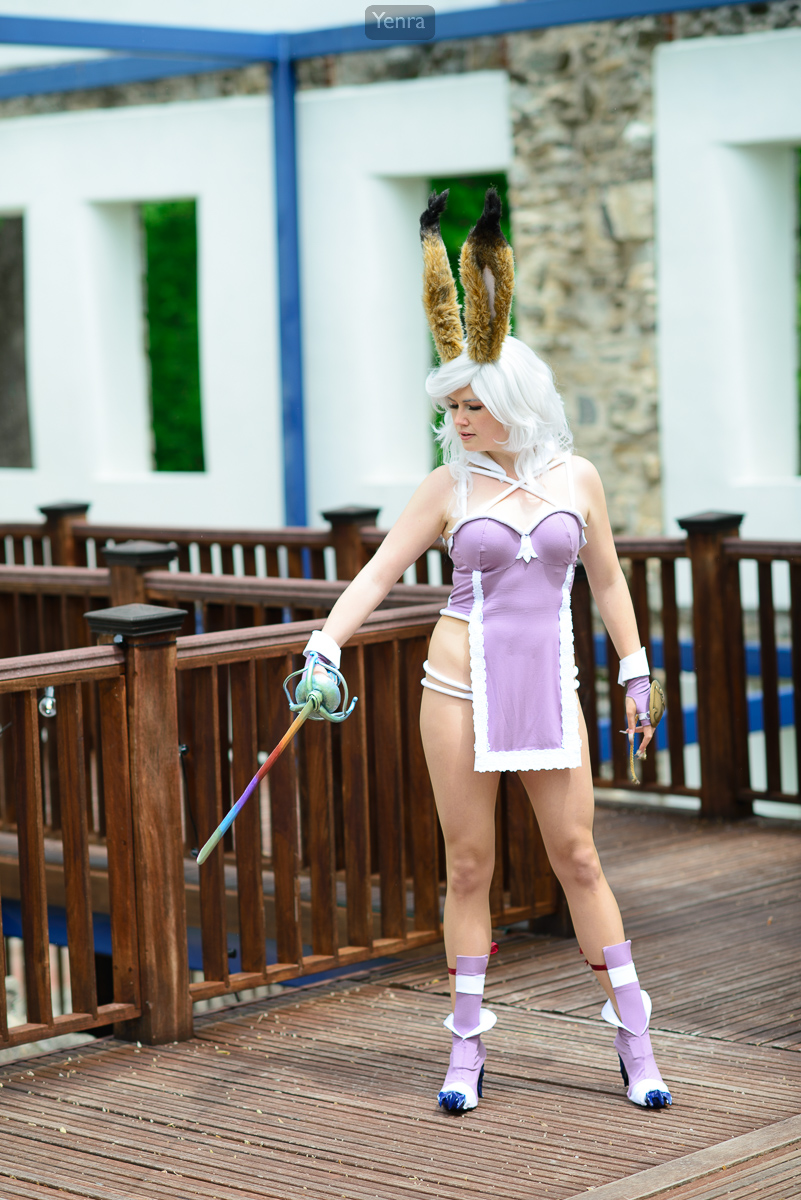
Viera Fencer, Final Fantasy Tactics Advance · Photograph: Yenra · Credit: whatthehaps
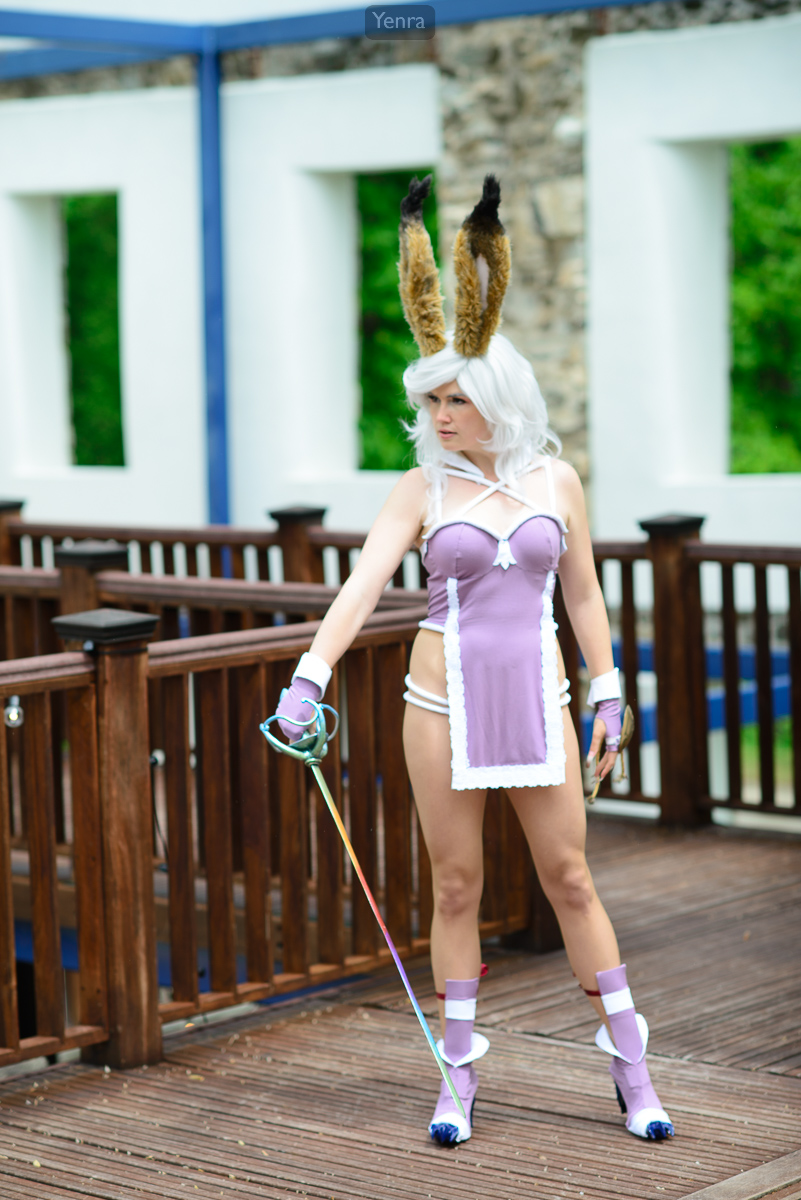
Viera Fencer, Final Fantasy Tactics Advance · Photograph: Yenra · Credit: whatthehaps
In the first portrait, the feet are apart and one arm extends toward picture left. The costume sword continues that diagonal toward the wooden railing. Look at the spaces between the arm, body, and surrounding lines.
The related photograph brings the sword nearer vertical and changes the direction of the face. The overall stance remains similar, giving you a way to follow those small variations. Which relationship catches your eye? Which might suggest something you would like to try?
Make room for the whole gesture.
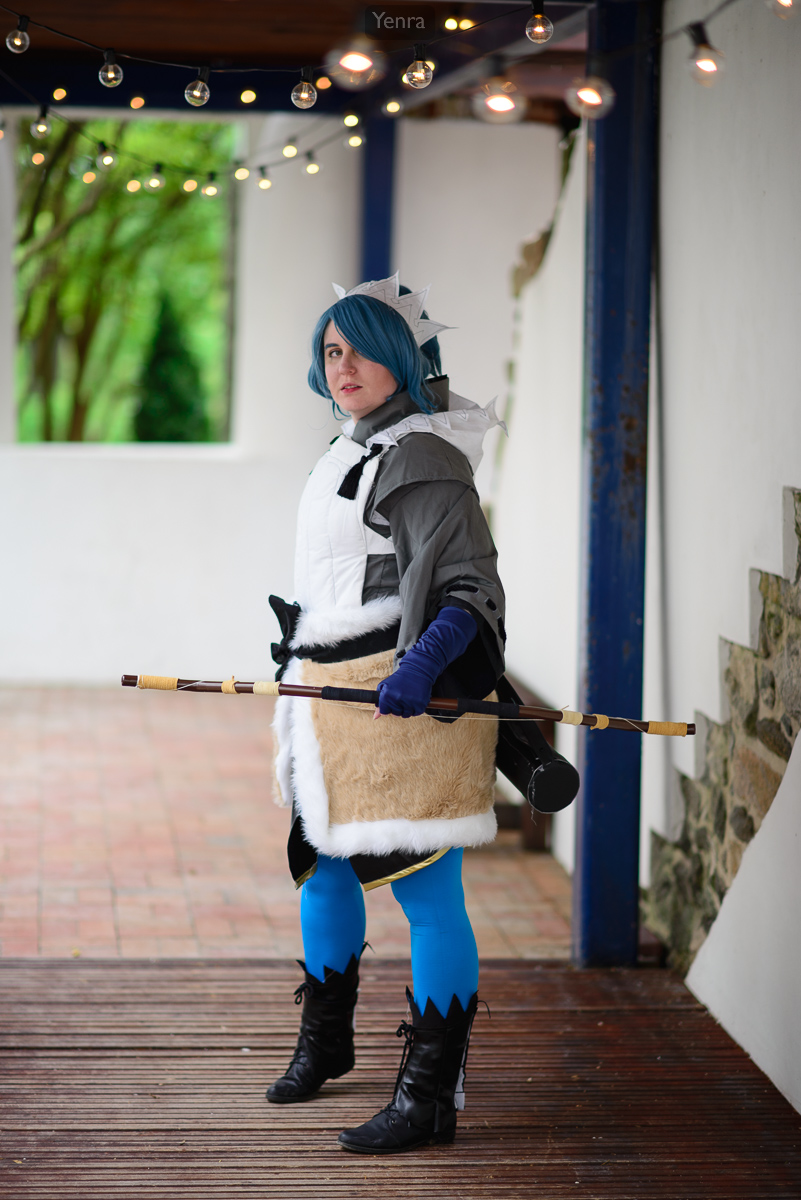
Setsuna, Fire Emblem · Photograph: Yenra · Credit: GunKatCosplay
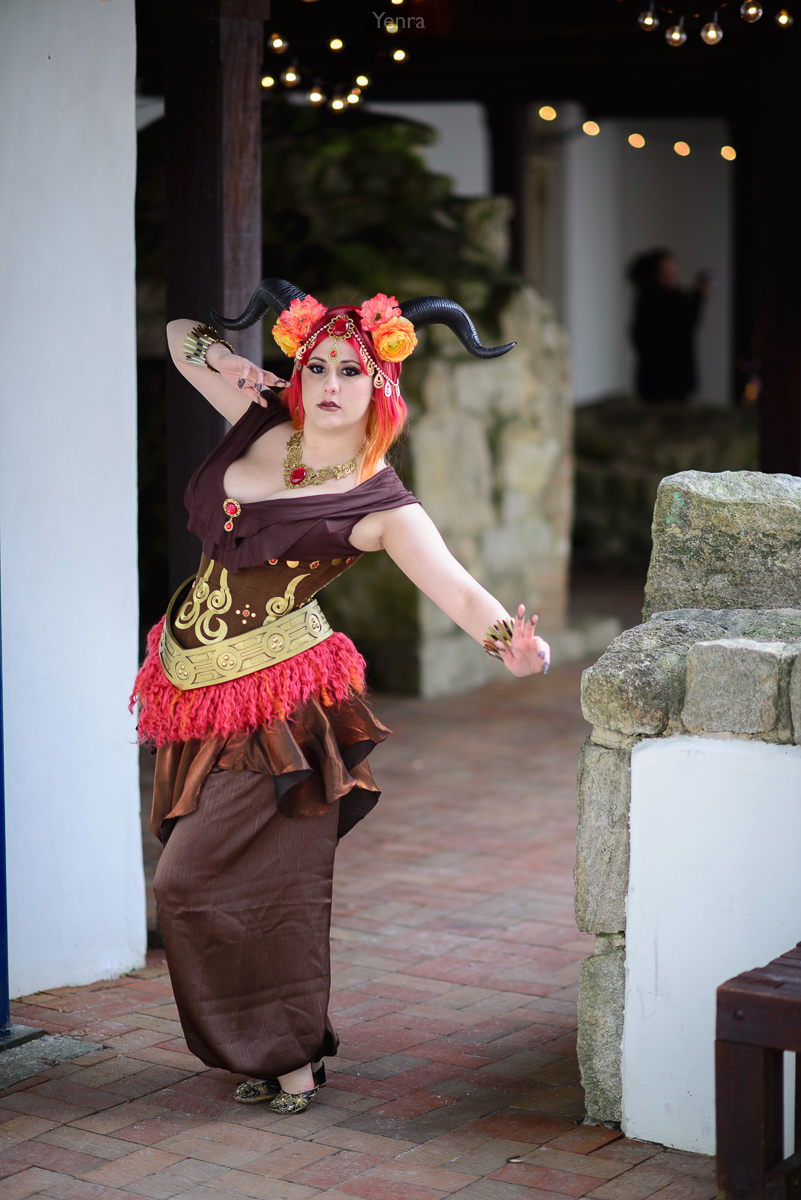
Ifrit, Final Fantasy · Photograph: Yenra · Credit: Awesome Possum Cosplay
The blue-haired figure turns their body while their face returns toward the camera. The long prop crosses the lower body, and both boots remain within the frame. Follow how those directions relate to one another.
The final portrait offers a different arrangement: the torso leans, one arm rises, and the other extends into the surrounding space. You can trace the visible shapes without needing to reconstruct an action or the original directions behind the portrait.
When making your own photographs, let the person choose a comfortable stance and decide how much to vary it. The costumes, props, and shoes in these examples belong to the archive; an ordinary outfit and a level place to stand are enough for your experiment. Give the feet and hands room whenever they are part of the picture you want to make.
Look back with curiosity.
- How do the feet and body direction relate?
- What does one small change in the hands contribute?
- Which version would you and your partner enjoy developing?
Continue with Exploring seated portraits, Exploring a turn in a portrait, Exploring hand gestures in a portrait, or Working together for a portrait.
Browse all 600 photographs from Ellicott City 2017 → · Take the standing portrait experiment with you →