Field notes · Look · Try · Compare
Making a portrait beside a tree
Explore bark, the edge of a trunk, and comfortable choices for a portrait in a familiar place.
A familiar tree gives you several places to begin a portrait. Its bark can fill the background, its trunk can mark one side of the frame, and the space beside it can make room for a person and their surroundings. Explore those possibilities together, starting with a position that feels comfortable.
Let bark become part of the background.
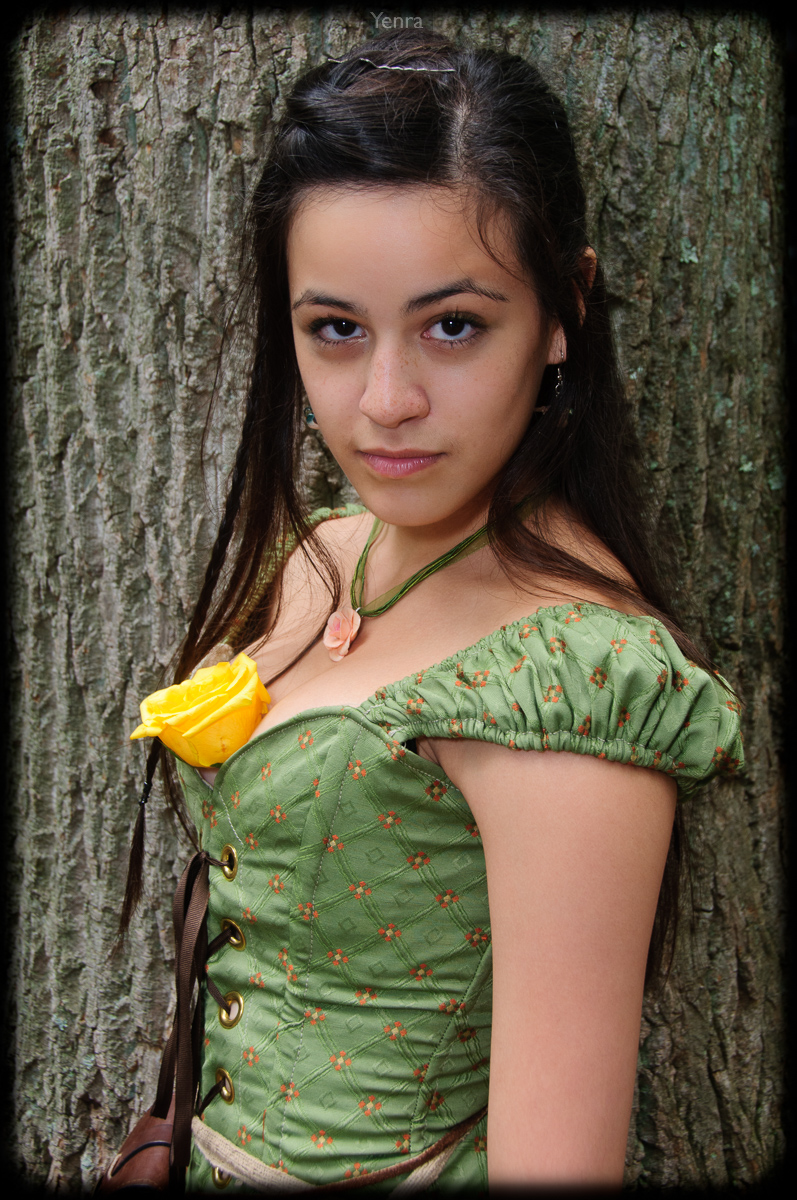
Woman in Green Corset with Yellow Rose · Yenra Photography archive
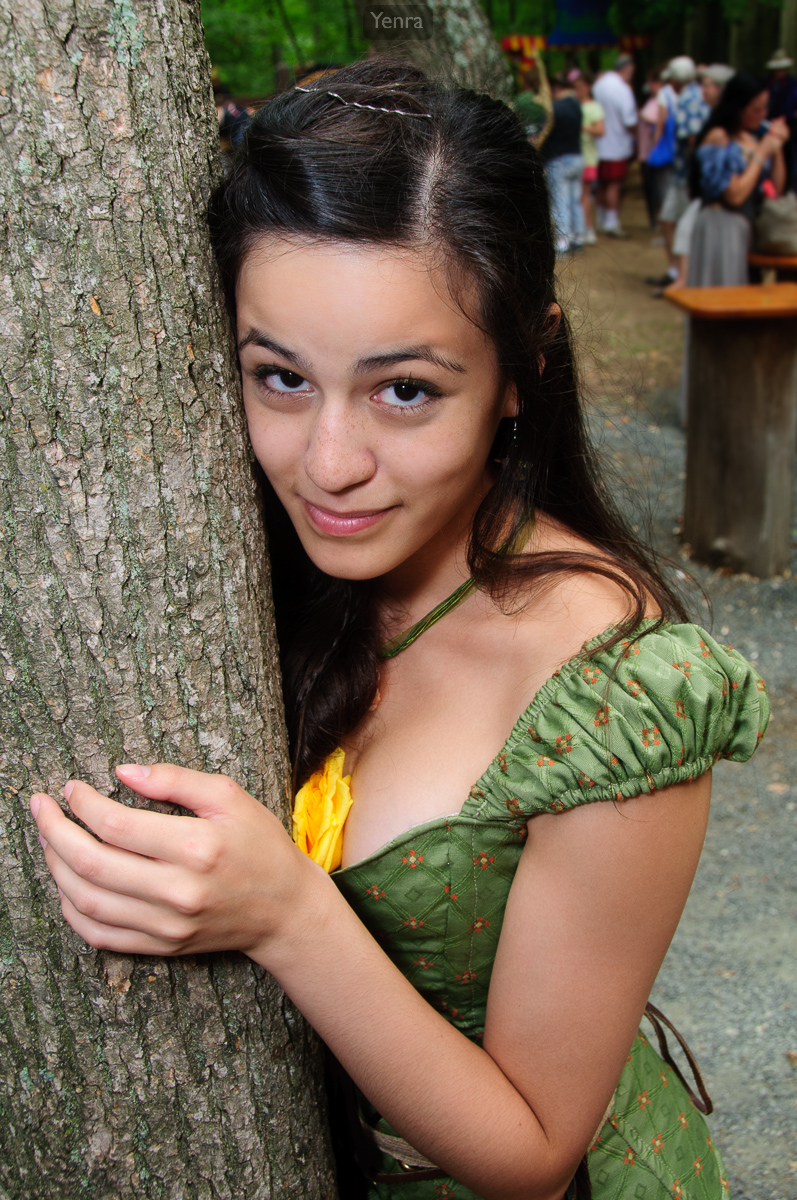
Young Woman at Outdoor Event · Yenra Photography archive
In the first portrait, textured bark fills much of the space behind green clothing and a yellow rose. The repeated rough shapes give the smoother face and fabric a different surface to sit against. The photograph retains its original dark border and framing.
In the second, the trunk occupies the left edge. A hand meets the bark, while people and a table appear beyond the person. Compare how much of the setting each photograph lets you see. One gives bark more room; the other opens a view into the gathering.
Give the trunk an edge of the frame.
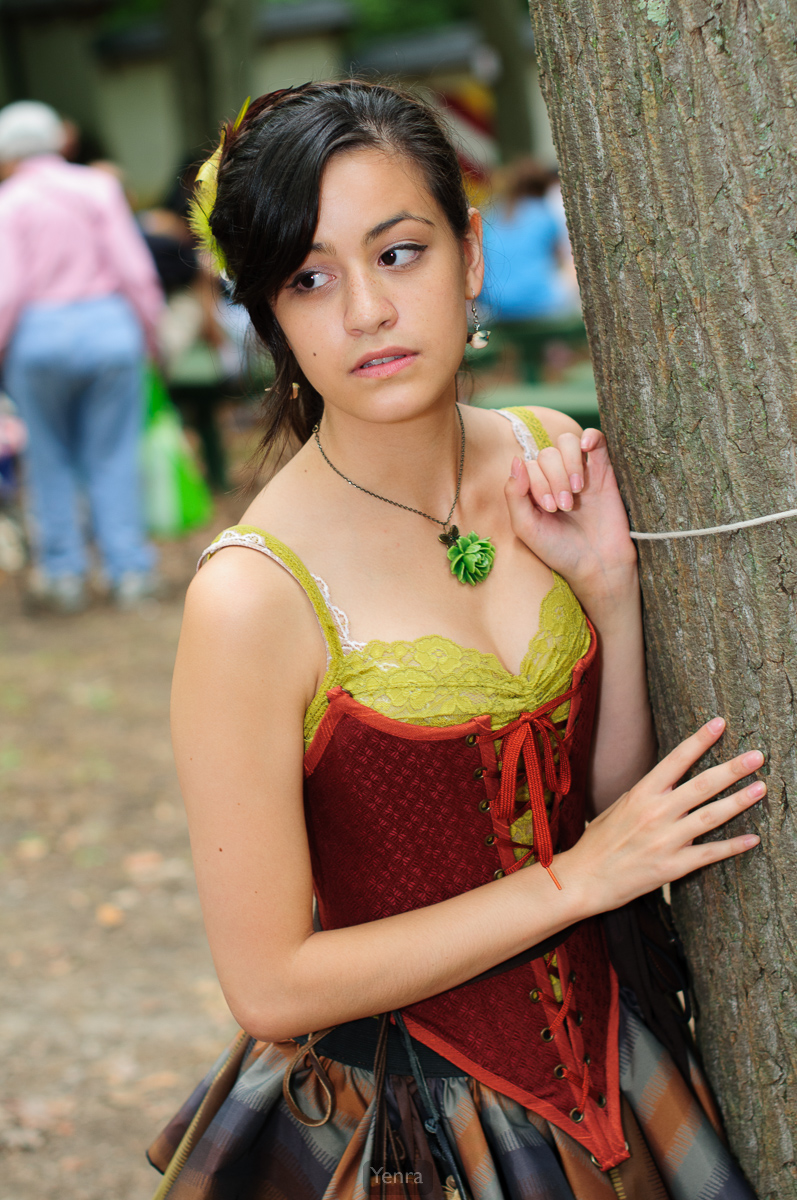
Woman posing in front of a tree · Photograph: Yenra
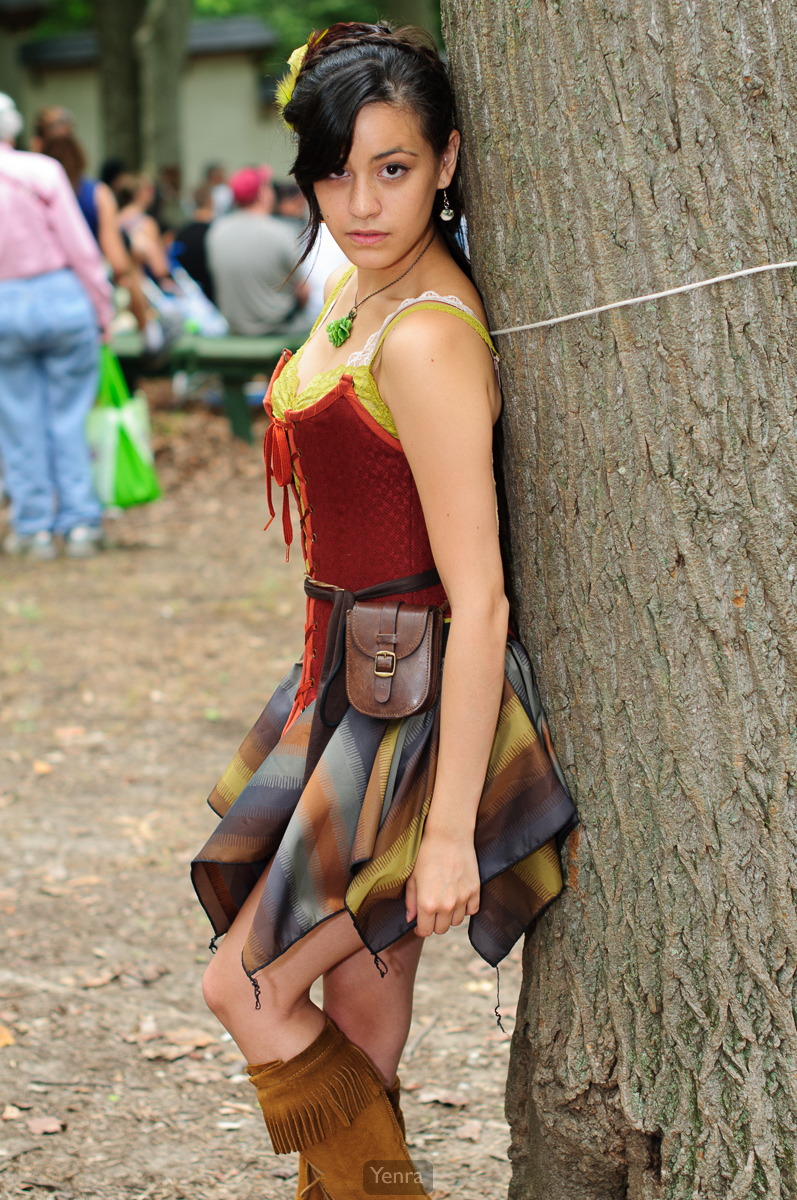
Woman posing by a tree · Photograph: Yenra
Here the trunk sits on the right. In the first view, one hand rests against the bark and the other is raised near the shoulder. Bright clothing occupies much of the frame. In the broader view, one arm is down and more of the clothing and surroundings is visible. The cord around the trunk remains part of both original photographs.
Look at the boundary between person, bark, and background. Where does your attention move? A trunk can give the picture a strong edge while leaving room for softer shapes beyond. Including more of the place offers another possibility; a closer view can bring face, hands, and texture together.
Make room for another comfortable position.
When you try this with a portrait partner, ask where they would enjoy standing or sitting. Hands can rest naturally, meet the bark if that feels comfortable, or do something else entirely. Touching the tree is optional. A small change in your camera position may offer enough variation without asking the person to move.
Make one picture, then explore how much of the trunk and surrounding place you want to include. Compare together. The photographs above show different arrangements, and they can suggest questions for your own setting without prescribing a particular pose.
Look back with curiosity.
- What does the bark contribute to the picture?
- How does the surrounding place change between views?
- Which arrangement would you both like to explore further?
Continue with Noticing texture in a photograph, Choosing a portrait background, Giving a portrait a sense of place, or Finding frames within a photograph.
Browse all 110 photographs in the September 5, 2011 gallery · Explore all 227 photographs in the August 25, 2012 gallery · Take the tree portrait experiment with you →