Field notes · Look · Try · Compare
Planning facing pages for a photo collection
Give photographs room across two facing pages and an imagined page turn.
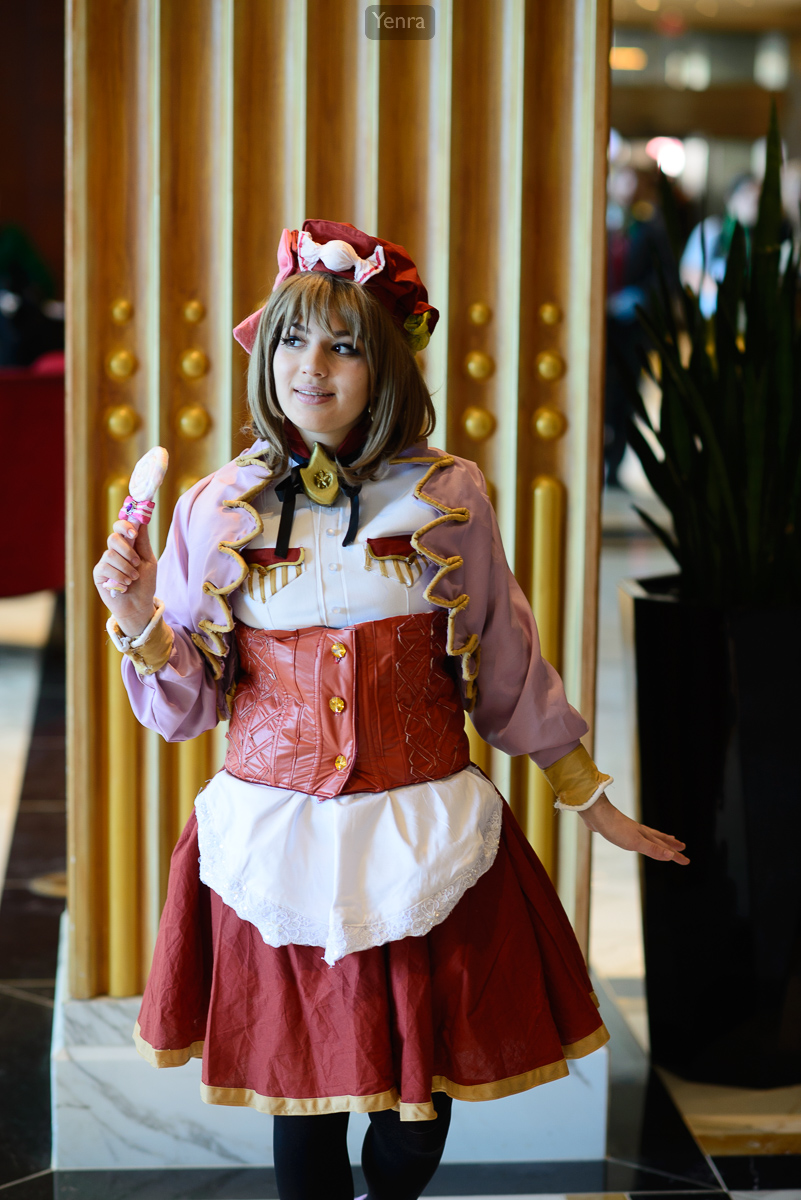
Kanako Mimura, Idolmaster-Granblue Fantasy Crossover · Photograph: Yenra · Credit: Mochi Sews
Captured: 2018:01:06 13:27:20
Two facing pages give photographs a shared space. One picture can introduce a costume while another draws you closer to a detail. A page turn can then bring a new face or a quieter moment. You can explore these relationships with a paper sketch or a note before making a book.
The arrangement in this lesson is a new editorial example using three existing MAGFest 2018 photographs. It is an invitation to experiment with presentation. The original titles, credits, photographs and archive order remain intact.
Give the first photograph a page
Mochi Sews appears as Kanako Mimura in the Idolmaster-Granblue Fantasy crossover. The wider portrait shows the costume's pink, red, white and gold, with a lollipop-shaped prop held beside the face. It gives us several details to return to.
Imagine this complete photograph on a left-hand page, with space around its border. A spread is the pair of pages you see together when a book is open. Thinking in spreads lets you consider both the individual picture and its neighbor.
Start by giving each picture a clear place. You can draw rectangles and write photograph numbers inside them. There is no need to crop the image to fill a page or choose a physical print size at this stage.
Let the facing page change the scale
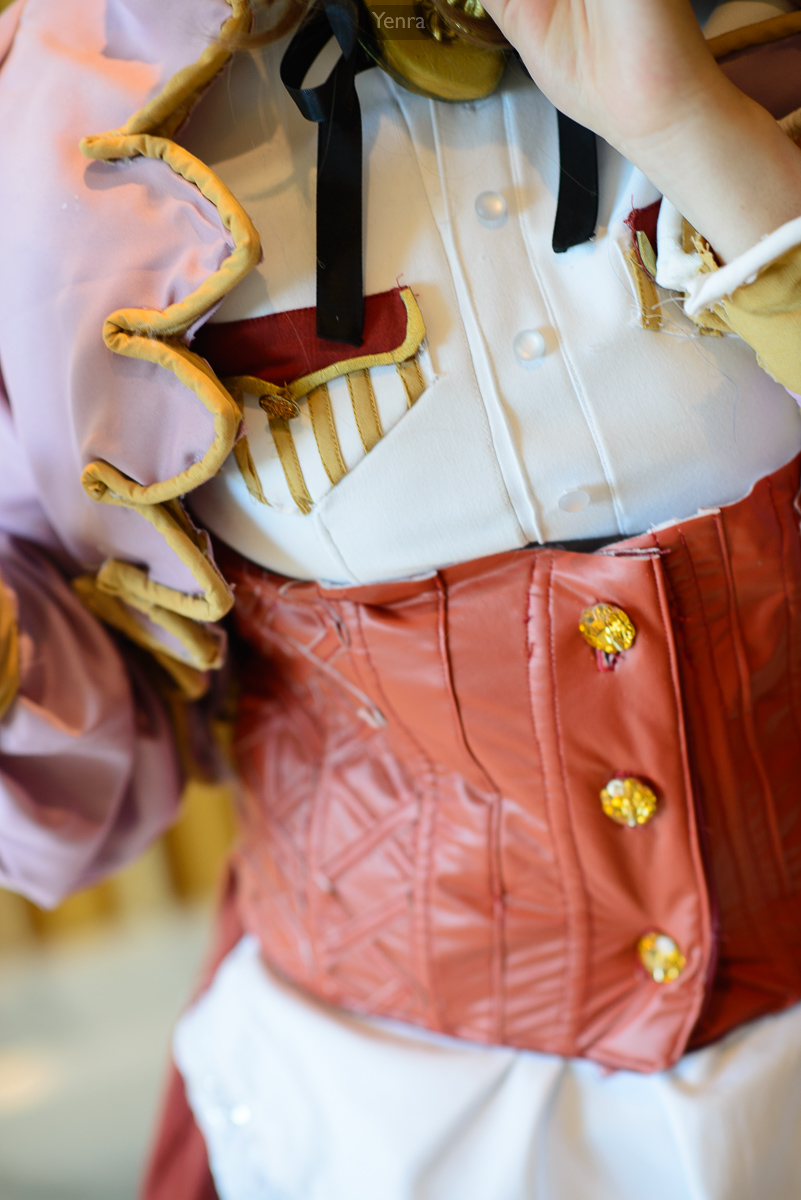
Kanako Mimura, Idolmaster-Granblue Fantasy Crossover, Detail · Photograph: Yenra · Credit: Mochi Sews
Captured: 2018:01:06 13:27:34
This separate close photograph brings the gold edging, gold buttons and red corset forward. Across from the wider portrait, it could invite a slower look at materials already present in the costume.
The gutter is the space nearest the meeting edge of the two pages. Leave room there so each photograph can keep its complete frame. In this simple plan, the pictures stay on their own pages, with no face or important detail split across the center.
Look from one page to the other. You might follow a color, a shape or a change of scale. Then look at the gap between them. A little room can help the pictures feel distinct while allowing their connection to remain visible.
Try sketching a larger or smaller margin. The point is to notice how the arrangement feels to read, not to find one correct measurement. Keep a small note about the version you enjoy.
Save another portrait for the turn
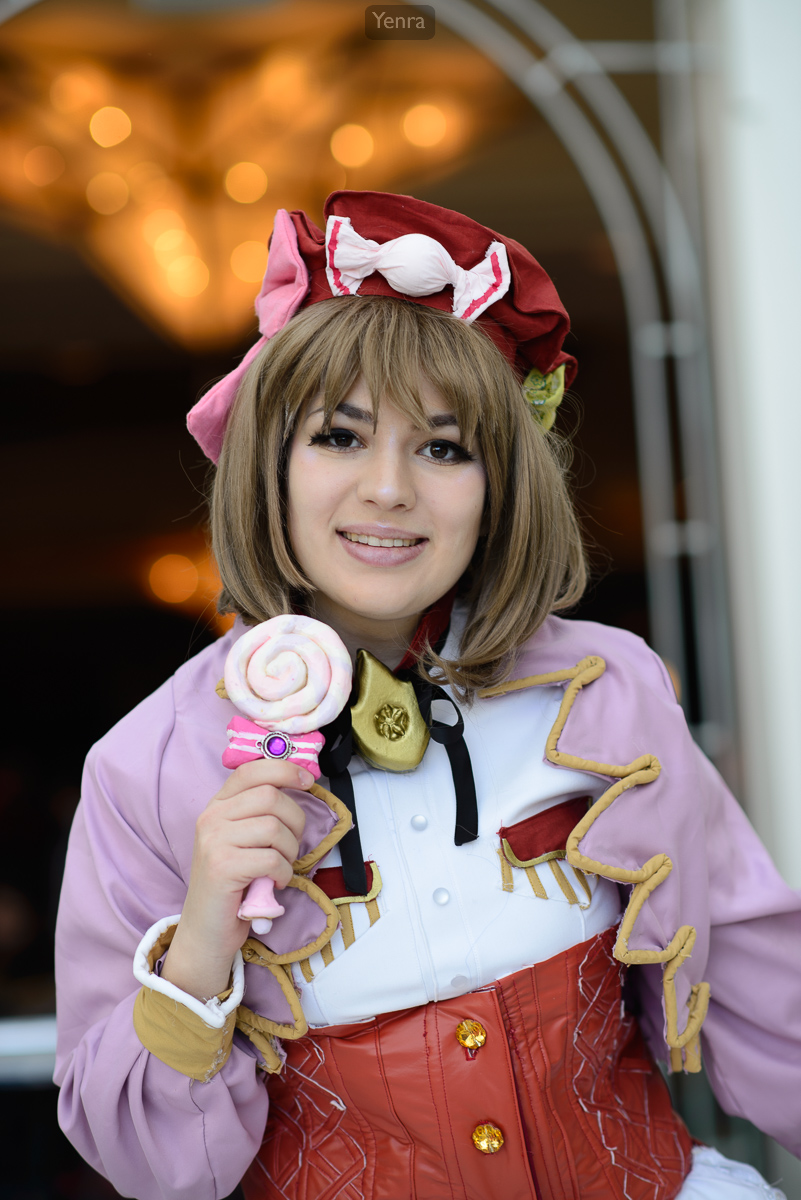
Kanako Mimura, Idolmaster-Granblue Fantasy Crossover · Photograph: Yenra · Credit: Mochi Sews
Captured: 2018:01:06 13:35:15
The closer portrait returns attention to the face and held prop. Placing it after a page turn would let it arrive as a new moment, rather than making all three photographs compete for attention at once.
The sketch below leaves the facing page empty after that turn. An empty page can be part of a plan: it offers a pause and gives the nearby photograph room. You can also try another image there later and compare.
The labels describe a possible arrangement; the full photographs remain above for close looking. On a small screen, the labelled left and right pages follow one another in reading order. This sketch is a planning aid, not a record of an earlier publication.
Keep three small notes
- Across the spread: What connection do the two photographs share?
- Near the gutter: What would benefit from a little more room?
- After the turn: What would you like the viewer to encounter next?
Read your sketch as if you were opening the collection for the first time. Keep the arrangement that makes you want to look again. It can stay flexible while you discover more connections among your photographs.
Look back with curiosity.
- What connection appears across the first two pages?
- What does the space between them let you notice?
- What changes when the next portrait arrives after a page turn?
Keep exploring
Pairing a portrait with a detail · Trying two orders for a photo sequence · Planning a small wall display of photographs
Browse the complete MAGFest 2018 gallery.