Field notes · Look · Try · Compare
Photographing a small dessert at a table
Explore a familiar tabletop subject through viewpoint, surrounding objects and a chosen point of focus.
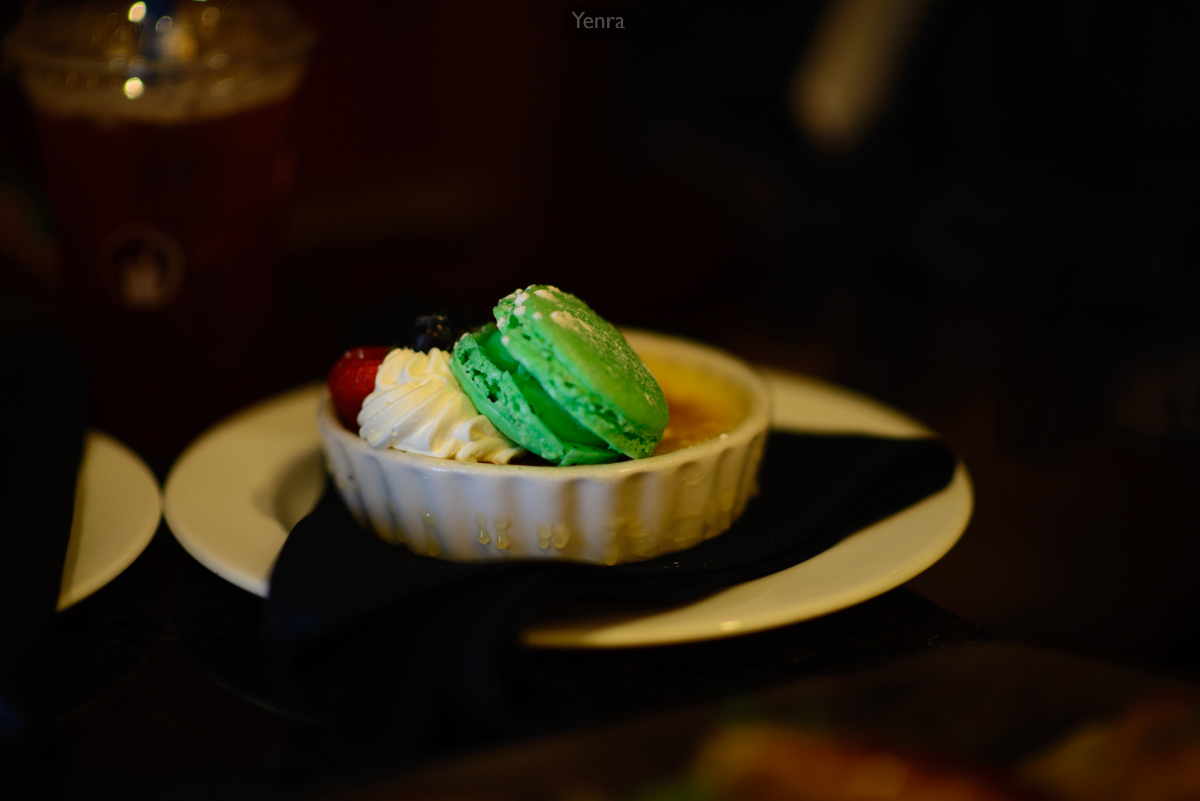
Macaron atop Creme Brulee at the Maid Cafe · Photograph: Yenra
Captured: 2016:11:04 13:32:08
A small subject on a table can offer plenty to explore. A plate gives it a setting, nearby objects add shapes, and a modest change in viewpoint can reveal another relationship. These two photographs invite a simple experiment with something you already have.
Begin with the dish and its surroundings
A green macaron rests above a dessert in a white fluted dish. The source title identifies it as “Macaron atop Creme Brulee at the Maid Cafe.” The plate, dark napkin and softly rendered drink place the small subject within a tabletop scene.
Look at where the green shape meets the pale cream and dish. Then follow the broad curve of the plate. Several smaller textures sit within that larger outline, giving you both a clear overall shape and details to spend time with.
For your own photograph, choose a snack, a piece of fruit or another small object and set it on a stable table. Start from a comfortable camera position. Include enough of the surroundings to show something you enjoy: a plate edge, a napkin, or the surface itself.
If your phone or camera lets you choose a focus point, select a detail you want to see clearly. Look at the result rather than expecting a particular amount of background softness. A picture with more of the table in focus can be just as rewarding to explore.
Compare a view with foreground layers
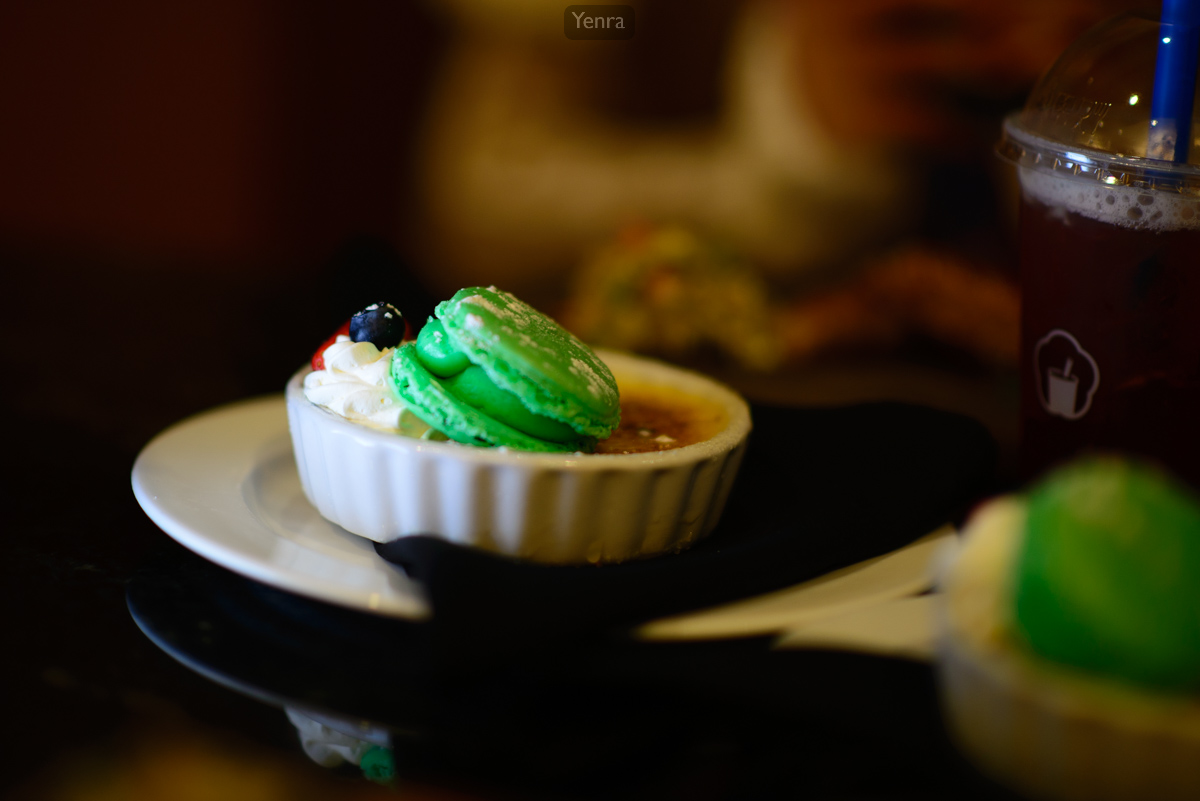
Macaron atop Creme Brulee at the Maid Cafe · Photograph: Yenra
Captured: 2016:11:04 13:31:34
In this other view, a second softly rendered green dessert appears near the lower-right edge, and a drink occupies the upper right. The central dish has more objects around it at different apparent distances. The dark tabletop also catches part of a reflection below the plate.
Compare how much room the dish has in each frame and where the surrounding objects meet the edges. The photographs show different arrangements; they do not tell us that only the camera moved. What we can explore is the visible result in each.
Try moving your own camera slightly to one side or a little lower while keeping the table easy to work around. Look at the foreground before making the next picture. A nearby object might become a soft shape, overlap the subject, or move toward an edge. Choose the relationship that interests you.
Keep one discovery from two pictures
Two views are enough for a useful comparison. Put them beside each other and name one change: more plate visible, a different overlap, or a detail that looks clearer. There is no need to choose a permanent winner.
Keep a version you enjoy and a small idea for another day. A different viewpoint or a little more space around the plate can be the whole experiment. The pleasure is in discovering what a familiar subject offers when you give it a closer look.
Look back with curiosity.
- What changes when you choose another viewpoint?
- Which detail looks clearest in each picture?
- What small variation would you enjoy trying next?
Keep exploring
Changing your viewpoint · Noticing where a photograph is sharp · Photographing the details that matter
Browse the complete Nekocon 2016 Friday gallery.