Field notes · Look · Try · Compare
Photographing a playful jump
Practice shared timing and framing around a brief movement, then enjoy the differences between the resulting gestures.
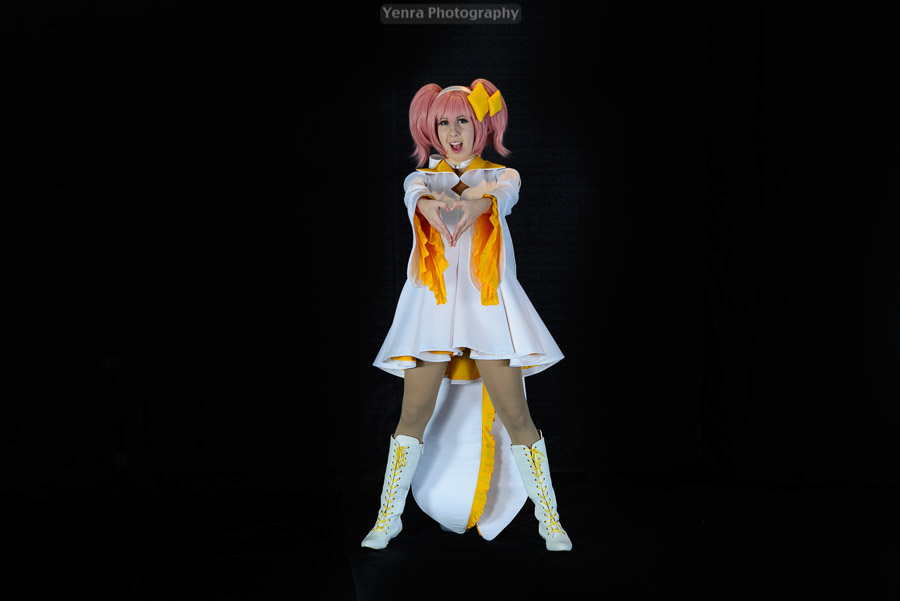
White-and-yellow costume: still pose · Photograph: Yenra · Archive tag: Color Me Kawaii
Captured: 2014:11:07 19:07:05
A playful jump offers a brief arrangement of hands, feet, hair and clothing. Working together on a comfortable movement gives you a chance to explore timing and leave room for its changing shape. The most rewarding frame may be the one whose expression you both enjoy.
These three Nekocon 2014 photographs move from a still pose to two airborne moments. Each source record carries the Color Me Kawaii archive tag. The selection spans nearly two minutes, so read the pictures as separate variations rather than the stages of one continuous jump.
Begin with a comfortable still pose
The white-and-yellow costume is shown with the hands extended forward and both boots visible. Long pieces of sleeve fabric hang below the arms, and the landscape frame gives the full figure room against the dark background.
A still reference picture can help you and your portrait partner decide where to begin. Look at the space around the hands, feet and clothing. Ask which movement they would enjoy trying and how much room it might need.
Choose a clear, level place and let your partner set a comfortable pace. A small jump is one possibility. A raised-arm gesture or movement while seated offers the same opportunity to coordinate a cue and notice a changing outline.
Watch the changing outline
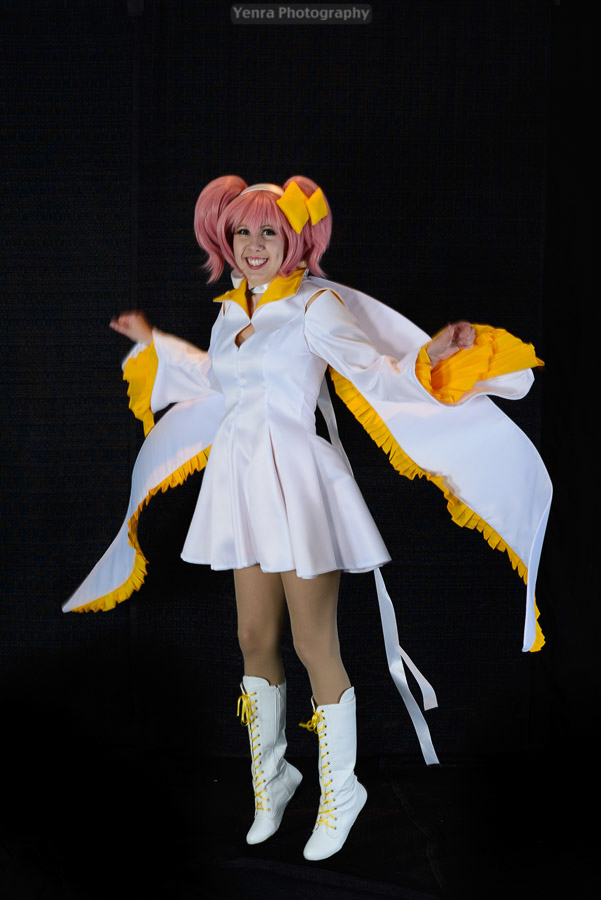
White-and-yellow costume: lifted boots and sleeves · Photograph: Yenra · Archive tag: Color Me Kawaii
Captured: 2014:11:07 19:08:27
Both boots are lifted in this frame, while the long sleeve fabric opens to either side. Hair and hands add smaller changes around the face. The shape occupies the portrait frame differently from the still pose.
Before making your own photograph, watch the chosen movement once if that feels useful. Notice where the hands or clothing travel. Agree on a simple count or cue, then frame with a little room around the area the movement is likely to occupy.
Make a few pictures and pause to look together. You can learn from a frame made slightly earlier or later than expected: it may show a different expression, an interesting fold or a useful clue about the space you need.
The aim is a photograph you enjoy, not a higher jump or an exact copy of this costume pose. Ordinary clothing and a small action can give you plenty to explore.
Compare another airborne shape
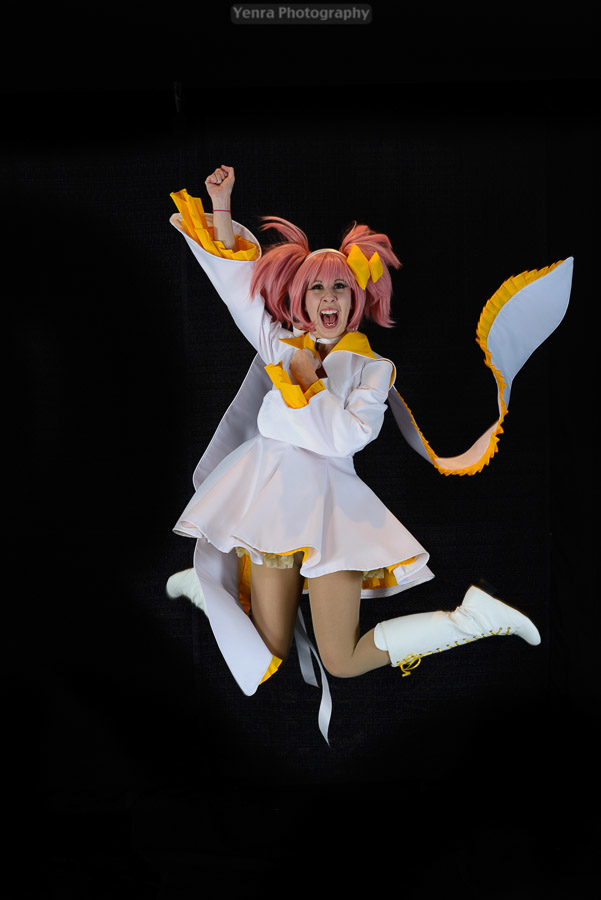
White-and-yellow costume: bent-knee jump · Photograph: Yenra · Archive tag: Color Me Kawaii
Captured: 2014:11:07 19:09:01
Bent knees, a raised fist and lifted hair make another lively arrangement. On the right, the long sleeve fabric curves upward. The face contributes an open-mouthed expression that belongs to this particular moment.
Compare the two moving frames without asking one to replace the other. Follow the boots, then the hands, then the fabric. Notice how those parts combine with the expression. A difference you can name gives you a useful idea for another attempt.
If you both want to continue, change one thing you can comfortably control: make the photograph a little earlier, leave more room above the hand, or try a smaller gesture. Keep the partner's preferences part of the review.
Let timing be something you explore
You can practice this with the phone or camera you have. Begin by watching and choosing a moment. If you would like to explore how exposure time affects the appearance of movement, the earlier movement lesson offers a next step.
Keep a frame you each like and a brief note about why. An expressive face, a pleasing shape or a comfortable shared experiment is already a worthwhile result. Let that discovery guide the next small variation.
Look back with curiosity.
- Which expression or shape do you both enjoy?
- Where does the movement need more room?
- What small timing change would you try next?
Keep exploring
Exploring movement in a portrait · Planning a portrait together · Exploring the edges of the frame
Browse the complete Nekocon 2014 gallery.