Field notes · Look · Try · Compare
Exploring movement in a portrait
Follow changing shapes through a short portrait sequence, then explore a comfortable small action.
A small movement can offer several different photographs. Hands change position, fabric opens into another shape, and a face turns toward or away from the camera. Give yourself time to watch those changes. You can begin with a comfortable turn, a small step, or one moving hand, then choose the moments that interest you.
Follow the changing shape.
These four photographs belong to a short sequence in the Pittsburgh November archive. Read them in their original order, then compare individual frames. Each offers a different relationship between the person, the patterned dress, and the stone courtyard.
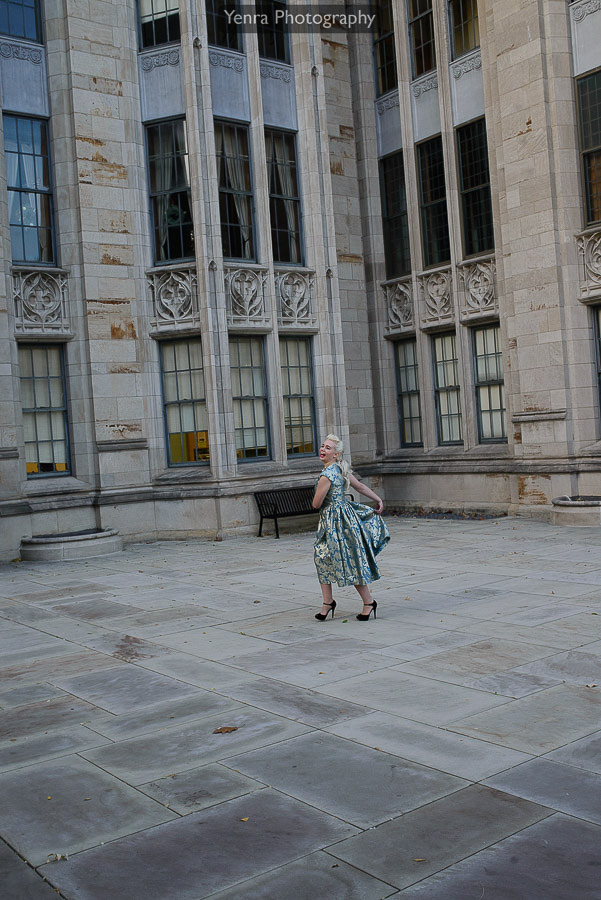
Turning in a stone courtyard — frame 1 · Photograph: Yenra
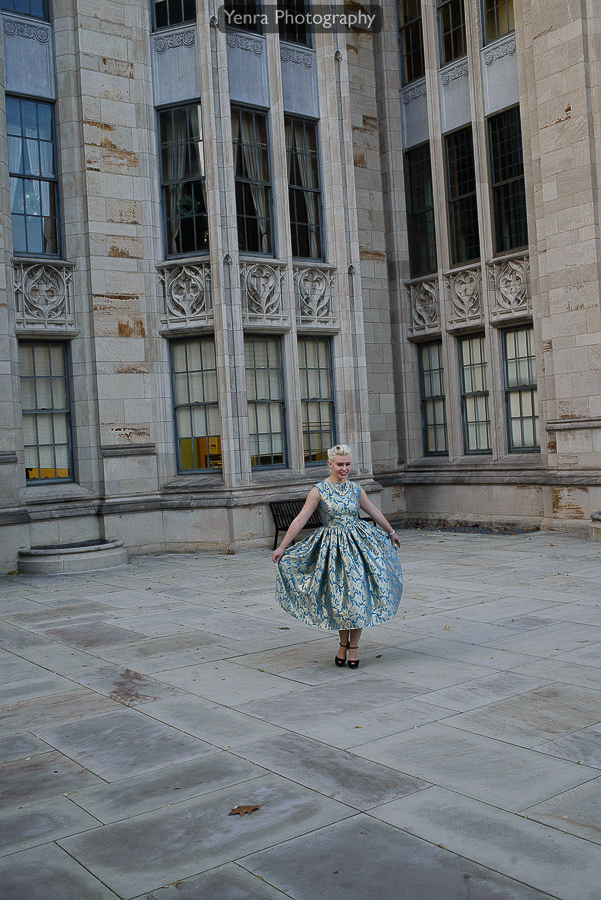
Turning in a stone courtyard — frame 2 · Photograph: Yenra
In the first frame, the figure looks back and the dress extends toward one side. In the second, the person faces forward and holds both sides of the skirt. Look at the space between each hand and the body, and at the outline the fabric makes against the paving. The same clothing can become a different shape from one moment to the next.
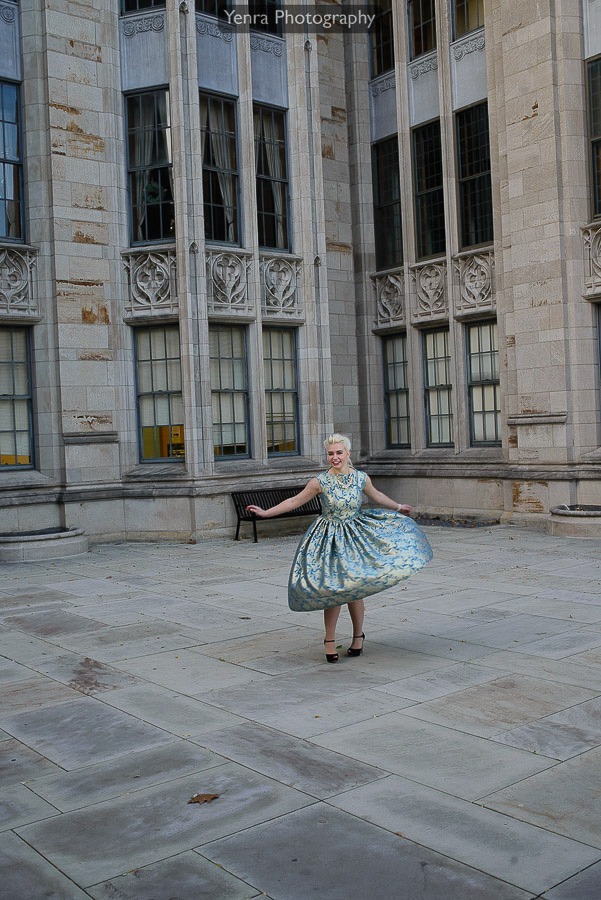
Turning in a stone courtyard — frame 3 · Photograph: Yenra

Turning in a stone courtyard — frame 4 · Photograph: Yenra
The third frame opens the dress into a wider curve. The arms extend around that shape while the person faces the camera. In the fourth, the body turns away and the face looks back. The fabric occupies another position within the picture. Compare the four frames and see which combination of hands, expression, and outline holds your attention.
The original records place these photographs at 17:43:00, 17:43:07, 17:43:11, and 17:43:15 on November 15, 2014. All four record a shutter speed of 1/125 second. They are selected moments from the sequence; each photograph links to its original archive page.
Choose a moment and explore exposure time.
Two choices work together when you photograph movement: when you make the photograph, and how long the exposure lasts. The first helps you choose a particular arrangement of hands, clothing, and expression. The second can change how movement appears within that exposure.
A faster shutter speed generally makes freezing motion more likely. A slower shutter speed can let more movement appear as blur. Both can be useful creative choices. Try a variation, look at the result, and decide whether you would enjoy a more distinct outline or a greater sense of movement. Nikon's introduction to shutter speed explains this relationship in more detail.
Use the recorded 1/125 second as a starting point for curiosity about these frames. In your own photographs, the subject's movement and the conditions you are working in will help guide your next choice. Begin with the camera or phone you have; you can practice noticing moments before exploring additional controls.
Make room for a shared experiment.
Agree on a movement your portrait partner enjoys. A small turn of the shoulders, a change in hand position, or a comfortable step can provide plenty to observe. Leave room in the frame for the movement, make a few photographs, and review them together. Ask which moments they like as well as noticing your own preferences.
You can also explore movement while seated, or photograph a scarf moved gently by hand. Look for a changing outline or a fold that opens and closes. A simple action gives you room to concentrate on timing and to try again with one new idea.
Try one action a few ways.
- Choose a comfortable action. Work with a willing partner on a small turn, hand movement, or step. For an object study, try moving a scarf by hand.
- Watch it once. Notice how the shape changes and choose a moment you would like to photograph.
- Make a few frames. Leave space for the action and explore different moments as it unfolds.
- Compare together. Look at the hands, face, fabric, and surrounding space. Choose a frame you each enjoy.
- Try one change. Photograph another moment or vary the action slightly. If your camera provides shutter controls, explore a different exposure time and compare its effect.
Find your next moment.
- Which changing shape made you want to take a photograph?
- What do you enjoy about your chosen frame on its own?
- What would you like to try differently during another pass?
Keep a note in the field practice notebook, browse the complete Pittsburgh November gallery, or continue with gesture and expression. You can also use your favorite moments to explore a small photo story.