Field notes · Look · Try · Compare
Building a small photo story
Connect a wider view, a detail, and a visual echo, then arrange a short sequence from a place you enjoy.
A place can become a small photographic story through the things you notice: a building, a painted surface, a window, a glimpse into another space. A few pictures give you a chance to connect those observations and decide how you would like someone else to encounter them.
This teaching sequence is newly arranged from Yenra’s September 2, 2018 Frederick walk. The complete 18-photograph gallery keeps its original order. The photographs record that day’s places and displays.
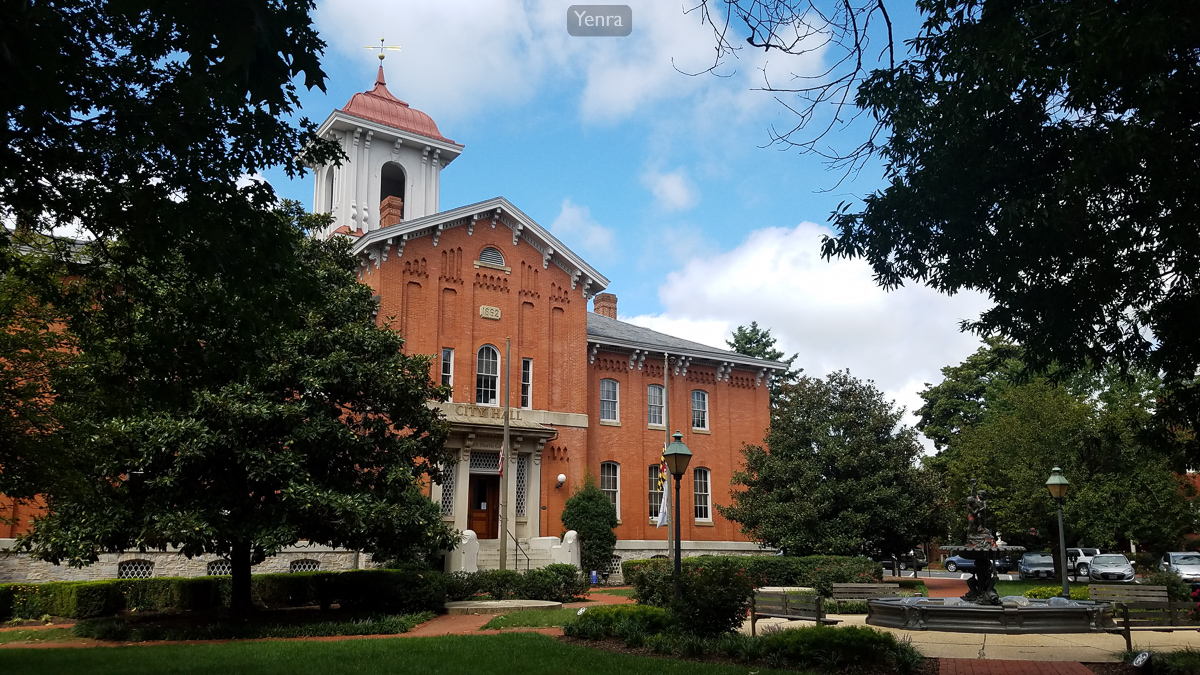
City Hall · Photograph: Yenra
1. Give the viewer somewhere to begin.
The broad view of City Hall includes the brick building, trees, garden, sky, and fountain. It gives the eye several distances to travel through. As an opening, a view like this can establish the scale and surroundings before the sequence moves closer.
A wide view is one possible beginning. A close detail could also open a story with a question that a later photograph answers. Try both orders and notice how your first picture changes the expectations you bring to the next one.
2. Move closer to something you noticed.
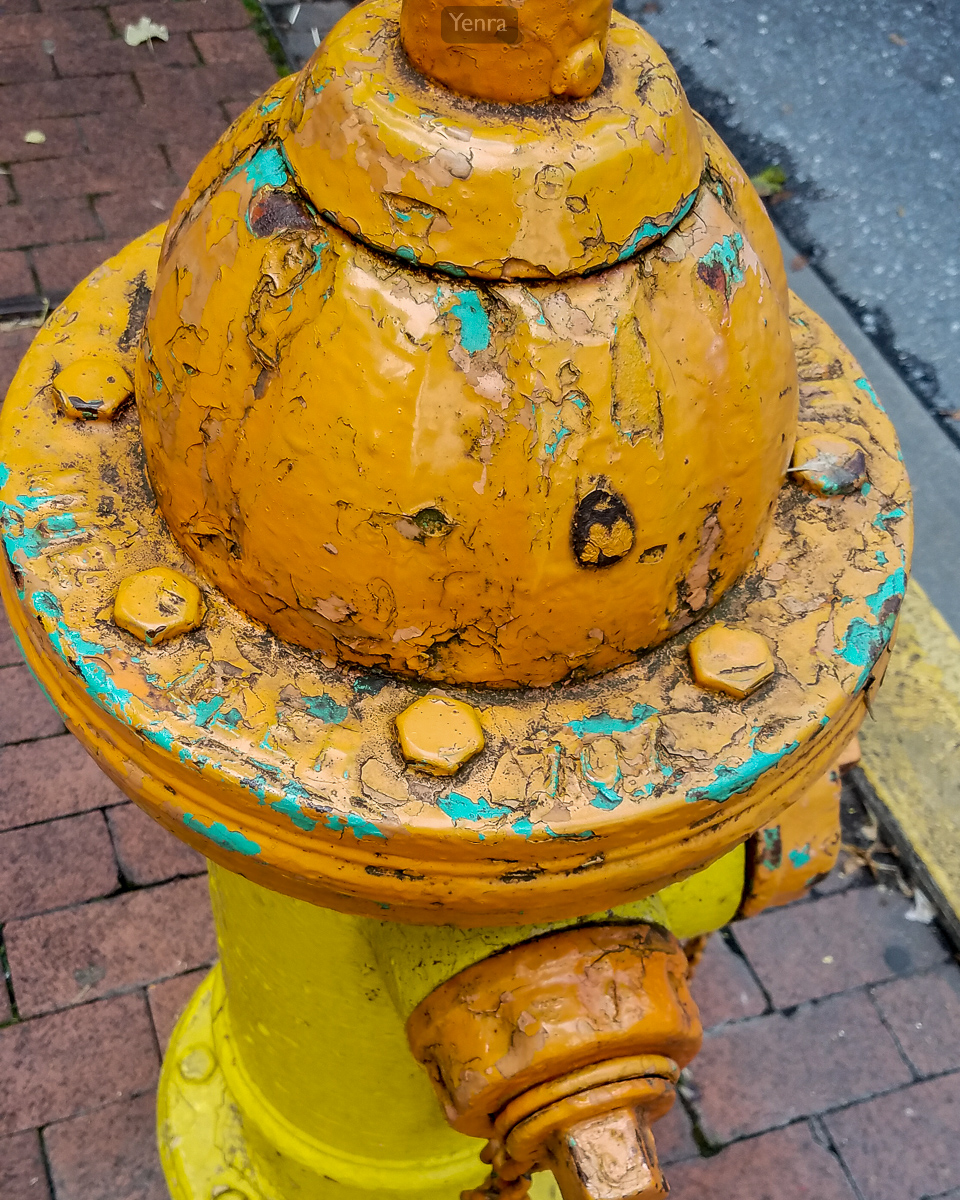
Yellow Fire Hydrant · Photograph: Yenra
The yellow hydrant brings the sequence down to a small area of painted metal. Chips reveal other colors, and the bolts and curved surfaces create a different rhythm from the building. Your attention shifts from a place you can look across to a surface you can examine.
A detail gives you permission to linger. When you are photographing a familiar place, look for something that would be easy to pass: an edge of paint, a reflection, a repeated shape, or a meeting of materials. Make a photograph that gives that observation enough room to be seen.
3. Find a visual echo.
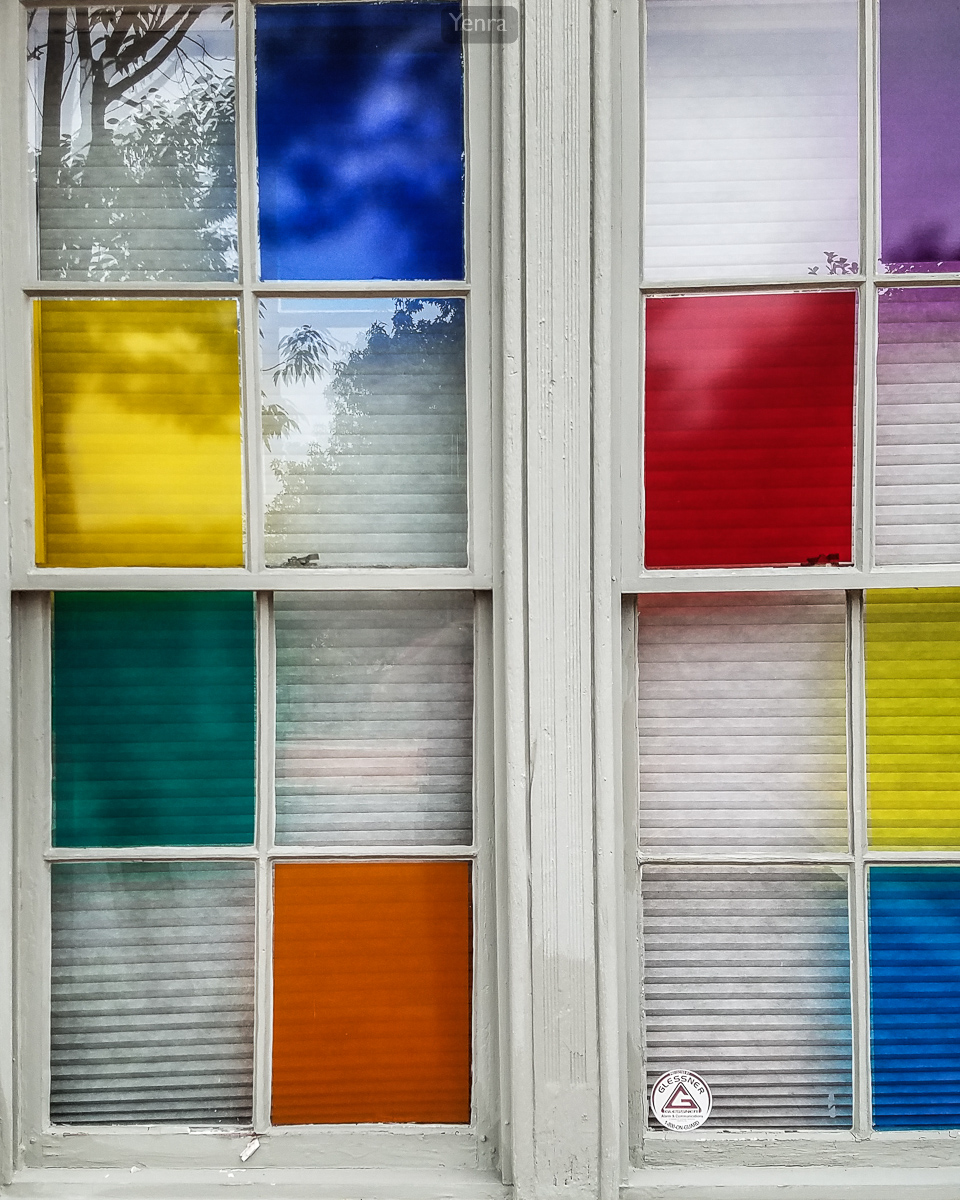
Colored Window Panes · Photograph: Yenra
The colored panes offer another way to follow color across a surface, now divided by regular white frames. Yellow and blue-green areas recall colors in the hydrant, while the straight lines contrast with its rounded shape. Placing these photographs together lets color provide continuity as the subject changes.
Look for an echo that matters to you: a color, a curve, a repeated material, or a similar patch of light. It can be a subtle connection. The photographs can belong together without showing the same object.
4. Leave a way for the eye to continue.
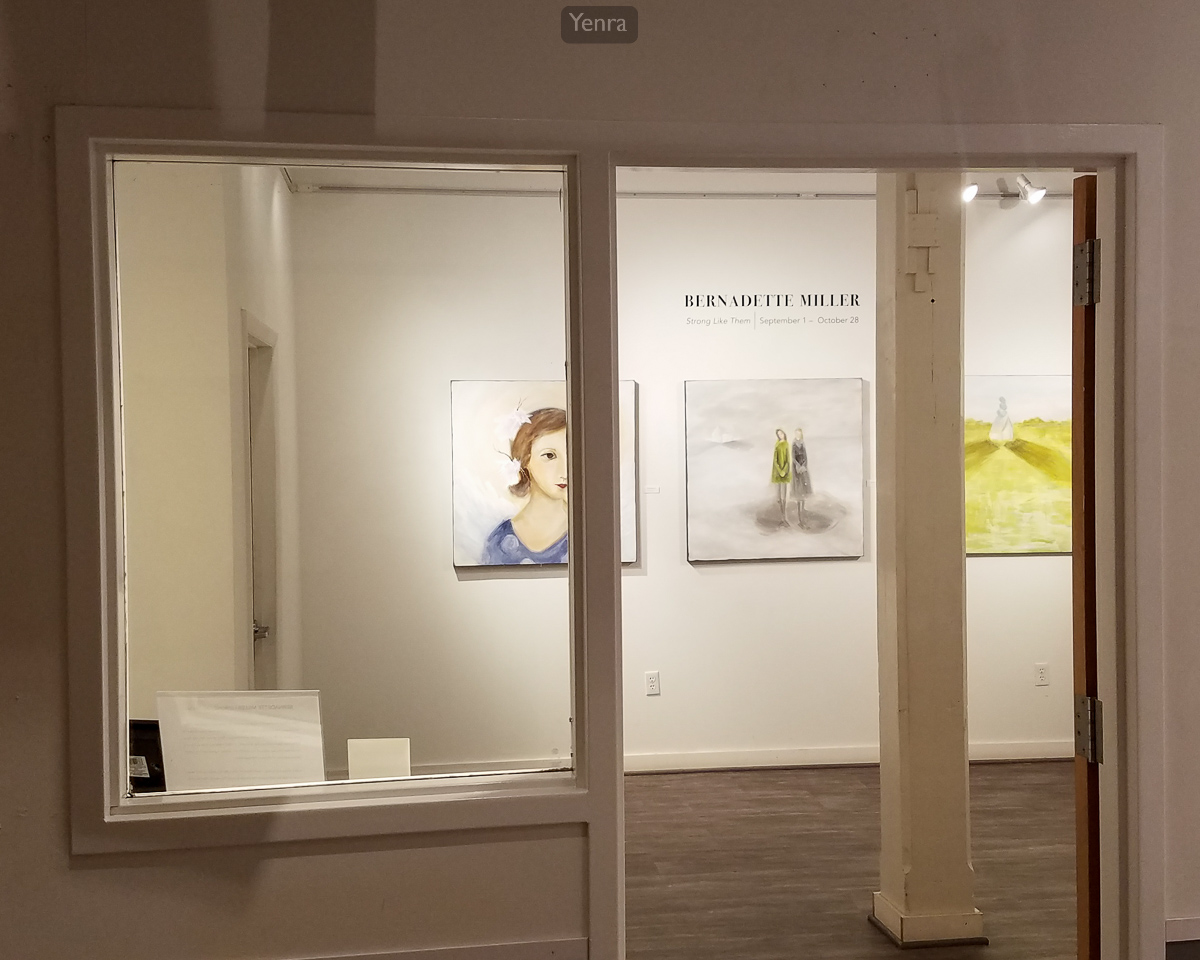
Bernadette Miller, Artist · Photograph: Yenra
The final example looks through a window and doorway into an art display. The frames divide the view, while the pictures inside give the eye somewhere else to travel. After moving from a broad exterior to close surfaces, this photograph opens another space.
As an ending, it can suggest that there is more to notice beyond the sequence. Another arrangement might finish with the hydrant’s bold color or return to the wider setting. Explore the possibilities by changing the order and reading the sequence again.
Try a story of three to five photographs.
- Choose a small area. A room, a garden, or part of a familiar walk is enough. Use a phone or any camera you enjoy.
- Make a view that gives context. Include enough of the surroundings to describe where your attention began.
- Move closer. Photograph a detail, texture, or relationship you want someone else to notice.
- Look for an echo or a change of pace. Follow a color, shape, or patch of light into another photograph. You can also include a quieter frame between two busy ones.
- Choose a short sequence. Start with three to five images. Give each one a role, then try changing the opening or ending.
These Frederick photographs were recorded with a phone camera. Their subjects are close at hand, and their differences come from what is included, how closely it is shown, and how the pictures are placed together. Use your own equipment to explore those same choices in a place that interests you.
Read the sequence as a whole.
- What does each photograph add that the others do not?
- Which connection helps you move from one picture to the next?
- How does a different first or last photograph change the experience?
Keep the larger set as well as your chosen sequence. You may enjoy making a different story from the same photographs later. Use the field practice notebook to record what you tried, explore the original Frederick walk, or follow the ideas in the color lesson. An event archive such as Otakon 2019 offers another place to look for details, people, and wider settings that could form a short sequence.