Field notes · Look · Try · Compare
Noticing silhouettes in a photograph
Follow a recognizable outline and notice the detail within a darker shape.
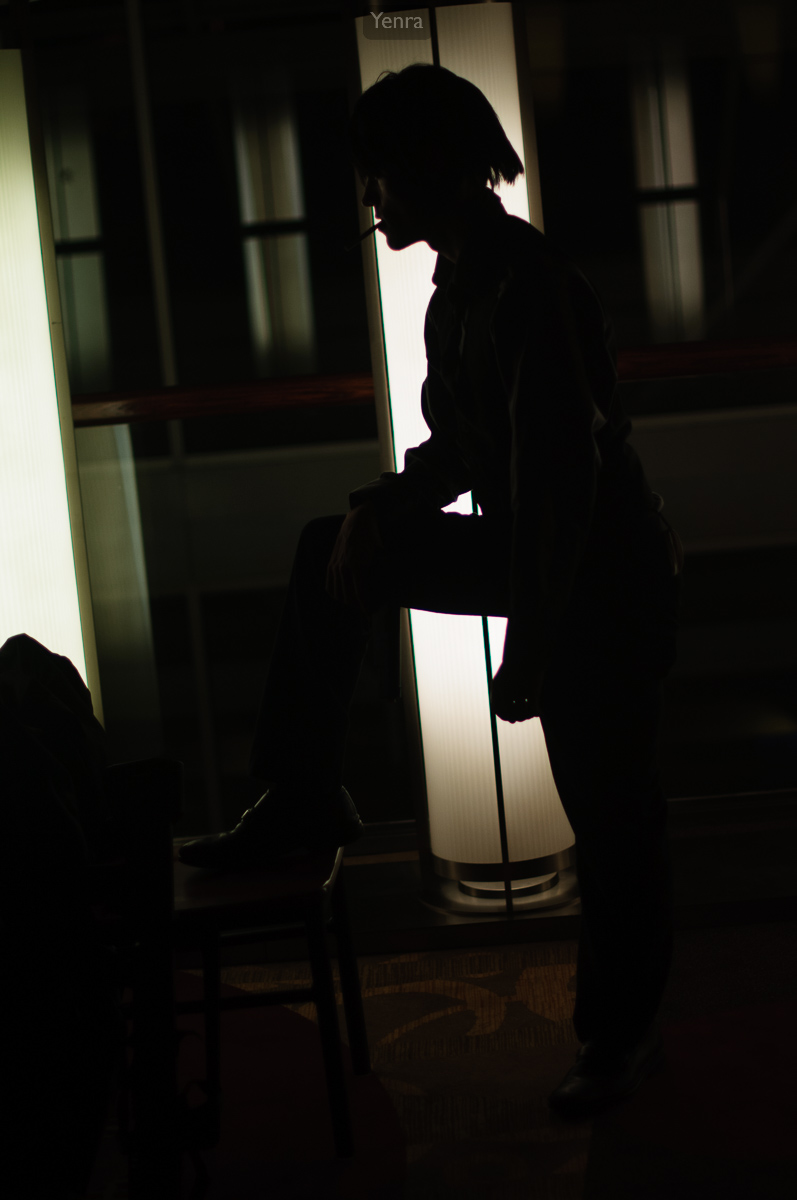
Profile silhouette against a bright column · Photograph: Yenra
Captured: 2012:07:28 23:33:59
A silhouette invites you to recognize a person or object through its outline. A profile, a bend at the elbow, or a space beside a knee can carry much of the picture. Begin where a darker shape meets a brighter area, then follow the edges that help you understand what you see.
Follow the outline against a bright shape
The tall bright column gives parts of this figure a clear edge. Follow the profile, the bent arm, and the raised knee. Some parts of the clothing merge with the darker surroundings, while the areas beside the column separate more distinctly.
You can read those differences without needing every part of the person to be equally visible. Look at the small spaces around the limbs as well as the figure itself. A gap between shapes can help describe a gesture, even when the clothing contains little visible detail.
For your own first experiment, choose a familiar object with a recognizable outline. A mug, a plant, or a small ornament can offer curves and gaps to explore. Place it in front of a brighter background and look for an edge that separates clearly. Make a starting photograph with some room around that shape.
Notice the detail that remains

Vocaloid Sandplay Singing of the Dragon · Photograph: Yenra
Captured: 2012:07:28 23:36:31
This seated figure is also mostly dark against a bright column. Small areas of reddish color remain along the hair, and some detail is visible near the shoulder. Follow the profile and the sweep of the hair before looking into the darker clothing.
A silhouette can retain color and texture. Those details may give you another way to enjoy the picture, alongside its broader outline. Notice which part you recognize first and which part becomes interesting as you spend longer looking.
Move your viewpoint a little around your own object. Does a handle separate from the body? Does a leaf become easier to distinguish? Keep an eye on both the outline and the background behind it. A small movement may reveal a useful gap or bring two shapes together.
Compare outline and visible detail
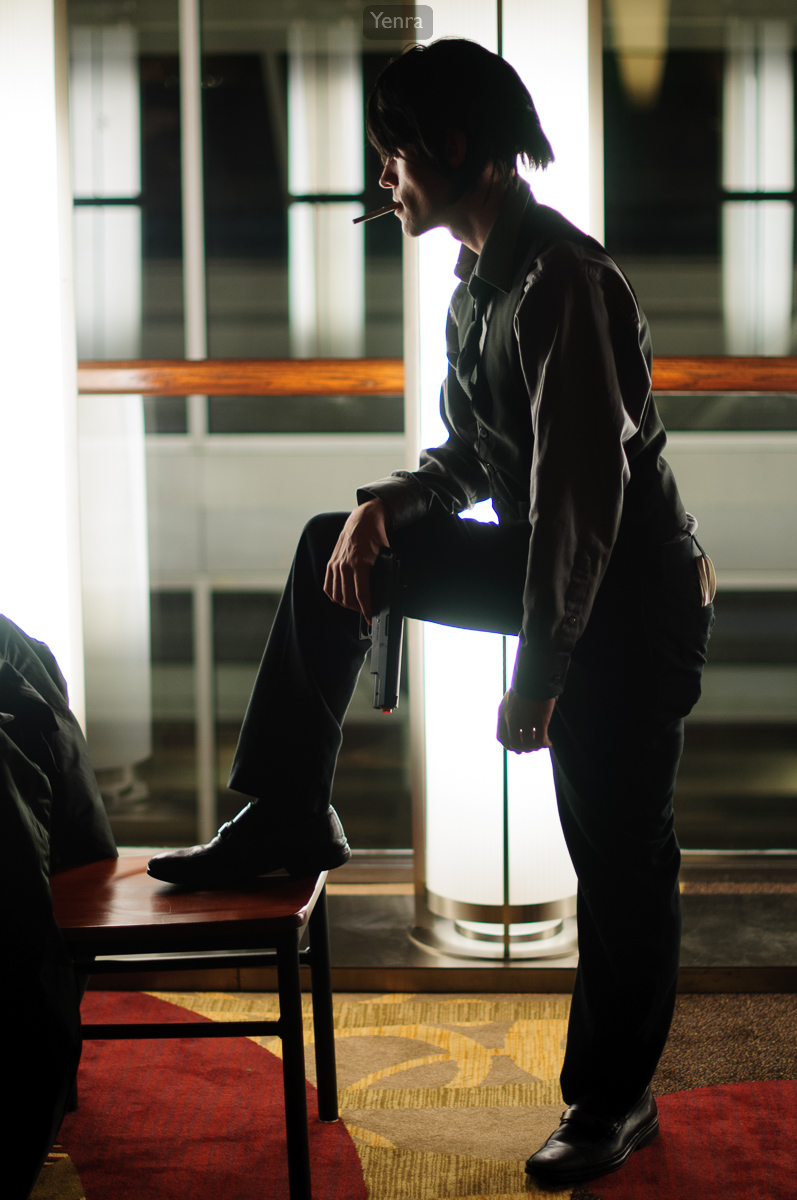
Profile portrait with visible detail beside a bright column · Photograph: Yenra
Captured: 2012:07:28 23:33:46
In this related profile photograph, more detail is visible in the face, hand, and clothing. The bright column still helps define the figure, while folds and smaller tones now contribute more to the reading of the portrait.
The first and third photographs are separate original files captured thirteen seconds apart. This third photograph was made earlier; the dates remain in their captions. Their order here supports a comparison of outline and detail. The pictures alone do not establish which camera, lighting, or editing choices produced the difference.
Compare the two views by asking what each makes easier to notice. One may draw your attention quickly to the profile and bent leg; the other may hold your attention on a hand or a fold. You can value both contributions without treating one as a correction of the other.
Return to your own photographs and write one observation about the edge you followed. Perhaps a small gap made the object more recognizable, or a remaining patch of color became part of its appeal. Keep the version that interests you and the observation that makes you want to try again.
Look back with curiosity.
- Which part of the outline makes the subject recognizable?
- Where does visible detail remain within the darker shape?
- What changed when you moved your viewpoint?
Keep exploring
Noticing light and dark shapes · Noticing shadows in a photograph · Exploring a profile portrait
Browse the complete Otakon 2012 gallery.