Field notes · Look · Try · Compare
Noticing sequin textures in a costume photograph
Move from a gold costume to its small reflective discs and the larger shapes around them.

Mami, Dreamin Iris - The Idolm@ster · Photograph: Yenra · Credit: Jenni Bon · Archive tags: Idolmaster, Mami Futami
Captured: 2017:02:18 12:39:38
A sparkling surface offers more than a patch of brightness. Look closely and you may find small repeated shapes, folds that gather them into bands, and quieter areas that give the eye somewhere to rest. Moving between a whole portrait and a detail can make those relationships easier to notice.
These photographs of Jenni Bon as Mami at Katsucon 2017 move from the gold costume to two original details. Enjoy the larger portrait first, then see what the small reflective discs contribute. The order is arranged for looking; the detail photographs were recorded before the whole portrait.
Find the sparkling surface in the whole portrait
In the opening portrait, gold fills much of the bodice and upper skirt. It forms broad shapes around the face and hands, with white fabric and rainbow trim nearby. From this distance, the many small reflective pieces gather into a sparkling surface.
Let your eye move from the face toward the gold, then across the white skirt. Notice where the surface seems busiest and where the picture offers a simpler shape. The costume remains part of a portrait, so you can enjoy its detail alongside the gesture and expression.
Choose one small area that makes you curious. Before looking at the next photograph, describe what you can already see there: a bright patch, a fold or a repeated shape. A brief observation is enough to give the closer view a purpose.
Look closely at the small repeated discs
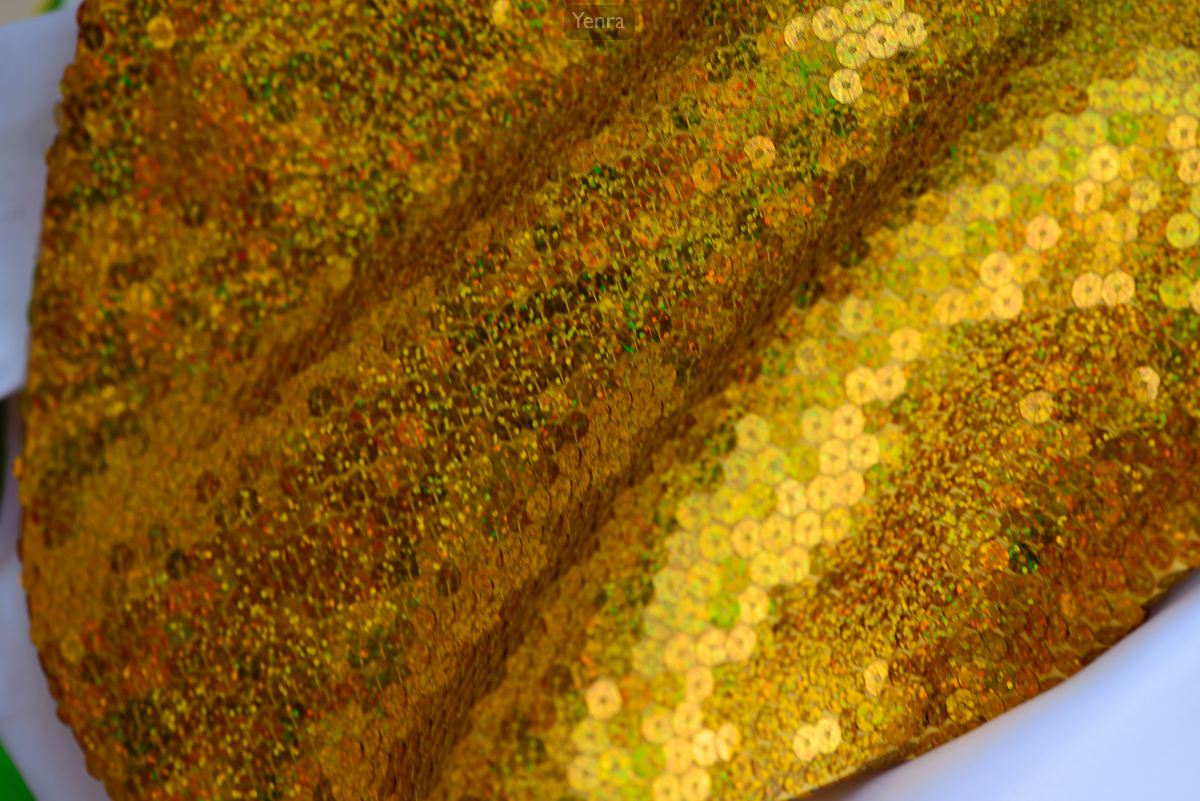
Mami Details, Dreamin Iris - The Idolm@ster · Photograph: Yenra · Credit: Jenni Bon · Archive tags: Detail, Idolmaster, Mami Futami
Captured: 2017:02:18 12:33:41
The detail photograph reveals small round sequins with visible centers. Some discs are distinct, while others gather into softer areas. Folds carry the surface across the frame, creating bands that look brighter or darker within the photograph.
Find one clearly defined disc, then follow the nearby repetition. Compare a bright band with a darker fold. The surface is made interesting by both the repeated circles and the differences among them.
Try a whole view and a detail of a reflective garment you already have. Look at the results together: which view shows the overall shape, and which makes the small pieces easier to appreciate? You can keep both when they reveal different things.
Compare the texture with larger star shapes
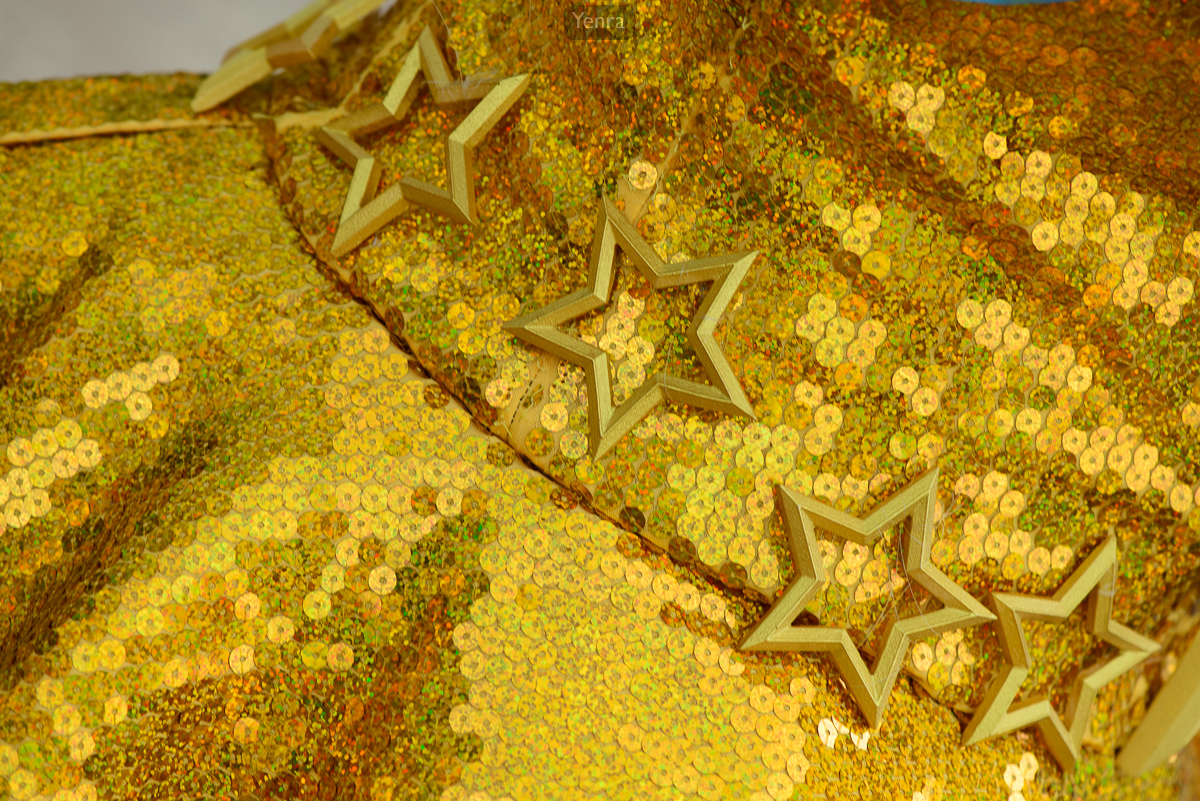
Mami Details, Dreamin Iris - The Idolm@ster · Photograph: Yenra · Credit: Jenni Bon · Archive tags: Detail, Idolmaster, Mami Futami
Captured: 2017:02:18 12:33:43
The third photograph places larger open star shapes across the sequins. Their broad outlines are easy to follow beside the tiny circles. The stars add another scale of detail without removing the surrounding texture.
Trace one star, then look into the space within its outline. The sequins continue there, linking the larger shape with the surface behind it. Compare the orderly edge of the star with the many changing bright points around it.
Return to the whole portrait and locate this part of the costume. Keep one note about the view you most enjoyed. You might prefer the overall sparkle, the small discs or the contrast of scales. That preference can suggest your next detail photograph.
Look back with curiosity.
- Where does the gold surface first catch your eye?
- Which small discs are distinct, and where do they gather into a softer texture?
- What changes when the larger stars enter the detail photograph?
Keep exploring
Noticing shine in a photograph · Noticing texture in a photograph · Noticing star shapes in a photograph
Browse the complete Katsucon 2017 gallery. Follow a photograph into its original neighbors and see which detail, gesture or change of setting catches your attention next.