Field notes · Look · Try · Compare
Noticing lacing and stitches in a photograph
Follow repeated joining details from prominent laces to smaller stitch-like marks, then see how they belong to a larger costume.
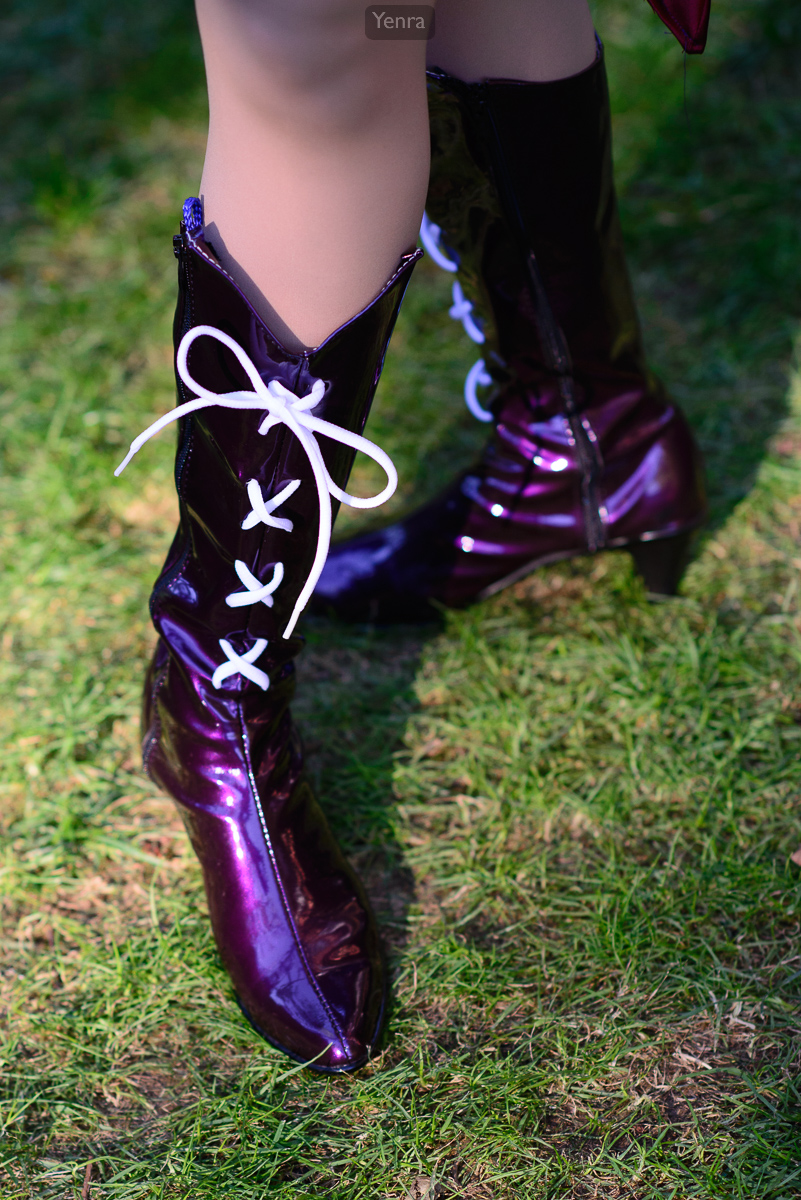
Purple boots · Photograph: Yenra
Captured: 2013:09:14 16:36:49
Laces and small stitched details can give your eyes a path through a photograph. Their crossings, intervals and changes of direction create patterns within a much larger view. Taking a moment to follow those marks can reveal something you had passed over on a first look.
These Anime USA 2013 photographs move from prominent boot laces to smaller stitch-like marks on a costume. Compare their scale, then return to the whole portrait. You can enjoy what the details contribute without needing to identify how the costume was made.
Follow the crossings in the laces
The bright laces cross the front of a purple boot, then gather into a bow. Their repeated turns stand apart from the broad purple surface. A second boot is visible more softly behind it, giving the close photograph another layer without repeating every detail with equal clarity.
Follow two or three crossings before looking at the full frame again. Notice how the spacing, pale color and changing angles help the lacing remain recognizable. You do not have to count every crossing; a short stretch is enough to begin seeing the pattern.
Try this with a photograph already in your collection. Shoe laces, a tied cord or decorative marks along a join can all offer a starting point. Describe the visible shapes first, using words that help you find the same detail again.
Find smaller marks along a join
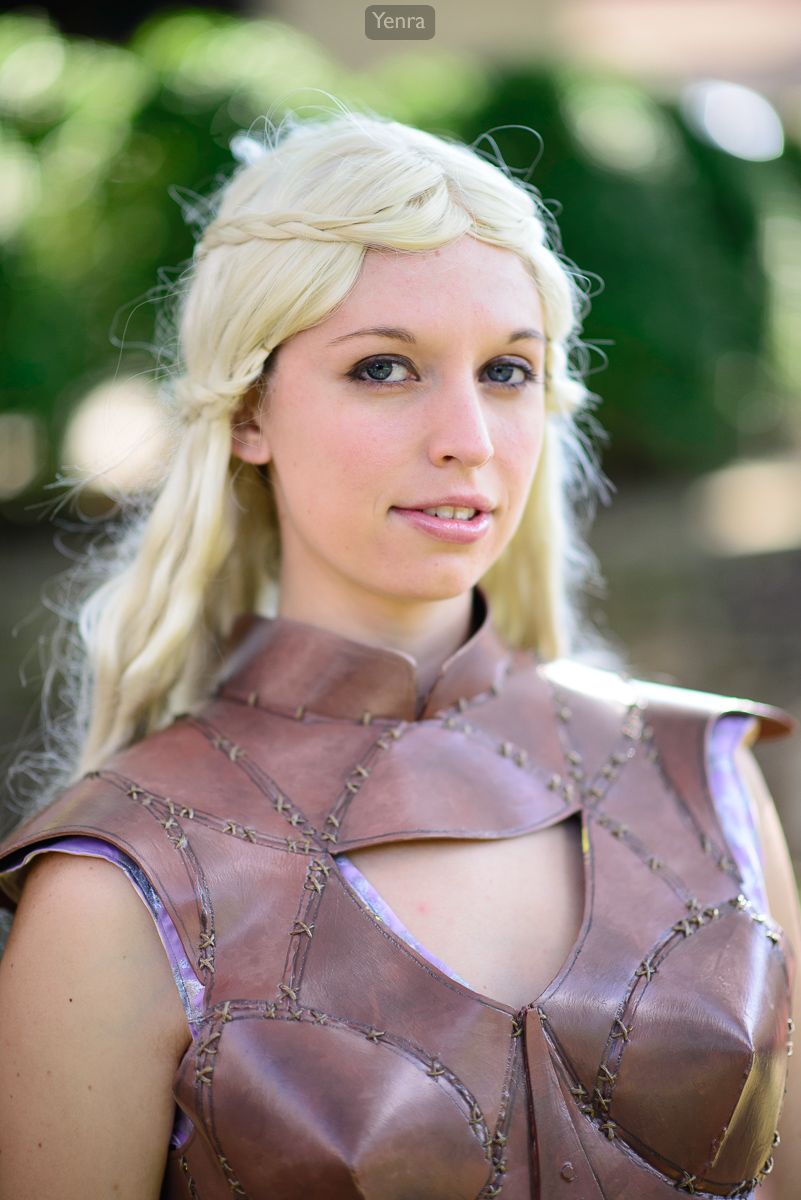
Daenerys Targaryen from Game of Thrones · Photograph: Yenra
Captured: 2013:09:13 16:47:28
In this closer Daenerys Targaryen costume portrait, small pale marks follow curved joins between brown panels. They look stitch-like at this scale. Purple fabric, hair and the face provide larger shapes around the much smaller repeated details.
Compare these marks with the boot laces. Both invite you to follow repeated crossings or short lines, but the marks here take up much less of the frame. Look at where they remain easy to see and where a curve or nearby shape asks for closer attention.
A photograph can show you a visual relationship without establishing a construction method. In your notes, “small pale marks along the curved join” is a useful observation. You can leave the materials and making process open unless the maker has supplied that information.
Return to the whole costume
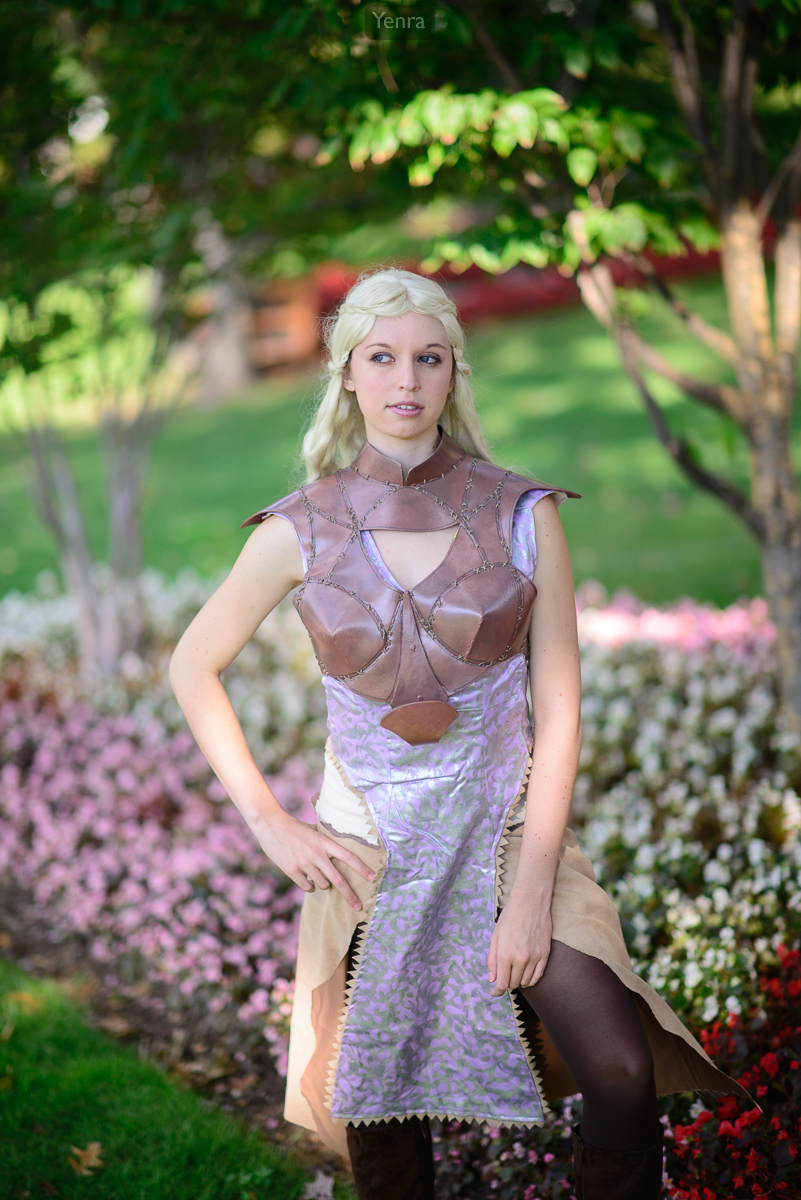
Daenerys Targaryen from Game of Thrones · Photograph: Yenra
Captured: 2013:09:13 16:48:15
The wider portrait lets those details become part of the whole costume and pose. The curved panel shapes occupy more of your attention, while the small marks help describe their edges. The garden gives the figure a setting beyond the clothing itself.
Move between the closer portrait and this wider view. What becomes easier to notice in each? The close photograph gives the repeated marks more space; the wider one shows how they relate to the larger arrangement. Neither has to explain everything alone.
You can repeat this comparison without changing either original. Look at a detail, return to the full frame, and write one sentence about what each view contributes. If you make new photographs, try both distances and keep the version or pair that interests you.
Look back with curiosity.
- Which repeated marks catch your attention?
- What does the closer view reveal?
- What does the whole costume add?
Keep exploring
Noticing crossed lines in a photograph · Noticing decorative borders in a photograph · Photographing the details that matter
Browse the complete Anime USA 2013 gallery. Return to a photograph that interests you, follow its original neighbors, and see what else you notice. Your next useful experiment can begin with a small detail that catches your attention.