Field notes · Look · Try · Compare
Noticing horizons in a photograph
Explore how the distant edge makes room for sky, water, and land.
A distant edge gives your eye a place to begin. Where water meets sky, or trees rise against clouds, a photograph opens into spaces above and below. Notice how much room each space receives, then imagine what another arrangement might invite you to see.
Find the distant edge
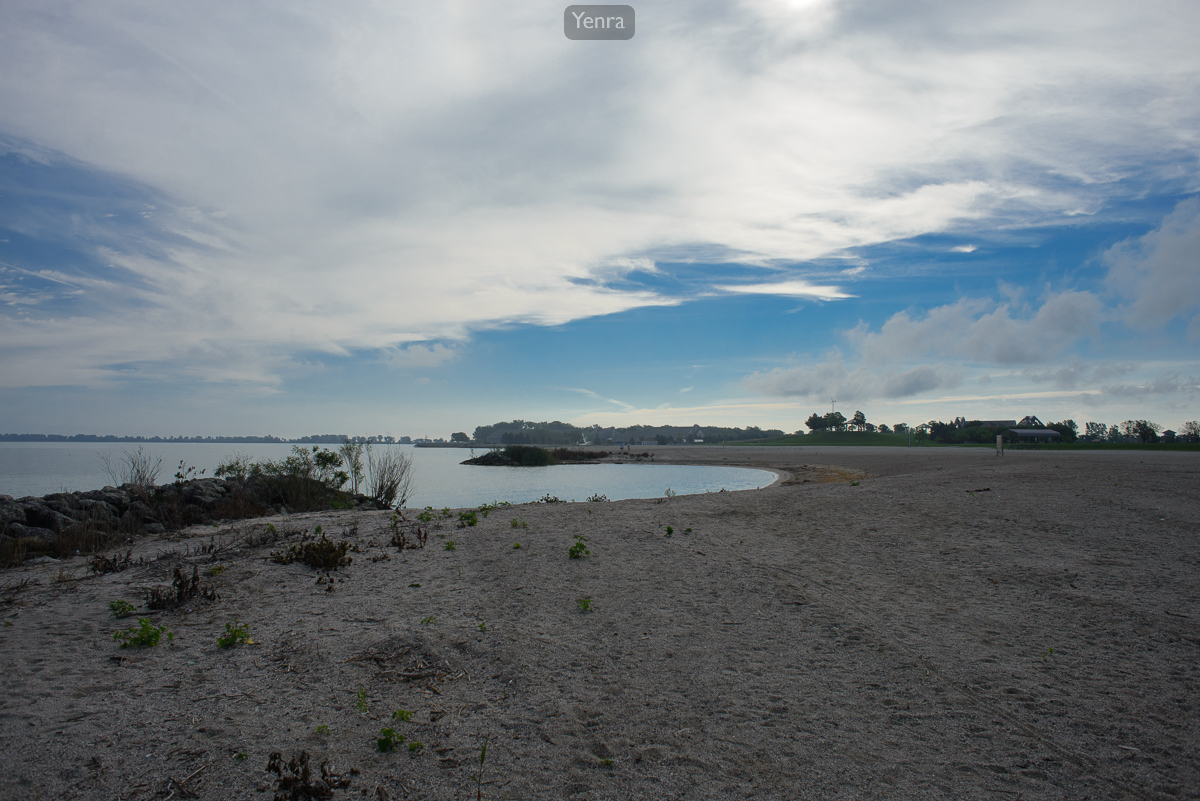
Midoricon Sky · Photograph: Yenra
Captured: 2016:09:09 09:54:50
In this lake view, the distant tree line runs across the picture below a broad sky. Closer to the camera, the beach curves around the water. Follow those two edges separately: one describes the far distance, while the other leads through the nearer ground.
A horizon can be a quiet horizontal boundary, or it can meet an irregular skyline of trees and buildings. Finding it is an exercise in looking. You might also notice clouds, rocks, or a shoreline that make their own lines elsewhere in the frame.
Notice the space above and below
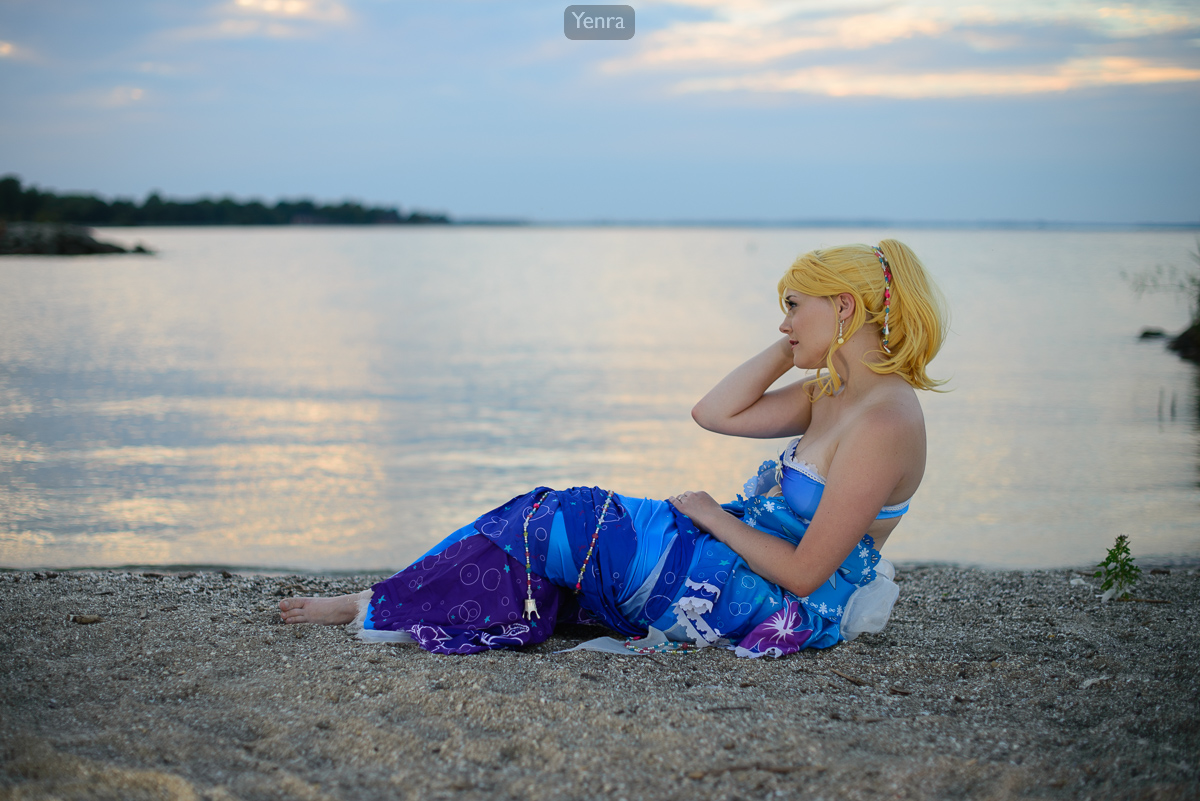
Mermaid Eli, Love Live · Photograph: Yenra · Credit: Slothtier Cosplay
Captured: 2016:09:09 19:40:38
Here the horizon sits high in the photograph. A broad area of water surrounds the seated figure, and a narrower strip of sky remains above. The person’s gaze and the long blue-and-purple shape of the clothing give you other directions to follow within that arrangement.
Try covering a little of the sky with your hand while looking, then uncover it. What does that space contribute? When making a new photograph, you can change the framing to explore the relationship. A low, middle, or high horizon can each be useful; choose according to what you want to give room to.
Let the horizon share the portrait
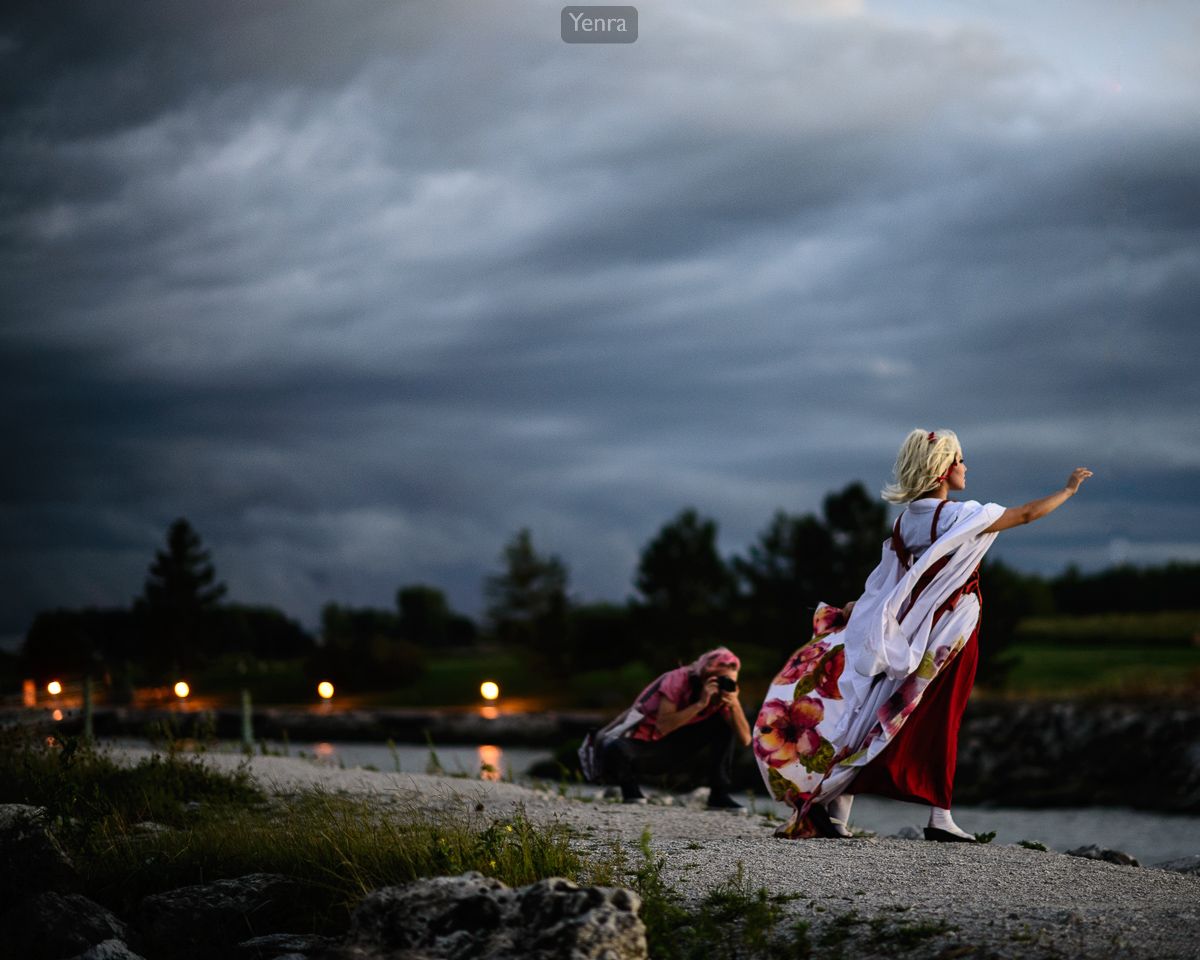
Uka, Inari Kon Kon Koi Iroha · Photograph: Yenra · Credit: Minjee Kay Cosplay
Captured: 2016:09:10 20:10:52
A low, uneven tree line leaves a large area for clouds in this portrait. The white-and-red clothing, extended arm, nearby photographer, and small lights remain part of the complete scene. The sky contributes a large shape of its own above those smaller details.
Compare this with the seated portrait. One picture gives more room to water around the figure; the other opens into sky above it. Their settings and arrangements differ in several ways, so enjoy them as separate possibilities. For your own experiment, stay with one view and make two or three framings that give different amounts of space to sky and ground.
You can explore this with a lake, a field, a city view, or a familiar scene through a window. Look for the far edge, notice the nearer ones, and keep a picture whose balance interests you.
Look back with curiosity.
- What becomes more noticeable when the sky has more space?
- How does the nearer shoreline differ from the horizon?
- Which placement suits the picture you want to make?
Keep exploring
Making space around a subject · Following lines through a photograph · Noticing diagonals in a photograph
Browse the complete Midoricon 2016 gallery.