Field notes · Look · Try · Compare
Noticing fringe in a costume portrait
Follow hanging details, their spacing and their different lengths within a portrait.
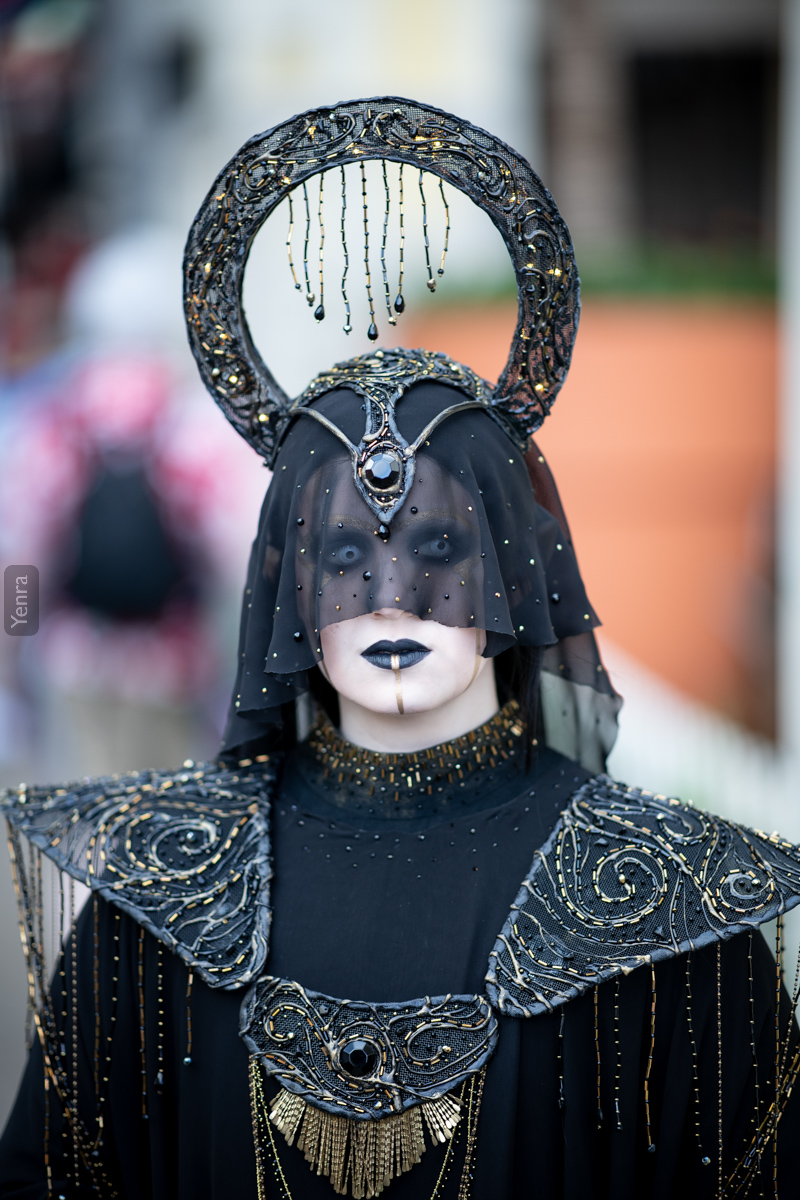
Katsucon 2020 photograph 1323 · Photograph: Yenra · Archive tags: Avallone Cosplay
Captured: 2020:02:14 12:21:06
Hanging trim offers a small pattern to explore within a portrait. A row of narrow strands can make one shape, while their ends draw another. Looking at their lengths and the spaces between them can help you discover a familiar photograph in a new way.
These three Katsucon 2020 photographs move from a portrait to closer views of its headpiece and chest decoration. Begin with the complete frame, then follow one hanging detail. Ordinary observations about spacing, direction and shape are enough to start.
Find hanging details around the portrait
The opening portrait places hanging strands inside a circular headpiece and below the shoulders. Those narrow lines sit among larger curves around the face. Looking from the face to the trim and back gives you a way to enjoy both the person and the costume details.
Choose a small group of strands and follow them downward. Notice where they begin, how much room lies between them and where they end. Some lines are easy to distinguish against an open background; others sit close together over dark clothing.
Now return to the full picture. Ask where this hanging pattern contributes to the larger arrangement. Your observation might be as simple as a row of short lines beneath a curved edge. That is a useful description to keep.
Compare the lengths inside an opening
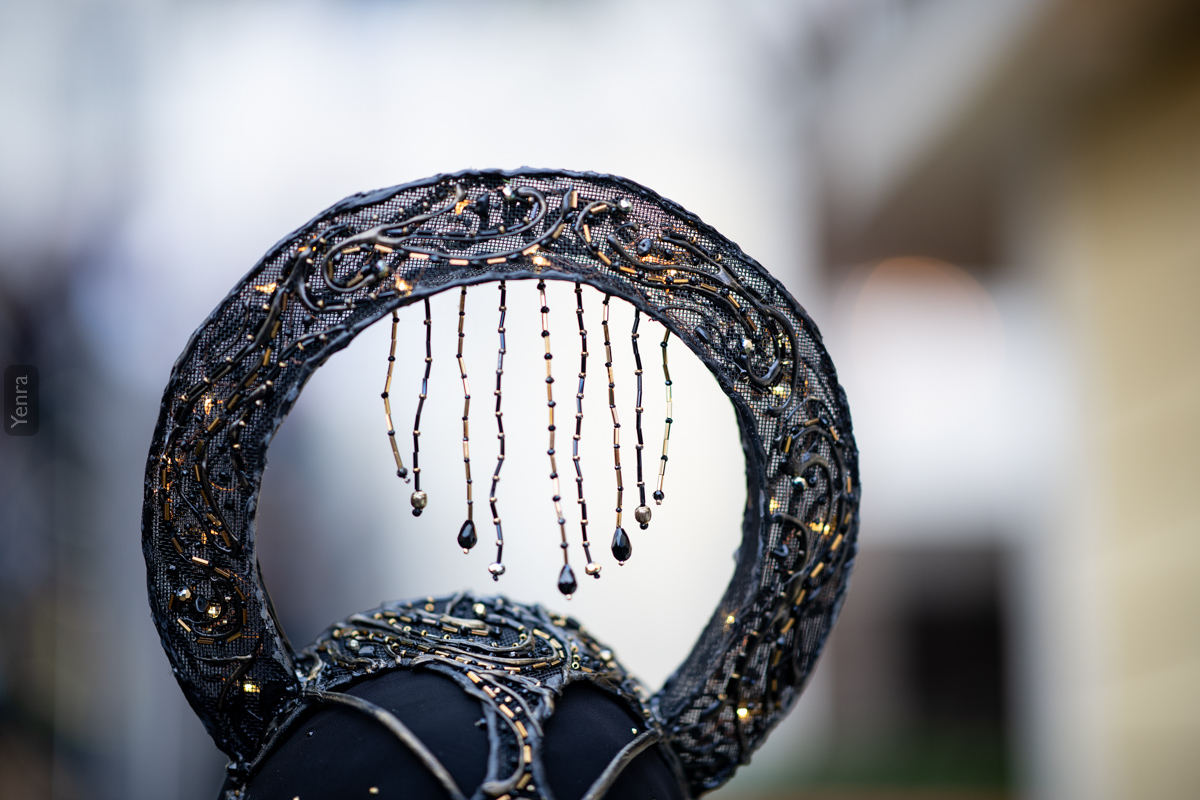
Katsucon 2020 photograph 1337 · Photograph: Yenra
Captured: 2020:02:14 12:21:37
The closer headpiece photograph makes the separate strands and their differing lengths easier to compare. Their ends create an uneven outline inside the larger circle. Small gaps let the background become part of the pattern.
Try following the ends from one side to the other, then look upward along an individual strand. These two paths emphasize different features: the outline across the group and the direction of each hanging piece.
You can explore a similar relationship with a fringed scarf or decoration you already have. Make a wider picture and a closer one, keeping the object comfortable and secure. Compare which view shows the spacing clearly and which gives the detail more context.
Follow a fringe beside a draped curve
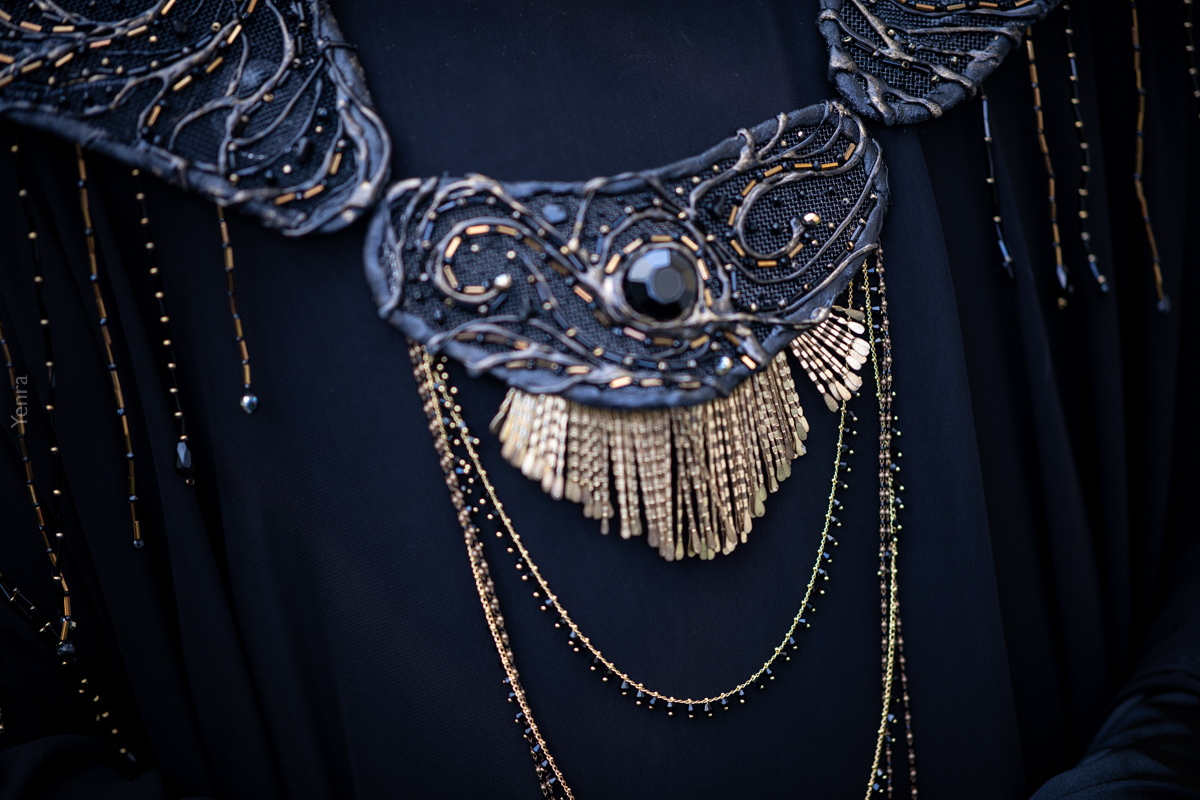
Katsucon 2020 photograph 1343 · Photograph: Yenra
Captured: 2020:02:14 12:21:48
The chest detail brings closely spaced hanging pieces together with longer draped chains. The shorter fringe makes a compact shape, while the curves below enclose larger areas of dark clothing. Different kinds of hanging detail can contribute different rhythms.
Look at the gaps as well as the pieces themselves. Compare the dense area beneath the central decoration with the more open curves below it. You can describe that difference without needing to identify how the costume was made.
Return to the portrait once more and see where these details belong. If you are exploring your own photographs, write one sentence about an outline or a space you had not noticed before. A small discovery can give you a fresh question for the next picture.
Look back with curiosity.
- What outline do the hanging ends make?
- Where are the gaps easiest to see?
- How does the fringe relate to the larger shapes?
Keep exploring
Noticing bead patterns in a costume photograph · Noticing decorative borders in a photograph · Noticing vertical lines in a photograph
Browse the complete Katsucon 2020 gallery. Follow a photograph into its original neighbors and see what else catches your attention. A small detail, a familiar prop or a new pairing may begin another discovery.