Field notes · Look · Try · Compare
Noticing colored light in a photograph
Compare how broad orange, violet and blue color areas give three nearby performance photographs different appearances.
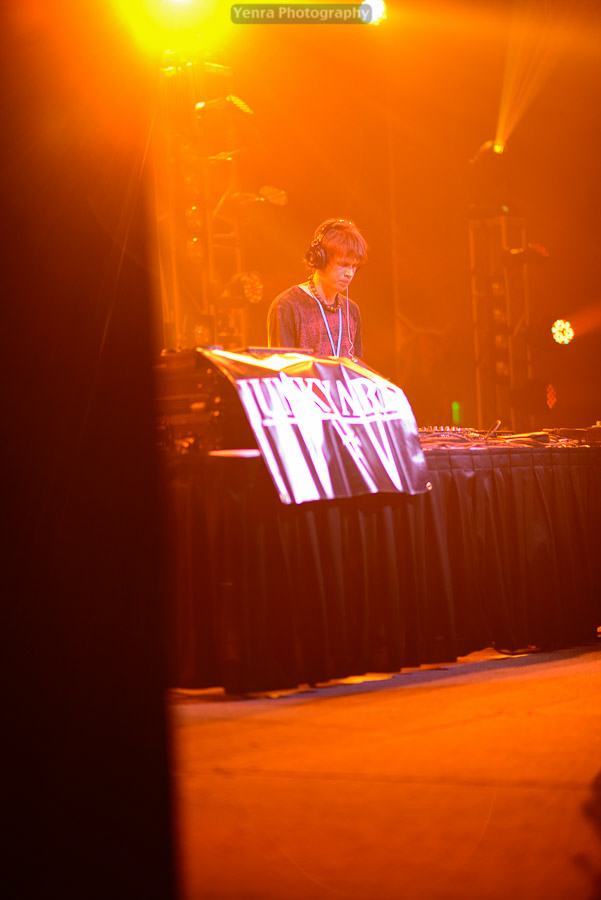
DJ under orange light · Photograph: Yenra
Captured: 2014:11:09 00:16:55
Colored light can spread through a photograph, changing the appearance of a face, a floor and the objects around them. A few nearby frames give you a chance to follow those changes. Start with a familiar detail, then look at the larger color areas that surround it.
These three photographs record a DJ at Nekocon 2014 over eleven seconds. The person, banner and equipment give us repeated details to compare, while orange, violet and blue occupy different amounts of each finished picture.
Begin with the orange wash
Orange and yellow fill much of the stage and floor. The banner makes a bright shape below the DJ, while the dark strip at the left reaches from the top to the bottom of the frame. Those broad areas give the smaller details a setting.
Try following one detail through the picture. You might choose the headphones, the edge of the table or a fold in the banner. Notice the color around it as well as its own appearance. A color wash can connect parts of a scene that otherwise have very different shapes.
Your first note can be simple: “Orange reaches from the upper lights down to the floor.” Describe what you see before deciding what you prefer. There is room to enjoy the sweep of color and the small details within it.
Compare the violet frame
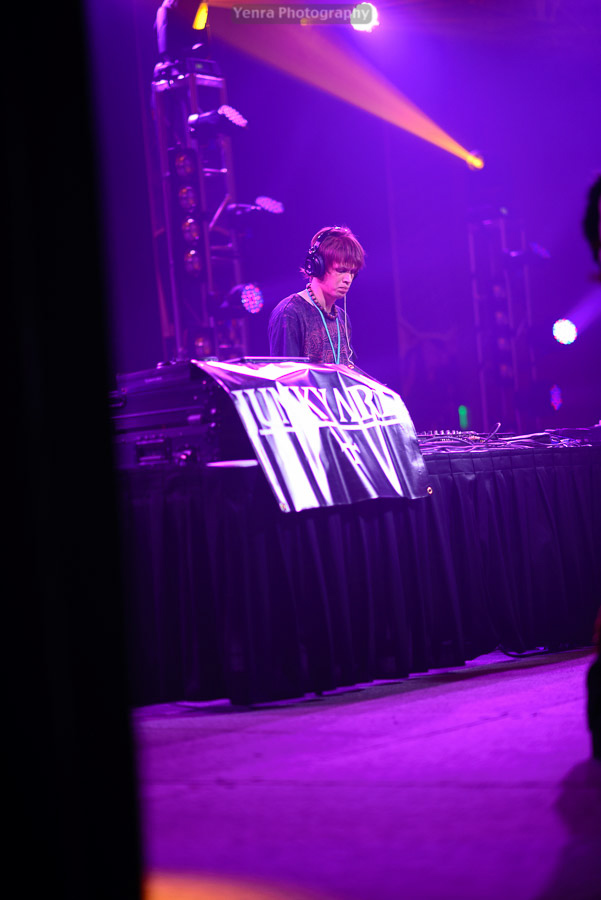
DJ under violet light · Photograph: Yenra
Captured: 2014:11:09 00:17:02
Violet now spreads across much of the stage, clothing and floor. An orange beam remains above, making a smaller contrasting area. The banner and equipment are familiar, but their surroundings have a different appearance.
Return to the detail you chose in the first frame. Does it seem more distinct here, or do you notice something else nearby? Then compare the floor and the space above the person. Looking at both a small landmark and a broad area makes the comparison easier to describe.
You can use your own color words. Violet, purple and pink may each describe part of what you see on your screen. The useful step is noticing where the colors appear and how they share the frame.
Look again in blue
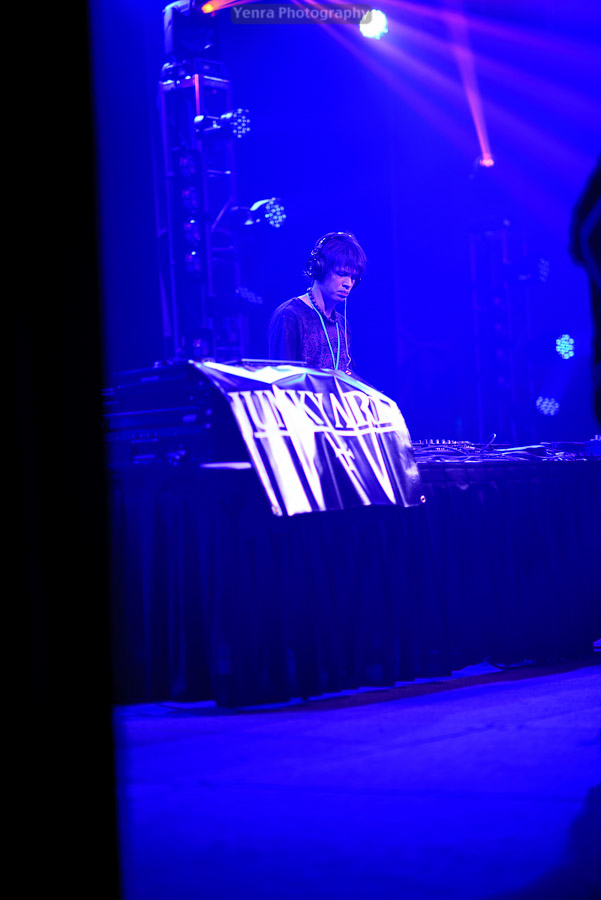
DJ under blue light · Photograph: Yenra
Captured: 2014:11:09 00:17:06
Blue dominates the stage and floor in the third photograph. Smaller pink-orange beams remain overhead. The same banner and table provide another opportunity to compare how familiar forms sit within a different overall color.
Look back through all three pictures. You might enjoy the orange frame's broad glow, the violet frame's contrasting beam, or the blue frame's more unified color area. Your response can be specific to these photographs; colors do not need to carry the same meaning for every viewer.
The capture records run from 00:16:55 to 00:17:06 on November 9, 2014. They place the pictures close together, while each frame remains its own finished photograph. We can compare the visible colors without reconstructing the lighting controls, white balance or editing choices.
Keep a small color observation
Try the comparison with photographs you already have. Choose a repeated detail, name the broad colors and write one sentence about what changes. If you photograph another event, watch a familiar part of the scene as the light changes and see whether another frame interests you.
These examples can also be your starting set. No lighting equipment or new outing is needed to practice looking. One clear observation gives you something useful to carry into your next photograph.
Look back with curiosity.
- Which repeated detail helps you compare the frames?
- Where does the broad color change the appearance most?
- What would you enjoy watching at another event?
Keep exploring
Noticing warm and cool colors · Noticing beams of light in a photograph · Photographing gestures on stage
Browse the complete Nekocon 2014 gallery.