Field notes · Look · Try · Compare
Photographing gestures on stage
Leave room for movement and discover what a quieter exchange contributes.
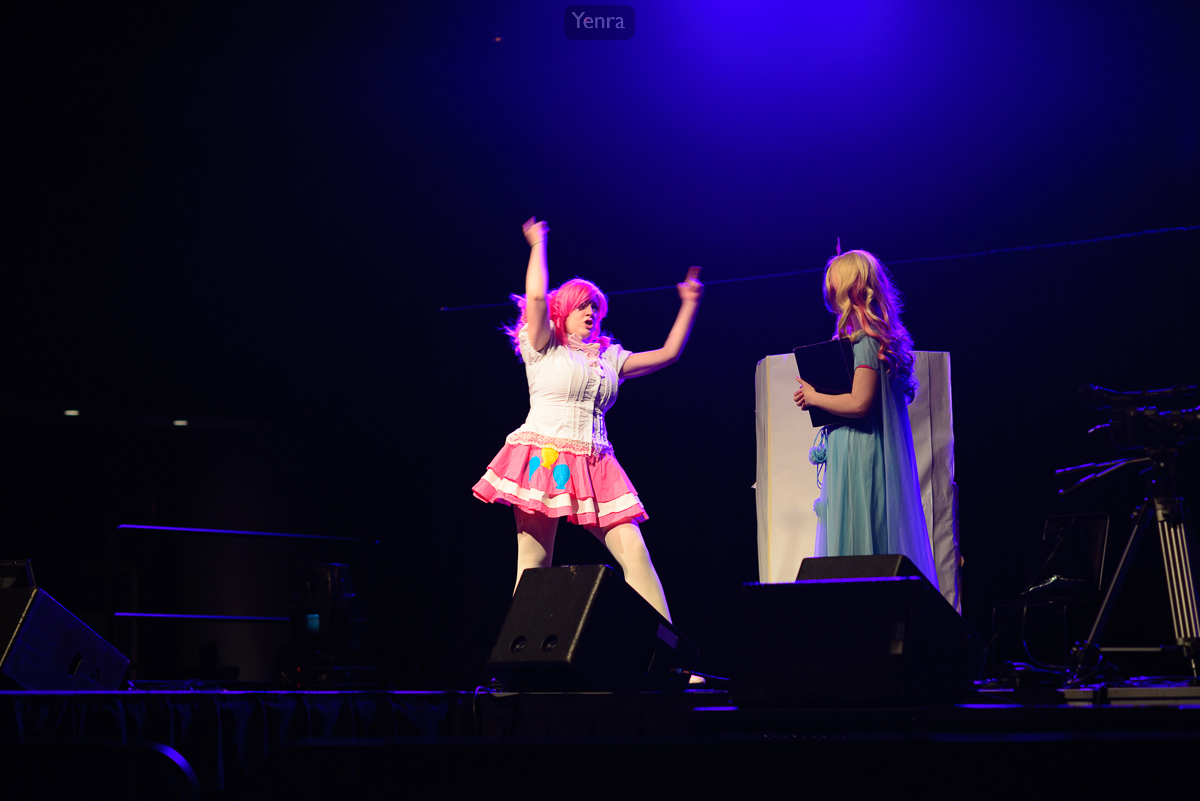
Pinkie Pie, My Little Pony · Photograph: Yenra
Captured: 2016:04:09 17:03:19
A gesture changes while you watch it. Arms rise, space opens between people, and an expansive movement becomes a quieter exchange. A small sequence can help you learn when to photograph and what to leave room for.
These three Tekko 2016 photographs follow two performers over a few seconds. They offer a chance to study timing and framing from visible moments, without needing to know the performance's dialogue or story.
Notice a gesture beginning
The pink-haired performer raises both arms while the other performer stands nearby with a dark book. The hands show some motion softness. That visible trace of movement is part of this photograph and something you can notice alongside the overall pose.
Look at more than the arms. Where does the second performer face? How much room surrounds the raised hands? What shapes do the stage equipment and backdrop add? Timing and composition work together in the same moment.
Before making your own photograph, watch a gesture unfold if you have the opportunity. You may begin to recognize a brief pause, a repeated movement or a direction in which the hands are likely to travel. A little observation can give your next frame a clearer purpose.
Work from a position the event permits and keep the audience's view in mind. You can explore timing from where you are, including with a wider frame that leaves room for movement.
Leave space for the movement
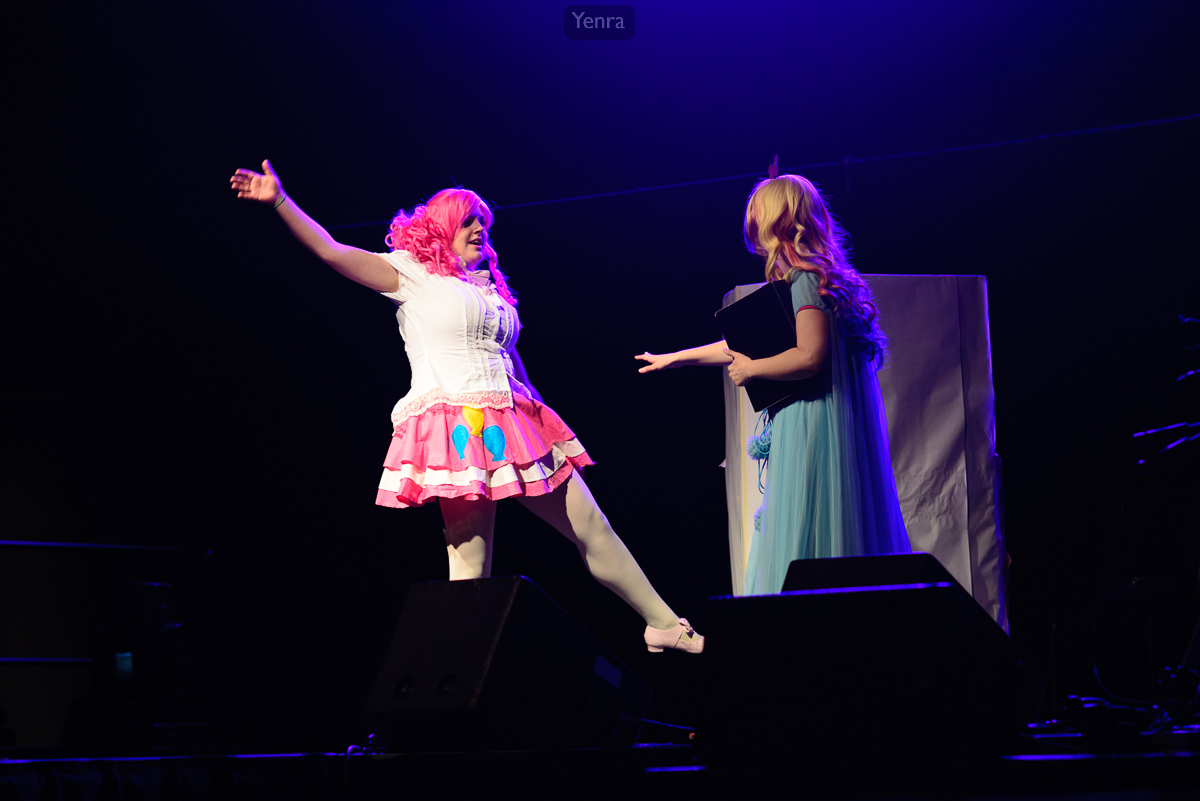
Pinkie Pie, My Little Pony · Photograph: Yenra
Captured: 2016:04:09 17:03:22
In the next photograph, an arm and a leg extend outward while the other performer reaches across the space between them. The gesture changes both the shape of the body and the relationship between the two people.
Follow the extended arm toward the frame edge, then return to the other performer's hand. Notice the space between the figures. Keeping both people in the picture lets their positions contribute to the moment together.
When photographing a moving gesture, leave a little room in the direction it is unfolding. You can review whether that space feels useful afterward. A wider first attempt can help you learn the movement before choosing a closer framing.
A sequence does not need to be long. Three or four photographs can give you enough to compare an early movement, a fuller extension and a pause. If you are practicing with a willing model, invite a small comfortable gesture they can repeat at their own pace.
Keep the quieter exchange too
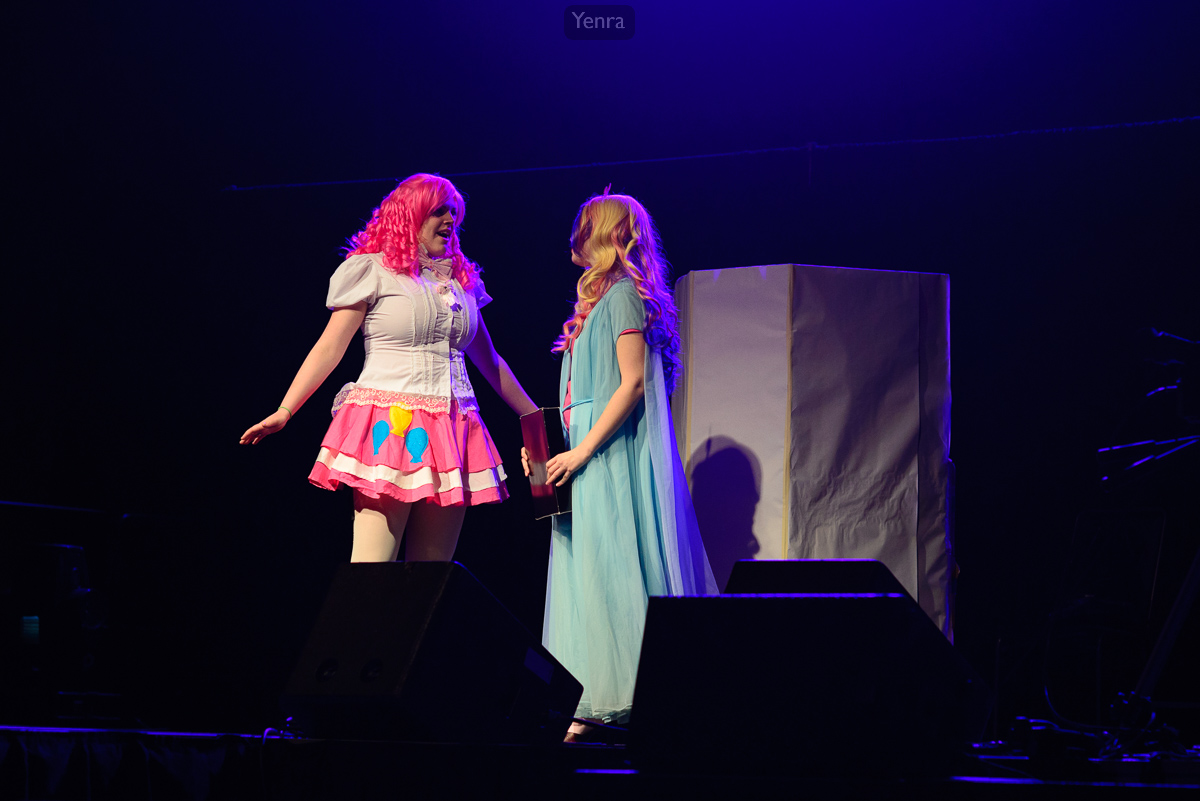
Pinkie Pie, My Little Pony · Photograph: Yenra
Captured: 2016:04:09 17:03:31
The performers now face each other more closely, with their arms lowered. The change gives the sequence a different emphasis: the space and direction between the faces become easier to notice.
A quieter moment can contribute as much as a large gesture. Compare what you learn from each picture instead of choosing only the most extended pose. One may show the shape of the movement; another may make the interaction clearer.
The photographs do not tell us exactly what was said, how the performers felt, or which camera and lighting decisions produced the result. Keep your observation close to what is visible. “The hands are lower and the performers face each other” is already a useful starting point.
Try the exercise with an existing sequence if an event is not available. Look at the pictures in order, then choose one you enjoy and write a short reason. A note such as “I like the room around the extended hand” gives you a specific framing idea to carry forward.
Your next experiment might be a slightly earlier frame, more room beside the gesture or greater attention to the second person. One small question is enough to keep learning from movement.
Look back with curiosity.
- What changes between the three moments?
- Where does the movement need more room?
- What does the quieter moment contribute?
Keep exploring
Exploring hand gestures in a portrait · Planning a portrait together
Browse the complete Tekko 2016 gallery.