Field notes · Look · Try · Compare
Noticing checks and grids in a photograph
Explore crossing lines in clothing, paving and a busy display.
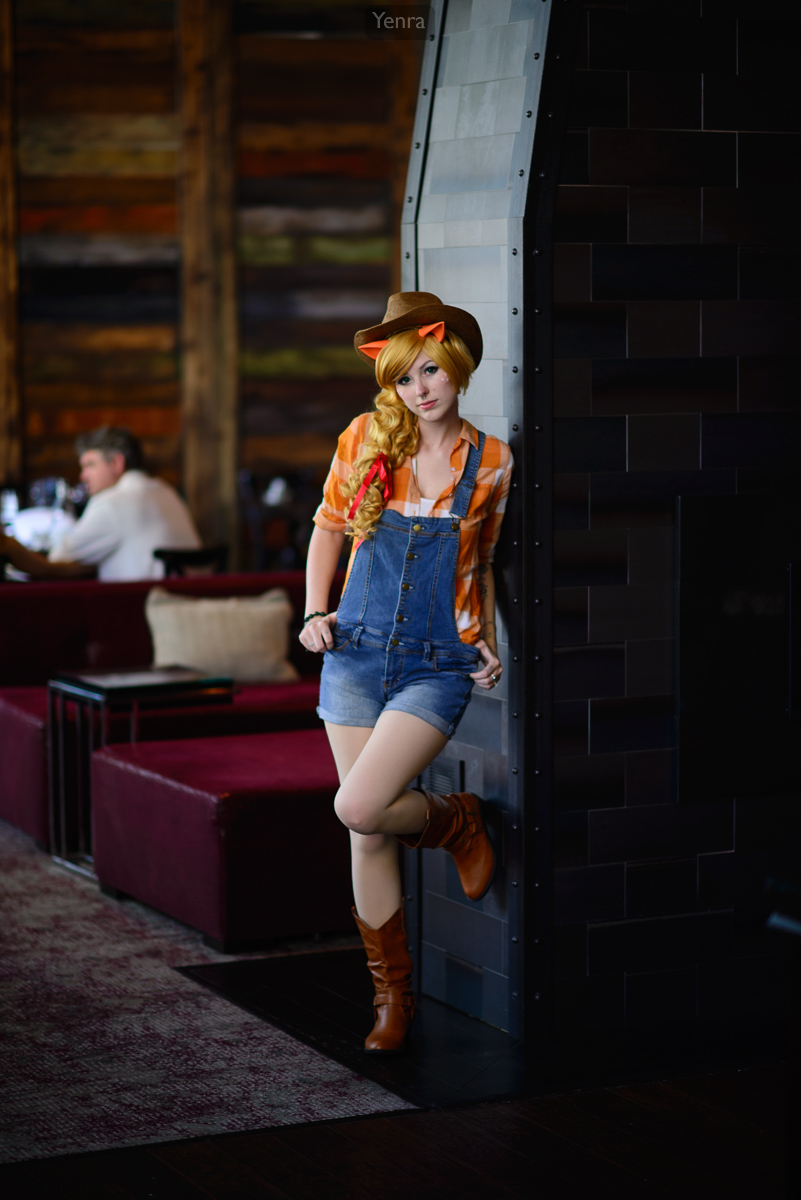
Applejack, My Little Pony · Photograph: Yenra · Credit: Chickadee Cosplay
Captured: 2016:05:28 14:25:01
A grid begins where one direction crosses another. Checks in a shirt, paving beneath your feet and shelves in a display can all give a photograph a structure to explore.
These three Animazement 2016 photographs move from a small pattern in clothing to larger patterns in the surroundings. Start with a picture you already have and follow one set of crossing lines. You may notice a relationship that gives you an idea for your next frame.
Start with the checks in clothing
Orange and pale stripes cross in the model’s shirt, forming checks that bend around the sleeves and torso. Beside the model, the tiled column repeats a larger set of rectangles. The two patterns share the picture while working at different scales.
Follow a short line through the shirt. A fold changes its direction; an overall strap interrupts it. Those small variations help the checked fabric feel different from the straighter divisions of the column.
You can enjoy a pattern without making it perfectly regular. Look for the places where it bends, disappears or meets another shape. In a portrait, the hands, clothing and surrounding space can each contribute something to that arrangement.
For your own study, write one sentence about the crossing lines you see. “Small checks beside larger tiles” is already a useful observation. It gives you a relationship to recognize in other pictures.
Follow the paving into the distance
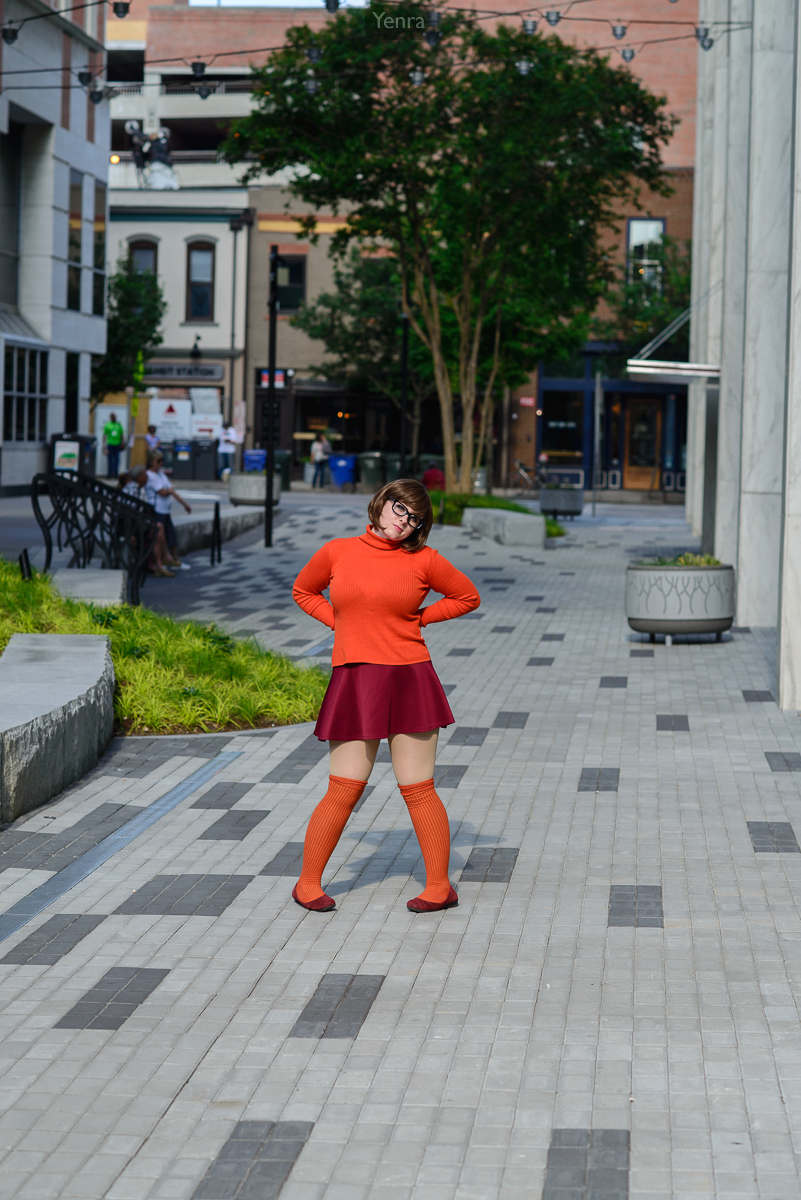
Velma, Scooby Doo · Photograph: Yenra
Captured: 2016:05:27 17:27:43
The walkway is made from pale and dark paving stones. Their repeated divisions extend around the model and toward the buildings behind. Near the bottom of the frame, individual stones are easy to distinguish; farther away, the pattern becomes smaller and closer together.
Notice how much of the photograph belongs to the ground. It gives the portrait a setting and a sense of distance, while the orange sweater forms a larger, more continuous area among the small repeated shapes.
The dark paving stones vary the grid’s rhythm. Follow a few of them, then return to the model. You may find that your eye moves between the repeated pattern and the figure that interrupts it.
A small change of viewpoint can offer another arrangement in your own photographs. You might include more foreground paving or let the pattern sit farther behind the model. Compare the complete frames and keep the version whose relationship interests you.
Let a grid organize a busy scene
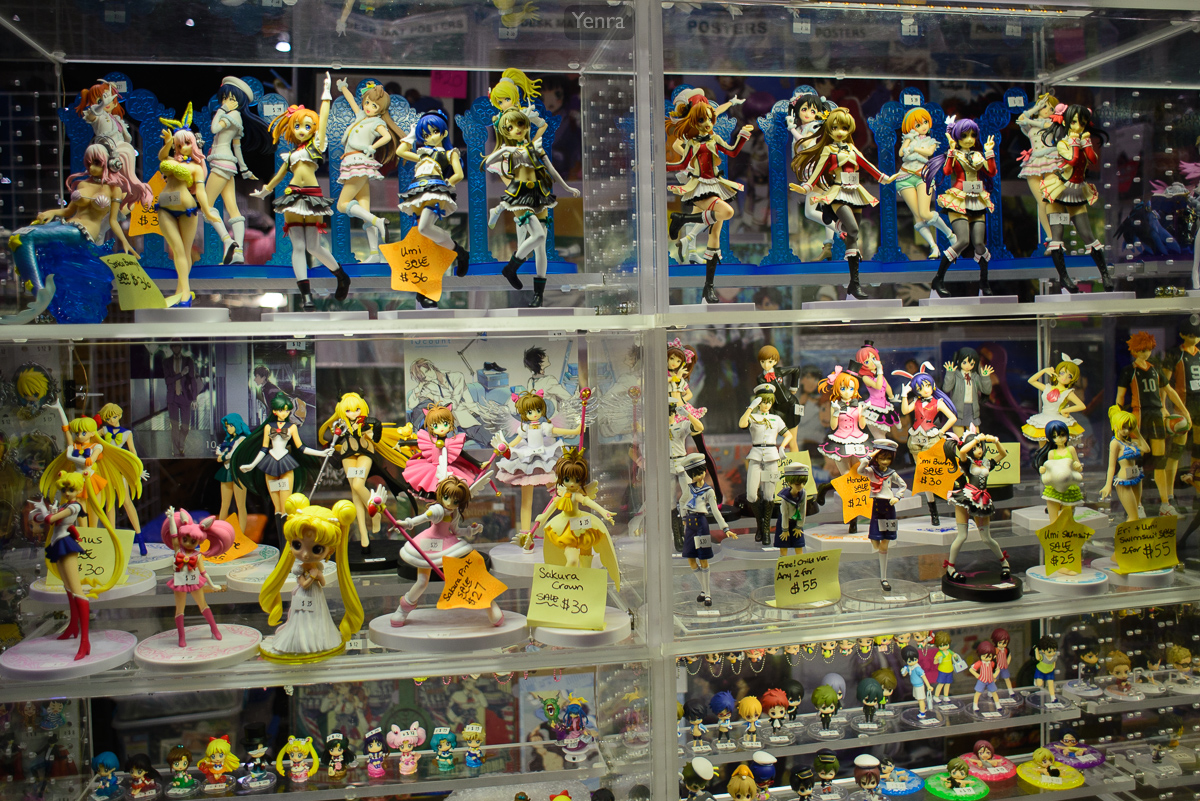
Anime Figurine Display Case · Photograph: Yenra
Captured: 2016:05:27 13:40:35
Horizontal shelves and vertical supports divide this cabinet into smaller areas. Colorful figurines, labels and reflections fill those areas with detail. The cabinet’s larger divisions give you somewhere to begin looking.
Start with one shelf, then move to the shelf below. Follow an upright through several rows. The grid remains useful even when objects overlap its edges or reflections soften a line.
This offers a different role for crossing lines: they can help you explore a crowded picture as well as a simple one. Try describing the broad divisions before naming the smaller details that catch your attention.
Look around an everyday place for a similar arrangement—bookshelves, a window, floor tiles or checked clothing. An existing photograph is enough for the exercise. Find the crossing directions, notice an interruption, and keep one observation you would like to revisit.
Look back with curiosity.
- Where do the lines cross?
- Which part of the grid is interrupted?
- What happens to the pattern as it moves into the distance?
Keep exploring
Noticing stripes in a photograph · Noticing rectangles in a photograph · Finding rhythm in repeated shapes
Browse the complete Animazement 2016 gallery.