Field notes · Look · Try · Compare
Finding rhythm in repeated shapes
Notice repeating shapes, explore their spacing, and try a pattern of your own.
A repeated shape gives your eye somewhere to return. You might find it in a row of cups, the spaces between leaves, a patterned skirt, or a fence beside a path. Begin with a repetition you enjoy, then notice how it changes as you look across the photograph.
Find a pattern, then follow its variations.
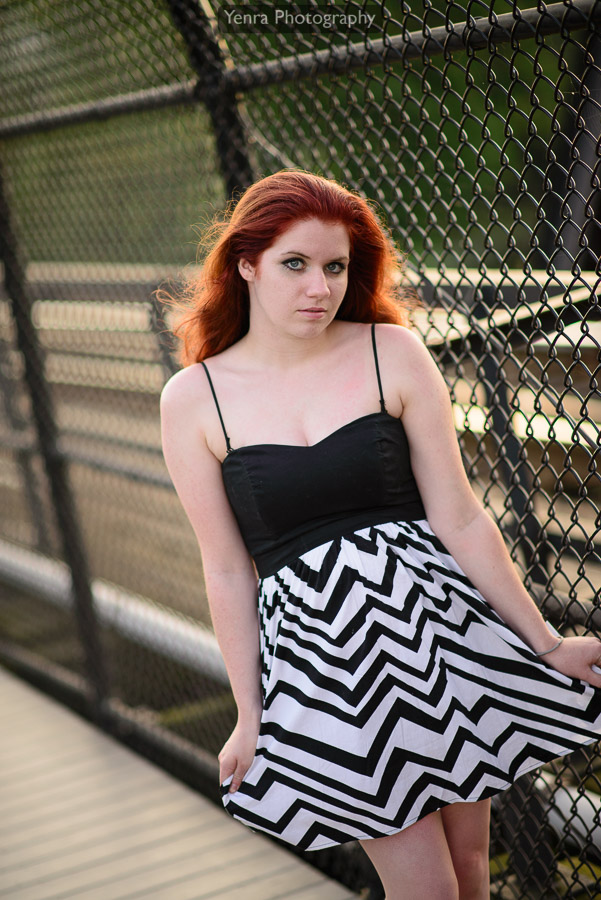
A patterned skirt beside repeating mesh · Yenra Photography archive
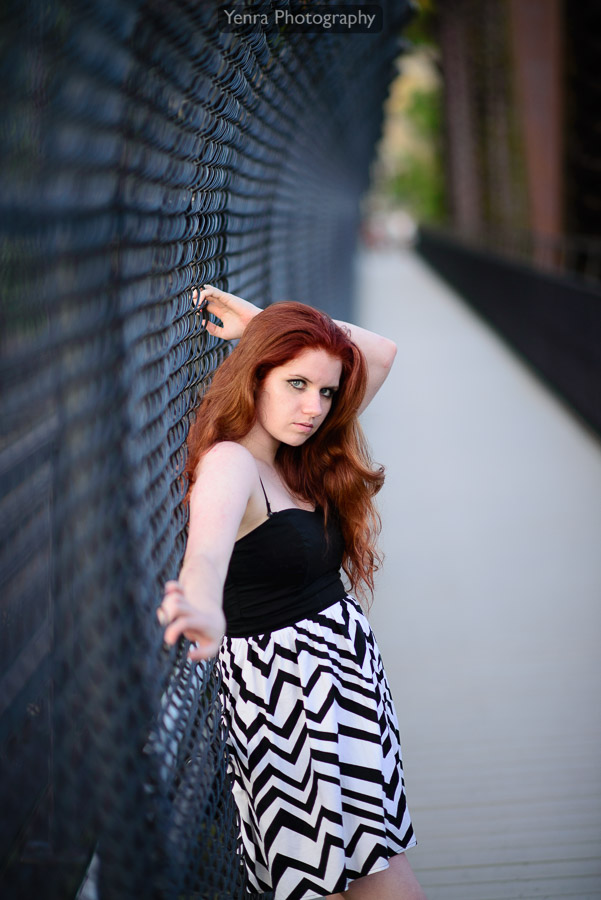
Mesh extending into the distance · Yenra Photography archive
The black-and-white skirt repeats a zigzag shape. Behind it, the fence repeats smaller openings in a grid. These two patterns occupy different parts of the picture: one travels across the clothing, while the other stretches around and beyond the person. Pause on either one, then let your attention move between them.
In the second portrait, the mesh fills much of the left side and becomes smaller toward the distance. The skirt supplies another set of repeating marks near the lower edge. Compare how much room each pattern has in the two photographs. They are different moments and arrangements, offering possibilities to study.
Visual rhythm is a useful name for this experience of shapes recurring through a picture. A rhythm can feel regular, varied, closely packed, or spacious. You can explore it by noticing both the shapes and the intervals between them.
Let different kinds of repetition meet.
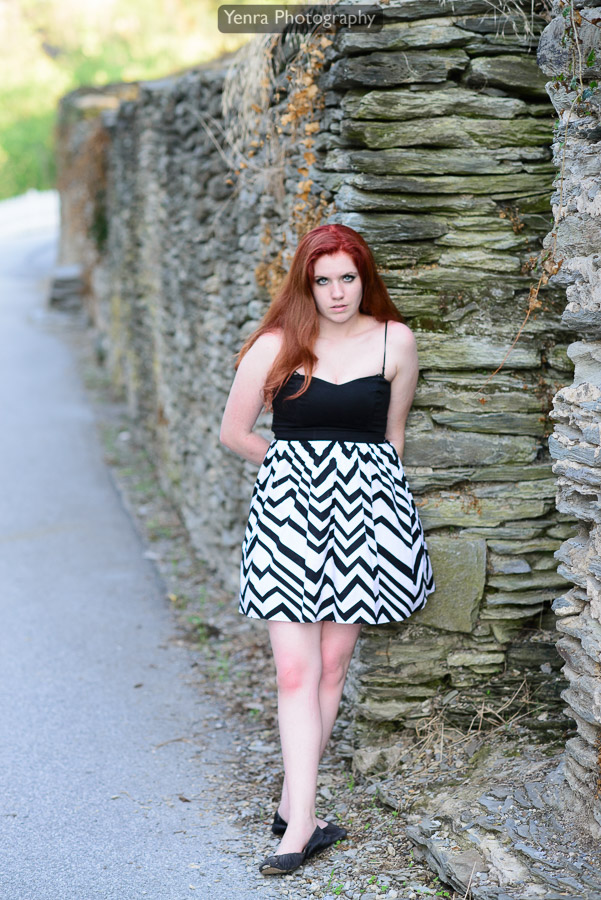
Zigzags beside layered stone · Yenra Photography archive

A patterned skirt against green surroundings · Yenra Photography archive
Along the stone wall, horizontal layers recur with uneven lengths and thicknesses. The skirt's more regular pattern sits beside those irregular courses. Look at the relationship between the small repeated zigzags and the broader layers of stone. Both offer detail, each with its own pace.
Against the softer green surroundings, the skirt's pattern is easier to follow as a separate area. Try looking first at the zigzags, then at the darker curved branch behind the person. Which part holds your attention, and where do you look next? Your answer is a useful observation to take into your own photographs.
The lines lesson explores directions through a frame, and the texture lesson looks closely at surfaces. Here, give yourself time to notice repetition and spacing. These ideas can work together in a single photograph.
Make a rhythm with something familiar.
Three to five small objects on a table are enough for an experiment. Arrange them in a loose row, make a photograph, then change one interval or turn one object. Look at the spaces as well as the objects. A different background can introduce another pattern or give the first one more room.
You can also work with repetition already around you: chair backs, folded fabric, windows, or leaves. Choose a comfortable place to photograph from and let the existing arrangement suggest your next variation. Each version can reveal a relationship you had not noticed before.
Try a small pattern study.
- Choose a repeated shape. Find one nearby, or arrange a few everyday objects.
- Notice the intervals. Look at the gaps, changes in size, and places where the repetition pauses.
- Make a starting photograph. Include enough of the pattern to see its rhythm.
- Try two variations. Change one spacing or orientation, then explore another background or view.
- Compare what you enjoy. Follow the repeated shapes in each photograph and choose a relationship to explore again.
Keep a note about the rhythm.
- Which shapes repeat, and where does the repetition change?
- How do the spaces between shapes contribute?
- Which variation would you like to try with a different subject?
Bring this experiment to the field practice notebook, browse the complete Bricks and Stone gallery, or explore another repetition in this Colossalcon East portrait.