Field notes · Look · Try · Compare
Making a portrait with gloves
Explore how a gloved hand brings color, shape and a comfortable gesture into a portrait.
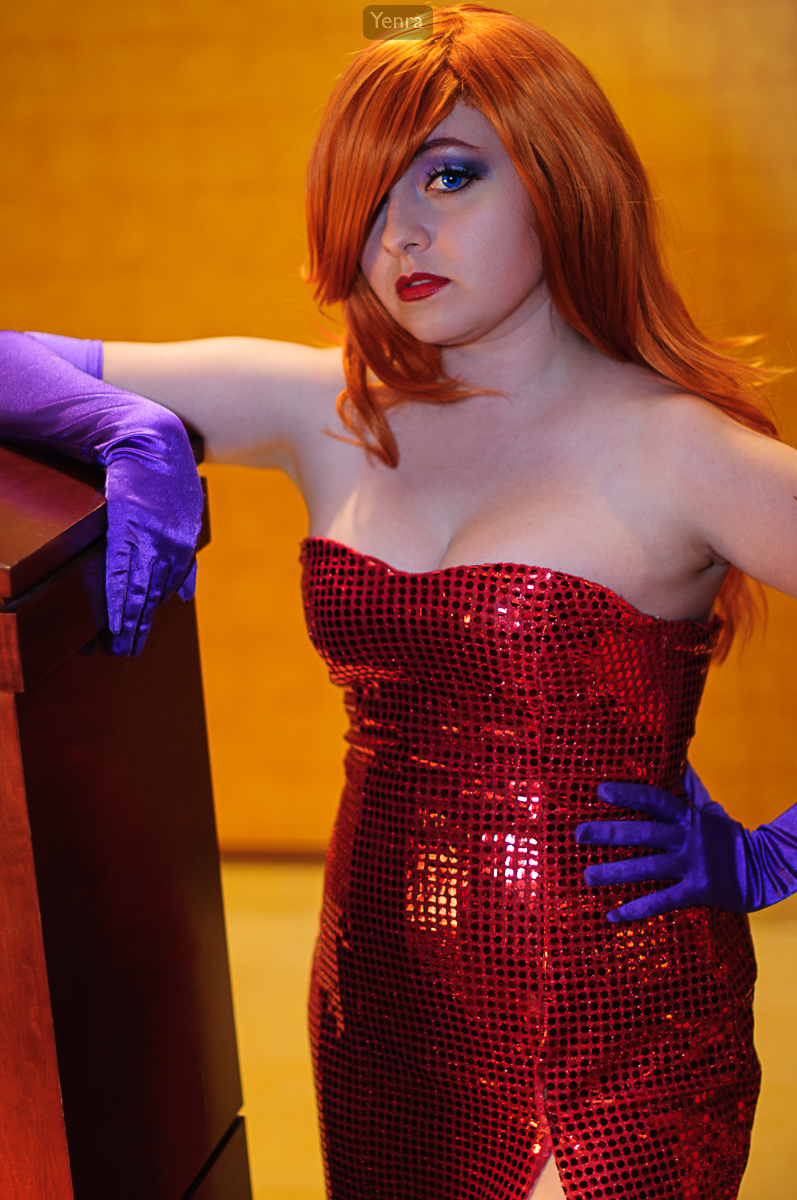
Jessica Rabbit, Who Framed Roger Rabbit? · Photograph: Yenra · Archive tag: Chiara Scuro
Captured: 2012:11:03 00:31:36
Gloves can make a small hand gesture especially easy to notice. Their color, outline and folds become part of the portrait, connecting the fingers with the arms, clothing and face. Begin with a position that feels comfortable, then explore one small variation together.
These three Jessica Rabbit portraits retain their Chiara Scuro archive attribution. They show separate moments with different framing and surroundings, so several things change between pictures. Use them as invitations to experiment rather than a set of positions to reproduce.
Start with a supported hand
One purple glove rests over the furniture edge while the other hand sits at the waist. The hanging fingers make a long shape on the left, and the spread fingers on the right create a different outline against the red costume.
Notice the broad areas of purple, the smaller folds around the wrists and the way each hand connects with an arm. Looking at these details can help you decide how much room to leave around a gesture in your own photograph.
Invite your partner to choose gloves and a starting position they enjoy. Hands can rest on a comfortable surface, in a lap or loosely at the sides. A relaxed beginning gives you time to look at the frame together before trying anything else.
Try an open palm near the face
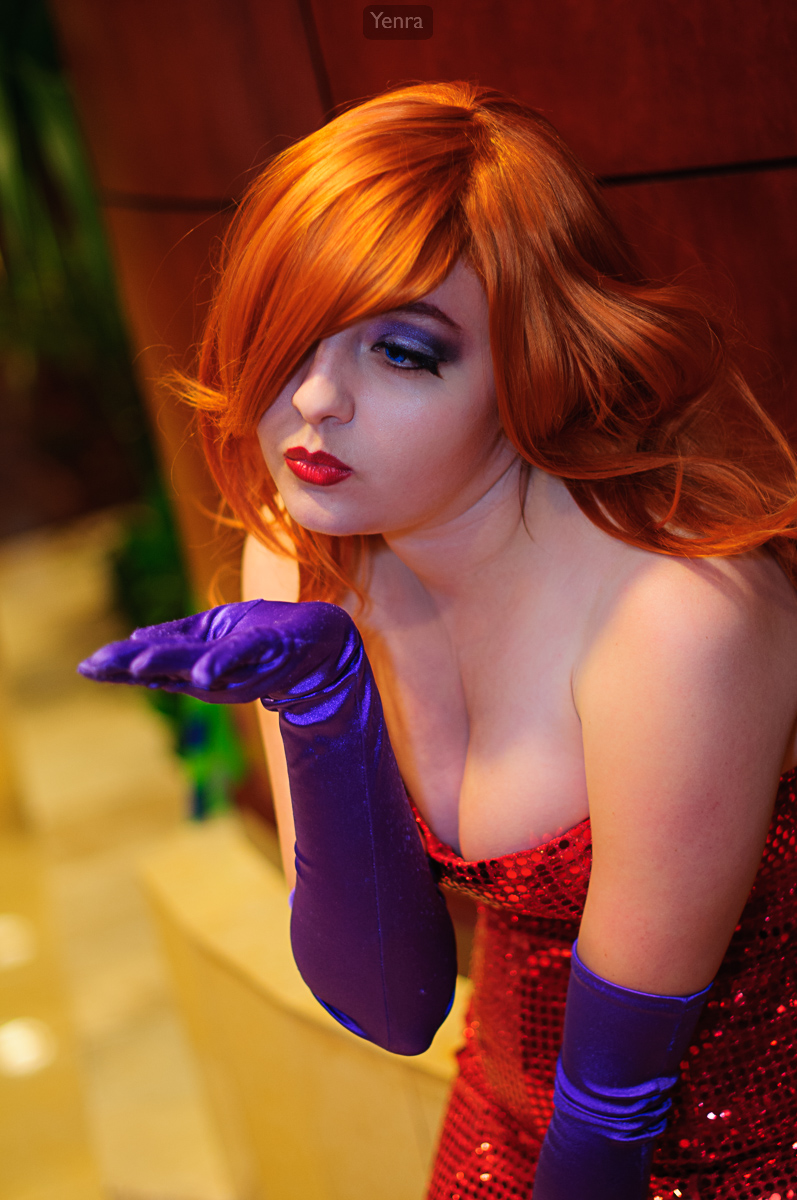
Jessica Rabbit, Who Framed Roger Rabbit? · Photograph: Yenra · Archive tag: Chiara Scuro
Captured: 2012:11:03 01:01:31
An upturned palm sits below the face in this closer view. The glove forms a broad purple shape, with the fingers extending across the picture. The face and hand are close enough to compare without losing their individual outlines.
For a small experiment, ask whether your partner would like to open a palm, bend the wrist gently or bring one hand nearer the face. Let them choose the gesture and stop wherever it feels comfortable. A seated version can offer the same possibilities.
Review how the hand fits into the whole portrait. Does it have room at the picture edge? Can you follow the fingers and still enjoy the expression? Moving your camera a little or allowing more space may give you another useful variation.
Let two hands make different shapes
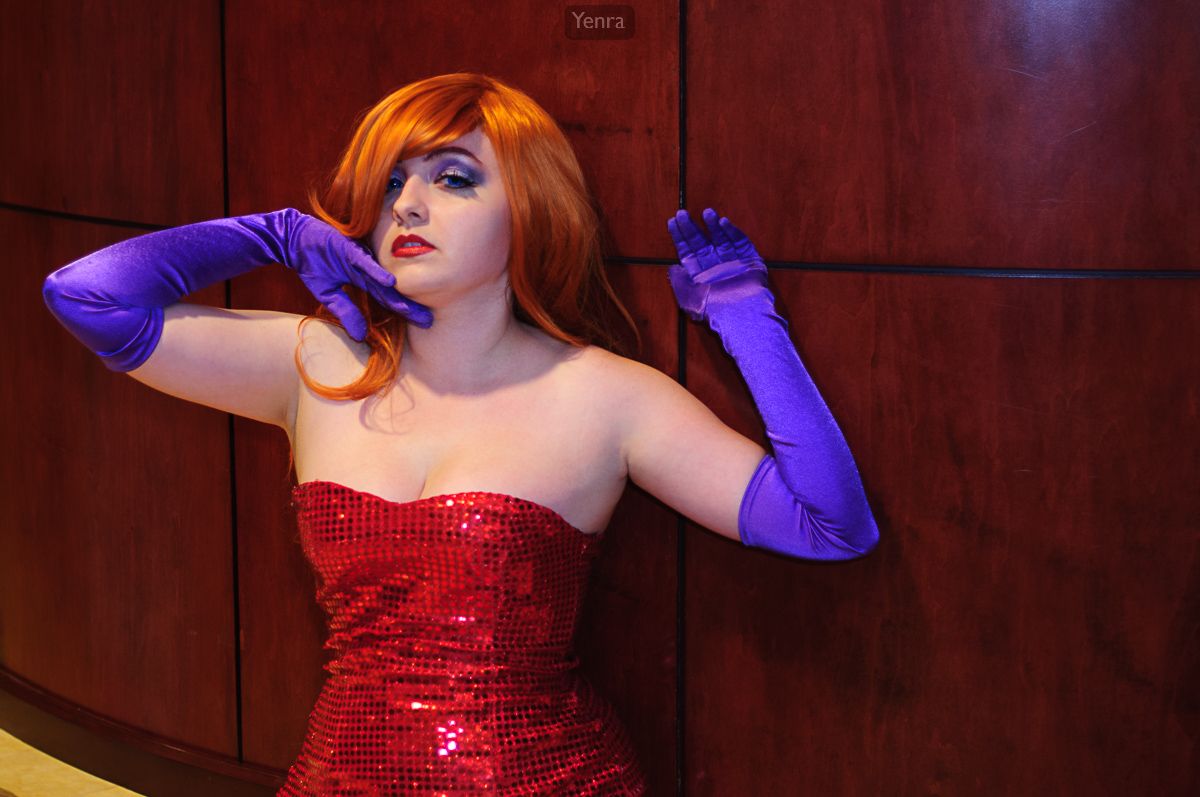
Jessica Rabbit, Who Framed Roger Rabbit? · Photograph: Yenra · Archive tag: Chiara Scuro
Captured: 2012:11:03 01:01:59
In the horizontal photograph, one glove sits beneath the chin and the other rises beside the head. The bent arms spread across the frame, while the fingers make two different shapes around the face.
Compare this wider arrangement with the previous vertical picture. The change in orientation gives the elbows and hands more room across the image. The background and viewpoint also differ, so describe what you see without assigning every difference to the gloves alone.
If your partner enjoys using both hands, try two comfortable positions and look at the result together. The hands can have different roles: one resting and one lifted, or both relaxed at different heights. There is no need to make a gesture perfectly symmetrical.
Let comfort guide the next variation
These examples were recorded at 00:31:36, 01:01:31 and 01:01:59 on November 3, 2012. They are separate portraits, not a continuous movement sequence. Each keeps its source record and complete boundaries.
Gloves you already have can be a starting point, whether they are plain, patterned, short or long. Choose an easy position, make a photograph and ask what your partner likes about it. Keep one useful observation about shape or framing and one idea you would both enjoy trying next.
Look back with curiosity.
- Which gesture feels most comfortable?
- How do the gloves connect the hands and face?
- What would you and your partner enjoy trying next?
Keep exploring
Exploring hand gestures in a portrait · Noticing contrasting textures in a photograph · Planning a portrait together
Browse the complete Nekocon 2012 gallery.