Field notes · Look · Try · Compare
Making a portrait with a cape
Explore a cape's drape, a wider shape, and a comfortable turn.
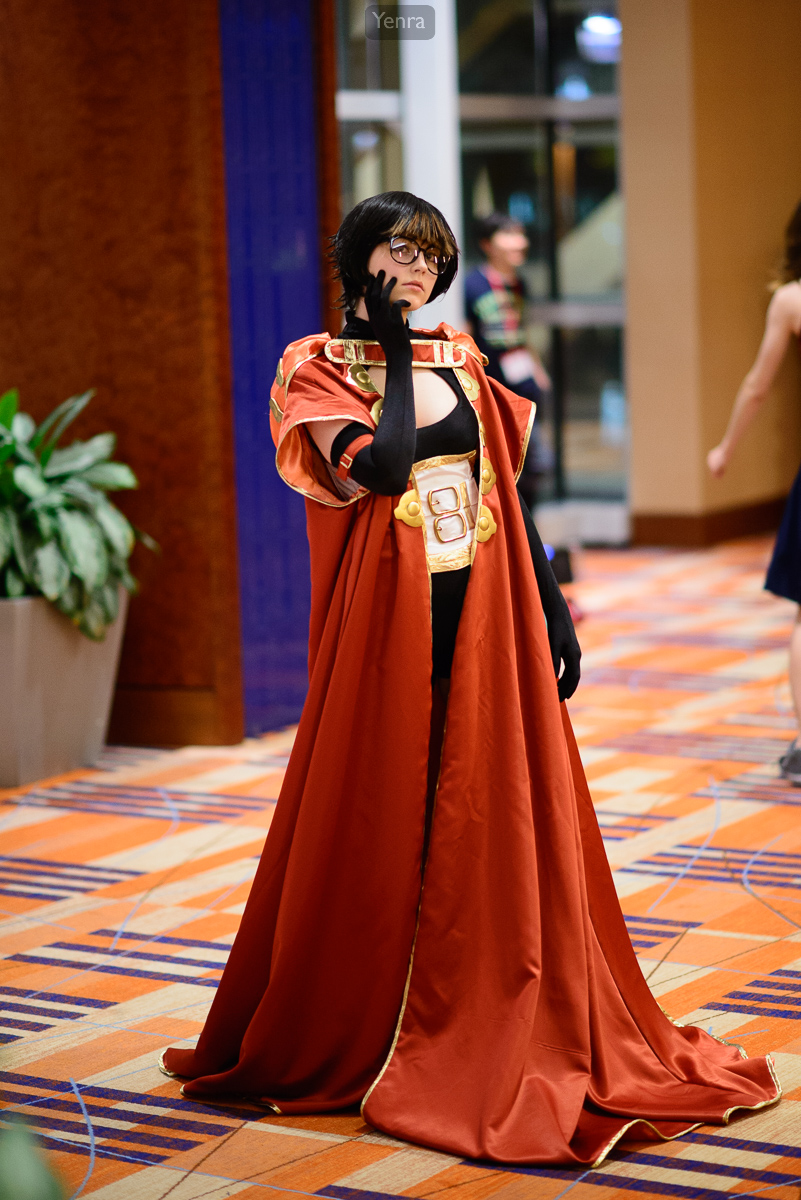
Satsuki Yatoji of X/1999 manga · Photograph: Yenra · Credit: Brie-chan Cosplay
Captured: 2013:08:08 21:25:53
A cape can contribute a long outline, a broad spread of color, or a small detail seen from another angle. Begin with how the fabric settles around the person wearing it. Invite your model to choose what they would enjoy showing, then explore one comfortable variation together.
Begin with the natural drape
In this portrait, Brie-chan Cosplay wears a long orange cape as Satsuki Yatoji. The fabric falls from the shoulders and gathers on the patterned floor. One gloved hand sits beside the face. Follow the long outer edges before looking at the smaller folds near the feet.
The cape and the person share the frame. Its orange area carries the eye downward, while the face and hand offer a smaller point of attention above. Notice how much of the fabric is included and where its outline meets the surrounding floor.
For your own portrait, let your model settle the cape in a way that feels comfortable. Ask whether there is a fastening, fold, or piece of decoration they want to include. Make a starting photograph with enough room for that detail and the drape they enjoy.
Give a wider shape room
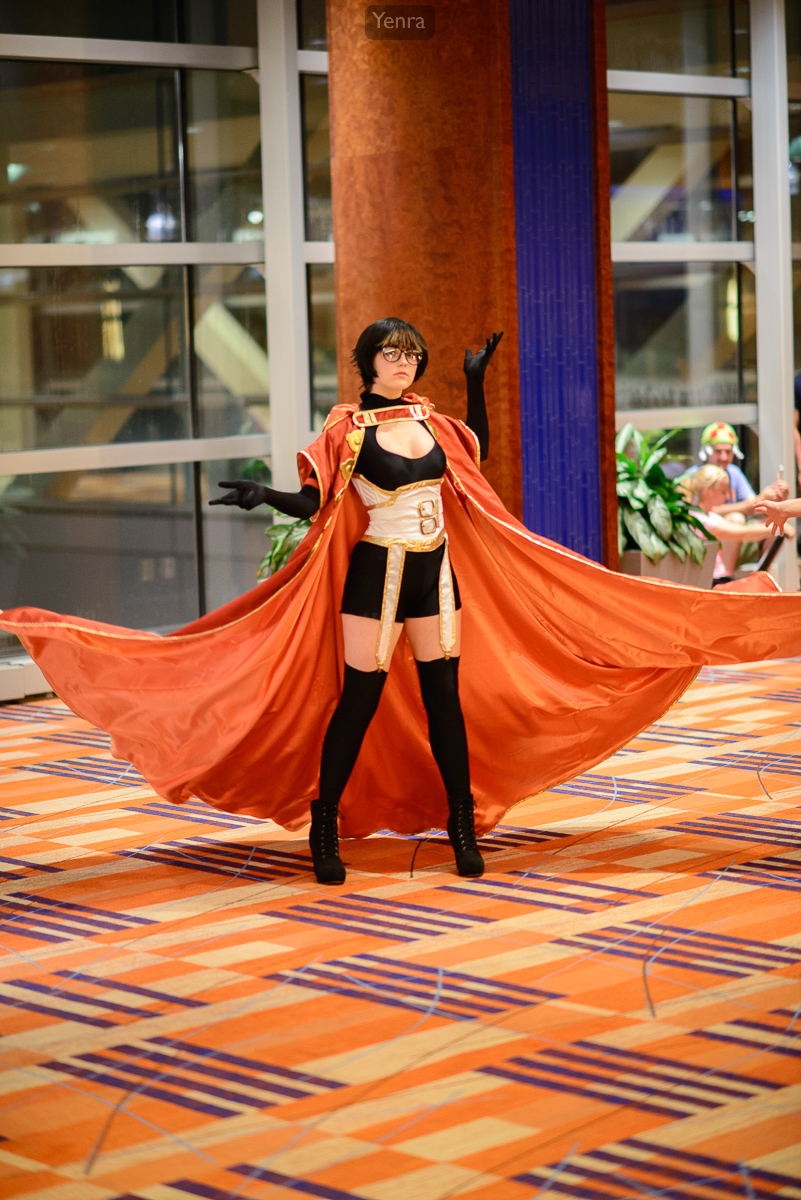
Satsuki Yatoji of X/1999 manga · Photograph: Yenra · Credit: Brie-chan Cosplay
Captured: 2013:08:08 21:26:43
The cape extends widely to both sides in this photograph, changing the outline around the figure. Helping hands enter the right edge, and some fabric continues beyond the original frame. Those visible details belong to the photograph and help us understand the arrangement we can see.
Compare this wider spread with the first example. The orange fabric now occupies more of the picture from side to side. Follow the folds toward the edges and notice how the shape relates to the face and body. These separate photographs offer two arrangements to study.
Ask your model whether they would enjoy showing a wider shape. Let them choose and control the adjustment, leave room around the fabric, and welcome a helper if they want one. A comfortable standing arrangement is enough to explore how a cape changes the picture. Review a starting frame together before choosing another variation.
Look from another angle
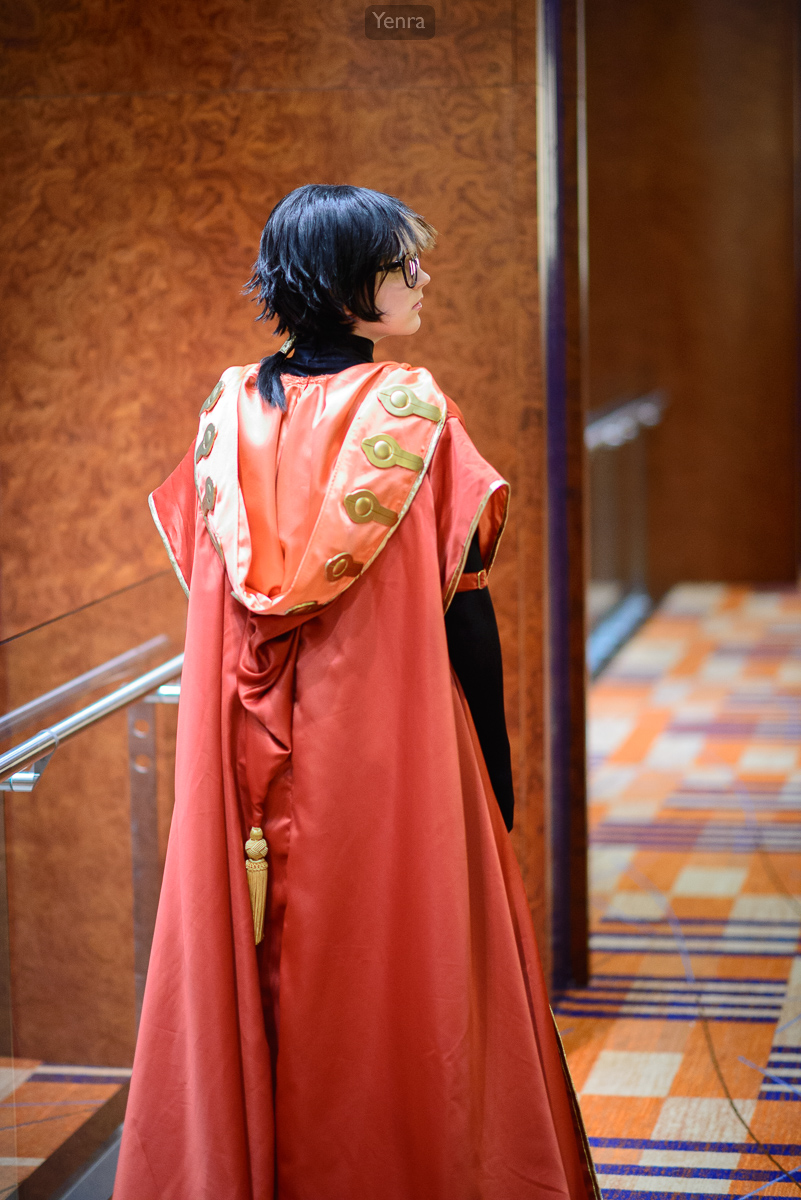
Satsuki Yatoji of X/1999 manga · Photograph: Yenra · Credit: Brie-chan Cosplay
Captured: 2013:08:08 21:30:50
The back and profile view brings the orange hood and gold-colored decoration into view. Folds describe how the cape lies across the back, while part of the face remains visible in profile. A change in angle gives these details a different place in the photograph.
You can invite a comfortable turn or move your own viewpoint to discover another part of the cape. Ask which view your model enjoys and keep the adjustment small enough to feel easy. A detail on the back may become the main idea, or it may remain one part of a wider portrait.
Look through the photographs together afterward. Which outline do you both enjoy? What became visible when the viewpoint changed? Keep one observation about how the fabric and person share the frame. If you do not have a cape available, start with these three examples and describe the change from drape to spread to another angle. That act of looking is useful practice in itself.
Look back with curiosity.
- What does the cape's outline add to the portrait?
- Which fold or detail becomes visible from another angle?
- Which arrangement does your model most enjoy?
Keep exploring
Seeing clothing as shape · Making a portrait with a scarf · Planning a portrait together
Browse the complete Otakon 2013 gallery.