Field notes · Look · Try · Compare
Making a portrait with a scarf
Follow long shapes, folds, and texture with a willing portrait partner.
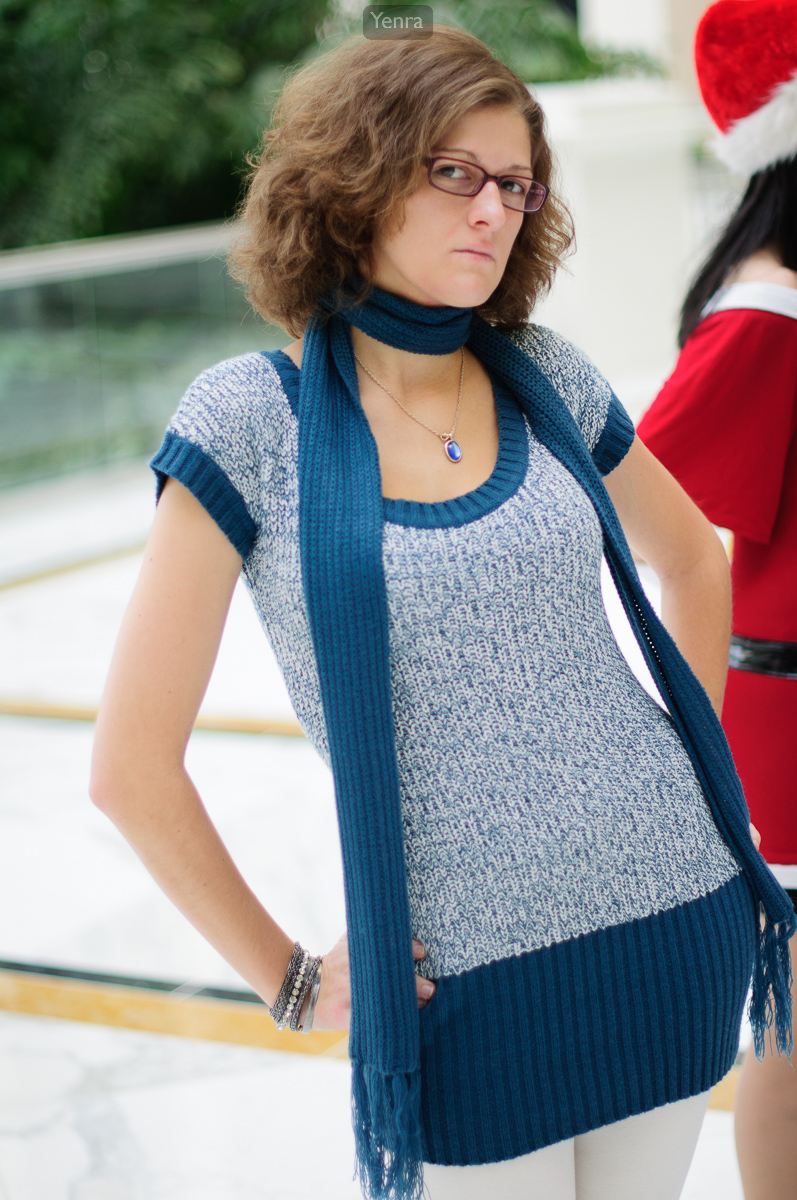
Portrait with a long blue scarf · Photograph: Yenra
Captured: 2013:01:05 13:12:34
A scarf offers long shapes, folds, and texture that can become part of a portrait. Its ends may lead your eye through a wider view, while a closer photograph can bring knitted detail near the face. Invite a willing partner to choose a scarf they enjoy, arrange it loosely and comfortably, and explore a few small variations together.
Give the scarf room in the frame
The long blue scarf hangs over a blue-and-white knitted top. Its ends make vertical shapes beside the torso, while the hands at the hips introduce bends on either side. The wider framing lets you see those relationships together.
Follow one scarf end from near the face toward the lower edge of the photograph. Notice its width, texture, and relationship to the clothing behind it. Then look at the spaces beside the arms. Those spaces help describe the pose as clearly as the fabric does.
For your starting portrait, give the scarf enough room to show the shape you noticed. Let your partner settle into a position they like. Look at the edges of the frame and the background, including any other people nearby, then choose a view that gives the main arrangement the space you want.
Move closer to folds and texture
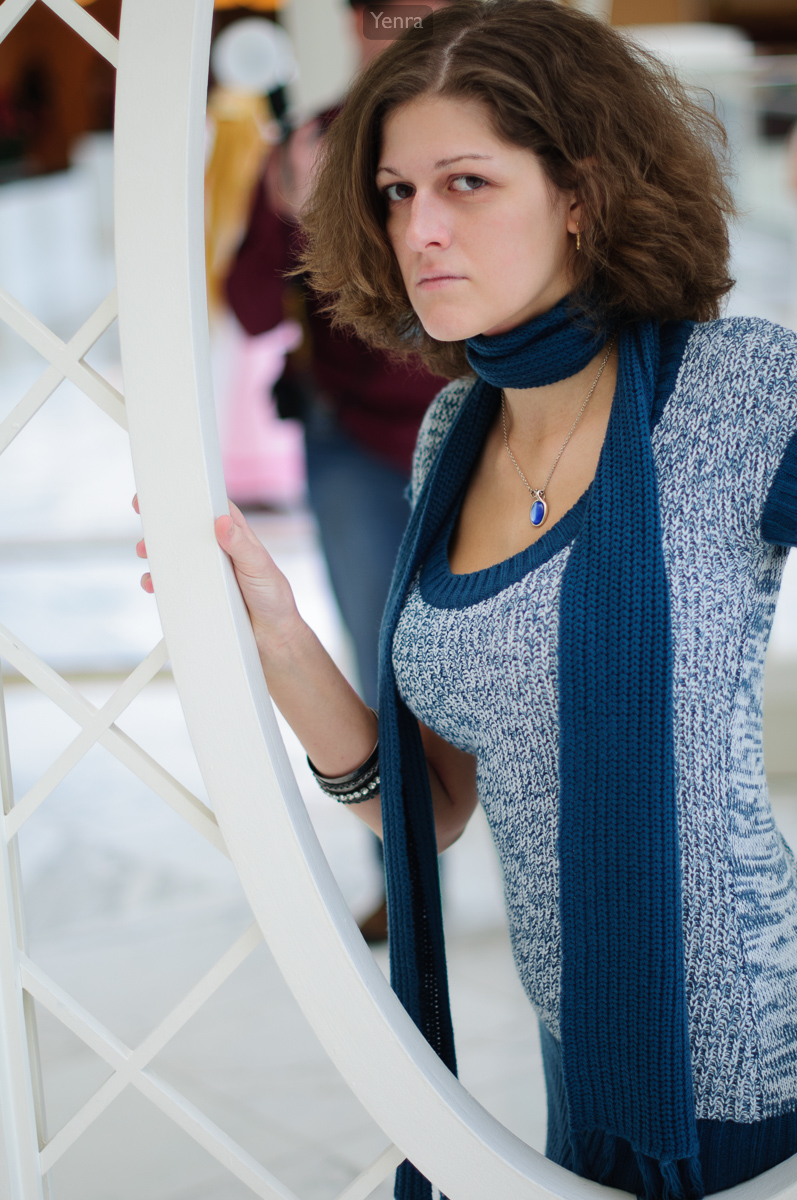
Close portrait with a blue scarf beside white latticework · Photograph: Yenra
Captured: 2013:01:05 13:13:12
This closer view brings the blue scarf and knitted clothing beside white latticework. A hand meets the lattice near the face. The folds of the scarf now occupy a larger part of the picture, and the long ends seen in the wider view contribute less to the arrangement.
The first two photographs show matching visible clothing in different framings. The pose, background, and other details also change. Use them as invitations to notice what a wider or closer view can emphasize in your own portrait session.
Try moving closer or changing your framing while your partner remains comfortable. Look for a fold, a knitted pattern, or an edge near the face. You can ask which details they would enjoy including. Review the picture together and decide whether another small change would help show that choice.
Let the hands join the arrangement
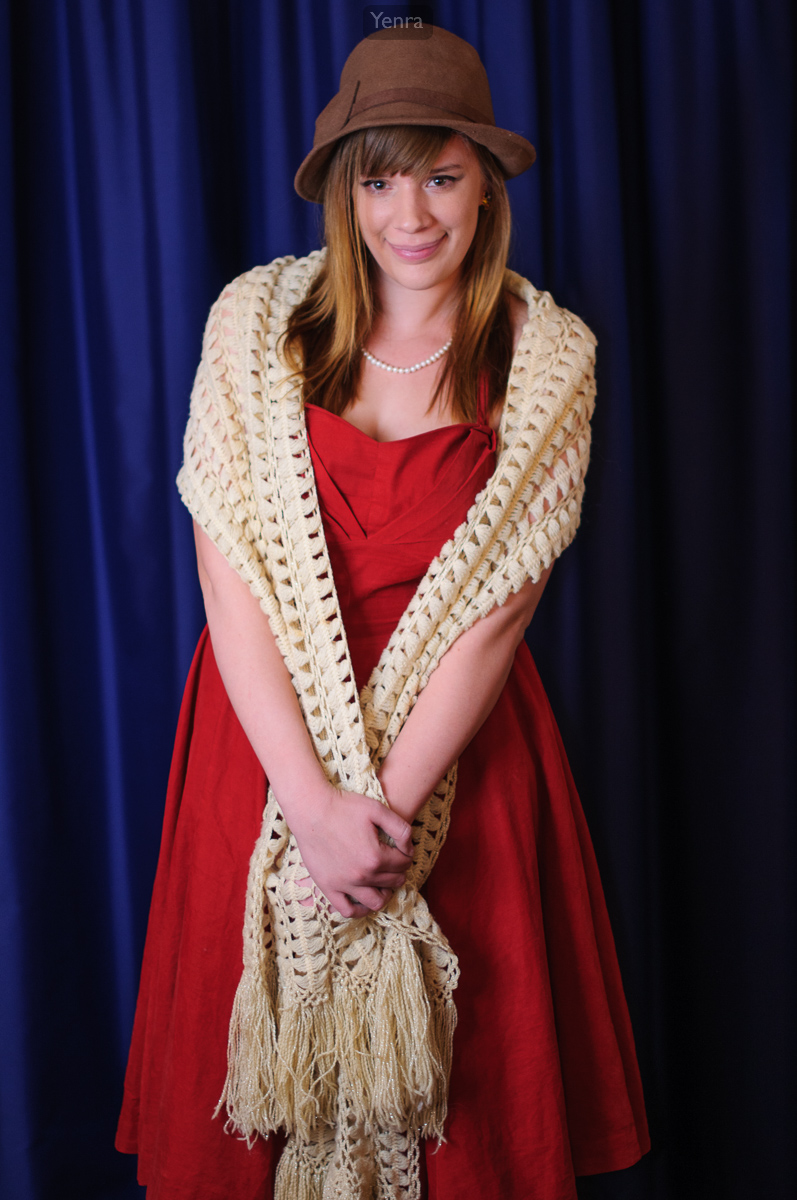
Portrait with a cream scarf and red dress · Photograph: Yenra
Captured: 2013:01:05 17:28:28
The cream scarf rests over the shoulders above a red dress. The hands gather its ends near the middle of the portrait. Its open knitted texture contrasts with the broader areas of the dress, and the brown hat adds another shape above the face.
This is another person and outfit, offering a different arrangement to explore. Follow the scarf toward the hands and notice how the gathered ends bring parts of the picture together. The blue drapes behind the figure add a contrasting background.
Ask your partner whether they would enjoy resting a hand on an end of the scarf or trying another relaxed position. Let them make the adjustment themselves, keeping the fabric loose and comfortable. A simple gesture can be enough; take a moment to see how it changes the visible folds.
Finish by choosing a photograph together. Your partner may enjoy an expression, a hand position, or the way the scarf sits with their clothing. Keep that response alongside your own observations about shape and texture. One detail you both want to explore can be a useful starting point for another portrait.
Look back with curiosity.
- What shape does the scarf add to the portrait?
- What becomes easier to notice in the closer view?
- Which arrangement does your partner enjoy most?
Keep exploring
Seeing clothing as shape · Noticing texture in a photograph · Exploring hand gestures in a portrait
Browse the complete MAGFest 2012 and MAGFest 2013 galleries.