Field notes · Look · Try · Compare
Making a portrait with a basket
Explore how carrying a basket, setting it beside a person and arranging its contents change a portrait.
Bea, Peter Rabbit · Photograph: Yenra · Credit: Once and Future Queen Cosplay · Archive tags: Once and Future Queen Cosplay, Peter Rabbit
Captured: 2018:05:31 16:07:29
A basket gives a portrait a familiar shape and a few easy choices. It can be carried, placed nearby or included with its contents. Each arrangement changes the relationship between hands, objects and the space around a person.
These three Bea, Peter Rabbit photographs carry the Once and Future Queen Cosplay credit. They offer a starting point for an experiment you can make with a willing portrait partner, everyday clothing and a light basket. Begin with an arrangement that feels comfortable to both of you.
Carry the basket within the portrait
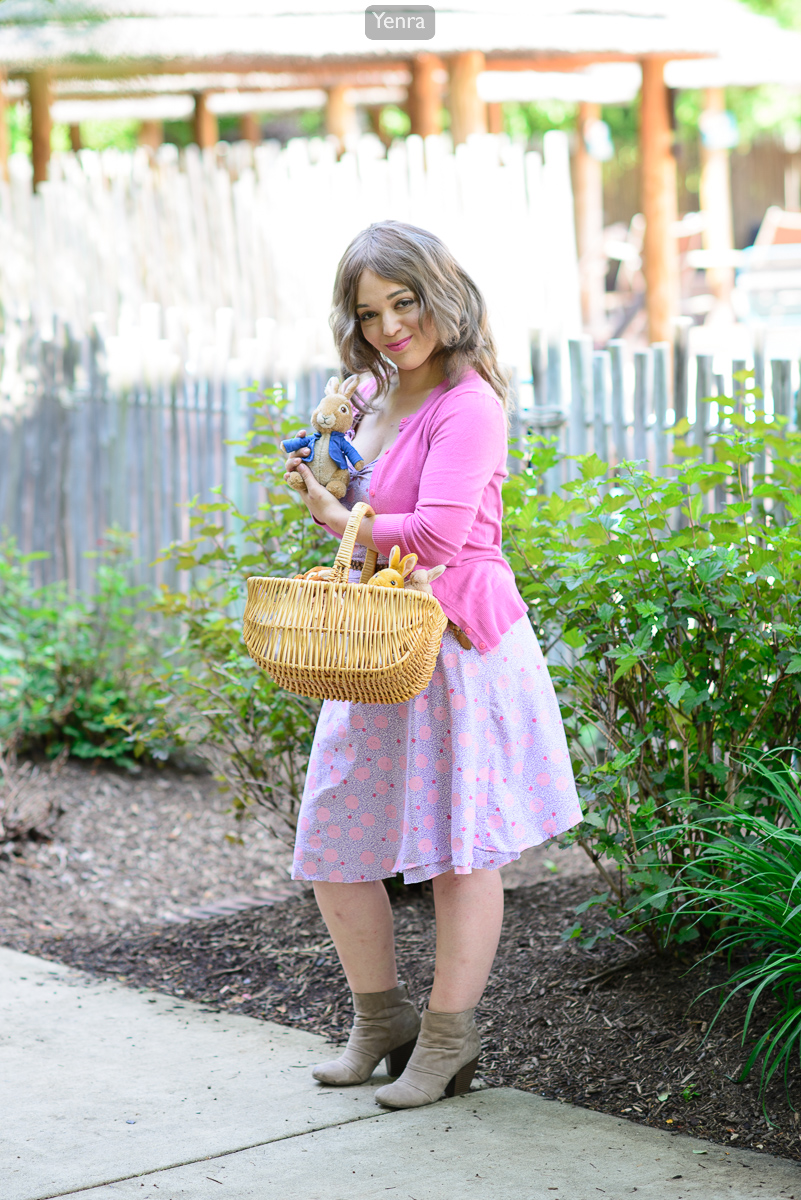
The first portrait includes the basket in front of the body, with a rabbit toy held nearer the face. The basket supplies a broad rounded shape below the hands; its handle connects that shape to the arm. The full-length view also gives the dress, boots and surroundings room.
Look at the space between the basket and the face. Notice how the toy provides another point of attention within that space. You can choose to include an object inside the basket, hold one separately, or begin with an empty basket and explore its shape alone.
Invite your partner to find a comfortable hold. Keep the basket light enough to rest naturally, then make a frame that includes its handle and edges. Review together before changing anything. The first arrangement can be a useful picture in its own right.
Let it sit beside a standing figure
Bea, Peter Rabbit · Photograph: Yenra · Credit: Once and Future Queen Cosplay · Archive tags: Peter Rabbit
Captured: 2018:05:31 16:08:03
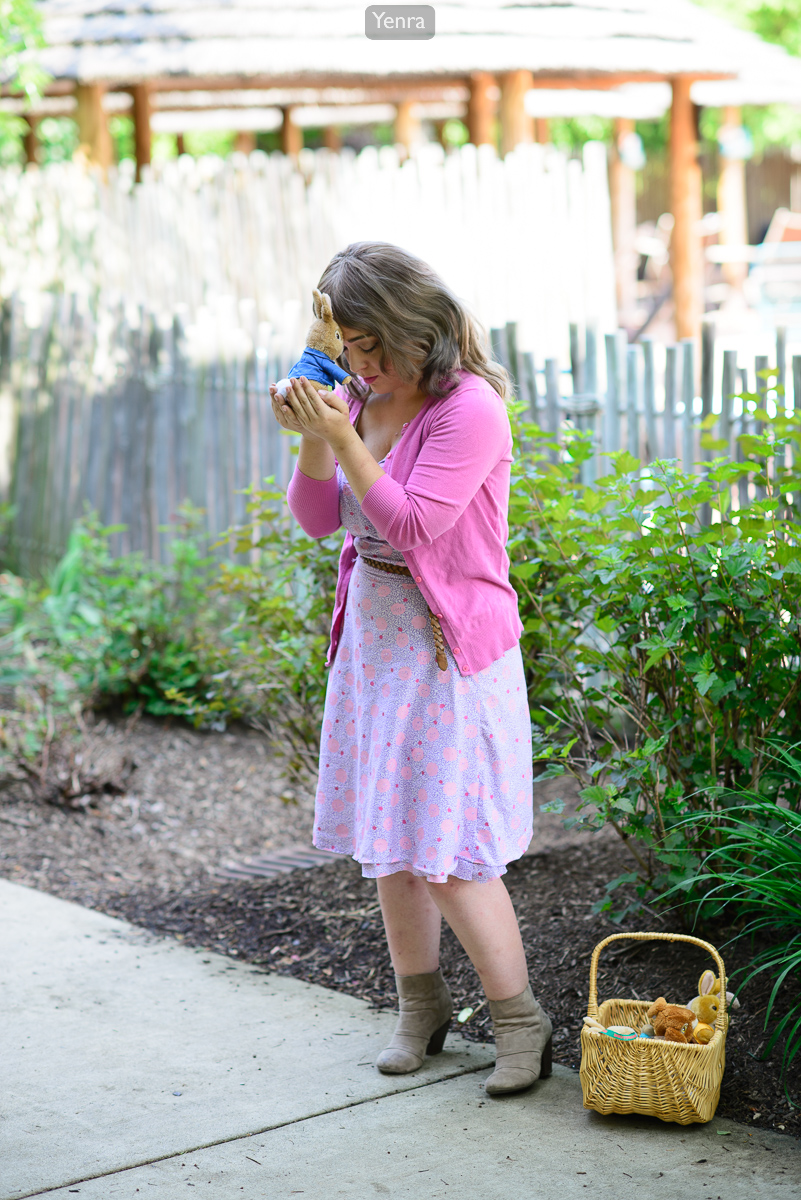
Here the basket rests beside the feet while both hands hold the rabbit nearer the face. It remains part of the portrait, but its lower position creates more space around the upper body and changes the relationship between the two objects.
Compare the complete frames. In one, the basket travels with the arms; in the other, it helps establish the ground beside the standing figure. Neither placement needs to be the final answer. Each gives you a different way to connect the person and their surroundings.
Try resting your basket on a stable surface nearby. Let your partner choose what to do with their hands, then check whether the basket has enough room in the frame to feel intentional. A small shift of your own viewpoint may help show the handle or contents more clearly.
Give the basket and its contents space
Bea, Peter Rabbit · Photograph: Yenra · Credit: Once and Future Queen Cosplay · Archive tags: Once and Future Queen Cosplay, Peter Rabbit
Captured: 2018:05:31 16:09:13
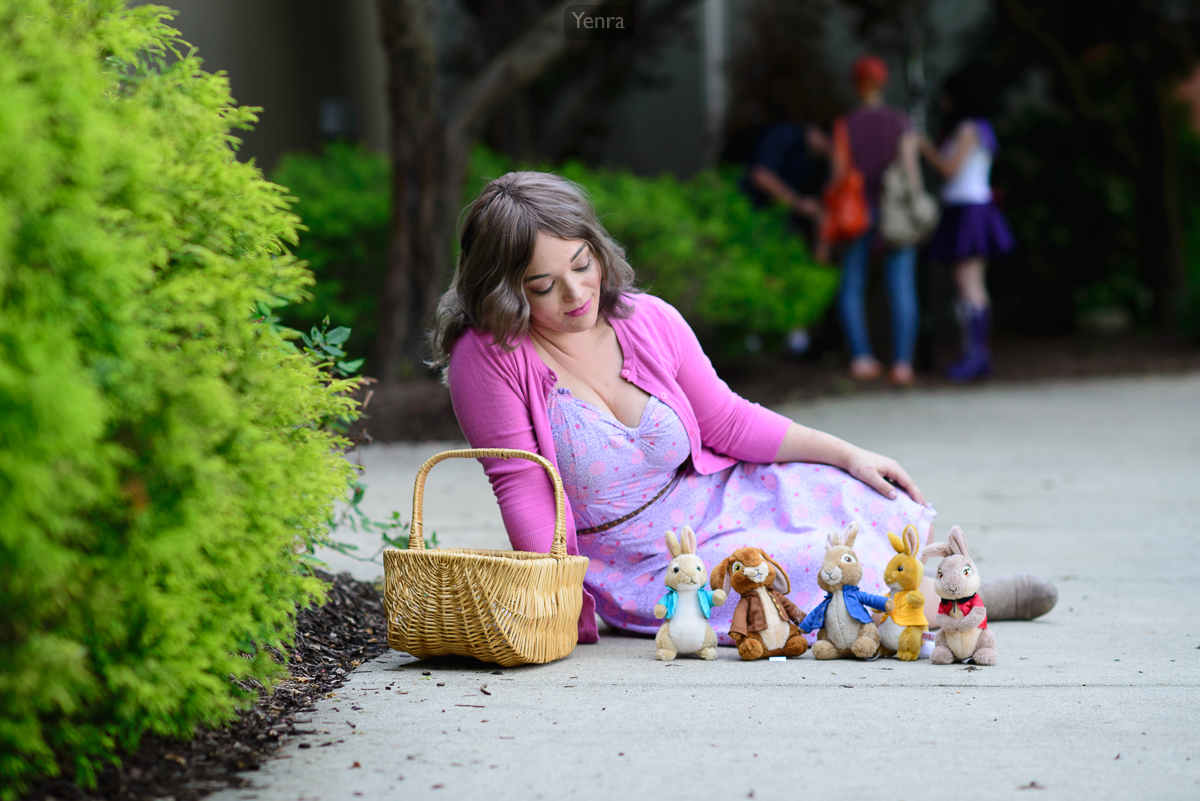
The landscape portrait places the basket beside a row of rabbit toys, with the seated figure behind and beside them. The wider frame allows the small companions to spread across the foreground. The basket becomes one part of a larger arrangement.
Notice how the objects remain distinct. The basket has its own area, the toys form a row, and the face sits above them. You can explore a similar relationship with a few familiar belongings, giving each enough space to be recognizable.
Choose a comfortable seated or standing arrangement for your own portrait. Try a wider frame, then compare it with the earlier view. Ask your partner which version they enjoy and what they would change. Keep one useful observation about placement, framing or the story the objects suggest together.
Look back with curiosity.
- What changes when the basket moves out of the hands?
- How do the handle and contents guide your attention?
- Which arrangement feels most useful for your portrait?
Keep exploring
Making a portrait with a handbag · Making a portrait with a plush toy · Exploring portrait framing
Browse the complete Colossalcon 2018 gallery. Follow a photograph into its original neighbors and see what else catches your attention. A small pattern, a familiar object or a changing gesture can become the beginning of your next experiment.