Field notes · Look · Try · Compare
Making a portrait with a plush toy
Explore a comfortable hold, a shared portrait, and a playful companion picture with a familiar soft toy.
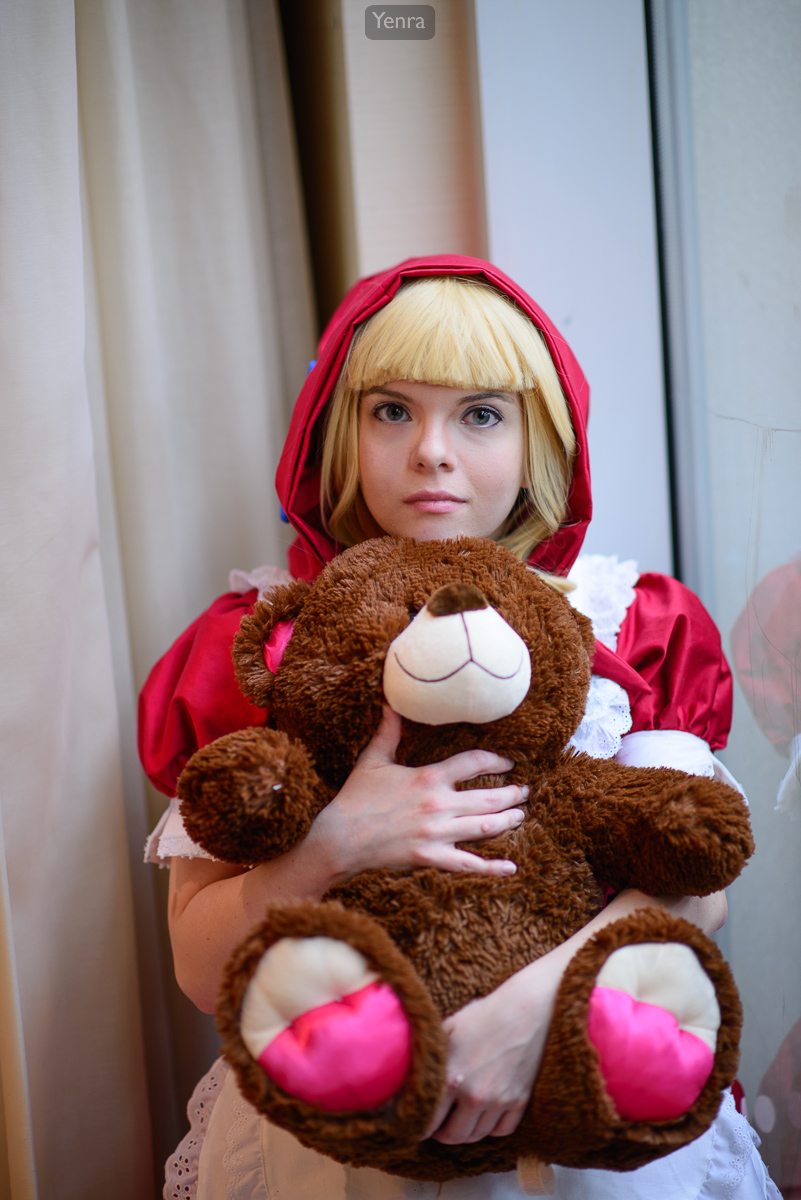
Little Red Riding Hood Cosplay · Photograph: Yenra
Captured: 2015:01:24 13:39:25
A familiar plush toy can give a portrait a playful starting point. It offers something to hold, a face to include, and a small subject for a companion picture. Choose a toy you already have and explore a few comfortable possibilities with a willing model.
Start with a comfortable hold
In this portrait, a model in a red hood holds a brown teddy bear close to the chest. The model's face appears above the bear's face. Hands wrap around the toy, and its pink paws add another bright detail within the frame.
Notice how much space each face receives. The bear is large enough to be a presence in the photograph, while the model remains clearly visible. The hold joins the person and object into one arrangement.
Invite your model to choose a comfortable hold or place the toy beside them. Ordinary clothes and a familiar chair are enough. Make a first photograph, then look together at the relationship between the two faces, the hands, and the frame's edges.
Try a small change in position. The toy might sit a little lower, turn toward the model, or look toward the camera. Let your model suggest a variation; a gesture they enjoy can be a useful place to begin.
Include the toy in a shared portrait
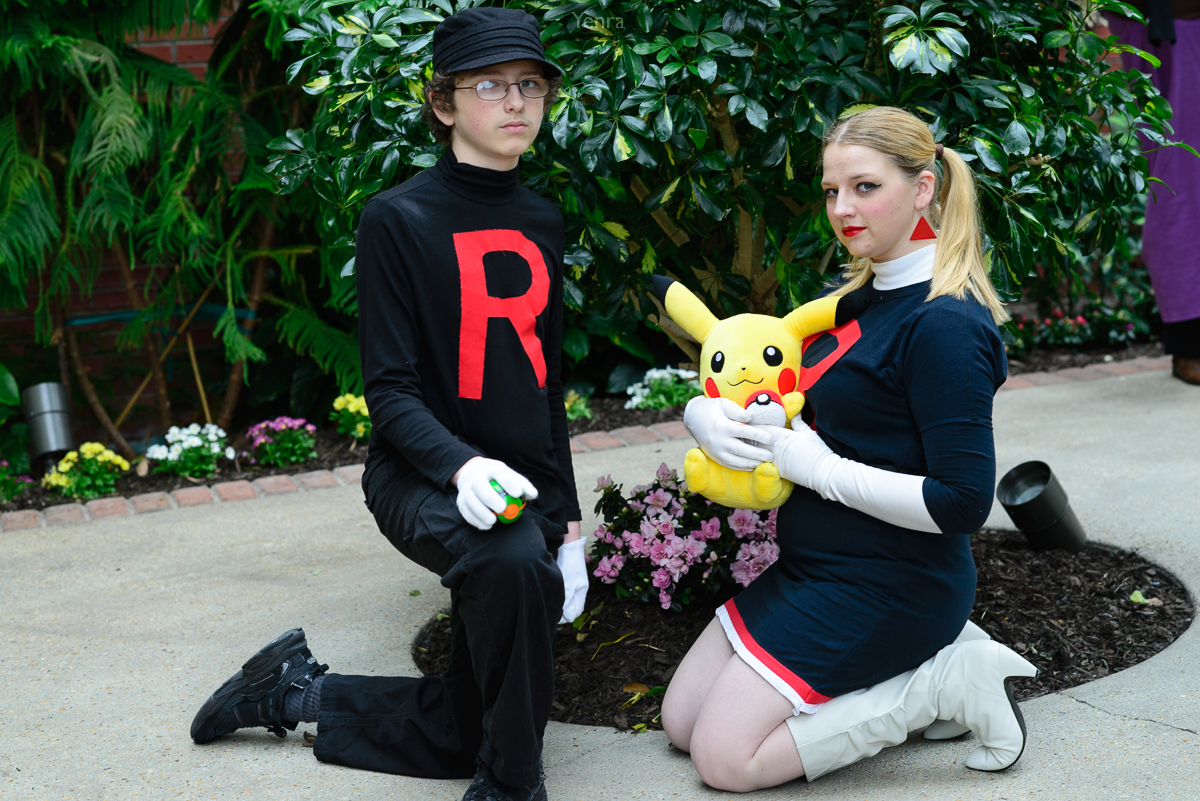
Team Rocket Cosplay · Photograph: Yenra
Captured: 2015:01:24 15:17:07
This horizontal photograph includes two models beside plants, with a yellow plush toy held between them. The toy becomes a third visible face. Its bright color stands out among the darker costumes and greenery.
Look at the space around each face and the hands supporting the toy. A shared portrait gives you more relationships to arrange: who is looking where, how close the figures sit, and where the object belongs.
If another model would like to join your experiment, invite both people to choose a comfortable seated or standing position. Keep the toy where everyone can see it and try one change at a time. The kneeling pose in the example is simply one existing arrangement.
Review the result together. Ask whether the toy feels like a companion, a playful accent, or the center of attention. Each can be a useful choice. You can explore the same questions with one model by changing the toy's position within the portrait.
Give the toy a picture of its own
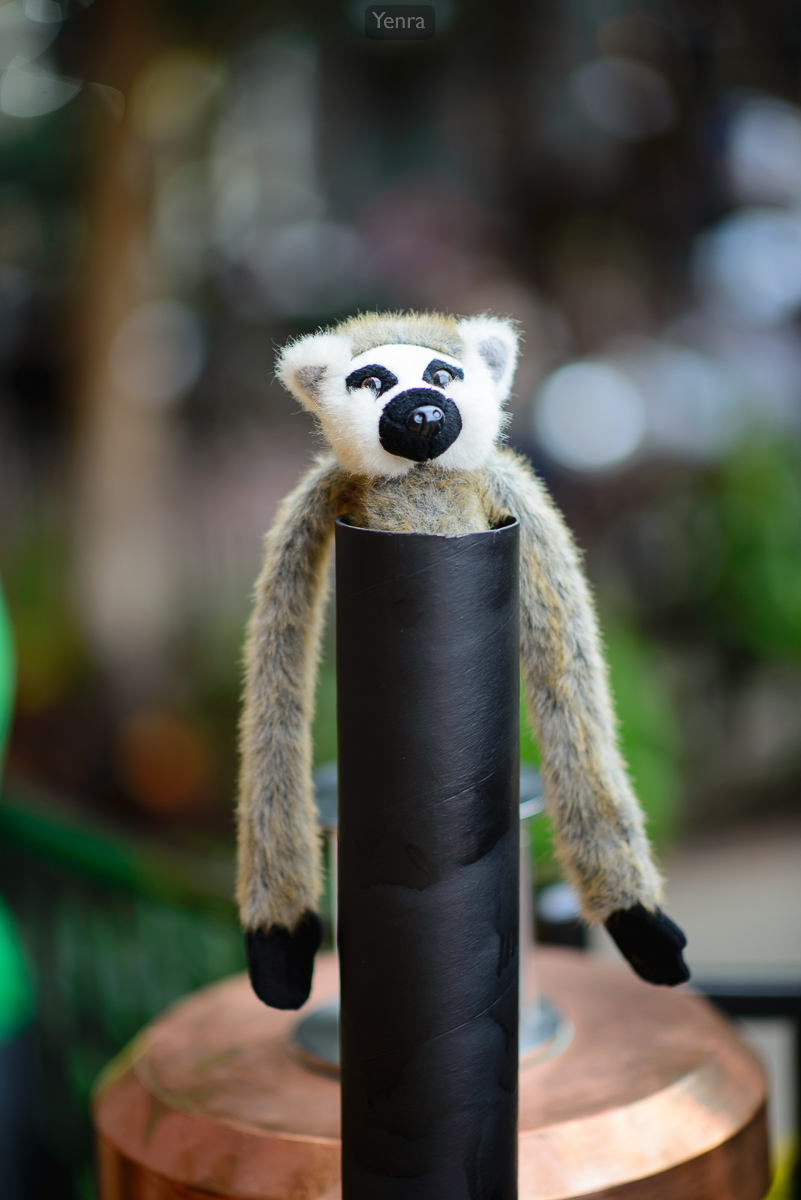
Lemur Toy Emerging from Cylindrical Object · Photograph: Yenra
Captured: 2015:01:24 15:42:12
A small long-armed toy rests inside the top of a dark cylindrical object. The face and dangling arms give this separate photograph a clear subject, while the background appears softly behind it.
The three archive examples show different toys and situations. This final picture suggests an extra possibility for your own session: a companion photograph of the toy alone. It can add a small pause or a playful detail beside a portrait.
Choose a stable everyday surface for your toy and begin with the face easy to see. Try a lower viewpoint or leave a little more space around it. Your camera may show the background differently from this example; notice what your own view brings into the picture.
Place the toy photograph beside one of your portraits and compare them. What connects the pair: color, a repeated face, or the memory of holding it? Keep a version you and your model enjoy, along with one idea for another small experiment.
Look back with curiosity.
- How does the toy change the gesture or expression?
- How much attention does it receive beside the model?
- What does the toy-only picture add to the portrait?
Keep exploring
Making a portrait with a cup · Exploring props in a portrait · Pairing a portrait with a detail
Browse the complete MAGFest 2015 gallery.