Field notes · Look · Try · Compare
Making a portrait sequence that moves closer
Connect a wider portrait, a closer view and a small detail in a new reading order.
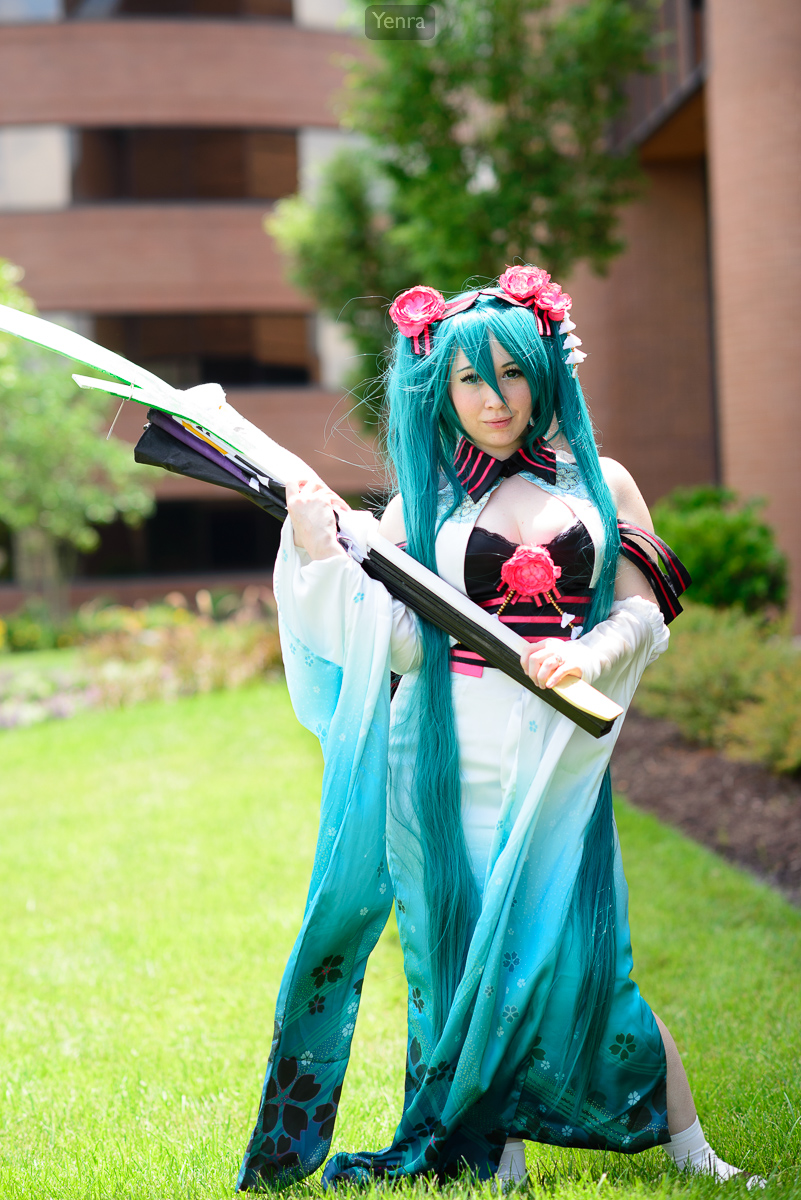
Woman in Kimono Holding Katana · Photograph: Yenra
Captured: 2014:06:13 13:29:23
A sequence can invite someone to look more closely, one photograph at a time. Begin with a view that establishes the person and outfit, move toward the face, then pause on a small detail. Repeated colors or shapes help the pictures feel connected as the amount of visible information changes.
Begin with the wider portrait
The first picture shows the outfit against grass, trees and a building. A parasol crosses the frame; turquoise hair, pink flowers and long pale sleeves connect the face with the wider arrangement. It gives the viewer several features to recognize in the photographs that follow.
Choose a wider view for what it introduces. It can show the surroundings, the shape of an outfit or how a prop relates to the person. It does not have to contain every detail. Here, the parasol extends beyond the left edge, while the flowers above the face remain small but visible.
Move toward the face and an accessory
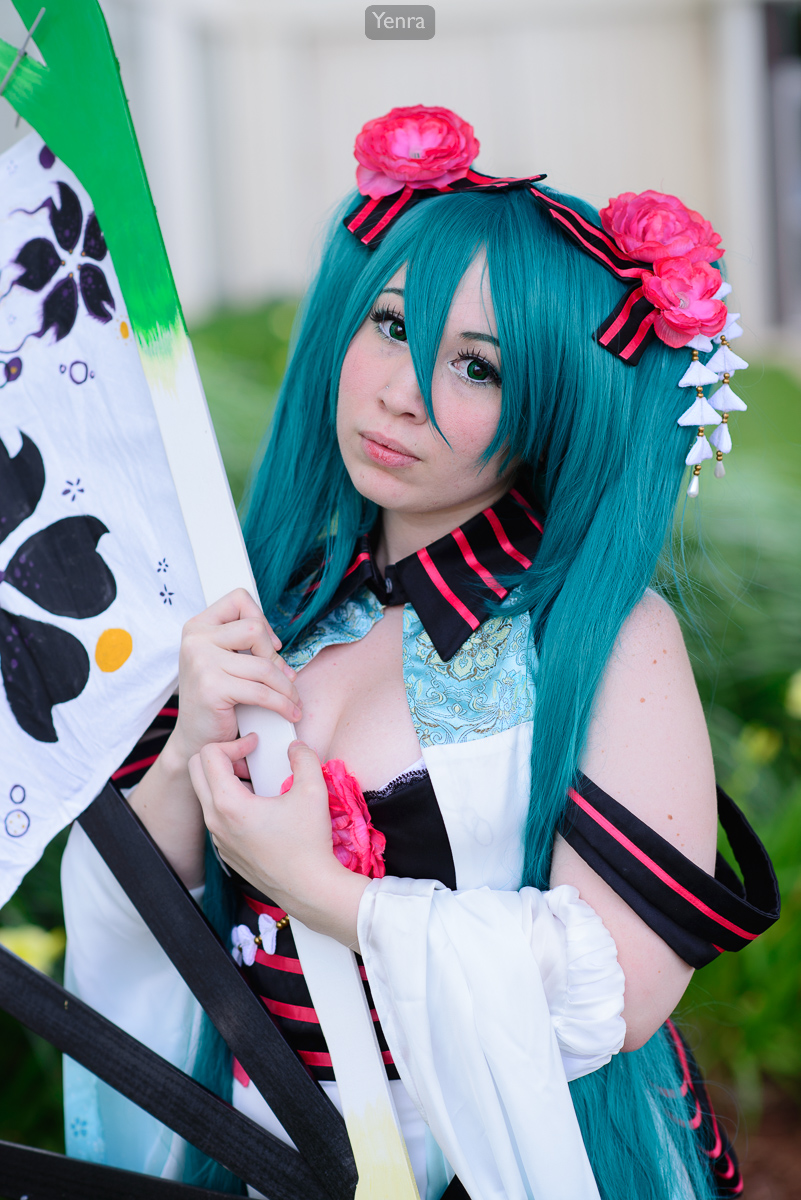
Japanese-Inspired Fashion · Photograph: Yenra
Captured: 2014:06:13 13:21:38
The next photograph brings the face, hands and parasol closer. The pink flowers and turquoise hair repeat from the opening picture, so there is something familiar to follow even as the framing changes. The hands and face now occupy more of the picture.
Look at the connection between neighboring photographs. What stays recognizable? What becomes easier to see? A useful middle picture can preserve enough of the first view to orient the reader while introducing the detail that will matter next.
End with a small detail
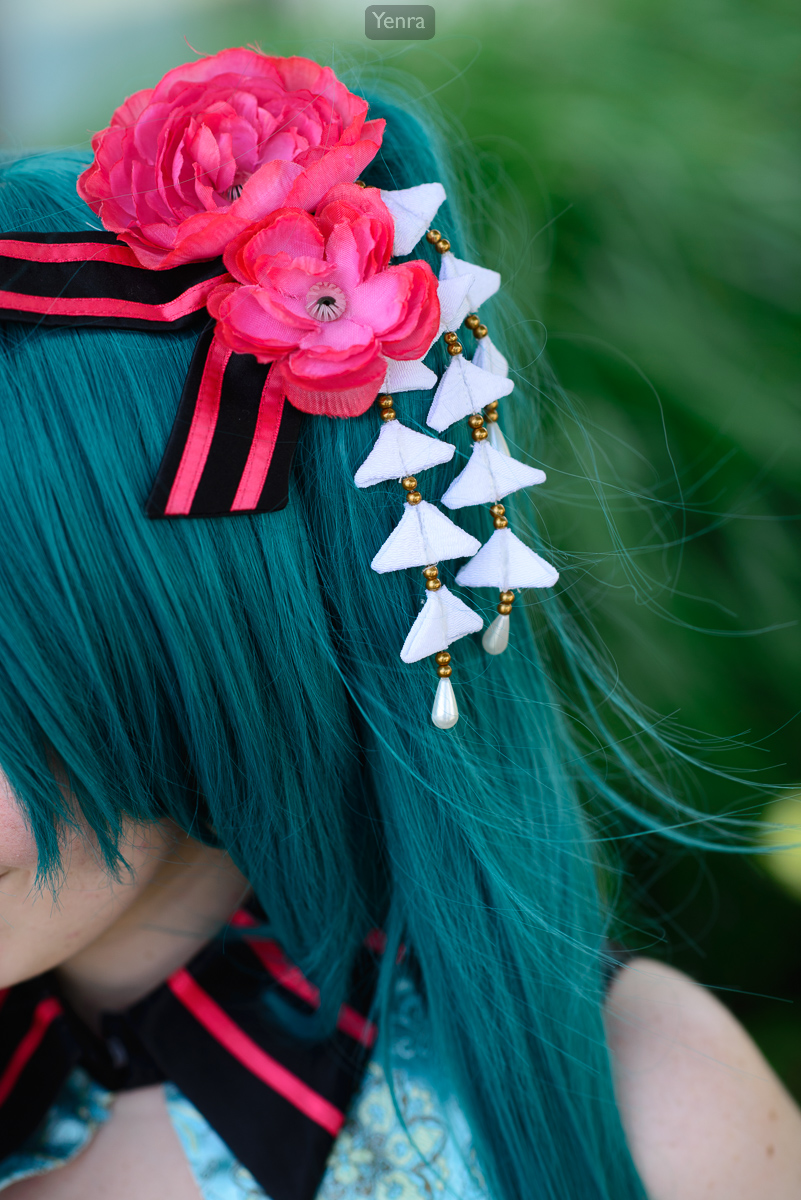
Vibrant Teal Hair with Pink Flowers Headpiece · Photograph: Yenra
Captured: 2014:06:13 13:23:31
The final view brings the hair ornaments forward. Pink flowers, striped ribbons, small white hanging shapes and gold-colored beads are visible against turquoise hair. Features that were small in the opening portrait now have room to be explored.
A detail can make a satisfying place to pause. It might leave the viewer with a color relationship, a gesture or an object worth remembering. Choose something connected to the earlier pictures, then ask what this final view adds to the reading experience.
Keep a visible thread between the pictures
- Wider portrait. The opening view introduces the outfit, parasol, turquoise hair and pink flowers.
- Closer portrait. The second view keeps the parasol and flowers recognizable while bringing the face and hands forward.
- Small detail. The final view carries the flowers and hair color into a closer look at the ornaments.
The actual capture times are 13:29:23 for the opening view, 13:21:38 for the closer portrait and 13:23:31 for the detail, all on June 13, 2014. Reordering existing photographs lets you explore a reading progression without changing their history. These full originals also differ in pose and viewpoint; they do not demonstrate a continuous approach or a controlled lens test.
Try this with three photographs you already have. Keep each original complete and write one sentence about the connection between each pair. You can also imagine the reverse order: begin with the small detail and gradually reveal where it belongs. Notice which direction suits the story you want to share, and keep the other as an alternative.
Look back with curiosity.
- What becomes easier to notice?
- Which variation would you like to explore next?
- What small observation would you like to keep?
Keep exploring
Exploring portrait framing · Pairing a portrait with a detail · Trying two orders for a photo sequence
Browse the complete Anime Mid-Atlantic 2014 gallery.