Field notes · Look · Try · Compare
Making a portrait in a narrow passage
Let nearby walls and a receding passage give a portrait a setting, then explore how much of that setting to include.

Night Photo Adventure at AUSA · Photograph: Yenra
Captured: 2016:10:22 20:27:15
A narrow passage can give a portrait a strong sense of place. Nearby walls, floor patterns and a view into the distance provide shapes around the person. You can explore how much of that setting to include while keeping the portrait comfortable and collaborative.
These selected Anime USA 2016 Saturday photographs use a narrow interior setting in different ways. The first portrait shows a different subject from the latter two. They offer ideas for your own experiment, with each original photograph and capture record retained.
Include the surrounding passage
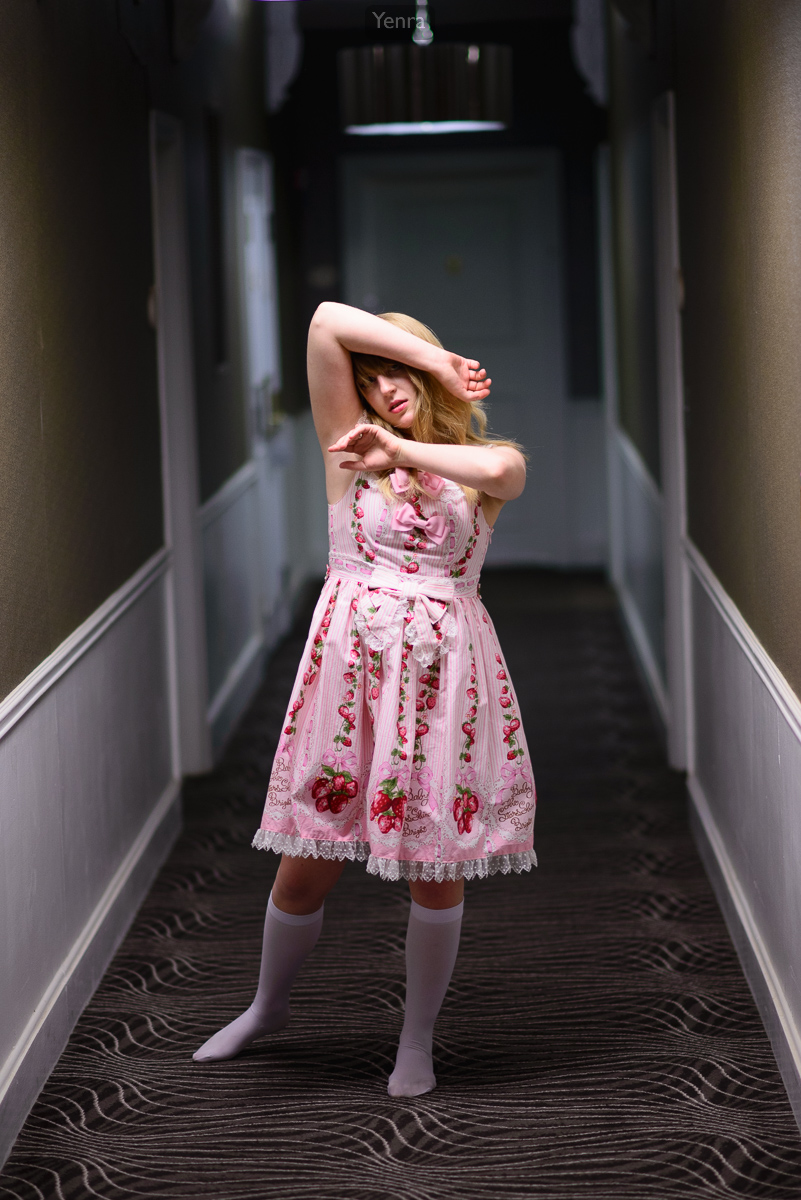
The pale dress sits between dark walls, and the floor and wall trim continue behind the figure. The wider view includes the feet, overhead fixture and several door openings. Together these details describe the space around the person.
Follow the walls into the distance and return to the face. Notice how much room remains above and beside the figure. The passage has a clear presence without needing to occupy the same amount of attention as the portrait.
With your portrait partner, choose a place where photography is welcome and people can pass comfortably. A room corner can provide a simple alternative. Start from a position you both enjoy, and make a frame that includes enough of the surroundings to recognize the setting.
Leave room for a gesture
Night Photo Adventure at AUSA · Photograph: Yenra
Captured: 2016:10:22 20:30:36
The pink dress and raised arms make a different shape within the passage. The hands and elbows remain inside the frame, while the walls and floor continue around the figure. The gesture gives the portrait a more expansive outline.
Look at the spaces beside the arms as well as the arms themselves. Those small gaps help the pose remain distinct from the surroundings. A comfortable hand position or a slight turn can offer another way to explore the same relationship.
Invite your partner to choose a gesture they like. Keep room around it and compare a little more or less space at the edges. The raised-arm pose here is one example; an easy standing position can be equally useful for your experiment.
Bring the face forward
Night Photo Adventure at AUSA · Photograph: Yenra
Captured: 2016:10:22 20:31:07
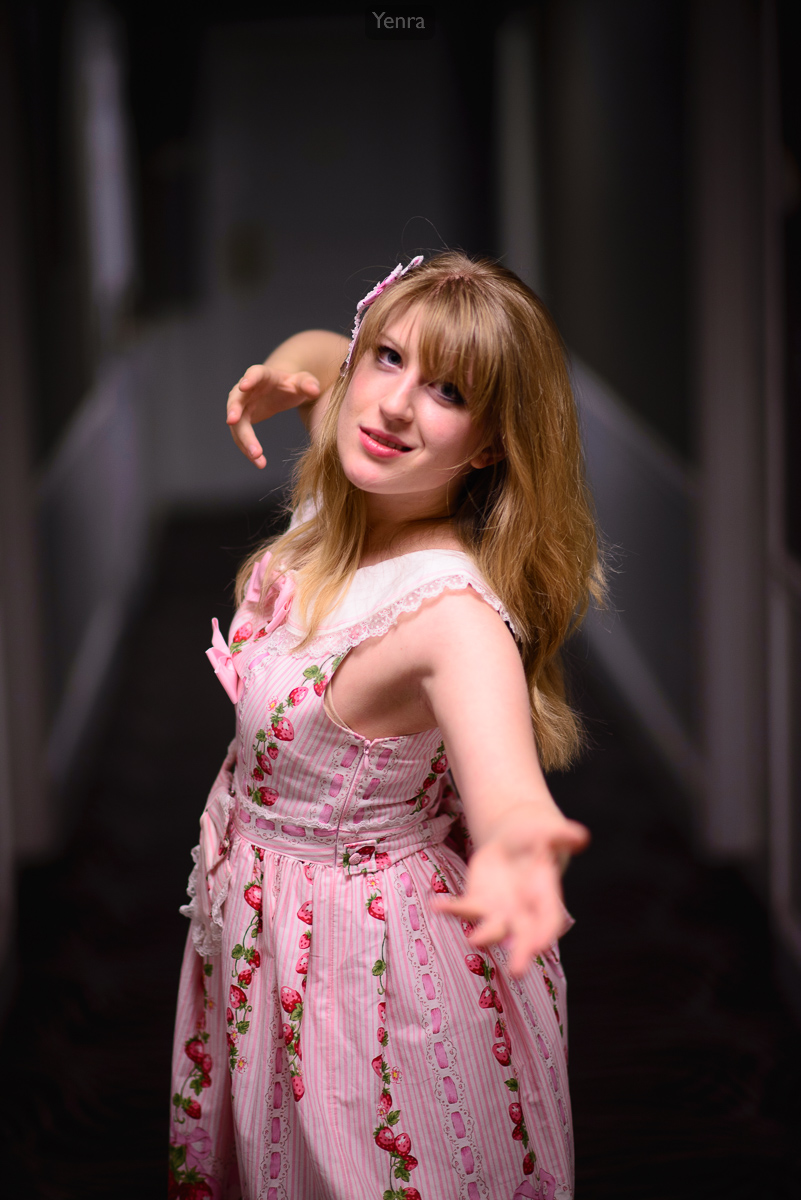
In the closer portrait, the face and reaching hand take up more of the picture. The passage remains recognizable behind them, though its details are softer. The pink clothing connects this image with the preceding example.
Notice the different jobs of the hands: one sits beside the face while the other reaches toward the camera. The near hand has softer detail, and the face remains a clear place to return. Compare how much of the setting you need to recognize where the person is.
Try a closer composition with your partner, changing one thing at a time. You might adjust your framing while keeping a comfortable pose, then explore a small gesture. Review the picture together before choosing what to try next.
Let the place contribute
The visible fixtures and shadows are part of these pictures, but they do not document the complete lighting setup. In your own setting, look at how the face and surroundings appear in a test photograph, and adjust exposure or position to suit what you want to explore.
Keep a wider view and a closer one if they contribute different things. One can describe the passage; another can bring the face forward. A useful result is a portrait you and your partner enjoy, together with one small discovery about the space.
Look back with curiosity.
- How much of the passage helps describe the place?
- What room does the gesture need?
- Which framing would you and your partner keep?
Keep exploring
Making a portrait in a doorway · Making space around a subject · Exploring hand gestures in a portrait
Browse the complete Anime USA 2016 Saturday gallery.